
Navigating Crypto News

CoinFeather
Navigating Crypto News

Quick market read from this story
Dogecoin is consolidating below the critical $0.10 resistance, with technical indicators showing neutral momentum and a lack of strong trend.
The $0.088 support zone is crucial for DOGE; a break below could lead to further downside, while a sustained move above $0.102 might signal a recovery towards $0.115.
Reduced trading volume suggests market participants are awaiting a clearer direction, a common precursor to a significant price move.
Deep Dive
Dogecoin (DOGE) is currently facing pressure, trading near the $0.09 mark and struggling to break above the crucial $0.10 resistance level. The cryptocurrency has been consolidating within a narrow range for several weeks, with buyers defending a key support zone between $0.088 and $0.090.
Analysis of the daily chart reveals that Dogecoin has formed lower highs since January, suggesting a prevailing bearish market structure. A descending resistance trendline continues to cap price increases. Technically, the immediate upside resistance is observed at $0.102, with a potential move towards $0.115 if this level is breached and sustained. Conversely, the critical downside support lies at $0.088. A break below this level could lead to further declines towards $0.082 and potentially $0.075.
Technical indicators reflect a lack of strong momentum. The Relative Strength Index (RSI) is hovering around 42-43, indicating neutral momentum. The Directional Movement Index (DMI) shows declining bearish pressure but no significant increase in bullish strength, with the ADX indicator remaining low, suggesting a lack of a strong trend.
If Dogecoin successfully breaks above the descending trendline and reclaims the $0.10 level, it could initiate a recovery towards $0.115 and potentially target $0.14. However, failure to hold the $0.088 support could increase bearish sentiment, driving the price lower.
Currently, Dogecoin appears to be in a state of equilibrium between support and resistance. The reduced trading volume suggests lower market participation, with traders awaiting a clearer directional signal. Historically, such periods of low volatility often precede significant price movements.
Source, catalyst, and sector overlap from the latest feed.
Geopolitical tensions stemming from the US-Iran conflict are introducing significant uncertainty into global markets, impacting cryptocurrencies like Bitcoin, Ethereum, and XRP. Despite a recent drop from $79K to $68K and substantial liquidations, Bitcoin has shown resilience, suggesting underlying support may prevent a complete market collapse. The ongoing conflict poses a risk of increased volatility for Bitcoin, with a potential downside target of $55,000 if key support levels are breached.
The post Coinbase Brings Regulated Futures to 26 European Countries: Here’s What You Get appeared first on Coinpedia Fintech News European crypto traders have spent years navigating unregulated platforms just to access derivatives. Coinbase just changed that. Coinbase has rolled out regulated futures trading across 26 European countries through Coinbase Advanced, now offering crypto derivatives under a MiFID-regulated entity across the region for the first time. Germany, France, and the Netherlands are among the countries …
Declining Bitcoin exchange reserves to 2019 levels suggest a significant reduction in readily available supply, potentially creating a supply shock if demand remains robust. The ongoing shift of BTC into self-custody, spot ETFs, and corporate treasuries indicates a structural change in asset holding patterns, reducing liquid supply for active trading. Historically, reduced exchange balances have preceded price expansions, implying that this trend could act as a bullish catalyst for Bitcoin's next market cycle.
Whale wallets liquidating $40 million in tokenized gold (XAUT, PAXG) suggests a potential top in gold prices, signaling a shift in safe-haven asset preference. Significant profit-taking in tokenized gold ahead of key U.S. inflation data indicates a cautious stance from large holders, potentially impacting correlated risk assets like cryptocurrencies. The rotation out of tokenized gold by whales implies capital reallocation, which could provide directional cues for Bitcoin and other major crypto assets in the short term.
Coinbase's launch of regulated futures trading in 26 European countries signifies a major expansion of compliant derivatives access for retail and institutional traders in the region. The offering of Bitcoin, Solana, and equity index futures with leverage up to 10x provides a regulated alternative to offshore, unregulated platforms, potentially attracting capital and increasing trading volume within compliant frameworks. This move by Coinbase could set a precedent for other exchanges seeking to offer regulated derivatives in Europe, potentially increasing competition and innovation in the European crypto derivatives market.
William Shatner's clarification that X Money will operate with fiat currency, not cryptocurrency, directly counters community expectations and may temper speculative interest in DOGE's integration with the platform. The confirmation of X Money using fiat and FDIC insurance, alongside Elon Musk's separate reaffirmation of the Doge-1 lunar mission, creates a divergence between X's payment infrastructure and potential future crypto integrations, impacting sentiment for DOGE. Despite X securing payment licenses including crypto-related ones, the explicit statement from Shatner that X Money is fiat-only suggests a strategic decision to prioritize traditional finance for the initial rollout, potentially delaying or altering any planned crypto features.
Shiba Inu's price action indicates a continued bearish trend with lower highs and lows, suggesting the asset has not yet reached its bottom and faces significant resistance on any upward movement. XRP is experiencing a period of unusual stability with low volatility, which may signal a lack of strong buying pressure and liquidity rather than a bullish recovery. Bitcoin is attempting to recover and stabilize around $67,000 after losing the $74,000 level, but faces significant overhead resistance from declining moving averages, making a return to previous highs challenging.
Dogecoin's futures market experienced an unusual 100,456.56% netflow drop in an eight-hour window, indicating significant trader repositioning despite quiet spot trading. The sharp futures netflow drop, coupled with a recent pattern of late-week selling and Sunday volatility, suggests traders are defensively adjusting positions ahead of potential market swings. Despite a recent price decline, Dogecoin's open interest has increased, signaling that traders are still actively engaged and watching for potential price movements.
Traders are accumulating Shiba Inu by withdrawing over 131 billion SHIB from exchanges, indicating a potential shift in sentiment despite current price weakness. The rise in SHIB open interest by 2.24% suggests increased speculative activity in the derivatives market, potentially signaling anticipation of future price movements. Despite a recent price dip, the significant net outflow of SHIB from exchanges, coupled with rising derivatives engagement, points to growing buyer confidence and accumulation at lower levels.
The launch of SoFiUSD by a federally insured US bank signals a significant shift in capital allocation towards blockchain infrastructure and utility, potentially diminishing speculative interest in meme coins. Shiba Inu and Dogecoin are facing downward pressure as their lack of tangible utility becomes more apparent compared to emerging projects offering exchange infrastructure and real-world applications. Smart capital is rotating into presale opportunities like Pepeto, which offer demonstrable utility and potential for significant returns, contrasting with the stagnant performance of established meme coins. The increasing convergence of traditional banking with crypto payment rails, exemplified by SoFi's stablecoin, suggests a maturing market where utility and regulatory compliance will increasingly dictate value over speculative hype.
Live Feed
Loading the broader stream in the same flow as the homepage feed.

Nasdaq's partnership with Kraken to distribute tokenized stocks globally signals a significant move towards integrating traditional finance with blockchain infrastructure. The initiative aims to streamline corporate actions like dividend payments and proxy voting, potentially increasing efficiency and accessibility for international investors. This development, alongside similar moves by ICE, suggests a growing trend of traditional financial institutions exploring tokenization to bridge TradFi and crypto markets.

Florida's passage of a stablecoin licensing bill establishes clear reserve, disclosure, and compliance rules, signaling a move towards formal regulatory oversight for payment stablecoins within the state. The legislation aligns with federal regulatory discussions, potentially creating a more predictable environment for stablecoin issuers operating in Florida and setting a precedent for other states. The requirement for issuers to maintain fully backed, liquid reserves and undergo independent audits suggests a focus on stability and investor protection, which could bolster confidence in regulated stablecoins. With key provisions set to take effect in October 2026, the bill provides a structured timeline for compliance, allowing regulators and issuers to prepare for the new framework.

Bitcoin's recent slide below $70,000 highlights its sensitivity to macro shocks, as a weak jobs report and surging oil prices revived stagflation concerns, pushing investors away from risk assets. The combination of slowing growth and persistent wage pressure creates a challenging environment for Bitcoin, as it signals potential delays in Federal Reserve rate cuts and reduces confidence in near-term monetary easing. While spot Bitcoin ETF inflows have shown recent positive momentum, the asset's price action is increasingly influenced by institutional flows and miner selling, which can amplify weakness during periods of macro uncertainty. Traders should closely monitor upcoming US CPI data and the Federal Open Market Committee meeting for clarity on inflation trends and potential Fed policy shifts, as these will be critical in determining Bitcoin's next directional move.
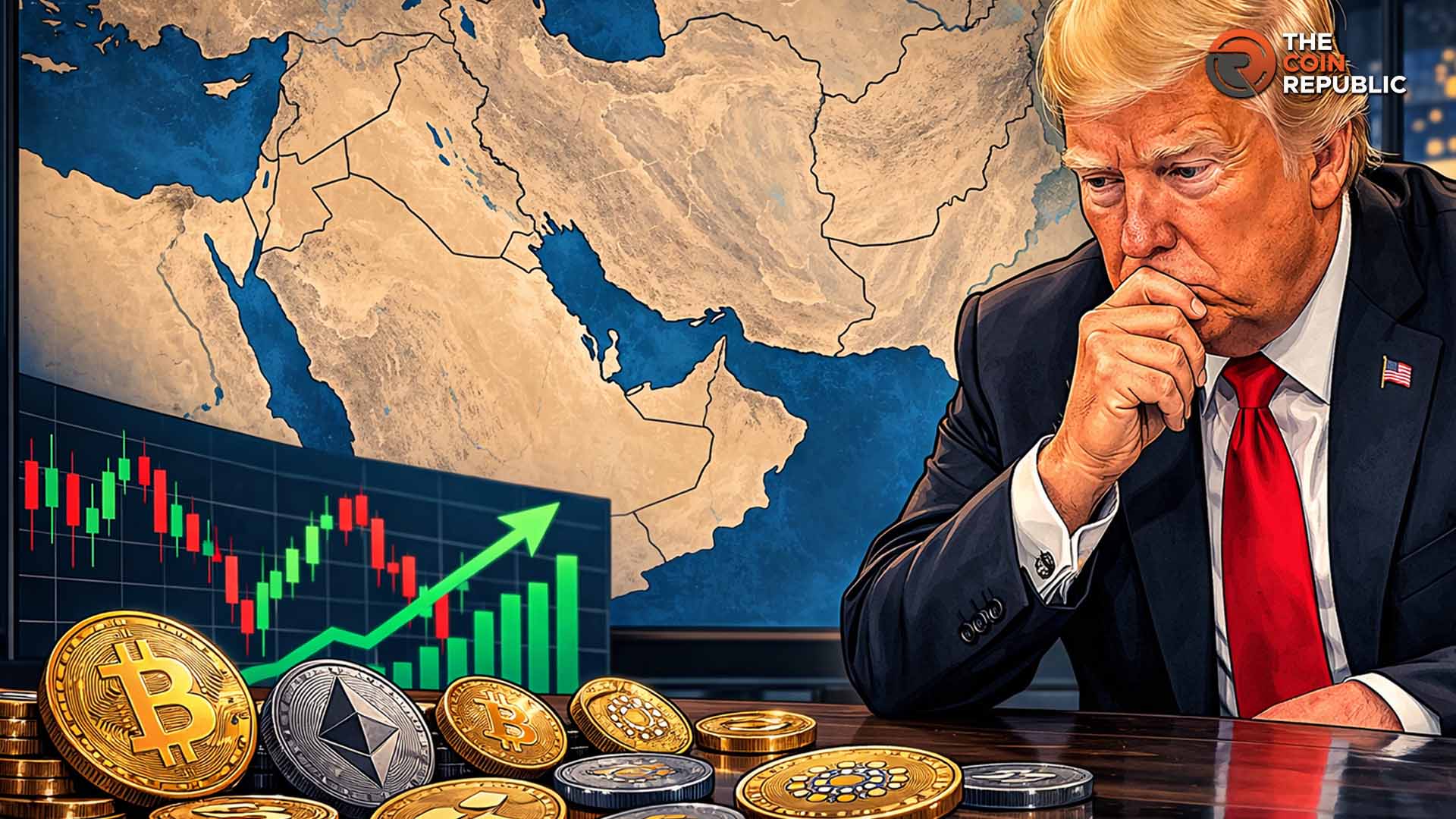
Easing geopolitical tensions surrounding the US-Iran conflict are driving a broad crypto market rebound, with total market cap increasing and major assets showing positive momentum. The market's positive reaction suggests that traders are viewing de-escalation as a catalyst for risk-on assets, potentially leading to further upside if tensions continue to recede. Bitcoin's recovery to $67.5K with increased trading volume and Ethereum reclaiming the $2K level indicate renewed investor confidence and a potential shift away from safe-haven assets.
Despite launching new co-branded credit cards with Swiggy, HDFC Bank's stock price has declined, indicating that the market may not view this product launch as a significant catalyst for growth or a positive development for the bank's immediate financial performance. The launch of two distinct credit card variants by HDFC Bank and Swiggy suggests a strategy to cater to different customer segments with tailored reward programs, aiming to increase adoption and spending within the Swiggy ecosystem and online. The market's negative reaction to HDFC Bank's stock, despite a product launch, highlights a potential disconnect between corporate announcements and investor sentiment, possibly due to broader market concerns or other unstated factors affecting the bank.

Upcoming U.S. inflation data is a key macroeconomic driver that could significantly influence crypto market sentiment and Federal Reserve interest rate expectations. Polkadot's planned economic upgrade, including a DOT supply cap and emissions cut, represents a structural change to its tokenomics that warrants monitoring for potential price impact. The week ahead features several project-specific announcements from Solstice/Kamino and Succinct, which could introduce short-term volatility or trading opportunities if details are market-moving. Geopolitical tensions and their impact on commodity prices, particularly crude oil, add a layer of macro uncertainty that traders will be watching for spillover effects into digital asset markets.

Coinbase's expansion into regulated perpetual futures in Europe, despite regulatory headwinds from ESMA, signals a strategic move to capture institutional and advanced retail demand for diversified derivatives products. The launch of crypto and equity index futures, including leverage options, positions Coinbase to compete more directly with traditional finance venues and other crypto exchanges offering similar products in the region. While the product launch is a positive step for Coinbase's 'exchange for everything' ambition, the ongoing scrutiny from ESMA regarding perpetual derivatives as CFDs introduces a layer of regulatory risk that could impact future product development and adoption.

Bitcoin demonstrated resilience by rising 2.8% amidst a broader market downturn driven by oil price spikes and geopolitical uncertainty, suggesting a potential shift in its safe-haven narrative. While traditional safe havens like gold and silver declined, Bitcoin's upward movement, coupled with rallies in select altcoins and DeFi tokens, indicates a growing appetite for riskier crypto assets in the current macro environment. Despite a significant increase in oil prices and equity futures dropping, Bitcoin's open interest in futures remained steady, implying that the current rally is not yet fully supported by institutional derivatives market activity. The premium on Bitcoin and Ether puts over calls, though unchanged, signals persistent downside concerns, but the overall market calm in implied volatility suggests traders are not pricing in an immediate, drastic repricing event.
Solana's price action is currently dictated by liquidity clusters, with a stronger draw towards the $78-$85 downside liquidity zone, suggesting a potential short-term drop before any significant recovery attempt. The $88-$89 resistance zone presents a critical test for SOL; a failure to break through could lead to further downside pressure, while a successful breach might open a path towards $95. Traders should monitor the $78-$85 liquidity band as a potential pivot point; a failure to hold this level could signal continued weakness, whereas a bounce could initiate a short-term upward trend.

Crypto investment products saw significant inflows totaling $619 million last week, indicating renewed investor interest despite broader market anxieties stemming from geopolitical events. Bitcoin ETPs have turned positive year-to-date with $117 million in inflows, suggesting a potential shift in sentiment towards BTC as a safe-haven asset amidst global instability. While Ether and Solana ETPs also experienced inflows, XRP was a notable outlier with significant outflows, highlighting divergent investor sentiment across major altcoins. Despite positive inflows, the article notes a late-week sentiment shift with outflows on Thursday and Friday, suggesting continued market volatility and a cautious outlook.

Bitcoin's failure to hold the 200-week EMA as support, coupled with new death crosses on weekly and three-day charts, signals a bearish outlook and potential for further downside, targeting $40,000-$36,000 according to some analyses. Geopolitical tensions driving oil price volatility and inflation concerns are a primary macro driver, potentially influencing Federal Reserve policy and impacting risk assets like Bitcoin. Despite bearish technical signals, derivatives market data from Binance shows a potential reversal pattern, historically coinciding with major bottoms, suggesting a divergence between technicals and sentiment. Large Bitcoin holders ('whales') are not significantly increasing exchange inflows despite price volatility, indicating a lack of aggressive profit-taking and potentially a cautious stance rather than outright selling.

The potential coordinated release of strategic oil reserves by G7 nations is easing market jitters, leading to a rebound in Bitcoin from its earlier lows. Increased volatility in oil prices, driven by geopolitical tensions, is highlighting the utility of decentralized perpetuals platforms like Hyperliquid for continuous commodity exposure. While geopolitical events are causing short-term price swings in Bitcoin, historical correlations suggest that periods of rising oil prices may coincide with the end of BTC's bull cycles.
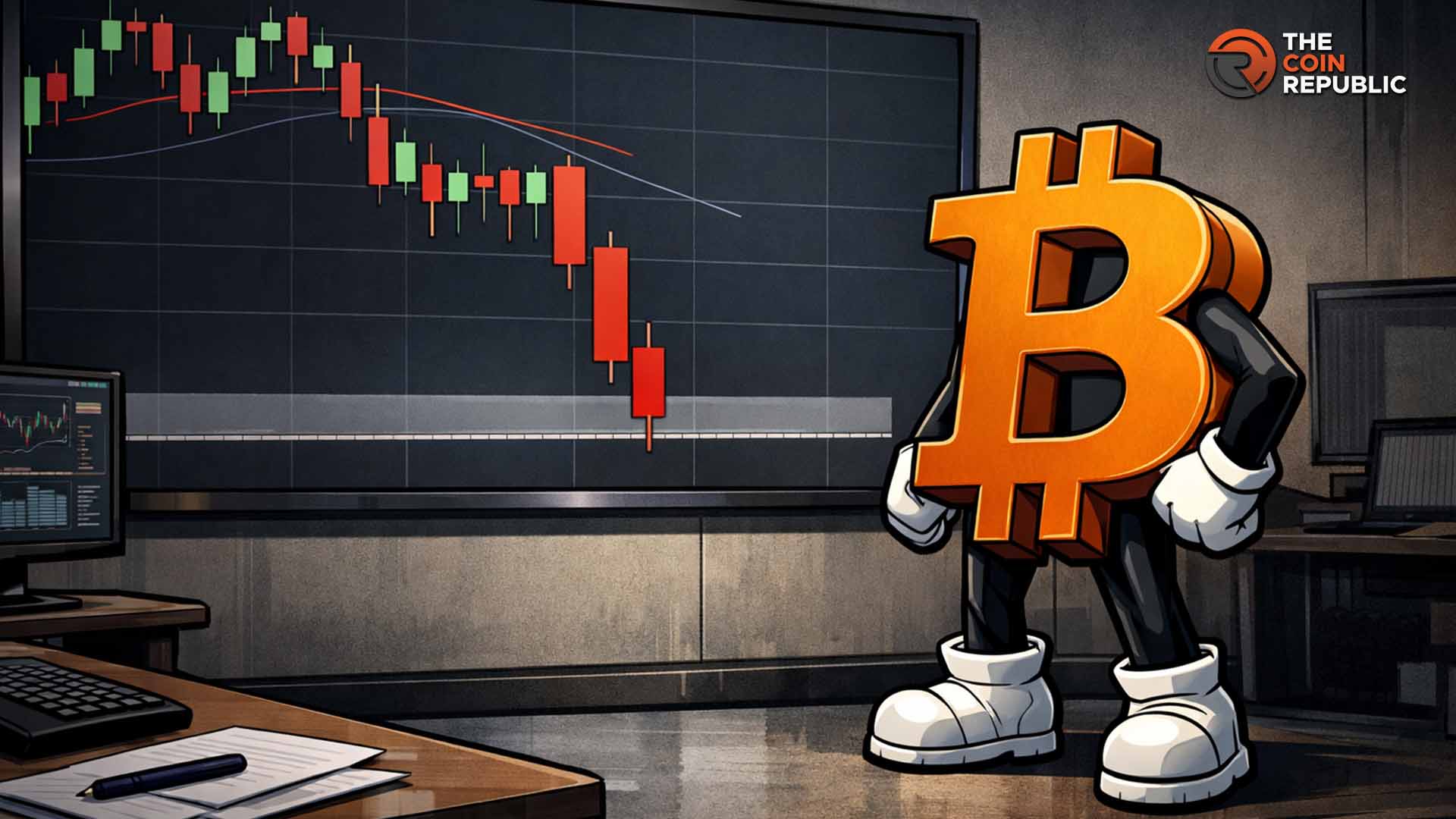
Bitcoin's weekly close below the 200-week EMA signals a potential shift in long-term trend, with $60,000 identified as the next key support level to watch. Failure to reclaim the 200-week EMA as support suggests increased bearish sentiment, potentially leading to further downside pressure if broader market conditions do not improve. External market factors like oil and gold prices are increasingly influencing Bitcoin's price action, indicating a heightened sensitivity to macroeconomic and geopolitical events. Despite bearish technical signals, some analysts observe a potential for a bullish pattern repeat from 2023, suggesting that current price action could be a temporary consolidation rather than a full trend reversal.

Nigel Farage's investment in Stack BTC, a UK-listed bitcoin treasury firm, signals growing political interest in digital assets and could boost the company's profile. The investment by a prominent political figure like Farage, coupled with Stack BTC's expansion into bitcoin treasury and Blockchain.com's involvement, suggests a potential increase in institutional adoption and infrastructure development. Stack BTC's share price saw a 12% increase following the announcement, indicating positive market reaction to the news and potential for further short-term price appreciation.
Signal context only. Validate with price action, liquidity, and risk limits before taking a position.
