
Navigating Crypto News

CoinFeather
Navigating Crypto News
Quick market read from this story
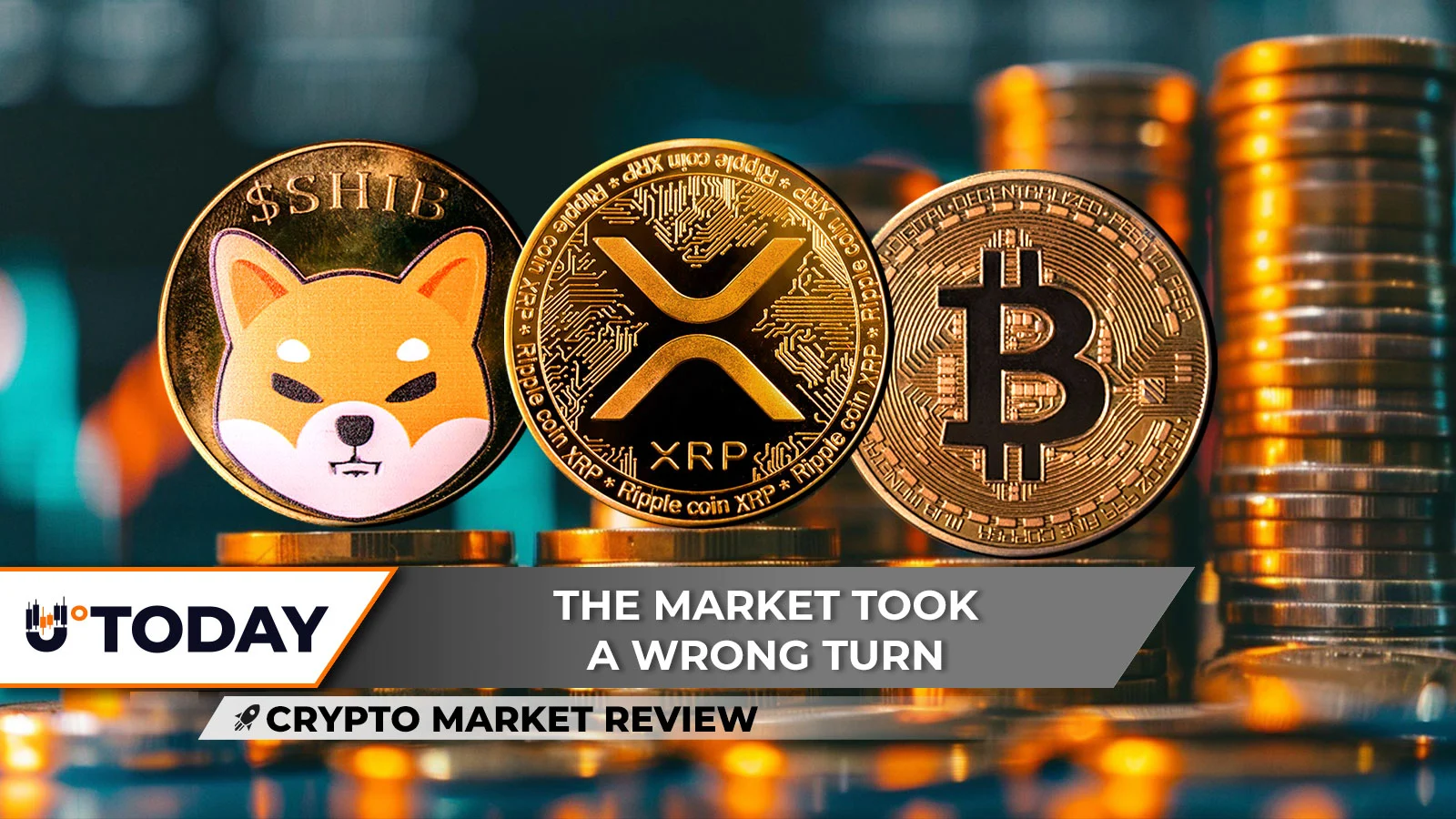
Shiba Inu's price action indicates a continued bearish trend with lower highs and lows, suggesting the asset has not yet reached its bottom and faces significant resistance on any upward movement.
XRP is experiencing a period of unusual stability with low volatility, which may signal a lack of strong buying pressure and liquidity rather than a bullish recovery.
Bitcoin is attempting to recover and stabilize around $67,000 after losing the $74,000 level, but faces significant overhead resistance from declining moving averages, making a return to previous highs challenging.
Deep Dive
The cryptocurrency market is experiencing significant shifts, with Shiba Inu (SHIB) showing continued decline and nearing 2021 price levels, while XRP enters a period of unusual stability, and Bitcoin (BTC) attempts to recover from recent losses.
Shiba Inu is facing a prolonged downturn, trading near $0.0000053. The meme asset has struggled to establish strong support, indicating that the market may not have reached its bottom. Technical analysis reveals a bearish structure with persistent selling pressure, characterized by lower highs and lower lows. SHIB remains significantly below key moving averages, suggesting that short-term gains are likely to face substantial resistance as the market continues its correction.
The absence of a distinct accumulation zone further exacerbates concerns. Unlike assets nearing a market bottom, SHIB has not shown increased buying activity or stable horizontal support levels. Instead, it continues a steady decline with low volatility, erasing speculative demand that previously fueled its rallies.
XRP is experiencing one of its most stable periods of the year, marked by significantly reduced volatility and fewer price swings. While this stability might appear positive, it could also signal a lack of momentum rather than a strong bullish recovery. XRP is currently trading around $1.36, holding just above a rising support line established after an earlier market fall.
Despite avoiding further breakdowns for several weeks, XRP remains below key moving averages, including the 26-day exponential moving average, with longer-term trend indicators still sloping downward. These levels act as dynamic resistance, limiting upward potential. Although XRP has shown minor upward drift, it has not been enough to overcome overhead resistance. This low volatility suggests a potential lack of strong liquidity and buying pressure necessary for a significant recovery.
Bitcoin is in a recovery phase after losing a critical technical level earlier this year. Currently trading around $67,000, BTC is attempting to stabilize after a sharp drop that erased weeks of gains. The primary concern for the market is whether Bitcoin can reclaim the $74,000 level it lost rapidly.
The swift breakdown below $74,000 saw a significant support zone fail, triggering liquidations and accelerating the decline towards the $65,000-$68,000 range. The rapid nature of this move has left little structural support for a quick return to higher levels. Bitcoin is still trading below several significant moving averages, which now act as dynamic resistance. Any upward movement is expected to encounter selling pressure before BTC can approach the $74,000 region again.
Despite the overall downtrend, Bitcoin has begun to form a minor consolidation pattern, with price movements tightening around $67,000, suggesting an attempt to establish a temporary base.
Source, catalyst, and sector overlap from the latest feed.
Actor Terrence Howard's prediction of Bitcoin's demise, lacking factual basis and drawing ridicule, highlights a disconnect between celebrity opinion and market fundamentals. The commentary from Howard, who previously made questionable mathematical claims, underscores the unreliability of non-expert financial pronouncements in the crypto space. Despite the vocal opposition from some public figures, the community's reaction demonstrates resilience and a focus on Bitcoin's underlying technology and long-term potential.
XRP's daily burn activity has surged by over 27%, indicating increased network usage which could signal growing demand and a potential price recovery. Despite a recent price dip and outflows from XRP ETFs, the rise in token burns suggests underlying network health and potential for a positive market sentiment shift. The increase in XRP burned as fees, reaching approximately 519 XRP, points to greater utility and transaction volume, historically a precursor to price appreciation.
XRP holders are currently experiencing significant unrealized losses totaling $50.8 billion, indicating a large portion of the token's supply is underwater relative to acquisition prices. The current state of unrealized losses approaches historical 'max pain' thresholds, suggesting potential for capitulation selling if market sentiment does not improve. Despite a past parabolic run in 2025, XRP's subsequent price decline has left many investors with substantial paper losses, highlighting the volatility and risk associated with the asset.
PlanB's updated S2F model projects an average Bitcoin price of $500,000 by 2028, suggesting the current market price near $67,000 is a significant buying opportunity based on historical scarcity dynamics. The model's forecast relies on Bitcoin's supply scarcity, particularly post-halving, and indicates that current RSI levels suggest the market is not yet overheated, implying further upside potential within the current cycle. While PlanB highlights historical accuracy and current undervaluation, he acknowledges the S2F model's limitations, specifically its focus on supply over demand, and warns investors to expect continued high volatility despite the bullish outlook.
Dogecoin's futures market experienced an unusual 100,456.56% netflow drop in an eight-hour window, indicating significant trader repositioning despite quiet spot trading. The sharp futures netflow drop, coupled with a recent pattern of late-week selling and Sunday volatility, suggests traders are defensively adjusting positions ahead of potential market swings. Despite a recent price decline, Dogecoin's open interest has increased, signaling that traders are still actively engaged and watching for potential price movements.
Solana's significant increase in stablecoin volumes, reaching $650 billion in February and surpassing Ethereum and Tron, indicates a growing utility beyond speculation and a strong contender in the stablecoin transaction space. The surge in Tether Gold (XAUT) volumes on Solana to over $280 million highlights the network's increasing adoption for Real-World Assets (RWAs), positioning it as a key player in this emerging sector. Solana's rapid growth in RWA holder accounts, now exceeding 1.16 million, demonstrates a significant shift in its ecosystem's focus and potential to capture a substantial share of the growing RWA market.
The historical four-year Bitcoin cycle, driven by halvings and retail speculation, appears to be evolving due to increased institutional adoption and ETF inflows, leading to shallower drawdowns and potentially longer market phases. Institutional demand, now holding approximately 12% of Bitcoin's supply via ETFs and corporate treasuries, is smoothing price volatility and altering the market's reaction to traditional catalysts like halvings. While the halving's impact on inflation has diminished, the market's response to macro factors like Fed policy is also becoming less predictable, suggesting a more complex interplay of forces driving Bitcoin's price. The diminishing returns across recent cycles and the shift in Bitcoin's identity towards a store of value, as suggested by JPMorgan's target and on-chain metrics, indicate a maturing asset class that requires updated analytical frameworks.
XRP investors are currently holding $50.8 billion in unrealized losses, with 36.8 billion tokens trading below their purchase price, indicating significant market pain. Analysts suggest XRP may be undergoing a typical market cycle capitulation phase, referencing historical patterns of price drops and consolidation before potential expansion. While long-term targets like $6.8 and $20 are cited, XRP's immediate technical structure remains bearish, trading within a descending channel with weak momentum indicators. The current price action and analyst commentary suggest a period of consolidation is likely before any significant upward price movement, making immediate buy signals improbable.
The upcoming U.S. CPI report is a key event for Bitcoin, Ethereum, and XRP, with market reactions historically showing significant volatility following inflation data releases. Analysts anticipate that inflation figures near or above expectations could maintain higher interest rates, potentially pressuring risk assets like cryptocurrencies and leading to price support tests. Conversely, inflation data coming in lower than expected could trigger a positive price reaction, with Bitcoin potentially retesting $70,000, followed by Ethereum and XRP. Recent outflows from Bitcoin ETFs introduce a note of caution, suggesting that short-term price momentum might be impacted regardless of the CPI report's outcome.
The potential incompatibility of current hierarchical deterministic wallet designs with post-quantum cryptography poses a significant operational risk for crypto exchanges, potentially impacting their ability to securely generate deposit addresses. New research and prototype wallets from Project Eleven aim to bridge this gap by restoring non-hardened key derivation under quantum-resistant schemes, suggesting a path for exchanges to maintain security and functionality. While Ethereum may leverage account abstraction for easier integration, Bitcoin would likely require a protocol upgrade to support new quantum-resistant signature schemes like ML-DSA, highlighting a potential divergence in upgrade paths for major Layer 1s.
Live Feed
Loading the broader stream in the same flow as the homepage feed.

The G7's consideration of releasing up to 400 million barrels of oil from strategic reserves signals a potential increase in global energy supply, which could exert downward pressure on oil prices. While the article focuses on oil markets, significant shifts in energy prices can indirectly impact broader financial markets, including cryptocurrencies, by influencing inflation expectations and investor risk appetite. The immediate market reaction saw oil prices slip below $108 per barrel, indicating that traders are pricing in the possibility of this supply increase, a sentiment that could extend to other commodities or risk assets.

The article highlights Bitwise CIO Matt Hougan's view that only utility-focused altcoins will rally, positioning Pepeto as a prime example due to its exchange infrastructure and $7.5M raised during a market downturn. Pepeto's presale success, with $7.5M raised and functional exchange infrastructure across three blockchains, is presented as a direct response to the shift away from hype-driven altcoins towards projects with tangible solutions. The contrasting performance of BlockDAG, which raised $440M but faces delays and leadership questions, serves to underscore Pepeto's focus on verifiable development and timely delivery as a key differentiator for presale investors.

Fantium CEO Jonathan Ludwig emphasizes that successful sports tokenization hinges on utility and real financial alignment, not just speculation, suggesting a shift towards more grounded applications in the sector. The introduction of the $BANK token for on-chain poker bankroll management signifies Fantium's expansion into formalizing private financial markets within niche sports verticals, aiming to create buyback and utility flywheels. Fantium's strategic choice to build on Solana is driven by its existing liquidity and infrastructure, indicating a preference for established ecosystems that can support practical, non-speculative tokenization models.

Kalshi's expansion into Brazil via partnership with XP Inc. marks a significant internationalization step, introducing event contracts tied to macroeconomic indicators like inflation and interest rates. The move into Brazil, a market with nascent prediction market regulations, suggests a strategic approach to capturing new user bases and exploring regulatory arbitrage opportunities. Availability of these contracts to both U.S. Kalshi investors and select XP users in Brazil indicates a dual-market strategy, potentially increasing liquidity and market participation.
Kalshi's expansion into Brazil via partnership with XP Inc. marks a significant international growth step, introducing event contracts tied to macroeconomic indicators. The move into Brazil, despite nascent regulatory clarity, signals potential for new financial derivatives markets on blockchain technology. This partnership could pave the way for broader adoption of event-based contracts in emerging markets, offering novel hedging and speculation tools.
The article provides a guide to crypto airdrops, detailing their purpose as a marketing strategy for new projects to gain awareness and users. Airdrops can offer users opportunities to earn free tokens, but also carry risks of scams and low-value distributions, necessitating careful verification. The guide highlights ten specific websites that track and list airdrop opportunities, serving as a resource for users interested in participating.
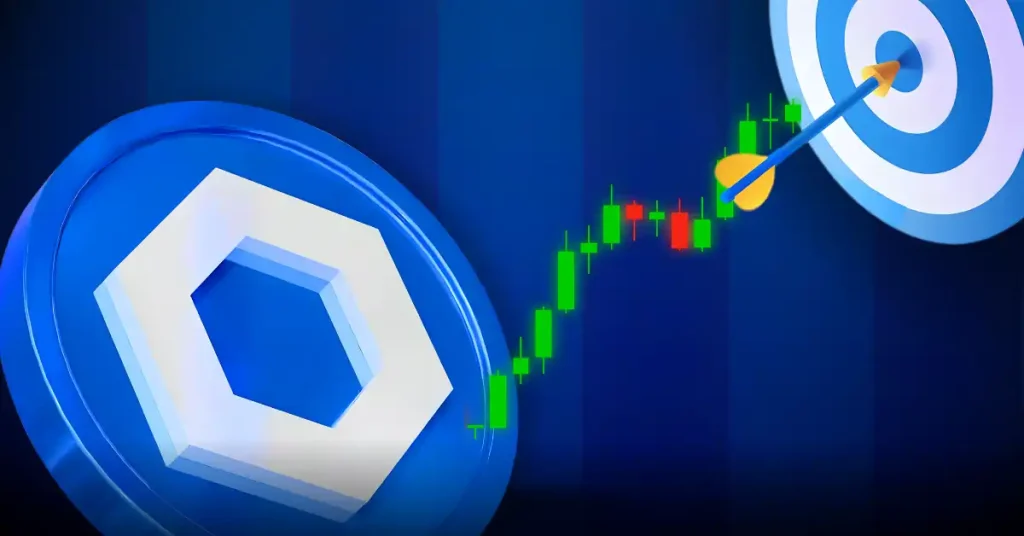
Chainlink is exhibiting a tightening consolidation pattern near a key descending trendline, suggesting a potential breakout is imminent as capital inflows persist despite broader market weakness. Sustained inflows into LINK investment products, totaling nearly $90.66 million, indicate strategic accumulation by investors who are positioning for a potential upward move. A decisive break above the $9.20-$9.40 resistance trendline could propel Chainlink towards the $10 psychological level and potentially the $11-$12 region, while support at $8.40-$8.60 remains critical.

The study highlights that while AI can reduce burnout by automating repetitive tasks, excessive use and oversight can lead to significant cognitive fatigue, termed 'AI brain fry,' potentially impacting employee performance and retention. 'AI brain fry' is associated with increased decision fatigue (33% more) and a higher likelihood of major errors (40% more), suggesting a tangible cost to businesses that could translate to financial losses and operational risks. The findings indicate that companies need to strategically implement AI, focusing on clear purpose definition and measurable outcomes rather than incentivizing sheer usage, to mitigate negative employee impacts and maximize AI's benefits. For the crypto industry, which is rapidly integrating AI, this research serves as a cautionary note on managing AI adoption to prevent detrimental effects on developer productivity and overall operational efficiency.
Beam's focus on privacy-preserving DeFi, utilizing Mimblewimble and LelantusMW, positions it to capture demand from users seeking confidential transactions and smart contracts. The article presents long-term price targets for BEAM, suggesting significant upside potential by 2030, contingent on the growth of private DeFi adoption and ecosystem expansion. Technical analysis indicates BEAM is in a downtrend but defending a key support zone, with a bullish breakout above $0.035 potentially leading to higher price targets.

Bitcoin's recent price stability amidst rising oil prices and geopolitical tensions highlights its increasing correlation with U.S. market sentiment, particularly tech stocks, rather than acting as a purely global, uncorrelated asset. The U.S.'s relative insulation from oil shocks, due to its net exporter status, provides a buffer for its financial markets and, by extension, Bitcoin, suggesting a divergence from global market reactions. While immediate impacts are muted, sustained geopolitical conflict and oil price surges could eventually filter through to U.S. consumer prices and broader market risk appetite, potentially affecting Bitcoin's stability.

WLFI's new governance proposal introduces a staking requirement that effectively disenfranchises smaller investors by demanding they lock up their limited liquid assets for 180 days to retain voting rights. The project's governance structure appears to be consolidating power, with nine team-linked wallets already controlling a significant majority of voting power, raising concerns about centralization despite claims of curbing whale influence. The move to lock out retail investors and concentrate power, coupled with the Trump family's entitlement to 75% of net revenue, creates a significant tension with the project's stated decentralization goals and could impact investor confidence. The proposal's mechanics, including a tiered 'Node' structure offering arbitrage and direct team access for large stakers, suggest a design that favors deep-pocketed participants over the broader retail base that initially funded the project.
![Crypto News Today [Live] Updates On Mar 9, 2026: Oil Price, NIFTY 50, Bitcoin USD Price](/api/image-proxy?url=https%3A%2F%2Fimage.coinpedia.org%2Fwp-content%2Fuploads%2F2026%2F03%2F06102739%2Fcrypto-news-today-1-1024x536.webp)
Escalating geopolitical tensions and the closure of the Strait of Hormuz have triggered a significant surge in oil prices, impacting global markets and potentially increasing inflation concerns. The sharp decline in Asian stock markets, with Japan's Nikkei 225 down over 7%, signals broad investor fear and risk aversion stemming from the oil supply shock and geopolitical instability. Despite increased geopolitical tensions, gold and silver prices have fallen due to profit-taking, a stronger USD, and rising bond yields, indicating a complex market reaction not solely driven by safe-haven demand.

Finance and insurance job openings have fallen to 13-year lows, signaling potential headwinds for traditional finance employment that could indirectly impact crypto market sentiment. Despite a decline in job openings, the finance sector saw a net employment gain in February, suggesting a mixed picture for the broader financial industry. Weak US jobs data, while potentially increasing the likelihood of Fed rate cuts which could benefit crypto, also raises concerns about economic fragility and may prompt risk-off strategies.

Australian exchange BTC Markets is seeking a license to trade tokenized real-world assets, signaling a significant move towards integrating traditional finance with blockchain technology. The RWA market, currently valued at approximately $26 billion, is projected to grow exponentially, with institutional players like BlackRock and Goldman Sachs already active, indicating strong future potential. BTC Markets' strategic pivot to RWA trading aligns with global trends and aims to capture a share of a market potentially worth trillions, driven by increasing regulatory clarity and infrastructure development in Australia. The development highlights a growing trend of established crypto exchanges seeking regulatory approval to offer tokenized traditional assets, potentially blurring the lines between TradFi and crypto markets.
Signal context only. Validate with price action, liquidity, and risk limits before taking a position.
