
Navigating Crypto News

CoinFeather
Navigating Crypto News

Quick market read from this story
Geopolitical tensions stemming from the US-Iran conflict are introducing significant uncertainty into global markets, impacting cryptocurrencies like Bitcoin, Ethereum, and XRP.
Despite a recent drop from $79K to $68K and substantial liquidations, Bitcoin has shown resilience, suggesting underlying support may prevent a complete market collapse.
The ongoing conflict poses a risk of increased volatility for Bitcoin, with a potential downside target of $55,000 if key support levels are breached.
Deep Dive
Global markets are on high alert following statements from U.S. President Donald Trump regarding the ongoing U.S.-Israel and Iran conflict. Trump indicated that the United States would have the "final say" on when the military operation against Iran ends, describing the decision as a "mutual" one with Israeli Prime Minister Benjamin Netanyahu. He also expressed belief that Israel would not need to continue the war once U.S. attacks halt.
The cryptocurrency market has experienced significant losses, with Bitcoin dropping from approximately $79,000 to near $68,000 since the conflict began. Despite the heightened tensions, major panic selling has not occurred. Data indicates that over the past 24 hours, 99,443 traders faced liquidations totaling $396.55 million. Bitcoin accounted for roughly $150 million of these liquidations, followed by Ethereum with $80.8 million and Solana with $18.8 million.
If the conflict between the U.S., Israel, and Iran persists, Bitcoin could experience increased volatility. Crypto trader Captain Faibik suggests that Bitcoin might be preparing for another bearish rally. Currently, Bitcoin is trading within a small rising channel after a sharp decline, indicating a temporary pause with an overall weak trend. Faibik anticipates that a break below the channel's support could lead to a further price drop towards the $55,000 level. Conversely, breaking above the upper trendline would weaken the bearish outlook and potentially delay any significant price decline.
Source, catalyst, and sector overlap from the latest feed.
The Clarity Act, aiming to define regulatory oversight between the SEC and CFTC, has passed the House and is awaiting Senate consideration, representing a critical step towards establishing clear legal frameworks for digital assets in the U.S. Former CFTC Chair Chris Giancarlo estimates a 60-40 chance of the Clarity Act passing Congress, highlighting regulatory clarity as a key bottleneck for institutional adoption and responsible industry expansion. The potential passage of the Clarity Act could significantly reduce regulatory uncertainty, which is currently a primary concern for the crypto market and a barrier to broader adoption and investment.
South Korea's financial regulators are proposing a six-month partial suspension for Bithumb, the country's second-largest exchange, due to alleged AML and KYC violations. The proposed sanctions, if confirmed, would primarily restrict new user deposits and withdrawals, impacting Bithumb's growth potential and market share. This action signals a continued tightening of regulatory oversight in South Korea's crypto market, following previous penalties against Upbit and Korbit, suggesting a trend towards stricter compliance for all major exchanges.
Despite nearly $50 billion in XRP supply now being underwater, this condition historically can precede market turning points, suggesting potential accumulation by long-term holders rather than immediate capitulation. Declining trading volume and a tightening technical structure indicate XRP is in a consolidation phase, which often precedes significant volatility, making current support levels critical for future price action. The current price action, characterized by a descending channel and pressure near key support, suggests that a breakout above resistance could target $2, while a failure to hold support may lead to further downside if broader market weakness persists.
Nasdaq's partnership with Kraken to tokenize shares represents a significant step towards bridging traditional finance with blockchain technology, potentially increasing institutional adoption of tokenized assets. The planned 2027 launch, pending SEC approval, suggests a long-term strategic integration rather than an immediate market catalyst, implying a 'watchlist' approach for related assets. This development could pave the way for broader acceptance of Real World Assets (RWA) on-chain, impacting the RWA sector and potentially influencing traditional financial market infrastructure.
Rising oil prices to $100 per barrel amid geopolitical tensions are increasing market volatility, prompting investors to reassess capital allocation between traditional safe havens like gold and risk assets such as Bitcoin. Historical data suggests a correlation between declining oil prices and Bitcoin's upward price movements, indicating that energy market shifts can serve as an early indicator of changing global liquidity and economic sentiment impacting risk assets. Bitcoin's price action around $60,000 and $70,000 will be crucial in determining whether it continues to be treated as a risk-on asset or evolves into an alternative hedge against rising macro uncertainty driven by oil prices.
Live Feed
Loading the broader stream in the same flow as the homepage feed.

Nasdaq's partnership with Kraken's parent company, Payward, signals a significant move towards integrating traditional equities with blockchain technology. The development could pave the way for broader adoption of tokenized assets, allowing international investors access to traditional stocks via crypto platforms. While Nasdaq seeks SEC approval, this initiative highlights a growing trend of traditional finance infrastructure exploring blockchain solutions for efficiency and accessibility. The preservation of shareholder rights, including dividends and voting, is crucial for the legitimacy and adoption of tokenized stocks.

MicroStrategy's substantial $1.28 billion Bitcoin acquisition, funded by stock sales, signals continued conviction in BTC as a treasury reserve asset by a major corporate entity. The market should monitor MSTR's stock performance relative to Bitcoin's price action, as its equity now acts as a leveraged derivative on the underlying asset's volatility. This large purchase by a prominent corporate holder reinforces the narrative of Bitcoin as a digital gold alternative, potentially attracting further institutional interest and capital inflows.
The article highlights crypto stocks as an alternative investment avenue for traditional investors seeking exposure to the digital asset economy without direct cryptocurrency holdings. Companies like Coinbase and Galaxy Digital are positioned to benefit from increased trading activity and institutional adoption, while mining firms offer leveraged exposure to Bitcoin price movements. The performance of these crypto stocks is intrinsically linked to cryptocurrency market cycles, implying high volatility and a need for careful risk management by investors. The focus on 2026 suggests a long-term outlook, positioning these companies as potential growth plays within the evolving digital asset landscape.
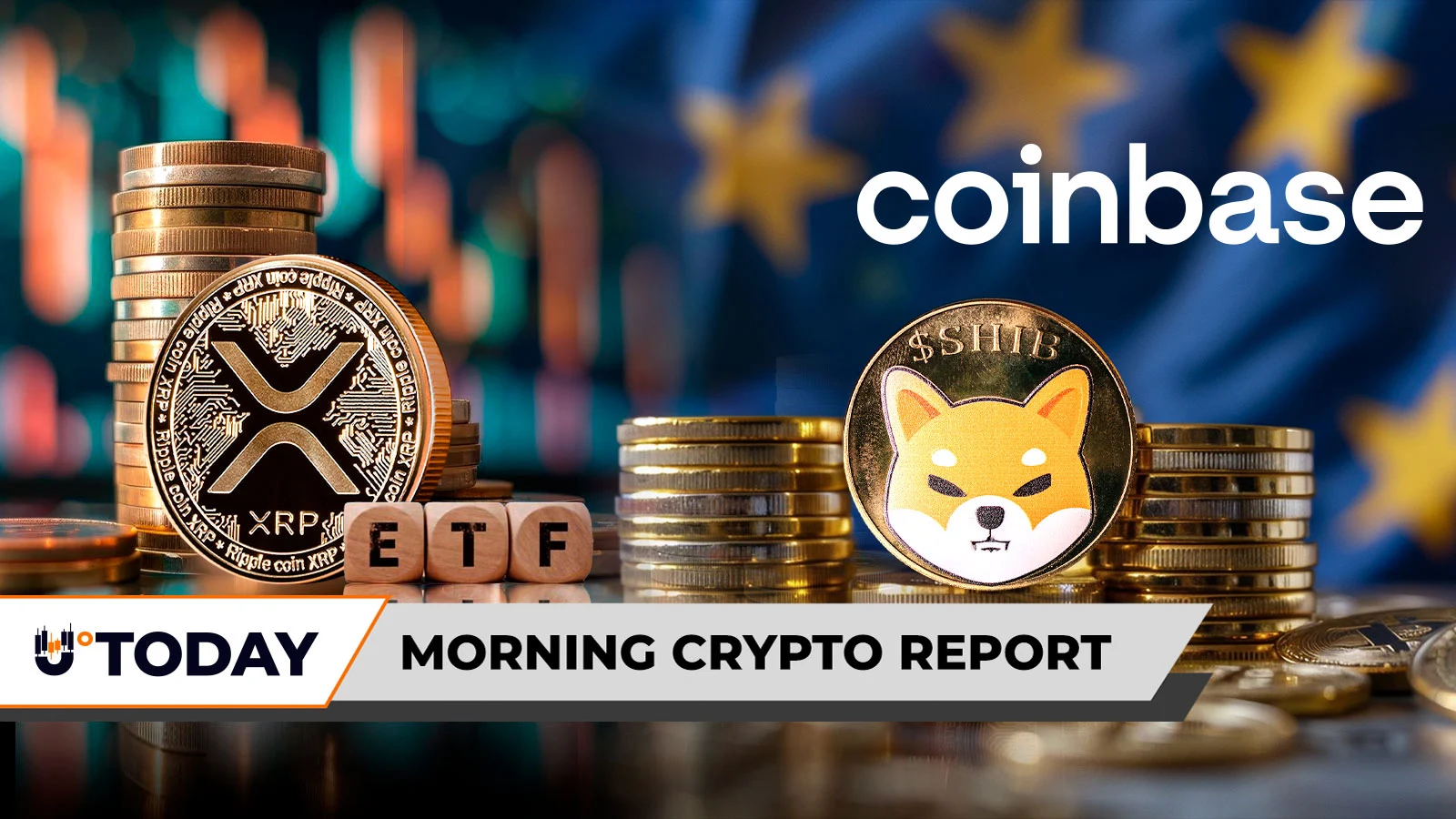
XRP experienced a significant $30.3 million outflow from institutional funds, indicating a potential shift in investor sentiment away from the asset despite broader market optimism. Coinbase's expansion of regulated futures to 26 European countries offers new trading avenues, though Shiba Inu (SHIB) futures are not included, dampening speculation for that specific asset. Dogecoin is consolidating within a descending triangle pattern, suggesting a potential 37% breakout or breakdown is imminent, contingent on broader market momentum and Bitcoin's performance. The upcoming CPI report on March 11 is a key market driver, with Bitcoin expected to trade within a $66k-$70k range until its release, influenced by ETF flows and oil market stability.
Bybit is doubling down on its Middle East operations, signaling confidence in the region's potential as a crypto hub despite geopolitical tensions. The exchange's commitment to local talent, regulatory compliance, and partnerships suggests a strategic focus on long-term growth in the MENA region. Increased crypto adoption during times of crisis, as seen in Iran, may indicate a growing demand for alternative financial systems in volatile regions.

Dogecoin has formed a golden cross, a bullish technical indicator suggesting a potential price recovery from recent lows. A significant 87.16% surge in trading volume, driven by derivatives and whale activity, supports the potential for upward price momentum. Despite positive technicals, the RSI at 40.94 indicates caution, suggesting that sustained meme coin interest is crucial for the recovery to hold. While short-term recovery signals are present, a long-term price target of $1.60 remains highly speculative and dependent on substantial market shifts.

Nasdaq's partnership with Kraken to enable tokenized equities signifies a major step towards bridging traditional finance and blockchain, potentially increasing institutional adoption of RWA. The focus on preserving issuer rights and regulatory compliance suggests a cautious, compliant approach to tokenization, which could pave the way for broader regulatory acceptance. With an expected operational launch in H1 2027, this development is a longer-term play, indicating a strategic move by major financial players into the tokenized asset space.

Bitcoin has demonstrated a notable outperformance against traditional assets like stocks and gold amidst the escalating Middle East conflict, suggesting a potential flight-to-digital-asset behavior from investors seeking uncorrelated returns. Despite geopolitical turmoil, derivative market signals such as declining open interest and negative funding rates indicate that bearish leverage is being reduced, potentially setting the stage for further price stabilization or recovery. The return of the Coinbase premium and spot ETF inflows suggest renewed institutional interest in Bitcoin, signaling that current price levels may be attractive to larger market participants after recent sell-offs.
Coinbase's expansion into regulated crypto futures trading across 26 European countries, including access to perpetual and dated contracts with up to 10x leverage, signifies a major step in its strategy to become an 'everything exchange' and could attract institutional and retail interest in derivatives within a compliant framework. The launch addresses a historical gap for European traders seeking regulated derivatives access, potentially shifting volume from offshore platforms to Coinbase's MiFID-regulated entity and increasing demand for underlying assets like BTC and ETH. This move by Coinbase into regulated derivatives in Europe, offering products on major assets and even crypto-linked equity indices, positions the exchange to capture a larger share of the European trading market and could set a precedent for other exchanges seeking to expand their offerings. The introduction of both perpetual-style and dated futures contracts, alongside leverage options, provides sophisticated trading tools that may appeal to experienced traders, potentially increasing overall market activity and liquidity on the platform.
Rising oil prices are directly impacting US stock markets, causing sell-offs due to inflation and slower growth fears. The energy sector is currently outperforming as oil prices surge, while cyclical and growth stocks are under pressure. Geopolitical tensions and their effect on oil supply are now a primary driver of market sentiment, overshadowing traditional earnings metrics for indices like the Dow Jones and S&P 500. Traders are closely monitoring key levels in the Dow Jones, S&P 500, and Brent crude to assess the potential for a deeper market downturn.
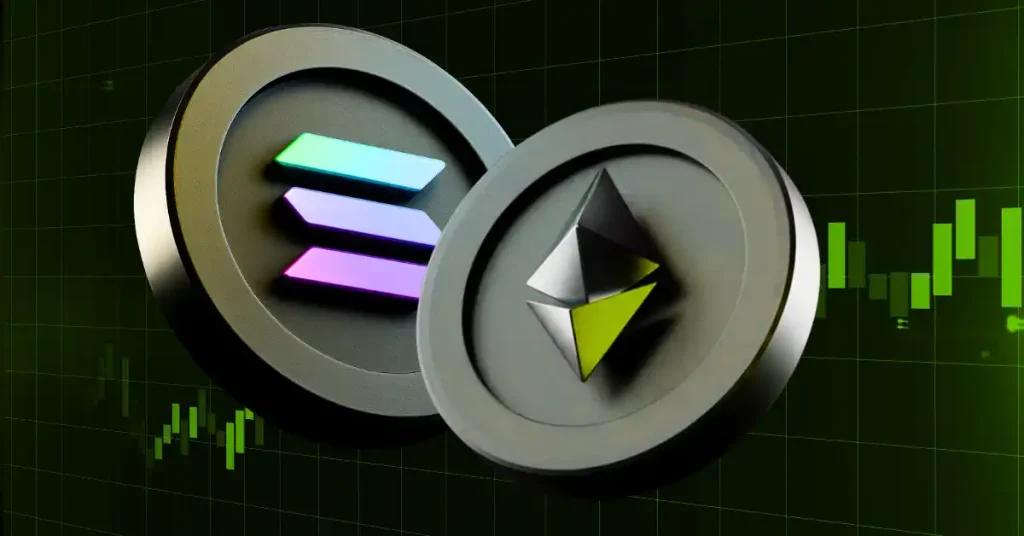
Solana briefly surpassed Ethereum in RWA holder count due to retail participation in tokenized equities, highlighting a surge in user engagement but not capital. Ethereum maintains a significant lead in RWA market capitalization ($15.16B vs. $1.71B), underscoring its dominance in institutional adoption for tokenized assets. Despite the temporary holder count lead, Solana's RWA market cap has grown 10x in a year, with significant activity in gold transfers and stablecoin volume, indicating growing infrastructure for RWA and payments. While the memecoin narrative on Solana may be cooling, the increasing adoption for RWA and payments, exemplified by Western Union's USDPT stablecoin, suggests a shift towards more fundamental utility.

Bitcoin's resilience to geopolitical turmoil and traditional market panic suggests a potential decoupling, supported by its current trading range and oversold conditions. Market makers' 'short gamma' positions at $60,000 and $75,000 indicate a risk of amplified volatility if price breaks these key levels, potentially leading to sharp directional moves. Despite broader market panic, Bitcoin's implied volatility remains stable, contrasting sharply with surging volatility in equities and oil, signaling a unique market dynamic for BTC.

Bitcoin's resilience above $67,000 despite a significant oil price shock suggests a potential market bottom, as it deviates from typical risk-off behavior. The formation of a bullish inverted hammer on the weekly BTC chart, coupled with its first positive weekly close in seven weeks, signals a possible trend reversal for Bitcoin. Persistent inflation fears driven by the oil supply shock may lead to delayed interest rate cuts, potentially tightening financial conditions and pressuring risk assets like Bitcoin in the short term.

Nasdaq's partnership with Kraken to distribute tokenized stocks globally signals a significant move towards integrating traditional finance with blockchain infrastructure. The initiative aims to streamline corporate actions like dividend payments and proxy voting, potentially increasing efficiency and accessibility for international investors. This development, alongside similar moves by ICE, suggests a growing trend of traditional financial institutions exploring tokenization to bridge TradFi and crypto markets.

Florida's passage of a stablecoin licensing bill establishes clear reserve, disclosure, and compliance rules, signaling a move towards formal regulatory oversight for payment stablecoins within the state. The legislation aligns with federal regulatory discussions, potentially creating a more predictable environment for stablecoin issuers operating in Florida and setting a precedent for other states. The requirement for issuers to maintain fully backed, liquid reserves and undergo independent audits suggests a focus on stability and investor protection, which could bolster confidence in regulated stablecoins. With key provisions set to take effect in October 2026, the bill provides a structured timeline for compliance, allowing regulators and issuers to prepare for the new framework.
Signal context only. Validate with price action, liquidity, and risk limits before taking a position.
