
Navigating Crypto News

CoinFeather
Navigating Crypto News

Quick market read from this story
MicroStrategy's substantial $1.28 billion Bitcoin acquisition, funded by stock sales, signals continued conviction in BTC as a treasury reserve asset by a major corporate entity.
The market should monitor MSTR's stock performance relative to Bitcoin's price action, as its equity now acts as a leveraged derivative on the underlying asset's volatility.
This large purchase by a prominent corporate holder reinforces the narrative of Bitcoin as a digital gold alternative, potentially attracting further institutional interest and capital inflows.
Deep Dive
MicroStrategy, led by Executive Chairman Michael Saylor, announced a significant acquisition of 17,994 bitcoin last week. The purchase was made at an average cost of $70,946 per coin, totaling $1.28 billion.
This latest purchase brings MicroStrategy's total bitcoin holdings to 738,731 BTC, acquired at an average price of $75,862 per coin. The company funded the recent acquisition primarily through the sale of common stock, raising $900 million, and an additional $377 million from the sale of its STRC preferred series of stock, as detailed in a filing on Monday.
The acquisition occurred as bitcoin is trading just below the $68,000 mark. MicroStrategy shares saw a slight increase of 0.2% in pre-market trading following the news.
Source, catalyst, and sector overlap from the latest feed.
The CoinDesk 20 Index is showing minimal movement, trading up 0.1%, indicating a lack of strong directional conviction across the top 20 crypto assets. Avalanche (AVAX) and Internet Computer (ICP) are outperforming the broader index, suggesting potential short-term strength in these specific Layer 1 protocols. With only nine out of twenty assets trading higher, the overall market breadth is weak, implying that gains are concentrated rather than widespread.
Live Feed
Loading the broader stream in the same flow as the homepage feed.
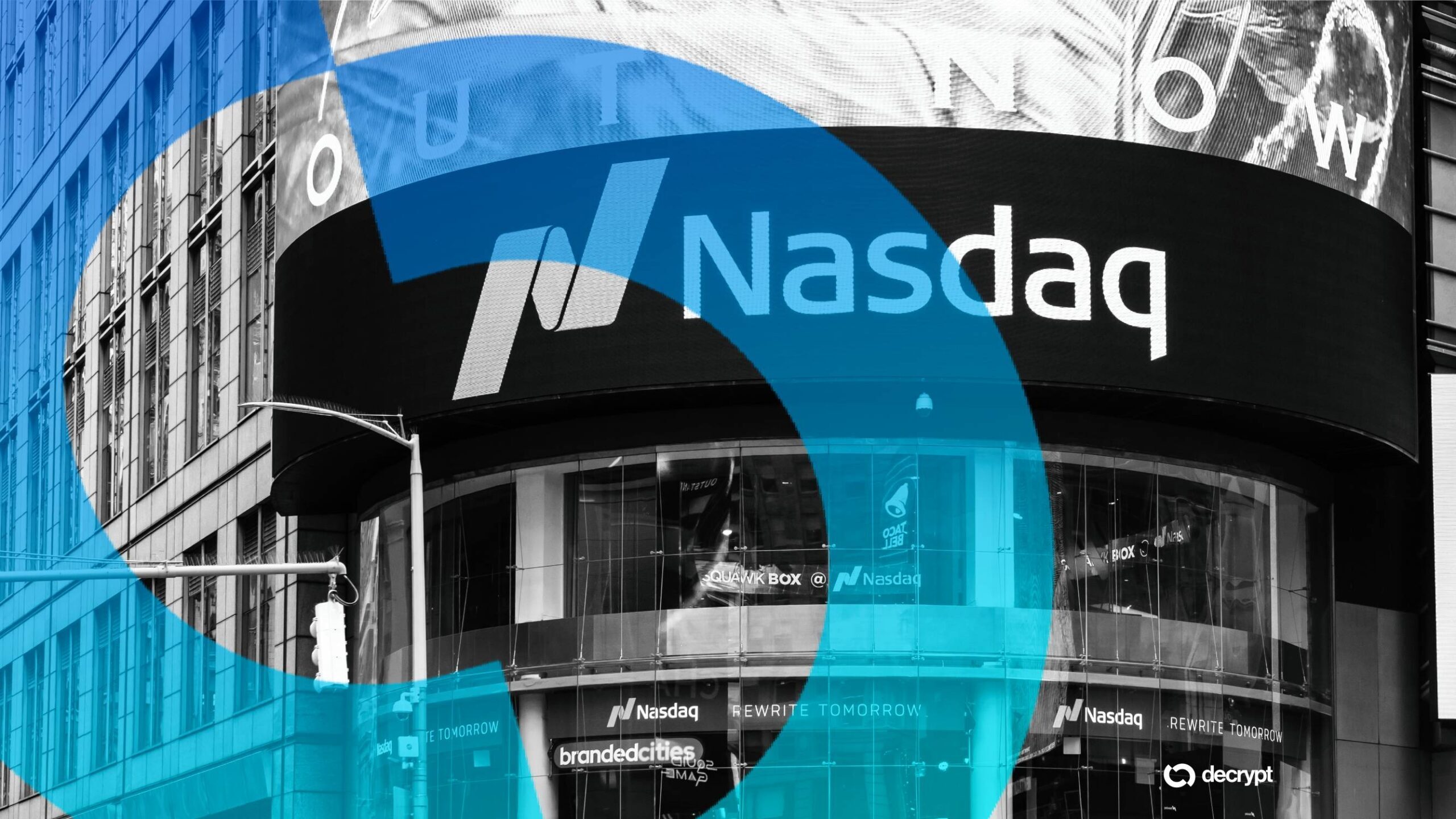
Nasdaq's partnership with Kraken's parent company, Payward, to develop tokenized equities signals a significant move towards integrating traditional finance with blockchain technology. The initiative, set to launch in 2027, aims to modernize corporate actions and shareholder engagement, potentially increasing efficiency and accessibility for tokenized stock trading. This development, alongside similar efforts from the NYSE, indicates a growing trend of established financial institutions exploring tokenization, which could impact market structure and liquidity for equities.

Bitmine's aggressive accumulation of 61,000 ETH in one week, bringing its total to nearly 4% of supply, positions it as a significant whale and potential market mover for ETH. The company's stated goal of reaching 5% ETH supply and launching its own validator network signals a long-term strategic commitment to Ethereum's staking ecosystem, potentially influencing staking yield dynamics. Despite bullish sentiment from some investors, short sellers highlight risks associated with declining staking yields post-upgrade and Bitmine's premium valuation, suggesting potential downside pressure. The market is presented with a dichotomy: Bitmine as a high-liquidity institutional proxy for ETH versus the risks of company-specific performance and potential overextension on a depreciating asset.

Significant outflows of 275 billion SHIB from exchanges suggest holders are moving assets to private wallets, potentially reducing immediate sell pressure. Despite exchange outflows, SHIB remains in a multi-month downtrend with lower highs and lows, indicating that the broader market structure has not yet shifted in favor of buyers. While on-chain data shows active circulation and a slight increase in network activity, the price action is likely to remain volatile and influenced by macroeconomic factors and Bitcoin's performance.
Bitcoin's recent price action is primarily driven by broader macro liquidity conditions and its status as a high-beta growth asset, rather than specific sector correlations like software stocks. The asset is currently testing a significant two-year high volume trading zone, which could act as a consolidation area before a potential move towards the $72K resistance level. A decisive break above the $72K resistance, supported by lighter historical volume above this zone, could lead to a smoother upward price discovery towards the low $80,000s. While correlations with equities are elevated, approximately only a quarter of Bitcoin's price movement is explained by equity factors, leaving significant room for Bitcoin-specific drivers like fund flows and network activity.

Coinbase's expansion into European futures trading, offering leverage up to 10x on BTC and ETH, signifies a strategic move to capture a larger share of the derivatives market in a key regulatory region. The launch provides European users with direct access to leveraged crypto derivatives, potentially increasing trading volume and demand for underlying assets like Bitcoin and Ethereum. This development aligns with Coinbase CEO Brian Armstrong's broader strategy to position the exchange as a disruptor in traditional finance and drive crypto adoption among institutional and retail participants in Europe.

Atlas has launched an AI-powered pipeline builder for game studios, moving from beta to global availability on Google Cloud Marketplace, signaling increased adoption of AI tools in game development. The tool automates technical aspects of game asset creation, such as texturing and optimization, aiming to enhance efficiency rather than replace human artists, addressing industry concerns about AI's role. The expansion of AI tools like Atlas AI Studio into game production workflows suggests a growing trend that could impact development cycles and the demand for specialized technical roles within studios.

Banks are adopting a dual-chain strategy for RWAs, utilizing public blockchains like Ethereum for market-facing liquidity and permissioned networks like Canton for private internal operations. The adoption of RWAs by institutions is accelerating, with projections suggesting a significant market size by 2030, driven by regulatory clarity and increased confidence in public blockchains post-Ethereum's Merge. The divergence in blockchain usage highlights a fundamental architectural debate between ZK-proofs and permissioned privacy models for institutional adoption, impacting how RWA transactions will be secured and audited. While Ethereum serves as a primary distribution layer for RWAs due to its liquidity and DeFi integration, permissioned networks are crucial for replicating traditional finance's confidentiality in settlement and internal workflows.

The ongoing delays in passing the CLARITY Act are creating regulatory uncertainty that disproportionately impacts US banks, hindering their ability to invest in digital asset infrastructure, while crypto firms continue to innovate and grow. The former CFTC Chair's assessment suggests that crypto companies are less dependent on the CLARITY Act for their operations compared to traditional financial institutions, indicating a potential shift in market leadership if regulatory clarity is not achieved. Disputes over stablecoin reward programs are stalling the CLARITY Act, with accusations that banks are holding the bill 'hostage,' which could lead to a loss of US competitiveness in the global financial ecosystem if not resolved.

Patos (PATOS) has confirmed a CEX listing price that guarantees a 108% ROI for early presale investors, signaling strong initial demand and a potential catalyst for price appreciation upon listing. The strategic appointment of 'Mark Zuckerfart' as Lead Marketing Executive has reportedly driven a 500% surge in presale activity, highlighting the impact of influencer marketing and community engagement on token sales. The project's positioning on the Solana blockchain, combined with confirmed CEX listings and early dApp development, suggests a focus on utility and liquidity that could differentiate it from typical meme coin volatility.

Strategy's significant Bitcoin accumulation of 17,994 BTC for $1.28 billion demonstrates continued conviction in BTC despite recent price action below their average cost basis. The purchase, executed at an average of $70,946, highlights a strategic decision to accumulate during a period of price consolidation, potentially positioning for future upside. This large acquisition by a major institutional player reinforces Bitcoin's role as a treasury reserve asset and signals sustained demand from significant market participants.

XRP faces persistent selling pressure, consolidating below key resistance at $1.50 and struggling to hold the $1.35 level, indicating a bearish market structure with potential downside risk towards $1. On-chain data shows a significant increase in XRP tokens held at a loss, suggesting that a large portion of holders are underwater, which could lead to selling pressure during any short-term price recovery. Technically, XRP is trading within a descending channel, with immediate support at $1.32 and a critical breakdown target at $1.10, while the $1.50-$1.55 zone remains a significant resistance hurdle for bulls. While MACD shows a potential slowing of selling momentum, the RSI remains neutral, reinforcing the current consolidation phase and the need for XRP to break key resistance levels to signal a trend reversal.
Signal context only. Validate with price action, liquidity, and risk limits before taking a position.
Tech investor Imran Khan, formerly of Snap and Credit Suisse, explicitly separates crypto from his AI investment thesis, viewing them as distinct asset classes with different drivers. Despite the separation, Khan's firm Proem Asset Management holds indirect exposure to crypto via equities like Coinbase and Robinhood, and a spot Bitcoin ETF (IBIT), indicating a broader tech sector interest beyond pure AI productivity. The commentary highlights a divergence in market perception, with some investors seeing AI and crypto convergence while key figures like Khan emphasize their fundamental differences in investment rationale. The discussion on AI's potential impact on jobs and the economy, and historical parallels to past technological revolutions, provides context for Khan's cautious but not entirely dismissive stance on emerging technologies.
