
Navigating Crypto News

CoinFeather
Navigating Crypto News

Quick market read from this story
SUI price is consolidating near a critical $0.85 support level, with a successful defense potentially paving the way for a retest of the $1.00-$1.05 resistance zone.
A breakdown below the $0.85 support could signal a deeper correction towards the $0.60 level, indicating a shift in market sentiment and potential downside risk.
Momentum indicators suggest weakening bearish control as SUI price compresses, but a confirmed breakout above resistance is needed to validate a bullish reversal.
Deep Dive
The SUI crypto price is currently consolidating near a critical support level around $0.85, with analysts closely monitoring its reaction to determine its next significant move. The cryptocurrency is trading at approximately $0.8893, supported by a market capitalization of $3.46 billion and a 24-hour trading volume of $272.66 million. This consolidation phase is crucial as it could signal the continuation of a potential wave 2 correction or a precursor to a recovery towards higher resistance levels.
Analysts identify the primary support zone for SUI between $0.815 and $0.837, with a more immediate micro support band ranging from $0.85 to $0.899. The price has been testing the upper boundary of this tighter zone, making the upcoming trading sessions pivotal. A positive reaction from this region could validate the current structure, suggesting the ongoing correction is maturing. Conversely, a failure to stabilize above these levels would weaken this outlook, potentially leading to a deeper decline towards $0.60.
For SUI to initiate a recovery, it must first defend its current support levels. The immediate upside target is the $1.00 mark, followed by a more significant resistance area between $1.01 and $1.05. Analyst commentary suggests that stabilization near $0.89, following repeated consolidation, could serve as a base for a rebound. Momentum indicators, including the RSI in the low-40s and a slightly positive MACD, indicate weakening but improving momentum. This suggests that while bears may be losing some control as the price compresses, a breakout is not yet guaranteed. Bears remain in play if SUI experiences a sustained break below $0.85, which could shift focus back to the $0.815-$0.837 region and potentially lower targets.
The overall prediction for SUI price remains range-bound, with the defense of support and trading volume being key factors in determining if buyers can challenge the $1.00 resistance level.
Source, catalyst, and sector overlap from the latest feed.
Ripple's payment network processing over $100 billion and its RLUSD stablecoin reaching $1 billion market cap signifies significant adoption and utility growth, potentially increasing demand for XRP as a settlement asset. The article highlights historical XRP price patterns correlating with the 100 EMA, suggesting potential accumulation zones and future upside targets between $6-$9 and $20-$25 if broader market conditions improve. Increased institutional interest in blockchain settlement solutions, coupled with Ripple's expanding payment infrastructure, could drive demand for XRP as a bridge currency for cross-border transactions.
Sonic Labs' launch of the USSD stablecoin, backed by tokenized Treasuries, aims to inject much-needed liquidity into its Layer 1 network which has seen a significant decline in activity and total value locked. The USSD stablecoin's integration with Frax's frxUSD infrastructure and its backing by established products like BlackRock's BUIDL and WisdomTree's WTGXX signal a strategic move to leverage real-world asset yield for on-chain utility. By providing a native, permissionless stablecoin, Sonic Labs seeks to reduce fragmentation and simplify capital inflow, potentially revitalizing user activity and developer adoption on the platform. Despite the launch, Sonic faces a challenging market reality with its native token (S) trading significantly below its all-time high, indicating that the stablecoin's success will depend heavily on its ability to drive tangible ecosystem growth.
Nasdaq and Kraken's collaboration signals a significant step towards integrating traditional equities with blockchain technology, potentially expanding market access for global investors. The partnership aims to preserve issuer rights and shareholder protections within a regulated framework, addressing key concerns for institutional adoption of tokenized stocks. The planned 2027 operational launch suggests a long-term strategic play, indicating that tokenized equities are moving beyond experimentation towards becoming a core component of market infrastructure. This development could pave the way for 24/7 trading of equities and ETFs, fundamentally altering traditional market hours and accessibility for international participants.
Bitcoin has reached a significant supply milestone with 20 million coins mined, leaving only 1 million remaining, which could increase scarcity and support price appreciation. Despite macro headwinds and extreme fear sentiment, BTC price is rallying towards $70,000, driven by substantial whale accumulation and a significant drop in exchange reserves. While some analysts predict further upside, others foresee a potential drop, and a contrarian view from Terence Howard predicting Bitcoin's collapse highlights the current market uncertainty and divergence of opinions. The recent surge in whale activity and BTC moving off exchanges suggests a short-term bullish outlook from large holders, potentially signaling a recovery phase despite broader market fear.
Ethereum's price is approaching key resistance levels above $2,000, with record leverage indicating aggressive speculative positioning by traders. High leverage and concentrated short liquidations near $2,030 suggest a potential for accelerated price swings due to cascading liquidations if resistance breaks. Increased derivatives activity and leverage, while signaling potential volatility, do not necessarily translate to sustained spot demand, warranting caution. The current market structure, characterized by elevated leverage and proximity to resistance, creates a volatile setup where a breakout could be amplified by short squeezes.
As Bitcoin approaches 95% supply mined, its price dynamics will increasingly shift from new issuance to demand-side factors and holder behavior. The diminishing new supply amplifies scarcity, potentially leading to more rapid price accelerations during demand surges and sharper downturns if holders sell into weak demand. Miners' role as a consistent selling pressure source will decrease, making Bitcoin's price movements more sensitive to macroeconomic cycles and global capital flows. The primary question for investors shifts from new supply to understanding the motivations of existing large holders and their willingness to sell.
Easing fears of an oil supply shock have improved broader market risk sentiment, directly benefiting Bitcoin's price and pushing it above $71,000. Bitcoin's recent resilience and potential decoupling from software stocks suggest it may be trading more independently, offering a potential hedge during macro uncertainty. Despite positive price action, analysts remain cautiously optimistic, noting that a failure to hold mid-$60,000 support could lead to further downside, indicating continued market fragility. The article highlights a shift in Bitcoin's correlation with tech stocks, suggesting a potential move towards a more uncorrelated asset class, which could be significant for portfolio diversification strategies.
Canaan's decision to accumulate record BTC and ETH reserves, while expanding operations, signals a contrarian bullish stance on long-term value despite current miner margin pressures. The company's strategy diverges from peers who are selling reserves to manage costs, suggesting a belief in future price appreciation or a stronger financial position. This accumulation by a major miner could be interpreted as a positive signal for the underlying value of Bitcoin and Ethereum, potentially influencing market sentiment.
Bitcoin's recent price surge mirrors stock market gains, but faces significant resistance at the 50-day moving average around $73,500, suggesting a potential short-term pullback. Analysts highlight the importance of liquidity conditions and liquidation clusters near $68,000, indicating that a sweep of these levels could precede further price discovery. Despite geopolitical tensions easing slightly, the market remains sensitive to macroeconomic factors and technical resistance, creating a cautious outlook for immediate upside.
Ripple is aggressively retooling the XRP Ledger into a comprehensive institutional-grade DeFi platform, integrating native lending, AMMs, and KYC-compliant trading to move beyond its initial payments focus. The significant growth in tokenized assets to $2.3 billion and the RLUSD stablecoin's market cap to $1.59 billion, alongside $1.24 billion in XRP ETF inflows, signals increasing institutional adoption and demand for XRPL-based financial products. While XRPL's TVL remains modest, the ongoing infrastructure build-out, including an upcoming EVM-compatible sidechain and privacy features, positions it as a potential competitor in the institutional DeFi space, supported by partnerships with major banks like Deutsche Bank and Société Générale. Regulatory clarity from the SEC settlement has removed a key overhang, potentially unlocking further institutional confidence and driving adoption, though the ultimate success hinges on translating these developments into substantial settlement volume.
Live Feed
Loading the broader stream in the same flow as the homepage feed.

Arthur Hayes predicts Hyperliquid's HYPE token could reach $150 by August, driven by increasing derivatives volume rotation from CEXs and demand for macro-linked perpetuals. The platform's revenue model, which uses approximately 97% of revenue to buy back HYPE tokens, creates a direct demand driver that could support price appreciation if trading activity continues to grow. Hyperliquid's success in attracting volume for non-crypto assets like oil via its HIP-3 protocol suggests a potential expansion of its market reach beyond traditional crypto derivatives. Technical analysis indicates a potential breakout for HYPE towards $50, supported by a cup-and-handle pattern, suggesting near-term upside if key resistance levels are breached.

Ripple's strategic focus on Turkey, Nigeria, and the UAE for its new stablecoin RLUSD highlights significant regional demand for digital dollar alternatives. The identified markets represent key growth areas for stablecoin adoption, driven by currency volatility in Turkey, remittance needs in Nigeria, and institutional adoption in the UAE. RLUSD's positioning as a tool for capital protection and efficient cross-border payments suggests a strategic move to capture substantial market share in these emerging economies.

BlockDAG's upcoming 10-15 exchange listings, including futures markets, represent a significant structural catalyst that could drive substantial demand and price appreciation. The current After Sale price of $0.001 offers a unique early entry opportunity, positioning buyers ahead of millions of new users expected to access the asset post-listing. The After Sale window is directly tied to the completion of the build-out phase and exchange rollout, closing in June when community deposits open, creating a defined timeframe for this early entry opportunity. The cumulative effect of multiple exchange listings and the introduction of futures trading is expected to transform BlockDAG's market access and liquidity, fundamentally altering its trading landscape.
Yes Bank's share price is showing a slight recovery as a significant portion of executives involved in an insider trading probe opt for settlement, reducing immediate legal overhang. The settlement by 16 out of 19 executives in the SEBI insider trading probe suggests a move towards resolving past allegations, potentially improving investor sentiment towards Yes Bank. While the settlement offers a path to closure for the insider trading allegations, the fact that three executives are challenging the claims indicates lingering uncertainty for Yes Bank.

CFTC Chairman Mike Selig's emphasis on regulatory clarity for DeFi, prediction markets, and crypto derivatives signals a proactive stance from U.S. regulators, potentially reducing uncertainty for market participants and fostering innovation. The CFTC's intention to clarify registration requirements for software providers in DeFi and address leveraged spot trading indicates a move towards defining operational boundaries, which could impact how decentralized platforms and trading services are structured and regulated. Selig's collaboration with the SEC on 'Project Crypto' and his assertion of CFTC authority over prediction markets suggest a coordinated regulatory approach, aiming to establish clear jurisdiction and prevent regulatory arbitrage. The mention of AI and automated trading systems highlights the evolving landscape and the CFTC's awareness of new technological drivers, indicating a forward-looking regulatory agenda that may influence future market structures.

Polymarket's partnership with Palantir to develop surveillance systems for sports prediction markets signals a proactive approach to regulatory compliance and market integrity. The initiative, leveraging Palantir's AI capabilities, aims to identify insider trading and manipulation, potentially mitigating risks that have drawn lawmaker scrutiny. This development could set a precedent for other prediction markets to enhance their self-policing mechanisms, especially as regulatory pressure increases.

Nasdaq is advancing a new model for tokenized equities that aims to grant tokens direct legal equivalence to shares, including voting and governance rights, distinguishing it from existing 'rights-light' wrapper models. The SEC's recent guidance clarifies the distinction between issuer-sponsored and third-party tokenized securities, favoring the former and setting a precedent for Nasdaq's approach. While 'rights-light' products like Kraken's xStocks have seen significant trading volume ($25B+), Nasdaq's strategy targets institutional adoption by prioritizing legal equivalence and issuer control, potentially reshaping the market for tokenized assets. The development signals a strategic move by traditional finance infrastructure providers like Nasdaq to integrate blockchain technology while retaining control over ownership records and corporate actions, aiming to capture value in the evolving tokenized asset landscape.

Vitalik Buterin's 'DVT-lite' initiative aims to simplify Ethereum validator setup, potentially lowering barriers for institutional staking and enhancing network decentralization. The development addresses complexity in current DVT systems, which has historically favored large staking providers, by proposing a near one-click setup for distributed validators. Successful adoption of DVT-lite could lead to a broader distribution of staking power, reducing centralization risks and potentially increasing ETH staking participation.

Bitcoin is consolidating near $71,000, influenced by geopolitical tensions regarding Iran and a significant drop in expected Federal Reserve rate cuts, creating market uncertainty. The collapse of Fed rate cut expectations to near zero suggests a prolonged period of higher interest rates, which typically dampens speculative asset appetite and limits upside potential for Bitcoin. Geopolitical rhetoric concerning the Strait of Hormuz is failing to significantly impact oil prices, indicating that current market pricing may not fully reflect a major supply disruption risk, which in turn limits Bitcoin's safe-haven narrative strength. Derivatives market data shows significant liquidation zones above and below the current price, suggesting that short-term price action is likely to remain range-bound as liquidity is swept in both directions.

Solana ETFs are attracting significant institutional capital, with 49% of assets identified via 13F filings, indicating a strong preference from crypto-native investment firms and market makers despite recent token price declines. XRP ETFs show a contrasting investor profile, with only 16% of assets identifiable through 13F filings, suggesting a larger reliance on retail investors for demand and asset stability. The differing investor bases for Solana and XRP ETFs highlight evolving market dynamics, with Solana drawing more industry-specific institutional flows and XRP appealing more directly to retail sentiment.

Hyperliquid's HYPE token demonstrates significant strength, outperforming major altcoins due to its growing dominance in non-crypto derivatives trading, particularly oil perpetuals. The platform's upcoming portfolio margin upgrade signals a move towards supporting larger positions and reducing liquidation risk, potentially attracting more institutional or sophisticated traders. Hyperliquid's strategic pivot towards commodities and equities, with only a minority of its top markets being crypto, indicates a diversification strategy that could broaden its appeal beyond the traditional crypto user base. The substantial volume and open interest in tokenized oil on Hyperliquid highlight a significant trend of non-crypto assets finding liquidity on decentralized exchanges, suggesting a potential new avenue for market growth.

Republican opposition to a US CBDC is creating legislative hurdles, potentially delaying a bipartisan housing affordability bill. The political standoff highlights a growing divide on digital currency policy, with privacy concerns being a primary driver for the opposition. This development elevates the CBDC debate from a niche technical discussion to a significant political bargaining chip, impacting future regulatory clarity. The linkage of CBDC policy to unrelated legislation like the housing bill suggests a strategic maneuver that could influence broader crypto regulatory discussions.
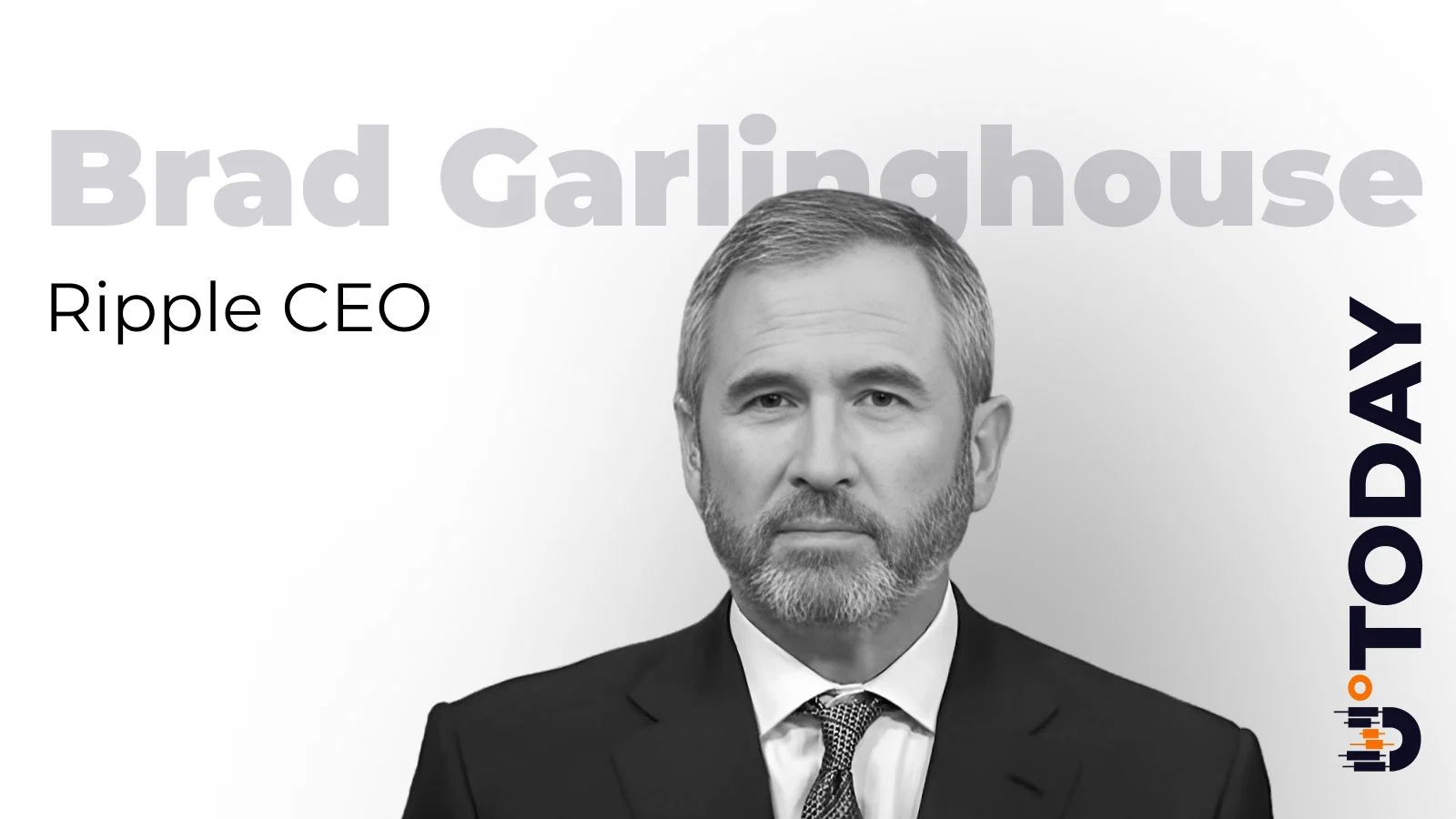
Ripple CEO Brad Garlinghouse has positioned 2026 as a pivotal year, signaling aggressive expansion and AI integration to bolster its enterprise blockchain solutions. The company's global pivot, evidenced by recent international tours and acquisitions, suggests a strategic move to diversify operations beyond traditional US markets. Garlinghouse explicitly states XRP is central to Ripple's growth strategy, implying potential positive correlation between Ripple's business development and XRP's market performance.
RLUSD has achieved a $1 billion market capitalization less than a year after its launch, signaling strong adoption and demand for regulated stablecoins in cross-border payments. The 733% surge in stablecoin usage for cross-border B2B payments to $226 billion highlights a significant shift towards digital assets for international settlements, driven by reduced FX costs and increased efficiency. Ripple's recent burn of nearly $1 million RLUSD on Ethereum demonstrates a proactive supply management strategy aimed at increasing scarcity and potentially driving token value, a key factor for its growth.
XRP has formed a golden cross on its hourly chart, indicating a potential short-term bullish trend that could lead to a retest of the $2 resistance level. While the hourly golden cross is a positive signal, the lack of confirmation on the daily chart suggests caution is warranted, making this a watchlist scenario rather than an immediate buy signal. The broader altcoin market sentiment shift and potential Bitcoin breakout could provide tailwinds for XRP, but its unique value proposition remains a key driver for potential upside.
Signal context only. Validate with price action, liquidity, and risk limits before taking a position.
