
Navigating Crypto News

CoinFeather
Navigating Crypto News
Quick market read from this story
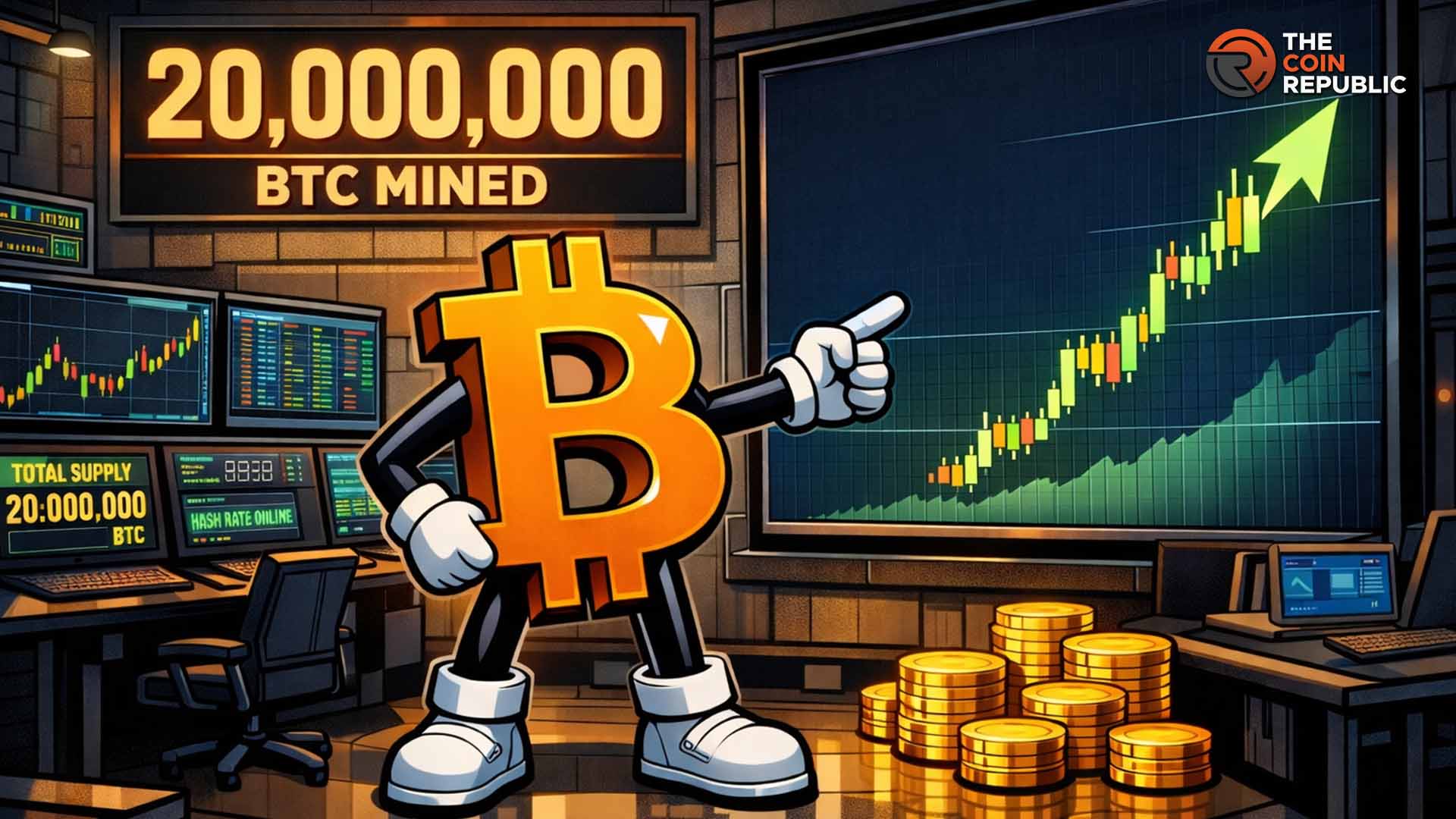
Bitcoin has reached a significant supply milestone with 20 million coins mined, leaving only 1 million remaining, which could increase scarcity and support price appreciation.
Despite macro headwinds and extreme fear sentiment, BTC price is rallying towards $70,000, driven by substantial whale accumulation and a significant drop in exchange reserves.
While some analysts predict further upside, others foresee a potential drop, and a contrarian view from Terence Howard predicting Bitcoin's collapse highlights the current market uncertainty and divergence of opinions.
The recent surge in whale activity and BTC moving off exchanges suggests a short-term bullish outlook from large holders, potentially signaling a recovery phase despite broader market fear.
Deep Dive
Bitcoin has achieved a significant supply milestone, with only 1 million coins remaining to be mined before reaching its hard cap of 21 million. This development, coupled with a surprising resurgence in whale activity and a notable drop in exchange reserves, has contributed to a recent price rally, pushing BTC towards the $70,000 mark despite prevailing macro headwinds and extreme market fear.
The cryptocurrency's supply has now surpassed 20 million coins, a landmark event that underscores its increasing scarcity. In line with this, Bitcoin's availability on exchanges has seen a substantial decrease, with over 54,000 BTC withdrawn since February 24th. This reduction in readily available supply is seen as a potential driver for increased value.
Contrary to expectations during a period of extreme market fear, indicated by the Crypto Fear and Greed Index dropping to 8 points, Bitcoin demand has surged. On-chain data from CoinGlass reveals significant whale involvement, with large orderbook flows showing increased inflows into whale addresses. Over the past two days, whales acquired approximately $24.5 million in BTC on Binance spot and about $1.19 million on Coinbase spot. Furthermore, they executed around $368 million in long positions on derivative segments of these exchanges. This accumulation signals a short-term recovery expectation from large holders, even amidst a bearish sentiment.
The future price trajectory of Bitcoin remains a subject of debate among analysts and market participants. While some Polymarket traders anticipate a rise towards $75,000, others are forecasting a decline to $65,000 or lower. Adding to the discourse, actor Terrence Howard recently predicted Bitcoin's collapse, citing its ties to fiat currency. However, proponents argue that Bitcoin's inherent scarcity, further amplified by declining exchange reserves, makes it more attractive than traditional assets like gold and silver. Historically, periods of extreme bearish sentiment have often preceded price recoveries in the crypto market.
Source, catalyst, and sector overlap from the latest feed.
Nasdaq and Kraken's collaboration signals a significant step towards integrating traditional equities with blockchain technology, potentially expanding market access for global investors. The partnership aims to preserve issuer rights and shareholder protections within a regulated framework, addressing key concerns for institutional adoption of tokenized stocks. The planned 2027 operational launch suggests a long-term strategic play, indicating that tokenized equities are moving beyond experimentation towards becoming a core component of market infrastructure. This development could pave the way for 24/7 trading of equities and ETFs, fundamentally altering traditional market hours and accessibility for international participants.
Ethereum's price is approaching key resistance levels above $2,000, with record leverage indicating aggressive speculative positioning by traders. High leverage and concentrated short liquidations near $2,030 suggest a potential for accelerated price swings due to cascading liquidations if resistance breaks. Increased derivatives activity and leverage, while signaling potential volatility, do not necessarily translate to sustained spot demand, warranting caution. The current market structure, characterized by elevated leverage and proximity to resistance, creates a volatile setup where a breakout could be amplified by short squeezes.
South Korean regulators are intensifying AML and KYC enforcement, signaling a stricter operating environment for domestic crypto exchanges. Bithumb's potential six-month partial business suspension, primarily affecting new user withdrawals, highlights the direct impact of regulatory compliance failures on exchange operations. The ongoing scrutiny of Bithumb, Coinone, and GOPAX indicates a broader trend of regulatory review across major South Korean crypto platforms, potentially impacting market liquidity and user confidence.
Despite geopolitical fears and rising oil prices, crypto ETPs saw significant inflows totaling $619 million, indicating persistent institutional demand for regulated digital asset exposure. Bitcoin ETPs led the inflows with $521 million, while Ether and Solana also attracted capital, suggesting a continued preference for established large-cap cryptocurrencies among investors. Investor sentiment weakened late in the week due to rising oil prices and inflation concerns, leading to substantial outflows on Thursday and Friday, highlighting the market's sensitivity to macro-economic shifts. While overall ETP flows turned positive year-to-date for Bitcoin, Ether remains in cumulative outflow territory, reflecting divergent investor conviction across major digital assets.
Coinbase's expansion into regulated futures trading in Europe diversifies its revenue streams beyond spot trading and could attract institutional capital seeking regulated derivatives access. The launch of futures trading in 26 European countries positions Coinbase to compete more directly with established derivatives providers and signals a strategic move towards becoming an 'Everything Exchange'. While the expansion is a positive development for Coinbase and its stock (COIN), it faces significant competition from both crypto-native exchanges and traditional finance players, potentially limiting immediate upside.
The Royal Government of Bhutan has moved 175 BTC, adding to its $42 million in total government transfers this year, indicating a consistent strategy of managing liquidity by periodically selling portions of its Bitcoin reserves. Bhutan's ongoing Bitcoin sales, managed by Druk Holding & Investments, highlight its role as a significant sovereign holder and its use of mining revenue to build and manage digital assets, suggesting a long-term strategic approach to its holdings. Despite the government's BTC transfer, Bitcoin price reclaimed $71,000, supported by broader market sentiment influenced by geopolitical comments and positive on-chain indicators like rising futures open interest and buy-side activity in perpetual contracts.
The significant decline in Bitcoin exchange balances to an all-time low suggests a strong investor preference for self-custody, potentially leading to a supply shock as fewer BTC are available for trading. With only one million Bitcoins remaining to be mined, the combination of reduced exchange supply and diminishing new supply could create upward price pressure if demand remains constant or increases. Robert Kiyosaki's repeated calls to accumulate Bitcoin and Ethereum alongside gold and silver, amidst warnings of a major market crash in 2026, reinforce a narrative of these assets as hedges against traditional financial system instability.
The milestone of 95% of all Bitcoin mined signifies a critical juncture where the diminishing new supply rate intensifies the scarcity narrative, potentially supporting long-term holder value. Shrinking block subsidies are forcing miners to diversify into AI and high-performance computing, creating a strategic shift that could impact network security if transaction fees do not adequately compensate for reduced block rewards. The debate over Bitcoin's long-term security model, driven by declining subsidies and potentially insufficient transaction fees, highlights a structural challenge that could affect the entire crypto ecosystem if not resolved.
Strategy (MSTR) executed a record STRC equity issuance, generating approximately $300 million in volume to fund its bitcoin accumulation strategy. The company amended its sales agreement to allow multiple agents for STRC sales, potentially increasing the efficiency and volume of future equity issuances used for bitcoin purchases. The estimated purchase of 1,420 BTC from Monday's activity reinforces Strategy's ongoing commitment to expanding its bitcoin holdings, signaling continued demand from a major corporate accumulator. STRC's recent dividend rate increase to 11.5% and its description as a high-yield instrument may attract investor interest, indirectly supporting MSTR's ability to fund bitcoin acquisitions.
Hyperliquid's HYPE token is experiencing a significant price surge driven by increased derivatives trading volume, particularly for hedging macro risks like oil prices. The platform's fee structure, which includes HYPE token buybacks and burns, is enhancing its value proposition as derivatives activity grows. Analysts are observing bullish technical indicators for HYPE, with potential upside targets identified if key resistance levels are breached, suggesting a positive near-term outlook. Hyperliquid is evolving beyond a typical DeFi derivatives venue, attracting traders for real-world asset exposure and macro hedging, indicating broader utility and potential for sustained growth.
Aggressive leveraged long positions on Hyperliquid indicate strong conviction from whales that Bitcoin will surpass $75,000, potentially accelerating a rally if resistance breaks. The concentration of large, leveraged bets on BTC and ETH suggests a potential for significant price swings, with a break above $75,000 acting as a key catalyst for further upside or a sharp reversal if conviction fails. While major players are bullish on BTC and ETH, a separate trader is taking bearish positions on select altcoins and oil, highlighting divergent market sentiment and potential sector rotation.
Significant accumulation of nearly 600,000 BTC occurred as prices dipped below $70,000, indicating strong demand from traders during the recent correction. The dense ownership cluster formed in the $60,000-$70,000 range suggests this price band could act as a crucial support level for Bitcoin moving forward. With approximately 8% of circulating supply acquired in this range, the $60,000-$70,000 zone represents a key area of interest for market participants monitoring support levels.
XRP's Bollinger Bands are tightening, suggesting a potential breakout towards the $2 level, which aligns with its 200-day moving average, indicating a possible bullish technical setup. Bitcoin experienced a significant short squeeze, liquidating over $100 million in bear positions and pushing the price towards $71,000, highlighting derivative market dynamics influencing price action. A large transfer of 494 billion SHIB to Cumberland DRW suggests accumulation by major market makers, signaling potential underlying demand despite short-term price inaction. Upcoming CPI data and Federal Reserve decisions are key events that could influence market sentiment and positioning for major assets like Bitcoin and XRP.
Ethereum's 'ultrasound money' narrative is being questioned as ETH has underperformed BTC by 65% since the PoS transition, driven by lower transaction fees and L2 activity weakening deflationary pressures. Investors are favoring Bitcoin's predictable fixed supply over Ethereum's evolving monetary policy, as evidenced by the significant disparity in US ETF holdings and ETH's failure to decisively break previous all-time highs. The shift of activity to Layer-2 solutions, while improving scalability, has reduced mainnet burn rates, undermining the core tenet of ETH becoming scarcer than BTC. Concerns about insider selling, highlighted by Vitalik Buterin's and the Ethereum Foundation's ETH sales, coupled with short-seller reports, are pressuring sentiment and questioning long-term conviction in ETH.
Live Feed
Loading the broader stream in the same flow as the homepage feed.
Dixon Technologies' stock price surge follows regulatory approval for a joint venture with HKC Overseas, signaling a strategic expansion into display technology manufacturing for consumer electronics. The JV, with Dixon holding a 74% stake, aims to produce LCD and TFT-LCD modules, positioning the company to capitalize on growing demand for displays in smartphones, TVs, and laptops. This development represents a significant step for Dixon in enhancing its manufacturing capabilities and potentially capturing a larger share of the electronics supply chain, which could lead to sustained revenue growth.
Anthropic's lawsuit against the Pentagon over a 'supply chain risk' label highlights a critical tension between AI safety guardrails and national security requirements, potentially impacting future government AI procurement. The Pentagon's classification of Anthropic as a supply chain risk, leading to a lawsuit, signals increased scrutiny on AI providers for defense contracts and could set a precedent for how AI companies manage their technology's use in sensitive applications. The legal challenge by Anthropic, stemming from a Pentagon decision to block its AI use in defense projects due to safety restrictions, could influence regulatory approaches to AI deployment in government and military contexts.

The cooling of geopolitical tensions related to Iran has led to a risk-on sentiment, driving Bitcoin above $70,000 and boosting other major cryptocurrencies. The expansion of stablecoin market capitalization, particularly for USDC and USDT, suggests increasing liquidity available for potential crypto asset purchases. Despite the broader rally, the negative Coinbase Premium Index indicates lagging demand from U.S. investors, which historically has been a key driver of bull runs. A pullback in oil prices and Treasury yields, alongside a weaker dollar, provides a supportive macro environment for risk assets like cryptocurrencies.

Nvidia CEO Jensen Huang's framework positions AI as a massive industrial buildout requiring trillions in infrastructure, directly countering job destruction narratives and highlighting energy as a critical constraint. The emphasis on AI infrastructure as an "industrial buildout" suggests a long-term structural demand for hardware, energy, and skilled labor, potentially benefiting companies involved in these sectors. Huang's argument that AI productivity creates capacity and growth, using radiology as an example, implies that AI adoption may lead to market expansion rather than pure displacement. The acknowledgment of open-source models accelerating adoption and demand for underlying infrastructure reinforces the symbiotic relationship between open innovation and hardware/energy providers like Nvidia.

Hyperliquid's upcoming portfolio margin feature enhances capital efficiency for seasoned traders, potentially increasing trading volume and leverage utilization on the platform. The introduction of portfolio margin, coupled with specific asset caps and user limits, aims to balance increased leverage with risk management, signaling a maturing approach to decentralized derivatives trading. This upgrade could attract more sophisticated traders seeking to optimize their capital deployment, especially for complex strategies, thereby strengthening Hyperliquid's position as a venue for active participants.

Winklevoss twins transferring $130M in BTC to Gemini hot wallets, flagged by Arkham as a potential sell signal, introduces near-term selling pressure risk for Bitcoin. While Arkham suggests a sell intention, the transfer to their own exchange's hot wallets could also indicate preparations for OTC trades, liquidity provision, or custody rebalancing, leaving the immediate market impact uncertain. Despite the transfer, the Winklevosses retain significant BTC holdings ($764M), suggesting this move may not represent a full divestment but rather a strategic reallocation or liquidity management action.
The growing popularity of gold-backed cryptocurrencies highlights a trend towards tokenizing real-world assets (RWA) as investors seek stability amidst crypto market volatility. Gold-backed tokens offer a blend of traditional asset stability with blockchain's liquidity and transparency, appealing to both crypto natives and traditional investors. Projects like PAXG, XAUT, and KAU are leading the market by offering 1:1 backing with physical gold, regulatory compliance, and unique features like yield generation or fractional ownership. The increasing adoption of gold-backed cryptocurrencies signals a maturing crypto market that is integrating more traditional financial instruments and assets.

Geopolitical de-escalation signals, as indicated by Trump's comments on the Iran conflict, are driving a risk-on sentiment, leading to a rally in Bitcoin and other crypto assets as the US Dollar Index (DXY) weakens. Despite the short-term rally, Bitcoin remains in a broader downtrend, requiring a sustained move towards $98,000 with established support levels to signal a trend reversal. Increased open interest in BTC and ETH futures, coupled with positive funding rates across most tokens, suggests renewed capital inflows and a predominantly bullish outlook among traders, though protective puts remain pricier than calls. The market is pricing out uncertainty related to geopolitical events, as evidenced by the drop in BTC and ETH implied volatility, but significant volatility could still emerge on a BTC price move above $75,000.

Veteran trader Peter Brandt's identification of a 'Banana Split' pattern on Bitcoin's chart, coupled with historically low exchange reserves, suggests a potential for significant upward price movement. The record low Bitcoin reserves on exchanges indicates a strong trend of investors moving assets off-platform for long-term holding, reducing immediate sell pressure and potentially amplifying price rallies. With over 95% of Bitcoin's total supply already mined, the increasing scarcity combined with bullish technical signals could attract further capital inflow, supporting a sustained upward trajectory.

CFTC Chair Selig is shifting regulatory focus from enforcement to a 'minimum effective dose' model, aiming to foster domestic crypto innovation by providing clearer frameworks for derivatives and tokenized assets. A joint CFTC-SEC initiative to establish a unified taxonomy for digital assets and regulate perpetual futures could significantly clarify jurisdictional ambiguities and bring offshore products into US regulatory oversight. The proposed regulatory framework for blockchain-based derivatives infrastructure, targeted for completion by August 2026, signals a proactive approach to integrating new technologies into traditional financial markets. By prioritizing fraud and market abuse over technical violations and deprioritizing non-core areas like climate risk, the CFTC aims to streamline its operations and focus on its core responsibilities, potentially impacting resource allocation for crypto oversight.

Tokenized stocks have crossed the $1 billion market cap threshold, signaling significant growth and increasing institutional interest in the RWA sector. Market consolidation is evident with Ondo Finance and xStocks dominating over 80% of the tokenized equity market, highlighting the importance of established infrastructure and regulatory navigation for success. The broader RWA market, excluding stablecoins, now stands at approximately $26 billion, indicating a strong trend towards tokenizing traditional financial assets on-chain.
Despite a 14% intraday surge, Pippin's price rally is met with caution due to weak on-chain flows and bearish derivatives positioning, suggesting limited conviction behind the move. The divergence between Pippin's price action and underlying market metrics indicates that the current rally may be a bull trap, vulnerable to further downside if key resistance levels are not overcome. Traders should monitor exchange flows and derivatives sentiment for shifts towards bullish positioning, as a sustained recovery for Pippin is unlikely without broader market participation and confidence.
Signal context only. Validate with price action, liquidity, and risk limits before taking a position.
