
Navigating Crypto News

CoinFeather
Navigating Crypto News

Source, catalyst, and sector overlap from the latest feed.
BlockDAG's upcoming 10-15 exchange listings, including futures markets, represent a significant structural catalyst that could drive substantial demand and price appreciation. The current After Sale price of $0.001 offers a unique early entry opportunity, positioning buyers ahead of millions of new users expected to access the asset post-listing. The After Sale window is directly tied to the completion of the build-out phase and exchange rollout, closing in June when community deposits open, creating a defined timeframe for this early entry opportunity. The cumulative effect of multiple exchange listings and the introduction of futures trading is expected to transform BlockDAG's market access and liquidity, fundamentally altering its trading landscape.
Live Feed
Loading the broader stream in the same flow as the homepage feed.
As Bitcoin approaches 95% supply mined, its price dynamics will increasingly shift from new issuance to demand-side factors and holder behavior. The diminishing new supply amplifies scarcity, potentially leading to more rapid price accelerations during demand surges and sharper downturns if holders sell into weak demand. Miners' role as a consistent selling pressure source will decrease, making Bitcoin's price movements more sensitive to macroeconomic cycles and global capital flows. The primary question for investors shifts from new supply to understanding the motivations of existing large holders and their willingness to sell.

Arthur Hayes predicts Hyperliquid's HYPE token could reach $150 by August, driven by increasing derivatives volume rotation from CEXs and demand for macro-linked perpetuals. The platform's revenue model, which uses approximately 97% of revenue to buy back HYPE tokens, creates a direct demand driver that could support price appreciation if trading activity continues to grow. Hyperliquid's success in attracting volume for non-crypto assets like oil via its HIP-3 protocol suggests a potential expansion of its market reach beyond traditional crypto derivatives. Technical analysis indicates a potential breakout for HYPE towards $50, supported by a cup-and-handle pattern, suggesting near-term upside if key resistance levels are breached.

Easing fears of an oil supply shock have improved broader market risk sentiment, directly benefiting Bitcoin's price and pushing it above $71,000. Bitcoin's recent resilience and potential decoupling from software stocks suggest it may be trading more independently, offering a potential hedge during macro uncertainty. Despite positive price action, analysts remain cautiously optimistic, noting that a failure to hold mid-$60,000 support could lead to further downside, indicating continued market fragility. The article highlights a shift in Bitcoin's correlation with tech stocks, suggesting a potential move towards a more uncorrelated asset class, which could be significant for portfolio diversification strategies.

Canaan's decision to accumulate record BTC and ETH reserves, while expanding operations, signals a contrarian bullish stance on long-term value despite current miner margin pressures. The company's strategy diverges from peers who are selling reserves to manage costs, suggesting a belief in future price appreciation or a stronger financial position. This accumulation by a major miner could be interpreted as a positive signal for the underlying value of Bitcoin and Ethereum, potentially influencing market sentiment.

Bitcoin's recent price surge mirrors stock market gains, but faces significant resistance at the 50-day moving average around $73,500, suggesting a potential short-term pullback. Analysts highlight the importance of liquidity conditions and liquidation clusters near $68,000, indicating that a sweep of these levels could precede further price discovery. Despite geopolitical tensions easing slightly, the market remains sensitive to macroeconomic factors and technical resistance, creating a cautious outlook for immediate upside.

Vitalik Buterin's 'DVT-lite' initiative aims to simplify Ethereum validator setup, potentially lowering barriers for institutional staking and enhancing network decentralization. The development addresses complexity in current DVT systems, which has historically favored large staking providers, by proposing a near one-click setup for distributed validators. Successful adoption of DVT-lite could lead to a broader distribution of staking power, reducing centralization risks and potentially increasing ETH staking participation.
Bitcoin is consolidating near $71,000, influenced by geopolitical tensions regarding Iran and a significant drop in expected Federal Reserve rate cuts, creating market uncertainty. The collapse of Fed rate cut expectations to near zero suggests a prolonged period of higher interest rates, which typically dampens speculative asset appetite and limits upside potential for Bitcoin. Geopolitical rhetoric concerning the Strait of Hormuz is failing to significantly impact oil prices, indicating that current market pricing may not fully reflect a major supply disruption risk, which in turn limits Bitcoin's safe-haven narrative strength. Derivatives market data shows significant liquidation zones above and below the current price, suggesting that short-term price action is likely to remain range-bound as liquidity is swept in both directions.

Hyperliquid's HYPE token demonstrates significant strength, outperforming major altcoins due to its growing dominance in non-crypto derivatives trading, particularly oil perpetuals. The platform's upcoming portfolio margin upgrade signals a move towards supporting larger positions and reducing liquidation risk, potentially attracting more institutional or sophisticated traders. Hyperliquid's strategic pivot towards commodities and equities, with only a minority of its top markets being crypto, indicates a diversification strategy that could broaden its appeal beyond the traditional crypto user base. The substantial volume and open interest in tokenized oil on Hyperliquid highlight a significant trend of non-crypto assets finding liquidity on decentralized exchanges, suggesting a potential new avenue for market growth.
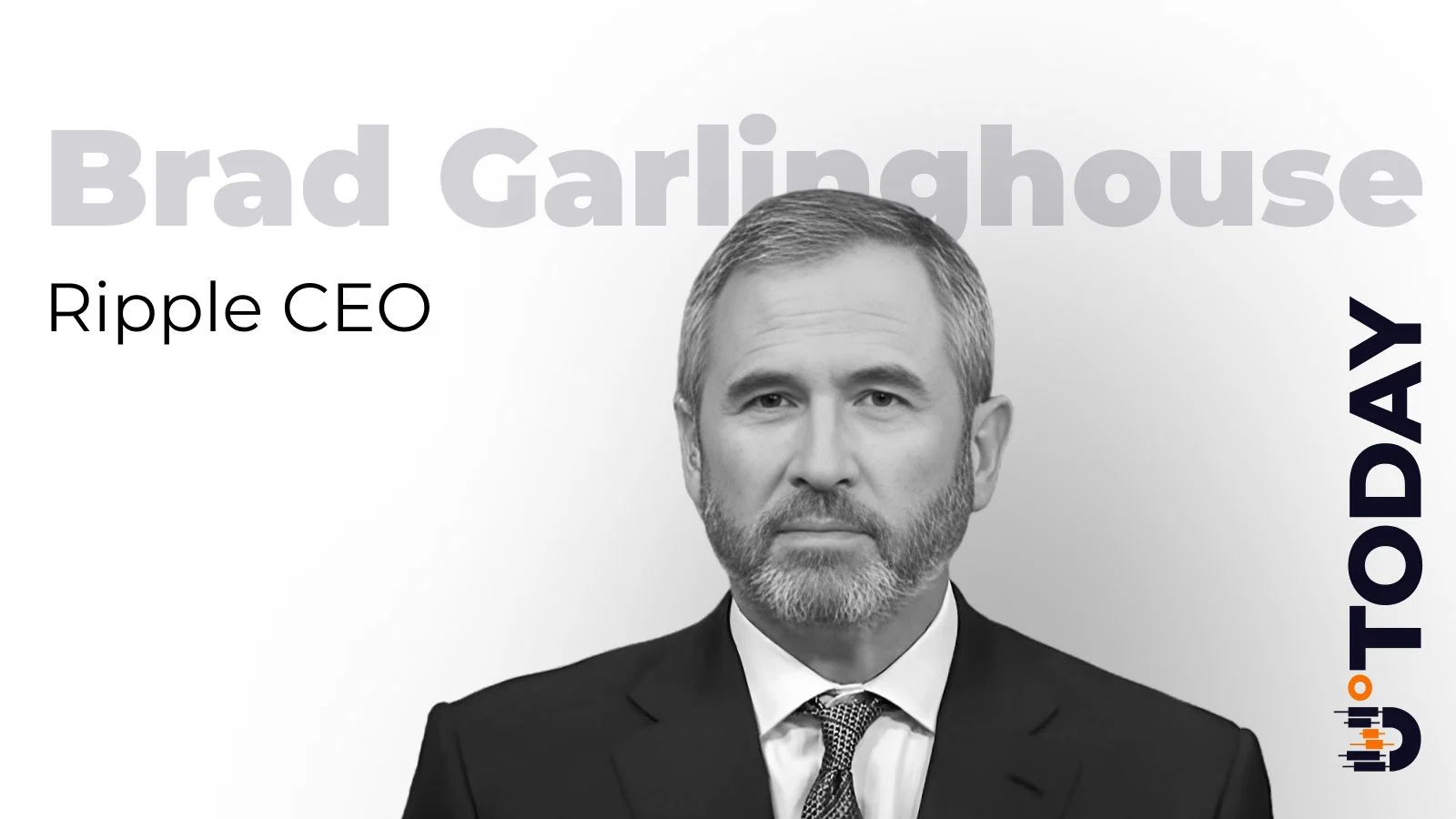
Ripple CEO Brad Garlinghouse has positioned 2026 as a pivotal year, signaling aggressive expansion and AI integration to bolster its enterprise blockchain solutions. The company's global pivot, evidenced by recent international tours and acquisitions, suggests a strategic move to diversify operations beyond traditional US markets. Garlinghouse explicitly states XRP is central to Ripple's growth strategy, implying potential positive correlation between Ripple's business development and XRP's market performance.
RLUSD has achieved a $1 billion market capitalization less than a year after its launch, signaling strong adoption and demand for regulated stablecoins in cross-border payments. The 733% surge in stablecoin usage for cross-border B2B payments to $226 billion highlights a significant shift towards digital assets for international settlements, driven by reduced FX costs and increased efficiency. Ripple's recent burn of nearly $1 million RLUSD on Ethereum demonstrates a proactive supply management strategy aimed at increasing scarcity and potentially driving token value, a key factor for its growth.
XRP has formed a golden cross on its hourly chart, indicating a potential short-term bullish trend that could lead to a retest of the $2 resistance level. While the hourly golden cross is a positive signal, the lack of confirmation on the daily chart suggests caution is warranted, making this a watchlist scenario rather than an immediate buy signal. The broader altcoin market sentiment shift and potential Bitcoin breakout could provide tailwinds for XRP, but its unique value proposition remains a key driver for potential upside.
Signal context only. Validate with price action, liquidity, and risk limits before taking a position.
Quick market read from this story
BitGo's dual authorization in Germany under MiCA and PSD2/ZAG frameworks provides regulated infrastructure for stablecoin (E-Money Token) operations, potentially easing compliance for other firms.
This development signals a maturing regulatory environment in the EU, with Germany positioning itself as a key hub for compliant digital asset services, particularly for stablecoins.
The dual license allows BitGo to offer payment services tied to E-Money Tokens, addressing a critical compliance gap for crypto asset service providers operating within the EU's new digital asset regime.
Deep Dive
Crypto custody firm BitGo has achieved a significant milestone with its European entity, BitGo Europe, securing dual regulatory approval from Germany's financial regulator, BaFin. This authorization allows the company to operate under both the European Union's Markets in Crypto-Assets Regulation (MiCA) and the Payment Services Directive 2 (PSD2) framework, specifically for services related to e-money tokens (EMTs).
The approval enables BitGo to offer services supporting E-Money Tokens, which are a category under MiCA that includes stablecoins backed by fiat currencies. While MiCA establishes the overarching legal framework for crypto asset service providers across the EU, firms dealing with EMTs must also adhere to existing payment services regulations. BitGo's dual authorization means it can provide infrastructure services for companies issuing or handling regulated stablecoins within Germany and the broader EU market.
The dual authorization addresses the complexities many crypto asset service providers face in navigating the overlapping requirements between MiCA and traditional financial regulations for stablecoins. BitGo stated its intention to serve as a licensed partner for crypto firms requiring regulated infrastructure to process EMT transactions. This move positions Germany as a key hub for regulated digital asset infrastructure within the EU and demonstrates adaptation to the EU's evolving crypto regulatory landscape.
Ripple is aggressively retooling the XRP Ledger into a comprehensive institutional-grade DeFi platform, integrating native lending, AMMs, and KYC-compliant trading to move beyond its initial payments focus. The significant growth in tokenized assets to $2.3 billion and the RLUSD stablecoin's market cap to $1.59 billion, alongside $1.24 billion in XRP ETF inflows, signals increasing institutional adoption and demand for XRPL-based financial products. While XRPL's TVL remains modest, the ongoing infrastructure build-out, including an upcoming EVM-compatible sidechain and privacy features, positions it as a potential competitor in the institutional DeFi space, supported by partnerships with major banks like Deutsche Bank and Société Générale. Regulatory clarity from the SEC settlement has removed a key overhang, potentially unlocking further institutional confidence and driving adoption, though the ultimate success hinges on translating these developments into substantial settlement volume.
