
200+ crypto news providers in one place.

CoinFeather
200+ crypto news providers in one place.
Quick market read from this story
SpaceX valuation reaches $1.75 trillion driven by Starlink expansion and launch dominance
Routine Starlink satellite launches reinforce SpaceX's position in the space-internet market
Reusability of Falcon 9 boosters significantly reduces marginal launch costs
Risks include regulatory scrutiny, competition, and capital intensity for future Starship development.
Deep Dive
SpaceX recently launched another batch of Starlink satellites into orbit using a Falcon 9 rocket from Cape Canaveral. This mission further expands Starlink's constellation, which is recognized as the world's most ambitious broadband network, surpassing several thousand satellites.
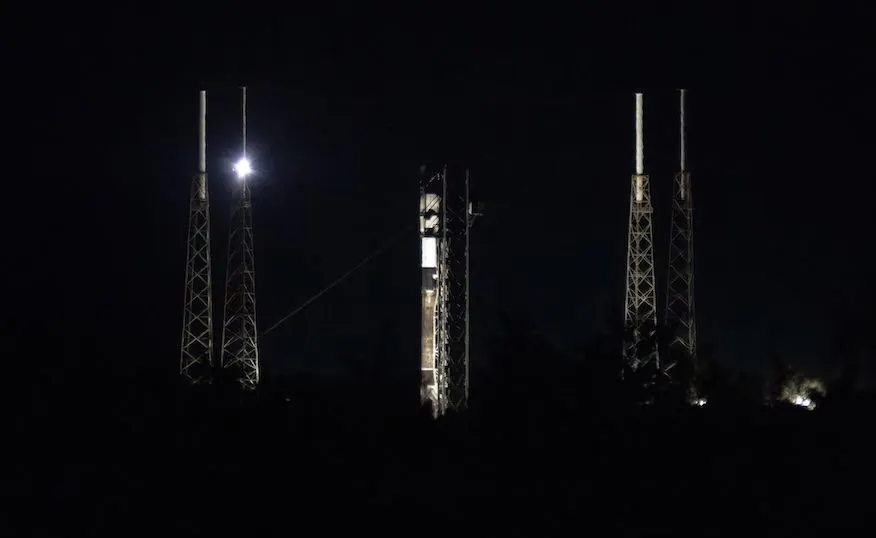
Amidst these operational successes, secondary market discussions place SpaceX's private valuation at approximately $1.75 trillion, establishing it as one of the most valuable private companies globally.
The substantial valuation of SpaceX is supported by three core strengths: its leadership in launch services, the scalability of its Starlink internet constellation, and its advanced engineering capabilities, including Mars-related technologies. The company leverages its Falcon 9 boosters for over 20 reuses, significantly reducing the cost of each launch by transforming rockets into reusable assets.
This reusability model directly benefits Starlink. Each launch becomes more cost-effective, improving the satellite internet service's unit economics over time. Analysts project Starlink could become a multi-hundred-billion-dollar business independently if it achieves global coverage and serves underserved markets, from rural areas to developing economies.
Furthermore, each successful mission de-risks SpaceX's broader ambitions, including the deployment of higher-throughput Starlink V2 satellites via Starship and the expansion of cargo and crew transport services for NASA, defense clients, and commercial partners. SpaceX's valuation reflects confidence in its execution, demonstrated by its consistent launch cadence, reliability, and decreasing cost structure, which have fundamentally altered the economics of accessing space.
A $1.75 trillion valuation necessitates near-perfect execution from SpaceX. The company faces ongoing challenges, including regulatory oversight concerning Starlink's expansion, spectrum allocation disputes, competition from other satellite internet providers, and the technical hurdles of scaling up Starship and its next-generation satellites.
The capital requirements remain immense, with billions continuously invested in rocket development, ground infrastructure, and satellite replenishment to maintain its market position. Any significant launch failure, disruption to Starlink services, or regulatory setbacks could prompt investors to reassess the growth and profitability assumptions underpinning the current valuation.
Nevertheless, each successful launch, such as the recent Starlink mission, reinforces SpaceX's central role in the burgeoning space economy. Its vertically integrated model is highly attractive to public market investors seeking access to this sector. The ultimate justification for SpaceX's $1.75 trillion valuation will depend on future developments, including achieving global Starlink profitability, fully operationalizing Starship, and establishing new revenue streams that solidify its status as a planetary-scale infrastructure provider, not just a rocket company.
Source, catalyst, and sector overlap from the latest feed.
Suzlon shares fell below ₹40, reaching a two-year low. The company announced a leadership restructuring with Ajay Kapur appointed as group CEO. Despite the price drop, multiple brokers maintain a 'Buy' rating with a target price of ₹60. The leadership overhaul aims to transition Suzlon into an integrated renewable energy solutions provider.
Ray Dalio warns Bitcoin cannot replace gold as a safe-haven. Gold gains amid market stress while Bitcoin drops 45% from recent highs.
Solana casinos are gaining popularity due to the network's fast transactions and low fees. Several crypto casinos are highlighted for supporting SOL deposits and withdrawals. Platforms offer diverse game libraries, crypto bonuses, and fast payouts for SOL players.
Ethereum Smart DCA indicator shows a surge, historically signaling accumulation phases. ETH price is forming higher lows and testing the $2.1K resistance level. Analyst charts indicate a consolidation structure with support near $1,800 and resistance around $2,100. Breakout above $2,100 is needed to shift short-term momentum.
Dogecoin trading below $0.0932 and 100-hour SMA, indicating bearish short-term outlook. Bears control DOGE price action since losing the $0.10 level. Key resistance at $0.0920 and $0.0932 must be cleared for potential recovery. Breakdown below $0.0885 could accelerate losses towards $0.0850 and $0.0800.
Nasdaq MRX filed with SEC for cash-settled binary options on Nasdaq-100 Index. These 'yes/no' contracts will be priced from $0.01 to $1, focusing on financial outcomes. The move signifies traditional finance exploring prediction market-style products. Nasdaq plans to potentially list these options on NOM and PHLX exchanges as well.
OKX launches USDT-settled perpetual futures for select US equities on March 4, 2026. Contracts will offer leverage from 0.01x to 5x, allowing speculation without direct share ownership. Initial listings include major tech stocks like NVDA, GOOGL, MSFT, AAPL, META, and index trackers QQQ, SPY.
Pantera-backed Solana Company launches Pacific Backbone infrastructure expansion in APAC. Project aims to improve Solana staking, validator operations, and performance for market makers. Company holds over 2.2 million SOL and shifts strategy from treasury to active staking and liquidity services. HSDT shares fell 8.3% following the announcement, with broader crypto stocks also trading lower.
Ripple expands payments platform to offer end-to-end stablecoin infrastructure. New capabilities include managed custody, virtual account collections, and fiat-to-stablecoin settlement. Ripple's payments platform has processed over $100 billion in total volume. The expansion positions Ripple as a single provider for enterprise digital asset payments across 60 markets.
Ripple Payments expanded to over 60 markets with new stablecoin and fiat collection, custody, and liquidity tools. The platform now supports unified collections and advanced liquidity features, aiming to reduce vendor complexity for businesses. Over $100 billion in volume has been processed, with more than 75 licenses globally, targeting financial institutions and fintechs. XRP price action remains volatile, with analysts suggesting a potential fractal pattern indicating a move higher later in March.
Morgan Stanley updated its SEC filing for a Bitcoin Trust ETF. BNY Mellon named as administrator and cash custodian. Coinbase Custody to safeguard bitcoin holdings. Trust will hold physical bitcoin and track its value via CoinDesk Bitcoin Benchmark.
Market infrastructure operators DTCC, Euroclear, and Clearstream highlight interoperability as crucial for tokenized securities adoption. Lack of interoperability between DLT and traditional finance systems risks higher costs and fragmented liquidity. The industry needs agreed-upon standards for seamless asset movement across diverse blockchain and legacy systems. The goal is 'same asset, same rights, same outcome' across all platforms.
Kraken Financial is the first crypto firm to obtain a Federal Reserve master account. Direct access to Fedwire allows for dollar settlements without intermediary banks. This integration enhances Kraken's institutional credibility and transaction efficiency. The development signifies a step towards integrating digital assets with traditional finance.
Morgan Stanley filed a prospectus for a proposed Bitcoin Trust ETF. BNY Mellon and Coinbase Custody will provide custody services for the ETF. The ETF will directly hold Bitcoin and use CoinDesk Bitcoin Benchmark for NAV calculation. Custody insurance exists but may not cover all potential losses.
Live Feed
Loading the broader stream in the same flow as the homepage feed.

Tether invested $50 million in sleep technology startup Eight Sleep. Eight Sleep will use the funding to develop new AI health features using Tether's QVAC architecture. This investment marks Tether's expansion beyond crypto into longevity and AI. Tether reported over $10 billion in net profits through 2025, channeling earnings into venture investments.

The South Korean stock market (KOSPI) closed near 5,094 after falling 12.06% in a single session today. The index had already fallen 7.24% the prior session, taking the two-day slide to roughly 18.4% on a compounded basis. South Korean equities did not fall alone, but the magnitude set Korea apart in a global risk-off window. […] The post Bitcoin surges past $71,000 during a record South Korean stock market crash of 18% this week appeared first on CryptoSlate.
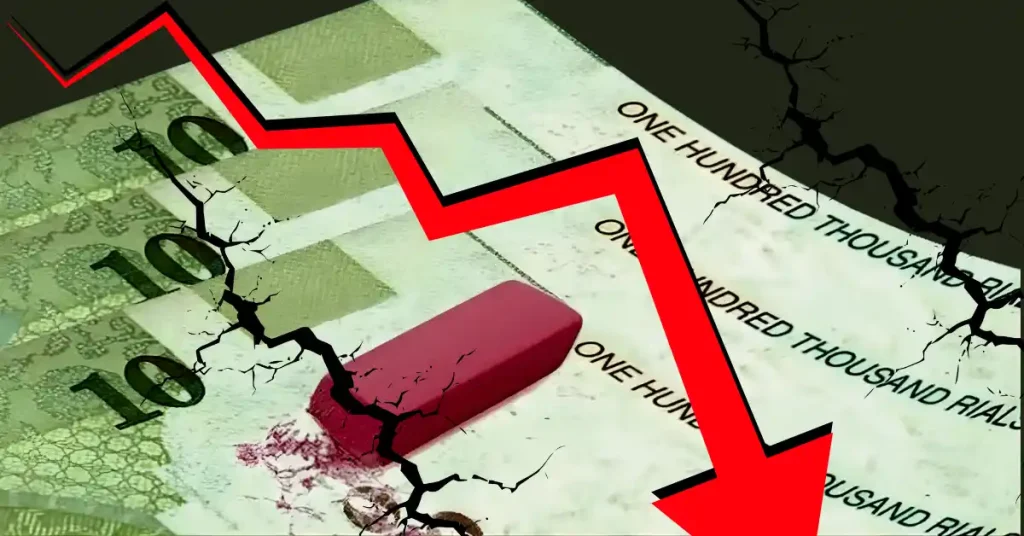
Iranian crypto market activity surged 873% above normal levels following regional airstrikes. Individuals and organizations are moving funds out of Iranian exchanges for safety and to bypass restrictions. High inflation and currency devaluation are driving Iranians to crypto as a financial hedge. The Iranian government utilizes crypto to mitigate economic pressure from international sanctions.

White House advisor Patrick Witt disputes JPMorgan CEO Jamie Dimon's claims on yield-bearing stablecoins. Witt argues stablecoin issuers under the GENIUS Act cannot lend reserves, unlike banks. The dispute is stalling the passage of the broader CLARITY Act for U.S. crypto regulation. Coinbase offers 3.5% yield on USDC, a rate traditional banks struggle to match.
CFTC Chair Mike Selig indicates U.S. perpetual futures are expected within the next month. This regulatory clarity could bring institutional capital back to the U.S. derivatives market. Onchain perps leader Hyperliquid faces both opportunity from increased demand and threat from regulated U.S. alternatives. Perpetual futures volume is expected to increase, with potential for both onchain and centralized venues to capture growth.
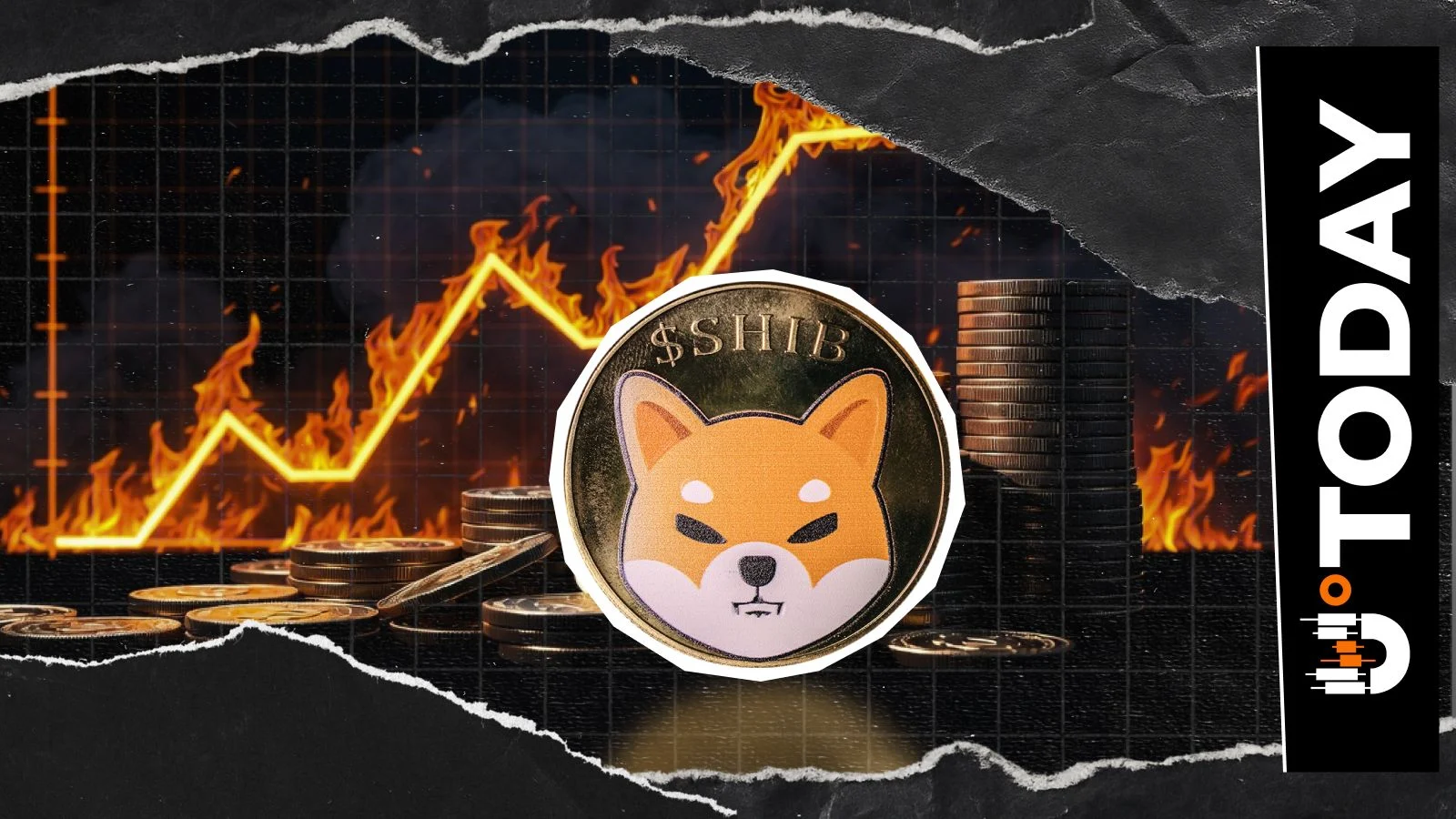
Shiba Inu price increased by 6.35% in the last 24 hours. Shiba Inu burn rate surged by 53,954% in the past day. 841,084 SHIB tokens were burned, reducing total supply. Exchange reserves for SHIB decreased significantly, indicating increased buying activity.

White House crypto adviser Patrick Witt rejects Jamie Dimon's view on regulating yield-bearing stablecoins as banks. Witt argues the Genius Act prevents stablecoin issuers from lending reserves, differentiating them from traditional banks. The debate centers on whether yield-bearing stablecoins should face bank-like regulations including capital and liquidity rules.
Tata Steel shares dropped 8% to ₹194.43 due to geopolitical tensions impacting metal markets. Iran conflict and Strait of Hormuz blockade caused supply disruption concerns, driving aluminum prices higher. Qatalum suspended production due to natural gas shortages linked to the Iran conflict. Broader sell-off observed in cyclical stocks like Vedanta and Hindustan Zinc.

South Korea proposes capping major shareholder stakes in crypto exchanges at 20% Exchanges will have three years to comply, with potential extensions for smaller platforms Major exchanges like Upbit and Bithumb currently exceed the proposed ownership limit The move could impact competition and innovation within the South Korean crypto market

Key Insights: Ethena price went up 7% over the last 24 hours. Sounds good at first. The token reached $0.115 on March 3, 2026. Traders got a bit excited. But there’s a problem. Ethena crypto rally stopped at a key level. It couldn’t break through $0.1196. That number matters a lot for the chart pattern. […] The post Ethena Price 7% Bounce Fails to Turn Bullish: Here’s Why a 20% Drop Looms appeared first on The Coin Republic.
Dubai stock market fell 5% on Wednesday after a two-day closure. Banks, property, and energy sectors led the declines. Regional volatility and geopolitical tensions are impacting UAE markets. Market cap of Abu Dhabi and Dubai exchanges lost billions in value.

XRP price shows potential breakout from symmetrical triangle targeting $1.95. Spot XRP ETFs recorded $7.53 million in net inflows on Tuesday, marking five consecutive days of net inflows. Cumulative XRP ETF inflows reach nearly $1.25 billion with AUM at $1 billion. Analysts suggest a weekly close above the 200-week EMA and $1.55 could shift momentum.
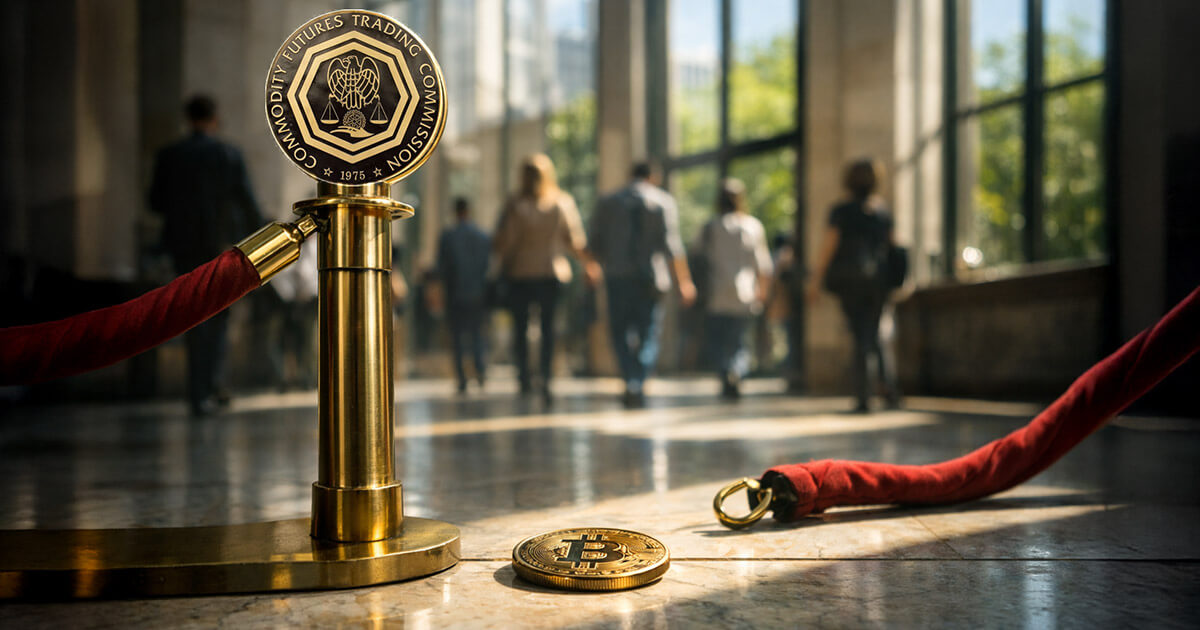
CFTC eyes April approval for bringing true perpetual futures onshore to the US. Potential approval could shift significant derivatives volume from offshore to US-regulated venues. Onshore perps aim to improve US price discovery, risk management, and reduce counterparty concentration. Broader scenario suggests US derivatives volume could reach $8.5-12.8 billion daily if scalability is achieved.
Signal context only. Validate with price action, liquidity, and risk limits before taking a position.
