
200+ crypto news providers in one place.

CoinFeather
200+ crypto news providers in one place.
Source, catalyst, and sector overlap from the latest feed.
SHIB exchange reserves have fallen to 80.9 trillion tokens, a decrease of over 1.6 trillion since mid-January. Whale activity includes a significant withdrawal of $394,000 worth of SHIB from CoinOne. Futures markets show short-sellers dominating with a long-to-short ratio of 0.91. SHIB price is trading at $0.00000558, needing to reclaim $0.000006 for a technical floor.
Tesla's robotaxi event and FSD v13 demo scheduled for late March/early April are key catalysts. Analysts are divided with price targets ranging from $25 to $600, consensus around $396-$450. Energy storage segment shows strong growth with 2026 guidance of 100+ GWh, potentially offsetting EV margin pressure. Q1 deliveries missed expectations at ~400K, impacting near-term sentiment.
Live Feed
Loading the broader stream in the same flow as the homepage feed.

KAI Exchange denies rumors of a Dassault Falcon 6X aircraft transaction involving 4.1 Bitcoins. The exchange states the reported transaction was fabricated false news by third-party media. KAI Exchange conducted a system drill on March 1, 2026, with a reference Bitcoin quote of $4.949 million. The aircraft's reported sale price does not align with the 4.1 Bitcoin equivalent.

CoinDesk 20 Index trading at 2029.47, up 3.9% since Tuesday. Eighteen of 20 assets in the CoinDesk 20 are trading higher. Solana (SOL) led performers, gaining 5.6%. Aave (AAVE) also performed well, rising 5%.

Bitcoin dropped to $63,000 following US and Israeli strikes on Iran. Crypto markets acted as a real-time sentiment gauge for geopolitical events over the weekend. Traditional markets are exploring extended trading hours, while crypto operates 24/7. Tokenized assets like gold (XAUT) and prediction markets saw increased weekend trading volume.
Stellar (XLM) has printed a golden cross on its hourly chart, indicating potential for a bullish rebound. XLM price has increased over 5% in the last 24 hours, with trading volume up 4.41%. RSI is at 64, suggesting the asset is not overbought. This follows a death cross and a 37% price drop in February.
XRP open interest reached $2.23 billion, an 8% increase. Short positions totaling $2.85 million were liquidated in the last 24 hours. XRP price increased 5.17% to $1.41 amid broader market rebound. Ripple is enhancing XRPL security and expanding its payments network.

Standard Chartered hired Naveen Mallela, architect of JPMorgan's $5B/day blockchain payments platform. This move signals Standard Chartered's intent to build proprietary on-chain infrastructure rather than relying on third-party networks. The hiring highlights the intense competition for specialized blockchain talent among major financial institutions. Mallela previously led JPM Coin, processing over $5 billion daily, and the Kinexus platform.
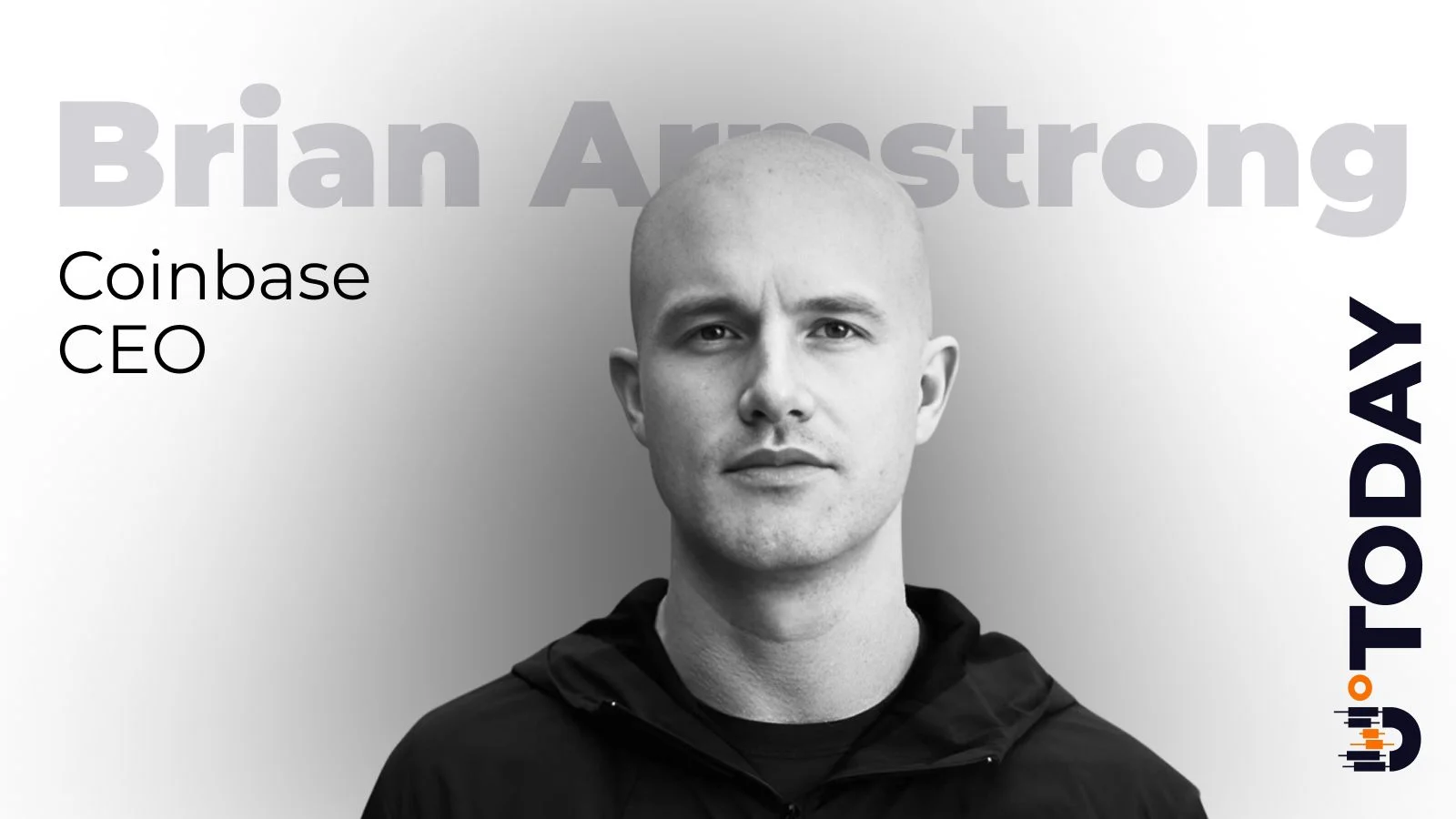
Coinbase CEO Brian Armstrong states crypto fundamentals are stronger than ever. Institutional adoption and sovereign demand for digital assets are increasing. Coinbase Premium gap indicates strong U.S. institutional buying of BTC at higher prices. Downturns are a natural return to the mean for scarce assets like Bitcoin.
Bitcoin price surged to near $71,370, up 6.35% in 24 hours. Rally driven by a short squeeze in derivatives markets, liquidating over $190 million in positions. Bitcoin dominance increased to 59.0%, indicating capital rotation from altcoins. Key support at $70,553; potential targets $71,886 and $72,000-$74,000 range.
The post How High Will Bitcoin Price Go This Week? appeared first on Coinpedia Fintech News Bitcoin climbed over the past 24 hours, raising a question across the market: how high can Bitcoin go this week? Bitcoin is currently trading near $71,370, up about 6.35% in the last 24 hours. The rally appears to be driven mainly by activity in derivatives markets, where a large number of bearish bets were suddenly …

UK House of Lords questioned Coinbase executive on stablecoin risks and financial stability. Coinbase argued regulated stablecoins are safer than uninsured bank deposits and can reduce payment costs. Concerns raised about stablecoins triggering bank deposit drains and facilitating illicit finance. UK risks falling behind US and EU in stablecoin innovation due to overly strict proposed regulations.

Cardano founder Charles Hoskinson criticizes the CLARITY Act as "horrific" and "trash." Hoskinson argues the bill could classify all digital assets as securities, harming new crypto projects. He disagrees with Ripple CEO Brad Garlinghouse's support for the bill, questioning the rush to pass it. The CLARITY Act could lead to increased SEC oversight and regulatory ambiguity for the crypto industry.

Former Binance global communications lead Brad Jaffe hired as CCO at KAST. KAST is a stablecoin firm focused on international entrepreneurs and digital asset users. KAST has made over 300 hires in the past year across engineering, product, and compliance.

Sui's native stablecoin USDsui has launched. Yield from USDsui's backing assets will be used to repurchase SUI tokens or deploy to DeFi protocols. This model contrasts with Tether and Circle, which retain yield externally. USDsui is issued by Bridge, a stablecoin firm acquired by Stripe.

Tether invested $50 million in sleep technology startup Eight Sleep. Eight Sleep will use the funding to develop new AI health features using Tether's QVAC architecture. This investment marks Tether's expansion beyond crypto into longevity and AI. Tether reported over $10 billion in net profits through 2025, channeling earnings into venture investments.

The South Korean stock market (KOSPI) closed near 5,094 after falling 12.06% in a single session today. The index had already fallen 7.24% the prior session, taking the two-day slide to roughly 18.4% on a compounded basis. South Korean equities did not fall alone, but the magnitude set Korea apart in a global risk-off window. […] The post Bitcoin surges past $71,000 during a record South Korean stock market crash of 18% this week appeared first on CryptoSlate.
Signal context only. Validate with price action, liquidity, and risk limits before taking a position.
Quick market read from this story
Tata Steel shares dropped 8% to ₹194.43 due to geopolitical tensions impacting metal markets
Iran conflict and Strait of Hormuz blockade caused supply disruption concerns, driving aluminum prices higher
Qatalum suspended production due to natural gas shortages linked to the Iran conflict
Broader sell-off observed in cyclical stocks like Vedanta and Hindustan Zinc.
Deep Dive
Tata Steel's share price experienced an 8% decline, closing at ₹194.43 on Wednesday, down from ₹211.01. This drop follows an 8.40% loss over the preceding five days. The downturn is attributed to escalating geopolitical tensions involving Iran, Israel, and the US, which have disrupted metal markets and triggered a broader sell-off in cyclical stocks.
The crisis in Iran and the associated blockade of the Strait of Hormuz have significantly impacted global trade routes, particularly for Middle Eastern metal producers. This disruption has fueled concerns about supply, leading to a surge in aluminum prices worldwide. The Strait of Hormuz is a critical shipping lane, with countries like Bahrain, Qatar, Saudi Arabia, and the United Arab Emirates collectively contributing over 8% of global aluminum output, and more than 5 million metric tonnes of the metal passing through the waterway annually.
Qatalum, an aluminum producer based in Qatar, was forced to suspend production due to a shortage of natural gas linked to the conflict.
The sell-off extended to other metal stocks, with Vedanta, an Indian iron ore producer, and Hindustan Zinc, a major zinc, lead, and silver supplier, also experiencing significant losses this week.
Market observers note that heightened geopolitical risks often prompt investors to divest from cyclical sectors, which are heavily reliant on economic activity. Steel and infrastructure companies fall into this category, as steel is a key component in construction, automotive, infrastructure, and manufacturing. The worsening situation in West Asia and the anticipated rise in energy costs are expected to dampen demand for steel, impacting overall economic growth.
