
200+ crypto news providers in one place.

CoinFeather
200+ crypto news providers in one place.

Quick market read from this story
UK House of Lords questioned Coinbase executive on stablecoin risks and financial stability
Coinbase argued regulated stablecoins are safer than uninsured bank deposits and can reduce payment costs
Concerns raised about stablecoins triggering bank deposit drains and facilitating illicit finance
UK risks falling behind US and EU in stablecoin innovation due to overly strict proposed regulations.
Deep Dive
The United Kingdom House of Lords questioned Coinbase's top international policy executive regarding the potential risks stablecoins pose to the UK financial system, including concerns about draining bank deposits, Silicon Valley Bank-style runs, illicit finance, and Know Your Customer (KYC) rules.
During a House of Lords inquiry into stablecoins, Tom Duff Gordon, Coinbase's vice president for international policy, asserted that fully reserved and regulated stablecoins are safer than uninsured bank deposits. He explained they are backed one-to-one by cash and high-quality government securities, allowing redemption at par.
Duff Gordon argued that stablecoins could significantly reduce payment costs, accelerate cross-border transactions, and support new AI-driven payment flows. He pushed back against suggestions that Coinbase aimed to evade KYC obligations.
He warned that overly strict proposals from the Bank of England and the Financial Conduct Authority (FCA) concerning capital, holding limits, and rewards could stifle competition. This, he contended, would cause the UK to fall behind regulatory frameworks like the US's Guiding and Establishing National Innovation for US Stablecoins (GENIUS) Act and Europe's Markets in Crypto Assets Regulation (MiCA) in attracting stablecoin innovation.
The Lords repeatedly questioned Duff Gordon about who bears redemption risk during a crisis, whether current arrangements simply shift risk from banks to non-bank issuers, and if stablecoin rewards could lead to a "deposit drain" from UK banks.
Duff Gordon countered these fears, calling concerns about disintermediation and credit creation "wildly exaggerated." He noted that major corporations and card schemes already utilize stablecoins to lower payment costs.
Regarding concerns about stablecoins facilitating crime, Duff Gordon highlighted Coinbase's implementation of KYC, Anti-Money Laundering (AML), and sanctions screening for customers. He argued that on-chain transparency and exchange-level controls could actually make policing illicit financial flows easier than with traditional cash.
Adam Jackson, chief strategy officer at Innovate Finance, expressed concern that the UK might establish a regulatory regime that is "more prescriptive and less competitive" than the EU's MiCA rules, potentially making the UK a less attractive environment for innovation compared to other jurisdictions.
This hearing contrasted with a previous session where critics like Chris Giles and Arthur E. Wilmarth Jr. expressed skepticism about stablecoins becoming mainstream in the UK and advocated for a stricter approach from the Bank of England. Wilmarth Jr. specifically criticized the US GENIUS Act, calling it a "disastrous mistake" for allowing non-banks into the "money business."
Source, catalyst, and sector overlap from the latest feed.
Bitcoin faces overhead resistance around $75k and $78.3k. A death cross between the 21-week and 100-week SMAs is expected this week. The death cross could signal the next leg down unless a major bullish catalyst emerges. Short-term price strength is attributed to a short squeeze, not necessarily a sustained bull market.
Oracle provider RedStone deploys price feeds on Stellar as the network expands DeFi infrastructure and experiments with lending and tokenized assets.
Bitcoin dropped to $63,000 following US and Israeli strikes on Iran. Crypto markets acted as a real-time sentiment gauge for geopolitical events over the weekend. Traditional markets are exploring extended trading hours, while crypto operates 24/7. Tokenized assets like gold (XAUT) and prediction markets saw increased weekend trading volume.
South Korea proposes capping major shareholder stakes in crypto exchanges at 20% Exchanges will have three years to comply, with potential extensions for smaller platforms Major exchanges like Upbit and Bithumb currently exceed the proposed ownership limit The move could impact competition and innovation within the South Korean crypto market
XRP price shows potential breakout from symmetrical triangle targeting $1.95. Spot XRP ETFs recorded $7.53 million in net inflows on Tuesday, marking five consecutive days of net inflows. Cumulative XRP ETF inflows reach nearly $1.25 billion with AUM at $1 billion. Analysts suggest a weekly close above the 200-week EMA and $1.55 could shift momentum.
CLARITY Act stalled in Senate over stablecoin yield dispute, impacting crypto legislation progress. CFTC Chairman expects approval of U.S.-listed crypto perpetual futures within weeks. JPMorgan projects CLARITY Act passage by mid-2026; Ripple CEO estimates 80% odds by late April. Concerns raised about CFTC's staffing and budget for expanded oversight under the proposed bill.
Cardano founder Charles Hoskinson criticizes the CLARITY Act as "horrific" and "trash." Hoskinson argues the bill could classify all digital assets as securities, harming new crypto projects. He disagrees with Ripple CEO Brad Garlinghouse's support for the bill, questioning the rush to pass it. The CLARITY Act could lead to increased SEC oversight and regulatory ambiguity for the crypto industry.
White House advisor Patrick Witt disputes JPMorgan CEO Jamie Dimon's claims on yield-bearing stablecoins. Witt argues stablecoin issuers under the GENIUS Act cannot lend reserves, unlike banks. The dispute is stalling the passage of the broader CLARITY Act for U.S. crypto regulation. Coinbase offers 3.5% yield on USDC, a rate traditional banks struggle to match.
CFTC Chair Mike Selig indicates U.S. perpetual futures are expected within the next month. This regulatory clarity could bring institutional capital back to the U.S. derivatives market. Onchain perps leader Hyperliquid faces both opportunity from increased demand and threat from regulated U.S. alternatives. Perpetual futures volume is expected to increase, with potential for both onchain and centralized venues to capture growth.
White House crypto adviser Patrick Witt rejects Jamie Dimon's view on regulating yield-bearing stablecoins as banks. Witt argues the Genius Act prevents stablecoin issuers from lending reserves, differentiating them from traditional banks. The debate centers on whether yield-bearing stablecoins should face bank-like regulations including capital and liquidity rules.
Tether's USAT stablecoin, issued by Anchorage Digital, received an independent accountant's report from Deloitte. The Deloitte report covers USAT reserves ($17.6M assets vs $17.5M liabilities) and does not apply to Tether's flagship USDT token. USDT reserves remain a point of scrutiny, with a more complex asset mix including Bitcoin and precious metals, unlike USAT's cash and Treasurys. Tether has frozen approximately $4.2 billion in USDT linked to illicit activity.
Morgan Stanley filed an amendment to its Form S-1 for the Morgan Stanley Bitcoin Trust. Coinbase and BNY Mellon are named as custody partners for the Bitcoin ETF. The ETF aims to operate like a traditional market ETF with cold storage for Bitcoin holdings. Increased institutional involvement in Bitcoin ETFs is correlated with price movements.
Ark Invest purchased $4 million in Coinbase (COIN) and $12 million in Robinhood (HOOD) shares on Tuesday. These purchases occurred before a significant rebound, with COIN and HOOD jumping 13% and 9% respectively. Coinbase and Robinhood represent the 10th and 11th largest holdings in Ark Invest's actively managed ETFs. Ark Invest had previously sold Coinbase shares in early February during a market downturn.
Whales accumulated Bitcoin at $63,000 during retail panic selling, preceding a bounce above $68,000. Pepeto presale has raised over $7.4M with 209% APY staking, indicating strong accumulation during market fear. XRP is holding near $1.40 despite significant Binance inflows, suggesting underlying buyer support. The article suggests a pattern of smart money accumulation during fear, similar to past Bitcoin rallies.
Live Feed
Loading the broader stream in the same flow as the homepage feed.
Bitcoin surged past $72,000, liquidating $350 million in short positions. Ethereum and Solana saw significant liquidations with $68M and $42M respectively. Macro factors including easing Iran tensions and oil pullback contributed to risk-on sentiment. Technical indicators suggest bullish momentum with potential for $75,000 Bitcoin.
Solana price approaches critical resistance band between $88.5 and $89.3. Limited supply pressure observed until the $95-$96 region. RSI has climbed above the neutral 50 level, indicating strengthening bullish momentum. Potential for SOL to reach $100 if consolidation breakout occurs.
Kraken enters the spotlight after securing access to a federal reserve master account, a milestone that has never been achieved by any crypto exchange.

Crypto-related equities saw large gains at the Wednesday open, rebounding from Tuesday's selloff.

Key Insights: Circle (CRCL) stock rally has not cooled since its latest earnings report. It accelerated again on Monday, extending a double-digit daily gain of 15% for the second day. The gains in the crypto stock extended the run to roughly 60% since last week’s fourth-quarter release, as investors leaned into stablecoin-linked stocks while the […] The post Circle Stock Rallies for a Second Day, Notches Another Double-Digit Move appeared first on The Coin Republic.

Bitcoin supply thin between $72,000 and $80,000, indicating potential for rapid price movement. Approximately 1% of circulating supply is in the $72,000-$80,000 range, suggesting limited resistance. Over 400,000 BTC were accumulated between $60,000 and $70,000, showing strong support below current levels.
Ripple Prime CEO describes this as an important milestone for the nonbank prime broker.
Shiba Inu exchange reserves are nearing the 80 trillion token threshold, indicating a potential shift from trading to long-term holding. Over two trillion SHIB tokens have been removed from exchanges recently. Despite outflows, SHIB's price remains under pressure, trading below key moving averages. Decreased exchange supply could amplify upward price movements if market sentiment improves.

Key Takeaways: Ethereum’s network throughput has hit an all-time high across L1 + L2s, driven largely by Base and Polygon […] The post Ethereum News: Record Network Activity Still Can’t Break the $2K Wall appeared first on Coindoo.
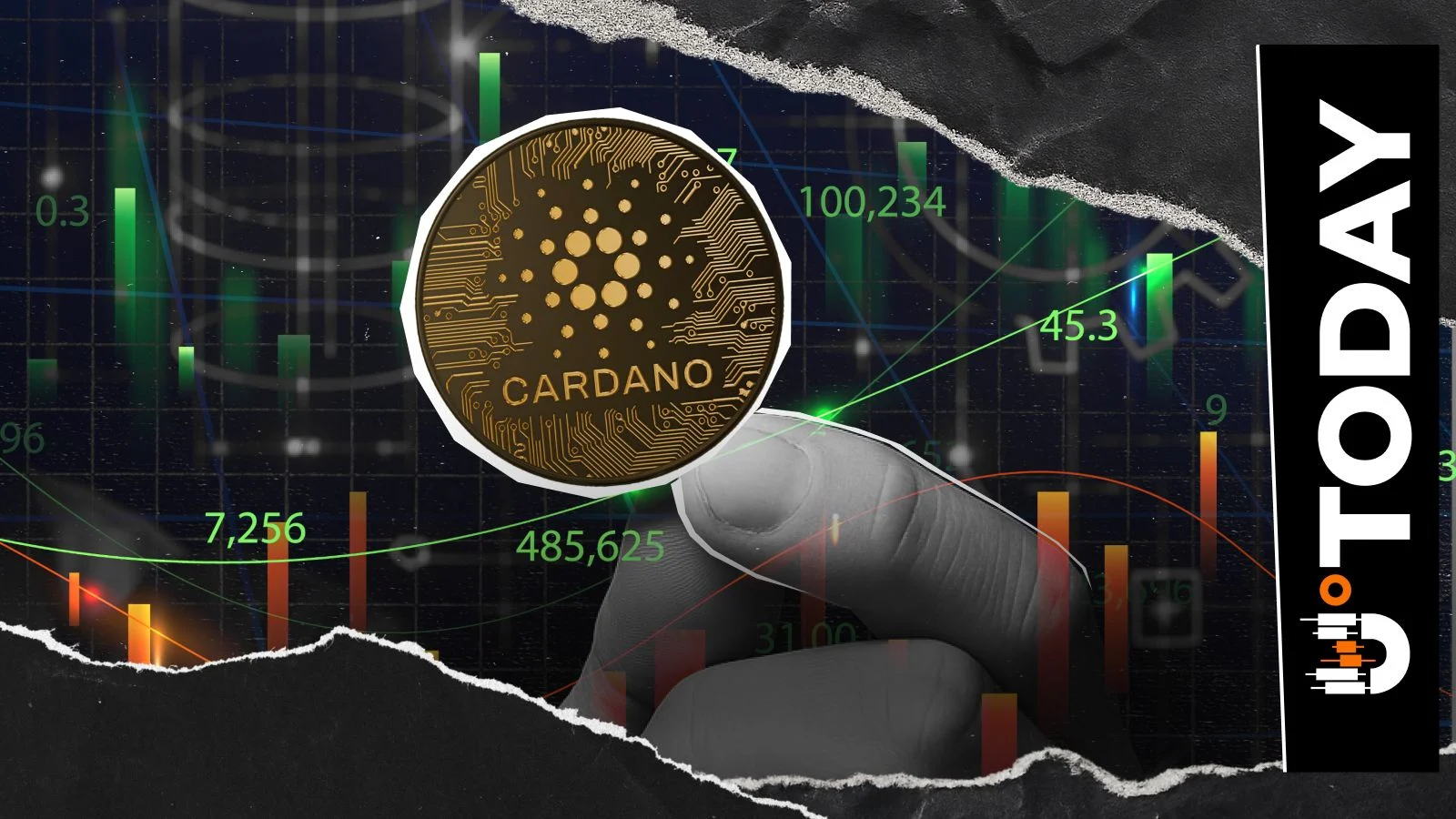
Cardano trading volume increased by over 23% in the past 24 hours, reaching $834 million. ADA price is testing the $0.30 resistance level, last seen on January 31. Midnight Network mainnet launch is expected later this month, enhancing Cardano's privacy features. Google Cloud and Vodafone are now supporting Midnight Network validators.
KT DeFi offers cloud mining and DeFi services for passive income generation. Users can rent computing power to mine cryptocurrencies like BTC, XRP, DOGE, and ETH. The platform provides automated yield solutions with daily profit settlements. KT DeFi supports millions of users globally and has been operating since 2019.

Bitcoin rose to $71,928, its highest value in nearly a month.

KAI Exchange denies rumors of a Dassault Falcon 6X aircraft transaction involving 4.1 Bitcoins. The exchange states the reported transaction was fabricated false news by third-party media. KAI Exchange conducted a system drill on March 1, 2026, with a reference Bitcoin quote of $4.949 million. The aircraft's reported sale price does not align with the 4.1 Bitcoin equivalent.
Signal context only. Validate with price action, liquidity, and risk limits before taking a position.
