
200+ crypto news providers in one place.

CoinFeather
200+ crypto news providers in one place.

Quick market read from this story
South Korea proposes capping major shareholder stakes in crypto exchanges at 20% Exchanges will have three years to comply, with potential extensions for smaller platforms Major exchanges like Upbit and Bithumb currently exceed the proposed ownership limit The move could impact competition and innovation within the South Korean crypto market
Deep Dive
South Korea's government and ruling party have reportedly agreed on a plan to limit the ownership stakes of major shareholders in domestic cryptocurrency exchanges to a maximum of 20%. This decision was reached by the Democratic Party of Korea's digital asset task force and the Financial Services Commission (FSC).
Regulators may permit exceptions of up to 34% for new businesses through an enforcement decree, referencing the Commercial Act's 33.3% veto threshold for general shareholders' meetings. Exchanges would be granted three years from the law's enforcement to comply with the ownership structure changes, with smaller exchanges potentially receiving an additional three-year grace period. Major platforms like Upbit and Bithumb, which dominate the local market with approximately 90% share, must reduce major shareholder stakes within the initial three-year timeframe.
Current ownership structures on South Korea's leading exchanges surpass the proposed 20% cap. For instance, Upbit chairman Song Chi-hyung holds about 25.52%, and Bithumb Holdings owns roughly 73.56% of Bithumb. Coinone chairman Cha Myung-hoon controls approximately 53.44%, Mirae Asset Consulting is set to hold around 92.06% of Korbit, and Binance owns about 67.45% of GOPAX.
The ownership cap proposal faces a significant legislative process, with a National Assembly member expected to introduce the bill. Passage could be difficult, as some lawmakers have expressed reservations about restricting ownership in the sector. An industry insider cautioned that the measure could negatively impact competition, innovation, and market entry barriers, stating it is an unprecedented global approach.
This proposed ownership cap follows recent regulatory tightening in South Korea's crypto sector. In late January, the National Assembly approved stricter entry requirements for virtual asset service providers (VASPs), allowing authorities to scrutinize executives and major shareholders for a broader range of violations, including drug trafficking, tax evasion, and economic crimes. Additionally, in February, lawmaker Kim Seung-won announced plans to draft amendments requiring disclosure from individuals who provide investment advice or encourage trading of financial products or virtual assets.
Source, catalyst, and sector overlap from the latest feed.
Bitcoin dropped to $63,000 following US and Israeli strikes on Iran. Crypto markets acted as a real-time sentiment gauge for geopolitical events over the weekend. Traditional markets are exploring extended trading hours, while crypto operates 24/7. Tokenized assets like gold (XAUT) and prediction markets saw increased weekend trading volume.
UK House of Lords questioned Coinbase executive on stablecoin risks and financial stability. Coinbase argued regulated stablecoins are safer than uninsured bank deposits and can reduce payment costs. Concerns raised about stablecoins triggering bank deposit drains and facilitating illicit finance. UK risks falling behind US and EU in stablecoin innovation due to overly strict proposed regulations.
XRP price shows potential breakout from symmetrical triangle targeting $1.95. Spot XRP ETFs recorded $7.53 million in net inflows on Tuesday, marking five consecutive days of net inflows. Cumulative XRP ETF inflows reach nearly $1.25 billion with AUM at $1 billion. Analysts suggest a weekly close above the 200-week EMA and $1.55 could shift momentum.
Bitcoin price jumped over 5% to around $72,000 on Wednesday. Technical analysis suggests a symmetrical triangle breakout could target $80,000 in March. An unfilled CME futures gap exists between $79,660 and $81,210, acting as a potential magnet. Polymarket odds show increased conviction for Bitcoin reaching $80,000 in March.
Kraken Financial is the first crypto company to receive a master account from the US Federal Reserve. This grants Kraken direct access to the Fed's payment systems, moving money on the same rails as banks. The approval signifies a potentially softer regulatory tone from the Fed towards the crypto industry. Kraken's banking unit does not receive full banking privileges like interest on reserves.
Cardano founder Charles Hoskinson criticizes the CLARITY Act as "horrific" and "trash." Hoskinson argues the bill could classify all digital assets as securities, harming new crypto projects. He disagrees with Ripple CEO Brad Garlinghouse's support for the bill, questioning the rush to pass it. The CLARITY Act could lead to increased SEC oversight and regulatory ambiguity for the crypto industry.
White House advisor Patrick Witt disputes JPMorgan CEO Jamie Dimon's claims on yield-bearing stablecoins. Witt argues stablecoin issuers under the GENIUS Act cannot lend reserves, unlike banks. The dispute is stalling the passage of the broader CLARITY Act for U.S. crypto regulation. Coinbase offers 3.5% yield on USDC, a rate traditional banks struggle to match.
CFTC Chair Mike Selig indicates U.S. perpetual futures are expected within the next month. This regulatory clarity could bring institutional capital back to the U.S. derivatives market. Onchain perps leader Hyperliquid faces both opportunity from increased demand and threat from regulated U.S. alternatives. Perpetual futures volume is expected to increase, with potential for both onchain and centralized venues to capture growth.
White House crypto adviser Patrick Witt rejects Jamie Dimon's view on regulating yield-bearing stablecoins as banks. Witt argues the Genius Act prevents stablecoin issuers from lending reserves, differentiating them from traditional banks. The debate centers on whether yield-bearing stablecoins should face bank-like regulations including capital and liquidity rules.
SHIB exchange reserves have fallen to 80.9 trillion tokens, a decrease of over 1.6 trillion since mid-January. Whale activity includes a significant withdrawal of $394,000 worth of SHIB from CoinOne. Futures markets show short-sellers dominating with a long-to-short ratio of 0.91. SHIB price is trading at $0.00000558, needing to reclaim $0.000006 for a technical floor.
Coinbase CEO Brian Armstrong states crypto fundamentals are stronger than ever. Institutional adoption and sovereign demand for digital assets are increasing. Coinbase Premium gap indicates strong U.S. institutional buying of BTC at higher prices. Downturns are a natural return to the mean for scarce assets like Bitcoin.
Iranian crypto market activity surged 873% above normal levels following regional airstrikes. Individuals and organizations are moving funds out of Iranian exchanges for safety and to bypass restrictions. High inflation and currency devaluation are driving Iranians to crypto as a financial hedge. The Iranian government utilizes crypto to mitigate economic pressure from international sanctions.
Live Feed
Loading the broader stream in the same flow as the homepage feed.
Tesla's robotaxi event and FSD v13 demo scheduled for late March/early April are key catalysts. Analysts are divided with price targets ranging from $25 to $600, consensus around $396-$450. Energy storage segment shows strong growth with 2026 guidance of 100+ GWh, potentially offsetting EV margin pressure. Q1 deliveries missed expectations at ~400K, impacting near-term sentiment.
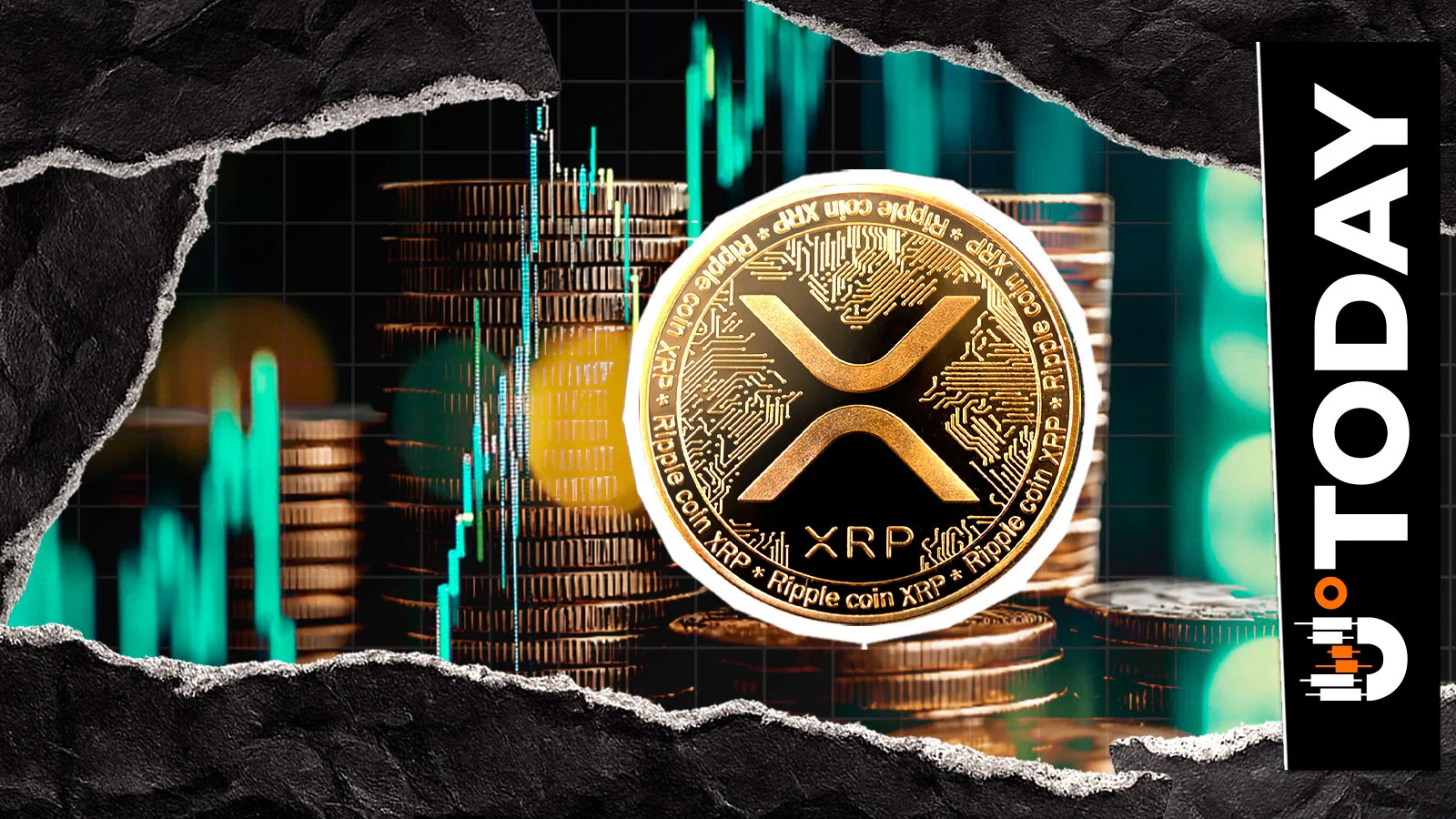
XRP open interest reached $2.23 billion, an 8% increase. Short positions totaling $2.85 million were liquidated in the last 24 hours. XRP price increased 5.17% to $1.41 amid broader market rebound. Ripple is enhancing XRPL security and expanding its payments network.

Standard Chartered hired Naveen Mallela, architect of JPMorgan's $5B/day blockchain payments platform. This move signals Standard Chartered's intent to build proprietary on-chain infrastructure rather than relying on third-party networks. The hiring highlights the intense competition for specialized blockchain talent among major financial institutions. Mallela previously led JPM Coin, processing over $5 billion daily, and the Kinexus platform.
S&P 500 and futures traded near flat after Tuesday's volatility driven by U.S.-Iran conflict. Geopolitical tensions and oil price swings are creating market uncertainty, impacting investor sentiment. Stronger than expected private job growth (63,000 vs 50,000 estimate) adds complexity to Fed rate cut expectations. Upcoming economic data and earnings reports will be key in balancing geopolitical risk with economic fundamentals.
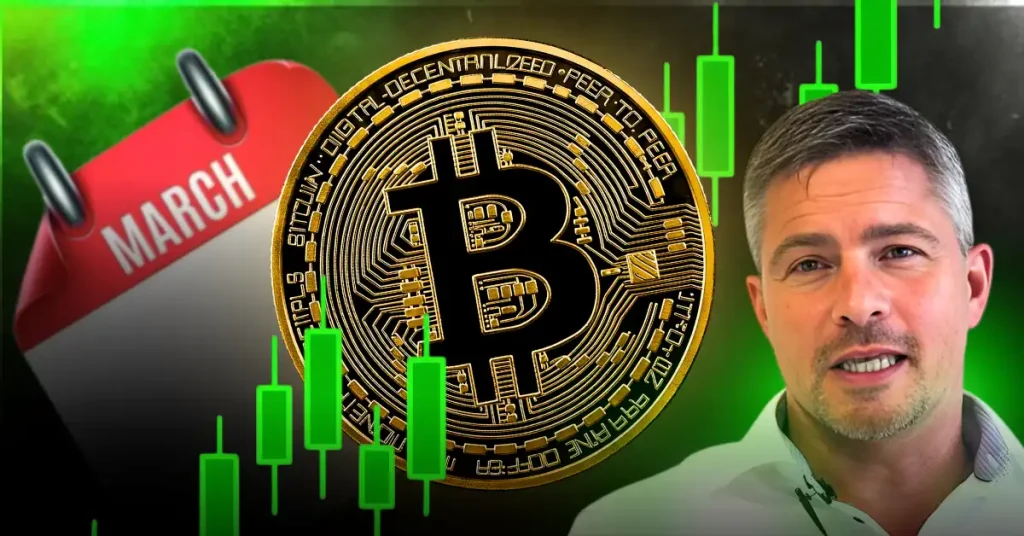
Bitcoin price surged to near $71,370, up 6.35% in 24 hours. Rally driven by a short squeeze in derivatives markets, liquidating over $190 million in positions. Bitcoin dominance increased to 59.0%, indicating capital rotation from altcoins. Key support at $70,553; potential targets $71,886 and $72,000-$74,000 range.

The post How High Will Bitcoin Price Go This Week? appeared first on Coinpedia Fintech News Bitcoin climbed over the past 24 hours, raising a question across the market: how high can Bitcoin go this week? Bitcoin is currently trading near $71,370, up about 6.35% in the last 24 hours. The rally appears to be driven mainly by activity in derivatives markets, where a large number of bearish bets were suddenly …

Former Binance global communications lead Brad Jaffe hired as CCO at KAST. KAST is a stablecoin firm focused on international entrepreneurs and digital asset users. KAST has made over 300 hires in the past year across engineering, product, and compliance.

Sui's native stablecoin USDsui has launched. Yield from USDsui's backing assets will be used to repurchase SUI tokens or deploy to DeFi protocols. This model contrasts with Tether and Circle, which retain yield externally. USDsui is issued by Bridge, a stablecoin firm acquired by Stripe.
Suzlon shares fell below ₹40, reaching a two-year low. The company announced a leadership restructuring with Ajay Kapur appointed as group CEO. Despite the price drop, multiple brokers maintain a 'Buy' rating with a target price of ₹60. The leadership overhaul aims to transition Suzlon into an integrated renewable energy solutions provider.

Tether invested $50 million in sleep technology startup Eight Sleep. Eight Sleep will use the funding to develop new AI health features using Tether's QVAC architecture. This investment marks Tether's expansion beyond crypto into longevity and AI. Tether reported over $10 billion in net profits through 2025, channeling earnings into venture investments.
Ray Dalio warns Bitcoin cannot replace gold as a safe-haven. Gold gains amid market stress while Bitcoin drops 45% from recent highs.

The South Korean stock market (KOSPI) closed near 5,094 after falling 12.06% in a single session today. The index had already fallen 7.24% the prior session, taking the two-day slide to roughly 18.4% on a compounded basis. South Korean equities did not fall alone, but the magnitude set Korea apart in a global risk-off window. […] The post Bitcoin surges past $71,000 during a record South Korean stock market crash of 18% this week appeared first on CryptoSlate.
Solana casinos are gaining popularity due to the network's fast transactions and low fees. Several crypto casinos are highlighted for supporting SOL deposits and withdrawals. Platforms offer diverse game libraries, crypto bonuses, and fast payouts for SOL players.
Signal context only. Validate with price action, liquidity, and risk limits before taking a position.
