
200+ crypto news providers in one place.

CoinFeather
200+ crypto news providers in one place.

Quick market read from this story
Market infrastructure operators DTCC, Euroclear, and Clearstream highlight interoperability as crucial for tokenized securities adoption
Lack of interoperability between DLT and traditional finance systems risks higher costs and fragmented liquidity
The industry needs agreed-upon standards for seamless asset movement across diverse blockchain and legacy systems
The goal is 'same asset, same rights, same outcome' across all platforms.
Deep Dive
The world's largest market infrastructure operators, including the Depository Trust and Clearing Corporation (DTCC), Euroclear, and Clearstream, have issued a warning that the widespread adoption of tokenized securities hinges on establishing interoperability between blockchain networks and traditional finance systems. In a joint white paper developed with Boston Consulting Group, they emphasize that "interoperability is a prerequisite for digital asset security (DAS) adoption at scale." Without it, assets risk becoming isolated on different networks, leading to high operational costs and fragmented liquidity as trading volumes increase.
The paper highlights that the current landscape of dozens of blockchains, each with its own standards, smart contract logic, and settlement designs, makes integration difficult and introduces operational and regulatory risks. The operators do not endorse a single technology but instead advocate for a "network-of-networks" model. This model relies on standards, gateways, and regulated service providers to connect digital and traditional systems, ensuring that assets can move across platforms while maintaining their integrity, ownership rights, and lifecycle, all while adhering to legal and regulatory compliance. The core principle they advocate for is "same asset, same rights, same outcome."
This warning comes amid growing traction for tokenization in repo markets and pilot programs across the U.S. and Europe. While tokenized securities represent a small fraction of global equity and FX markets, the paper notes that significant infrastructure is already in place, supporting over $300 billion in daily repo activity. Many existing workflows still rely on legacy systems, with tokenized bonds often trading on-chain while cash settles through traditional real-time gross settlement systems or bank payment networks. The paper anticipates this coexistence of old and new systems will continue for years.
The proposed framework extends beyond technical connections, aiming for alignment across asset and liability recognition, ownership, lifecycle events, ledger finality, and legal enforceability. Achieving this alignment is crucial to avoid extra reconciliation steps that could negate the promised efficiency gains of tokenized assets. The group urges regulators and market participants to form working groups focused on governance, standards, and resilience to shape future markets.
Major Wall Street firms have expressed optimism about tokenization's potential to reshape financial markets through 24/7 trading, faster settlement, and more efficient collateral use, potentially reducing back-office costs and freeing up capital. The white paper supports this vision, suggesting that success depends more on aligning the rules governing these systems than on launching new blockchains.
Source, catalyst, and sector overlap from the latest feed.
CoinDesk 20 Index trading at 2029.47, up 3.9% since Tuesday. Eighteen of 20 assets in the CoinDesk 20 are trading higher. Solana (SOL) led performers, gaining 5.6%. Aave (AAVE) also performed well, rising 5%.
Former Binance global communications lead Brad Jaffe hired as CCO at KAST. KAST is a stablecoin firm focused on international entrepreneurs and digital asset users. KAST has made over 300 hires in the past year across engineering, product, and compliance.
Sui's native stablecoin USDsui has launched. Yield from USDsui's backing assets will be used to repurchase SUI tokens or deploy to DeFi protocols. This model contrasts with Tether and Circle, which retain yield externally. USDsui is issued by Bridge, a stablecoin firm acquired by Stripe.
Tether invested $50 million in sleep technology startup Eight Sleep. Eight Sleep will use the funding to develop new AI health features using Tether's QVAC architecture. This investment marks Tether's expansion beyond crypto into longevity and AI. Tether reported over $10 billion in net profits through 2025, channeling earnings into venture investments.
White House crypto adviser Patrick Witt rejects Jamie Dimon's view on regulating yield-bearing stablecoins as banks. Witt argues the Genius Act prevents stablecoin issuers from lending reserves, differentiating them from traditional banks. The debate centers on whether yield-bearing stablecoins should face bank-like regulations including capital and liquidity rules.
Bitcoin dropped to $63,000 following US and Israeli strikes on Iran. Crypto markets acted as a real-time sentiment gauge for geopolitical events over the weekend. Traditional markets are exploring extended trading hours, while crypto operates 24/7. Tokenized assets like gold (XAUT) and prediction markets saw increased weekend trading volume.
Tesla's robotaxi event and FSD v13 demo scheduled for late March/early April are key catalysts. Analysts are divided with price targets ranging from $25 to $600, consensus around $396-$450. Energy storage segment shows strong growth with 2026 guidance of 100+ GWh, potentially offsetting EV margin pressure. Q1 deliveries missed expectations at ~400K, impacting near-term sentiment.
Standard Chartered hired Naveen Mallela, architect of JPMorgan's $5B/day blockchain payments platform. This move signals Standard Chartered's intent to build proprietary on-chain infrastructure rather than relying on third-party networks. The hiring highlights the intense competition for specialized blockchain talent among major financial institutions. Mallela previously led JPM Coin, processing over $5 billion daily, and the Kinexus platform.
Suzlon shares fell below ₹40, reaching a two-year low. The company announced a leadership restructuring with Ajay Kapur appointed as group CEO. Despite the price drop, multiple brokers maintain a 'Buy' rating with a target price of ₹60. The leadership overhaul aims to transition Suzlon into an integrated renewable energy solutions provider.
Morgan Stanley updated its SEC filing for a Bitcoin Trust ETF. BNY Mellon named as administrator and cash custodian. Coinbase Custody to safeguard bitcoin holdings. Trust will hold physical bitcoin and track its value via CoinDesk Bitcoin Benchmark.
Live Feed
Loading the broader stream in the same flow as the homepage feed.

KAI Exchange denies rumors of a Dassault Falcon 6X aircraft transaction involving 4.1 Bitcoins. The exchange states the reported transaction was fabricated false news by third-party media. KAI Exchange conducted a system drill on March 1, 2026, with a reference Bitcoin quote of $4.949 million. The aircraft's reported sale price does not align with the 4.1 Bitcoin equivalent.
SHIB exchange reserves have fallen to 80.9 trillion tokens, a decrease of over 1.6 trillion since mid-January. Whale activity includes a significant withdrawal of $394,000 worth of SHIB from CoinOne. Futures markets show short-sellers dominating with a long-to-short ratio of 0.91. SHIB price is trading at $0.00000558, needing to reclaim $0.000006 for a technical floor.
Stellar (XLM) has printed a golden cross on its hourly chart, indicating potential for a bullish rebound. XLM price has increased over 5% in the last 24 hours, with trading volume up 4.41%. RSI is at 64, suggesting the asset is not overbought. This follows a death cross and a 37% price drop in February.
XRP open interest reached $2.23 billion, an 8% increase. Short positions totaling $2.85 million were liquidated in the last 24 hours. XRP price increased 5.17% to $1.41 amid broader market rebound. Ripple is enhancing XRPL security and expanding its payments network.
S&P 500 and futures traded near flat after Tuesday's volatility driven by U.S.-Iran conflict. Geopolitical tensions and oil price swings are creating market uncertainty, impacting investor sentiment. Stronger than expected private job growth (63,000 vs 50,000 estimate) adds complexity to Fed rate cut expectations. Upcoming economic data and earnings reports will be key in balancing geopolitical risk with economic fundamentals.
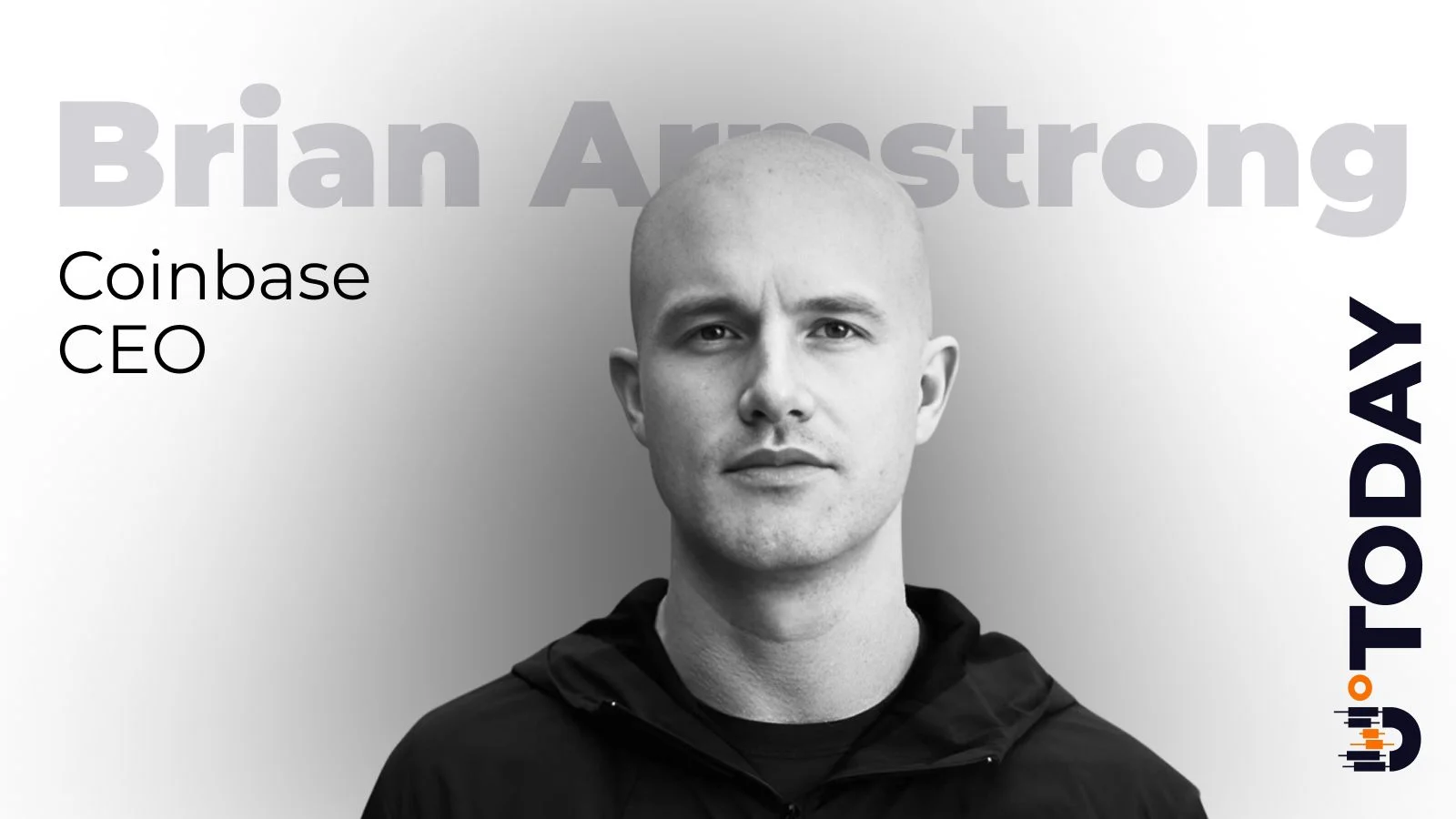
Coinbase CEO Brian Armstrong states crypto fundamentals are stronger than ever. Institutional adoption and sovereign demand for digital assets are increasing. Coinbase Premium gap indicates strong U.S. institutional buying of BTC at higher prices. Downturns are a natural return to the mean for scarce assets like Bitcoin.
Bitcoin price surged to near $71,370, up 6.35% in 24 hours. Rally driven by a short squeeze in derivatives markets, liquidating over $190 million in positions. Bitcoin dominance increased to 59.0%, indicating capital rotation from altcoins. Key support at $70,553; potential targets $71,886 and $72,000-$74,000 range.
The post How High Will Bitcoin Price Go This Week? appeared first on Coinpedia Fintech News Bitcoin climbed over the past 24 hours, raising a question across the market: how high can Bitcoin go this week? Bitcoin is currently trading near $71,370, up about 6.35% in the last 24 hours. The rally appears to be driven mainly by activity in derivatives markets, where a large number of bearish bets were suddenly …
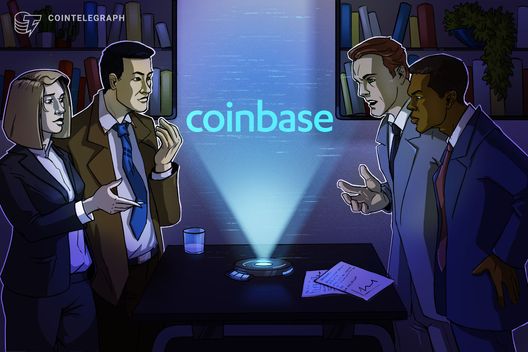
UK House of Lords questioned Coinbase executive on stablecoin risks and financial stability. Coinbase argued regulated stablecoins are safer than uninsured bank deposits and can reduce payment costs. Concerns raised about stablecoins triggering bank deposit drains and facilitating illicit finance. UK risks falling behind US and EU in stablecoin innovation due to overly strict proposed regulations.

Cardano founder Charles Hoskinson criticizes the CLARITY Act as "horrific" and "trash." Hoskinson argues the bill could classify all digital assets as securities, harming new crypto projects. He disagrees with Ripple CEO Brad Garlinghouse's support for the bill, questioning the rush to pass it. The CLARITY Act could lead to increased SEC oversight and regulatory ambiguity for the crypto industry.
Ray Dalio warns Bitcoin cannot replace gold as a safe-haven. Gold gains amid market stress while Bitcoin drops 45% from recent highs.

The South Korean stock market (KOSPI) closed near 5,094 after falling 12.06% in a single session today. The index had already fallen 7.24% the prior session, taking the two-day slide to roughly 18.4% on a compounded basis. South Korean equities did not fall alone, but the magnitude set Korea apart in a global risk-off window. […] The post Bitcoin surges past $71,000 during a record South Korean stock market crash of 18% this week appeared first on CryptoSlate.
Signal context only. Validate with price action, liquidity, and risk limits before taking a position.
