
Navigating Crypto News

CoinFeather
Navigating Crypto News

Source, catalyst, and sector overlap from the latest feed.
Bitcoin is exhibiting characteristics of a 'frustrating phase' in its cycle, marked by sideways price action and 'fake breakouts' due to weakening apparent demand and a bearish 'bull-bear indicator'. The current on-chain metrics, including a negative long-term holder SOPR and insufficient buying pressure, suggest continued volatility and a potential reset period before a new accumulation phase can begin. Despite near-term price uncertainty and a slip below $70,000, there are indications of institutional players quietly accumulating BTC at current 'discounted' prices, hinting at potential future upside.
Live Feed
Loading the broader stream in the same flow as the homepage feed.
The article provides a guide on how to buy Shiba Inu (SHIB) in 2026, detailing exchange selection, account verification, fund deposit, and order placement, indicating ongoing retail interest and accessibility for the meme coin. Shiba Inu's ecosystem expansion into Layer-2 (Shibarium), DEX (ShibaSwap), and NFTs suggests a strategic move beyond its meme coin origins, aiming to build utility and potentially attract a broader investor base. Despite ecosystem developments, the article emphasizes SHIB's speculative nature and high volatility, cautioning investors about risk and the influence of market sentiment and social media hype on its price.
The article positions sports predictive markets, exemplified by TrustDice, as a non-correlated alternative asset class for generating alpha, appealing to institutional and sophisticated retail investors seeking diversification from traditional markets facing inflation and compressed yields. TrustDice is presented as a sophisticated trading terminal leveraging blockchain for transparency, offering high liquidity, T+0 settlement, tight spreads, and high position limits, which are key advantages over traditional sportsbooks and illiquid alternative assets. The platform's emphasis on quantitative infrastructure, capital preservation via multi-sig cold storage, and provably fair technology aims to attract users seeking institutional-grade tools for risk management and tactical hedging in a decentralized finance context.
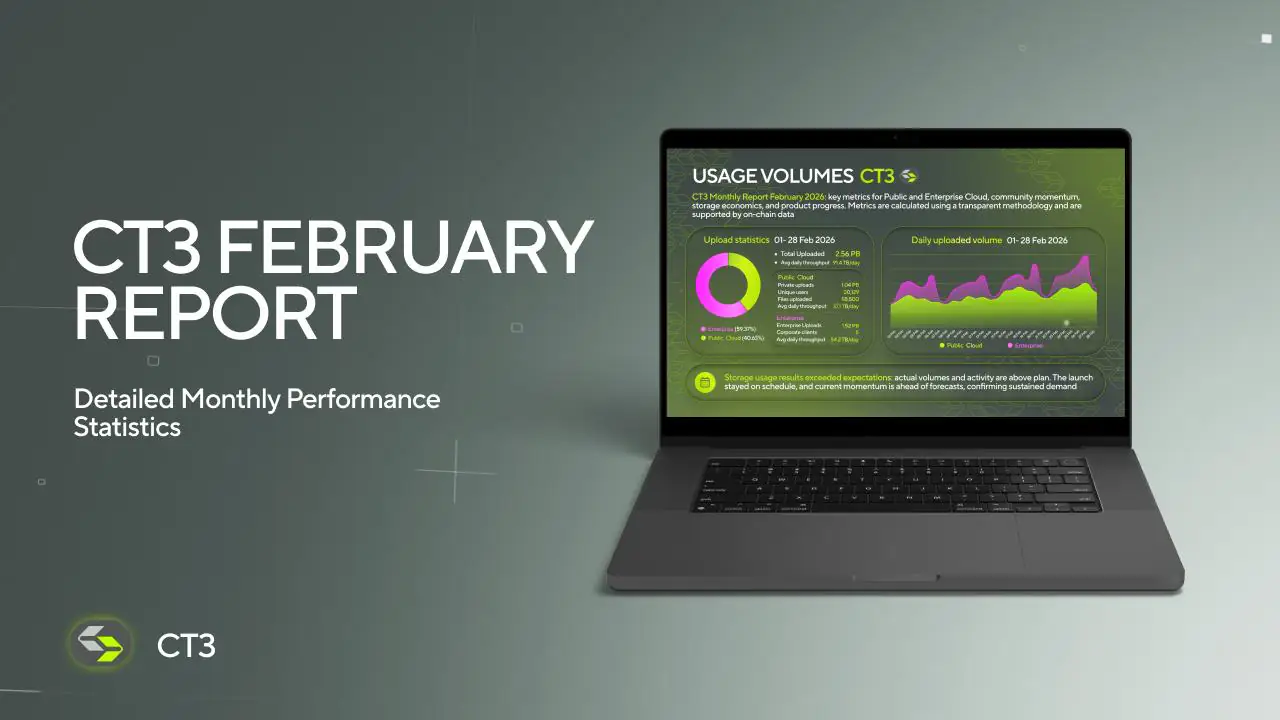
CT3's February 2026 report indicates actual performance metrics for its decentralized storage network exceeded initial estimates, suggesting strong underlying demand and operational efficiency. The sustained demand and growth in both public cloud and enterprise segments highlight CT3's increasing relevance as a scalable and secure data storage solution. Exceeding performance expectations in February provides a positive signal for CT3's infrastructure resilience and its capacity to handle increasing user activity and enterprise data loads.

Geopolitical uncertainty is driving cautious trading in Bitcoin, causing it to pull back from recent highs and impacting leveraged positions. AI tokens are showing resilience and outperforming the broader crypto market, driven by strong retail demand and specific catalysts like exchange listings and positive commentary from industry leaders. While Bitcoin and many altcoins are experiencing pullbacks due to macro-economic fears, the divergence in AI token performance suggests a sector-specific strength that traders should monitor. Decreased open interest in BTC and ETH futures on CME, alongside mixed signals in options markets, indicates a cautious institutional stance despite some retail-driven bets on higher prices.

Antalpha, a Nasdaq-listed fintech firm, has realized over $100 million in unrealized profits from its Tether Gold (XAUT) holdings, driven by the surge in gold prices. The firm's recent transfer of $15 million in XAUT to the institutional platform Cobo raises questions about potential future selling activity, though no explicit intention has been disclosed. Despite the transfer, Antalpha maintains a substantial position in XAUT, valued at over $264 million, indicating tokenized gold remains its primary digital asset.
A misconfiguration in Aave's Capo oracle system led to $27 million in wstETH liquidations, highlighting ongoing oracle risk management challenges in DeFi. Aave's commitment to compensate affected users mitigates immediate protocol damage but underscores the financial risks associated with decentralized lending platforms. The incident, coupled with Aave's internal governance disputes, adds to existing scrutiny of DeFi protocol stability and operational integrity. While the direct financial impact is contained by Aave's compensation plan, the event serves as a reminder of the potential for cascading liquidations due to oracle failures.

Geopolitical volatility in oil markets is driving significant trading volume on derivatives platforms like Hyperliquid, highlighting crypto's role as a venue for macro-driven leveraged bets. The correlation between oil price swings and crypto asset performance underscores crypto's current status as a risk-on asset, heavily influenced by broader macroeconomic and geopolitical events. Traders are utilizing Hyperliquid for leveraged exposure to commodity price movements, indicating a demand for continuous, high-leverage trading opportunities that mirror traditional market volatility. Mixed signals from political figures regarding geopolitical conflicts are creating market uncertainty, leading to rapid repositioning and increased trading activity across both traditional and digital asset markets.
Arthur Hayes maintains a long-term bullish outlook for Bitcoin, predicting a $250,000 price target by 2026, but advises against immediate buying due to current macroeconomic conditions. Hayes emphasizes that Bitcoin's price rallies are primarily driven by central bank liquidity injections, suggesting a pivot to monetary easing by the Federal Reserve is the key catalyst for his re-entry into the market. The former BitMEX CEO warns of potential downside risk for Bitcoin, citing geopolitical tensions and the possibility of a drop below $60,000, which could trigger leveraged trader liquidations.

US CPI data is expected to show a continued slowdown in inflation, potentially supporting a more dovish stance from the Federal Reserve. While overall inflation may be stabilizing, the slight increase in monthly prices and rising gasoline costs warrant close observation for potential inflationary pressures. The market will be closely watching the core inflation rate for signs of persistent price pressures, which could influence future monetary policy decisions.

Oracle's strong earnings, driven by AI and cloud demand, signal a potential shift in investor sentiment away from 'SaaS apocalypse' fears and towards growth narratives. The company's ability to raise significant debt for AI infrastructure, with strong investor demand, indicates confidence in its future AI-related revenue streams. The divergence in performance between Oracle's stock and Bitcoin suggests a potential decoupling of traditional tech and crypto markets, contrary to recent correlations. Oracle's narrative of embedding AI into existing systems rather than replacing them could set a precedent for how other software companies integrate AI, impacting their market valuations.
Geopolitical tensions in the Middle East are directly impacting global energy markets, leading to supply chain disruptions and price increases for Liquefied Natural Gas (LNG). India's reliance on imported gas and its strategic location for transit routes means that conflicts affecting the Strait of Hormuz pose a significant risk to domestic energy supply and pricing. Adani Total Gas Limited (ATGL) is experiencing a stock surge driven by concerns over LNG shortages, as the company faces upstream gas curtailment and has increased prices for industrial clients. The Indian government's invocation of emergency powers to prioritize domestic gas allocation for households and transport highlights the critical nature of energy security amidst geopolitical instability.
Signal context only. Validate with price action, liquidity, and risk limits before taking a position.
Quick market read from this story
Ripple Labs executed its largest RLUSD stablecoin burn to date, removing 10,000,000 coins from circulation, signaling a commitment to managing stablecoin liquidity.
The substantial RLUSD burn follows recent minting activity, indicating Ripple's active management of its stablecoin supply to maintain balance and potentially support its value.
This event, coupled with Ripple securing a new Australian Financial Services License, highlights the company's ongoing expansion and regulatory efforts in key markets.
Traders should monitor RLUSD's market dynamics and Ripple's broader strategy as these actions suggest a proactive approach to stablecoin operations and regulatory compliance.
Deep Dive
Ripple Labs has executed its largest ever burn of its stablecoin, RLUSD, by removing 10,000,000 coins from circulation on the XRP Ledger. This significant burn follows a previous removal of nearly one million RLUSD tokens just a day prior, which occurred on the Ethereum chain.
The recent large-scale burn comes after Ripple minted substantial amounts of RLUSD earlier in the week, including 6,000,000 and 1,000,000 RLUSD on March 9. Prior to these activities, at the beginning of March, Ripple had created a notable 69,000,000 RLUSD. This consistent minting and burning pattern reflects Ripple's strategy to manage RLUSD liquidity, aligning with its liquidity-on-demand model.
In parallel with its stablecoin operations, Ripple has secured a significant regulatory milestone by obtaining an Australian Financial Services License (AFSL). This license will enable Ripple to enhance its services for Australian financial institutions, offering access to its blockchain platform for faster, more efficient transactions compared to traditional banking systems.
Ripple President, Monica Long, highlighted the importance of this development, stating, “75+ licenses worldwide and counting. Compliance is how we scale.” Australian clients will gain access to Ripple Payments for real-time settlement and global on- and off-ramps, all managed through Ripple's technology. They will also be able to utilize RLUSD.
Ethereum's active wallet count has surpassed Bitcoin's by over 312%, indicating significant user adoption growth driven by its DeFi, tokenization, and L2 ecosystems. The sustained increase in non-empty wallets for ETH highlights its role as a primary settlement layer, suggesting potential for continued network effects and user acquisition. While this data points to strong adoption for Ethereum, it is an observational metric and does not represent an immediate catalyst for price action, thus warranting a neutral stance on immediate trading signals.
