
Navigating Crypto News

CoinFeather
Navigating Crypto News

Quick market read from this story
Federal prosecutors are pursuing civil forfeiture of $3.4 million in USDT linked to an alleged Ethereum investment scam, highlighting ongoing regulatory scrutiny of crypto fraud.
The scheme involved victims being lured into fake gold-backed Ethereum investments via text and DMs, demonstrating common social engineering tactics used in crypto scams.
This action is part of a broader trend of law enforcement targeting illicit crypto proceeds, with significant past actions involving larger sums and different cryptocurrencies.
Deep Dive
Federal prosecutors in Massachusetts have initiated a civil forfeiture action to recover approximately $3.4 million in USDT, which they allege are the proceeds of a crypto fraud and money laundering scheme. The U.S. Attorney’s Office for the District of Massachusetts seized the funds in February and March 2025, following an investigation that commenced in late 2024.
\nThe investigation identified at least four victims, including residents from Massachusetts, Utah, and South Carolina. Prosecutors claim the scam involved victims being contacted through seemingly misdirected text messages or encrypted messaging apps like WhatsApp and Telegram. Victims were then persuaded to invest in a purported exclusive Ethereum opportunity that was falsely advertised as being "
Source, catalyst, and sector overlap from the latest feed.
Bitcoin's retreat below $70,000 is driven by macroeconomic concerns stemming from the IEA's proposed historic oil reserve release, which could signal persistent inflation and higher interest rates pressuring risk assets. Derivatives markets show traders are actively hedging against further downside, with put options commanding a premium, indicating a bearish sentiment and potential for further price declines toward the $54,000-$55,000 range if macroeconomic uncertainty persists. While not directly correlated, the IEA's intervention highlights broader financial market fragility, suggesting that any sustained recovery in Bitcoin will depend on stabilizing macroeconomic conditions and a shift in derivatives positioning towards a more balanced state.
Live Feed
Loading the broader stream in the same flow as the homepage feed.
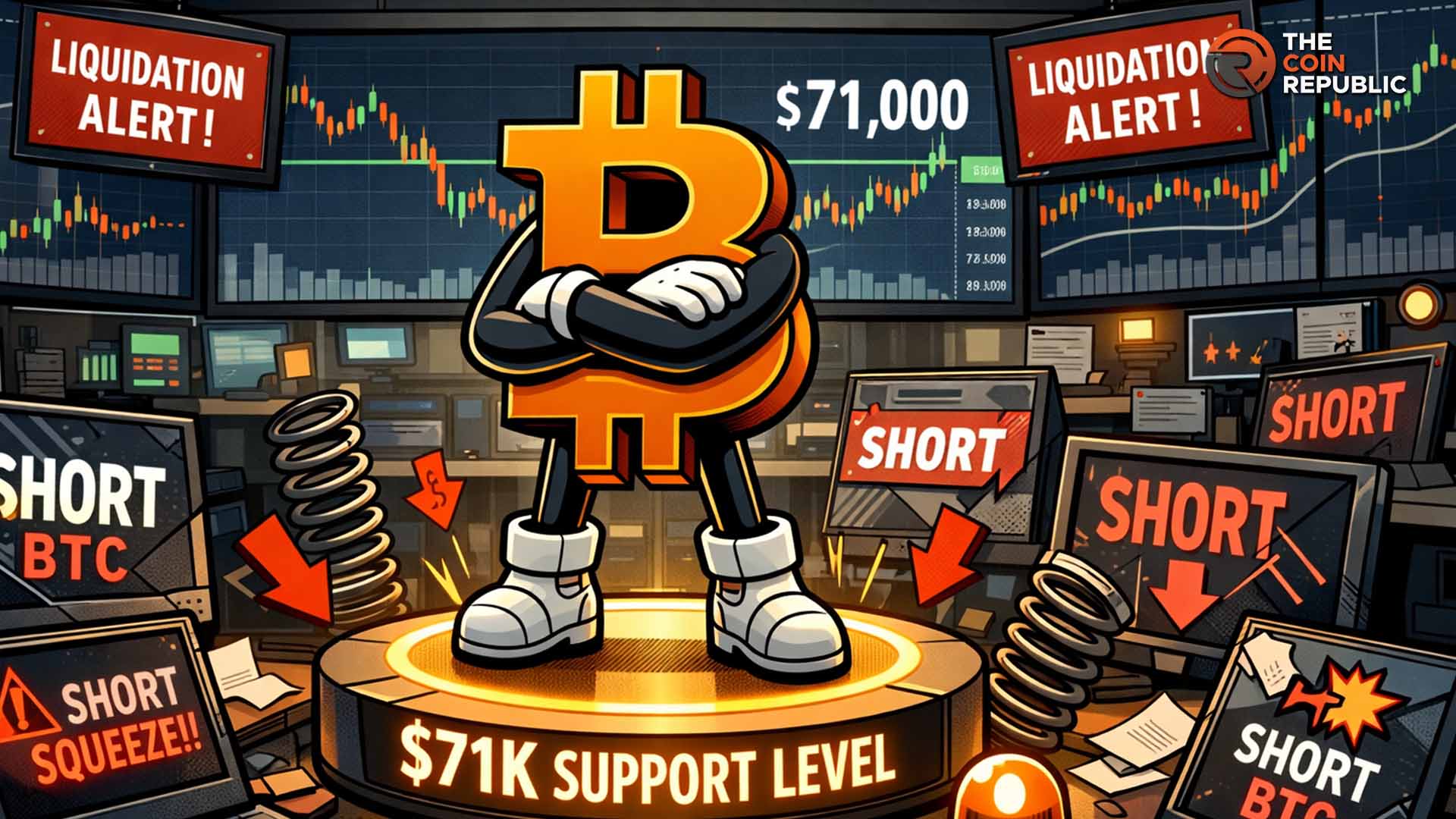
Extreme short positioning in Bitcoin derivatives markets, evidenced by a 6% funding rate, indicates a high probability of a short squeeze event. Despite bearish sentiment and geopolitical concerns, Bitcoin's $71,000 support level is holding, suggesting underlying demand from institutional inflows via spot ETFs. The current market structure, with significant shorting against strong fundamentals like increasing hash rates and ETF demand, presents a volatile setup ripe for a potential upward price movement if shorts are liquidated. Traders should monitor the $75,000 level as a key upside target, with a sustained break above it potentially triggering further liquidations of short positions.

XRP's Bollinger Bands are exhibiting a significant squeeze, indicating a period of consolidation that historically precedes a substantial price move and increased volatility. Despite recent price dips and ETF outflows, a surge in XRP Ledger payment volume and a prior golden cross suggest potential for a rebound towards the $2 mark if market conditions stabilize. The current neutral RSI and ongoing broader market weakness, influenced by external factors like oil prices, temper immediate bullish conviction despite technical signals for a potential XRP breakout.

XRP's weekly chart exhibits a fractal pattern mirroring the 2017 cycle low, historically preceding significant upside rallies. A sustained breakout above the $2 resistance zone, coinciding with key moving averages and supply clusters, is crucial for confirming a bullish trend continuation. Declining XRP balances on exchanges suggest increasing accumulation and long-term holder confidence, potentially signaling future price appreciation. While technicals suggest a potential 1,500% rally, the immediate path requires overcoming substantial overhead resistance around the $2 mark.
MicroStrategy's continued use of STRC preferred stock issuance to fund Bitcoin accumulation demonstrates a robust and repeatable strategy for expanding its BTC treasury without diluting common shareholders. The record $300M volume in STRC trading signifies strong investor demand for the high-yield instrument, validating MicroStrategy's approach and potentially enabling accelerated Bitcoin acquisition. The market's positive reaction to MSTR stock, alongside Bitcoin holding steady, suggests that institutional investors are increasingly comfortable with and supportive of MicroStrategy's hybrid TradFi-crypto accumulation model.

Bitcoin's inability to sustain above $70,000 highlights investor caution ahead of key U.S. inflation data, suggesting a potential for increased volatility. Geopolitical tensions in the Middle East, specifically concerning the Strait of Hormuz, are contributing to broader market uncertainty and impacting crypto asset prices. Traders are closely watching the 50-day moving average for Bitcoin as a critical indicator for potential trend shifts, with a sustained break above it signaling a potential bullish turning point. The upcoming U.S. consumer price index report is a significant macro event that could influence Federal Reserve policy expectations and, consequently, crypto market sentiment.
Despite a strong bullish sentiment in XRP derivatives with a long/short ratio of 2.9032, the price remains stagnant, indicating a disconnect between trader positioning and market execution. XRP's price consolidation between $1.37 and $1.40, coupled with trading below key moving averages, suggests underlying bearish structural factors are overriding short-term bullish sentiment. The high long-short ratio in XRP derivatives could signal a potential for a sharp price decline if overleveraged long positions are liquidated, a common market dynamic when sentiment is heavily skewed. Market indecision is evident in XRP's muted volume despite high futures trading activity, suggesting traders are awaiting a clear catalyst to break the current consolidation phase and resistance levels.
The article provides a guide on how to buy Shiba Inu (SHIB) in 2026, detailing exchange selection, account verification, fund deposit, and order placement, indicating ongoing retail interest and accessibility for the meme coin. Shiba Inu's ecosystem expansion into Layer-2 (Shibarium), DEX (ShibaSwap), and NFTs suggests a strategic move beyond its meme coin origins, aiming to build utility and potentially attract a broader investor base. Despite ecosystem developments, the article emphasizes SHIB's speculative nature and high volatility, cautioning investors about risk and the influence of market sentiment and social media hype on its price.

Bitcoin is exhibiting characteristics of a 'frustrating phase' in its cycle, marked by sideways price action and 'fake breakouts' due to weakening apparent demand and a bearish 'bull-bear indicator'. The current on-chain metrics, including a negative long-term holder SOPR and insufficient buying pressure, suggest continued volatility and a potential reset period before a new accumulation phase can begin. Despite near-term price uncertainty and a slip below $70,000, there are indications of institutional players quietly accumulating BTC at current 'discounted' prices, hinting at potential future upside.
The article positions sports predictive markets, exemplified by TrustDice, as a non-correlated alternative asset class for generating alpha, appealing to institutional and sophisticated retail investors seeking diversification from traditional markets facing inflation and compressed yields. TrustDice is presented as a sophisticated trading terminal leveraging blockchain for transparency, offering high liquidity, T+0 settlement, tight spreads, and high position limits, which are key advantages over traditional sportsbooks and illiquid alternative assets. The platform's emphasis on quantitative infrastructure, capital preservation via multi-sig cold storage, and provably fair technology aims to attract users seeking institutional-grade tools for risk management and tactical hedging in a decentralized finance context.
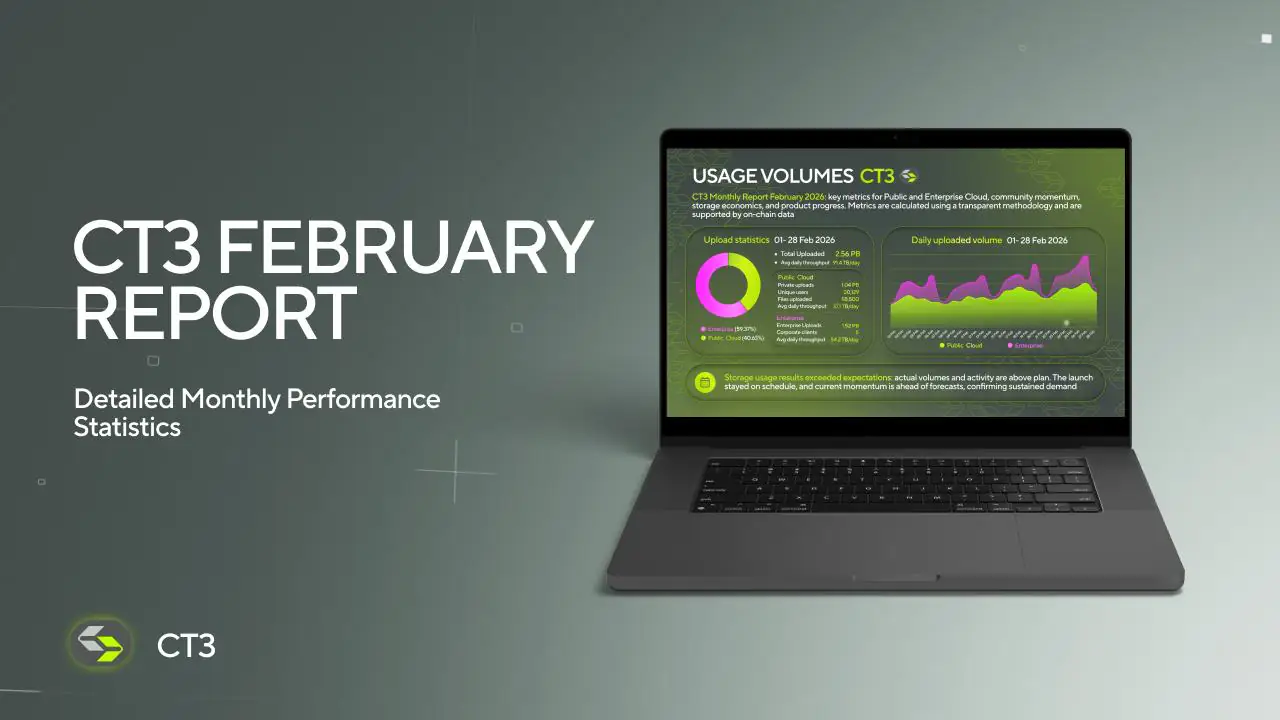
CT3's February 2026 report indicates actual performance metrics for its decentralized storage network exceeded initial estimates, suggesting strong underlying demand and operational efficiency. The sustained demand and growth in both public cloud and enterprise segments highlight CT3's increasing relevance as a scalable and secure data storage solution. Exceeding performance expectations in February provides a positive signal for CT3's infrastructure resilience and its capacity to handle increasing user activity and enterprise data loads.

Geopolitical uncertainty is driving cautious trading in Bitcoin, causing it to pull back from recent highs and impacting leveraged positions. AI tokens are showing resilience and outperforming the broader crypto market, driven by strong retail demand and specific catalysts like exchange listings and positive commentary from industry leaders. While Bitcoin and many altcoins are experiencing pullbacks due to macro-economic fears, the divergence in AI token performance suggests a sector-specific strength that traders should monitor. Decreased open interest in BTC and ETH futures on CME, alongside mixed signals in options markets, indicates a cautious institutional stance despite some retail-driven bets on higher prices.
Signal context only. Validate with price action, liquidity, and risk limits before taking a position.
USDT
USDT
US lawmakers are proposing legislation to explicitly ban prediction market contracts on war, death, and assassination, removing regulatory discretion. The proposed "DEATH BETS Act" aims to codify a ban on such contracts, irrespective of CFTC leadership, addressing concerns over national security and insider profit. This regulatory push, coupled with the CFTC's announced plans to expand oversight, signals increased scrutiny on prediction markets and their potential for misuse. The development could impact platforms offering event contracts, potentially leading to delistings or stricter compliance requirements for specific contract types.
