
Navigating Crypto News

CoinFeather
Navigating Crypto News
Quick market read from this story
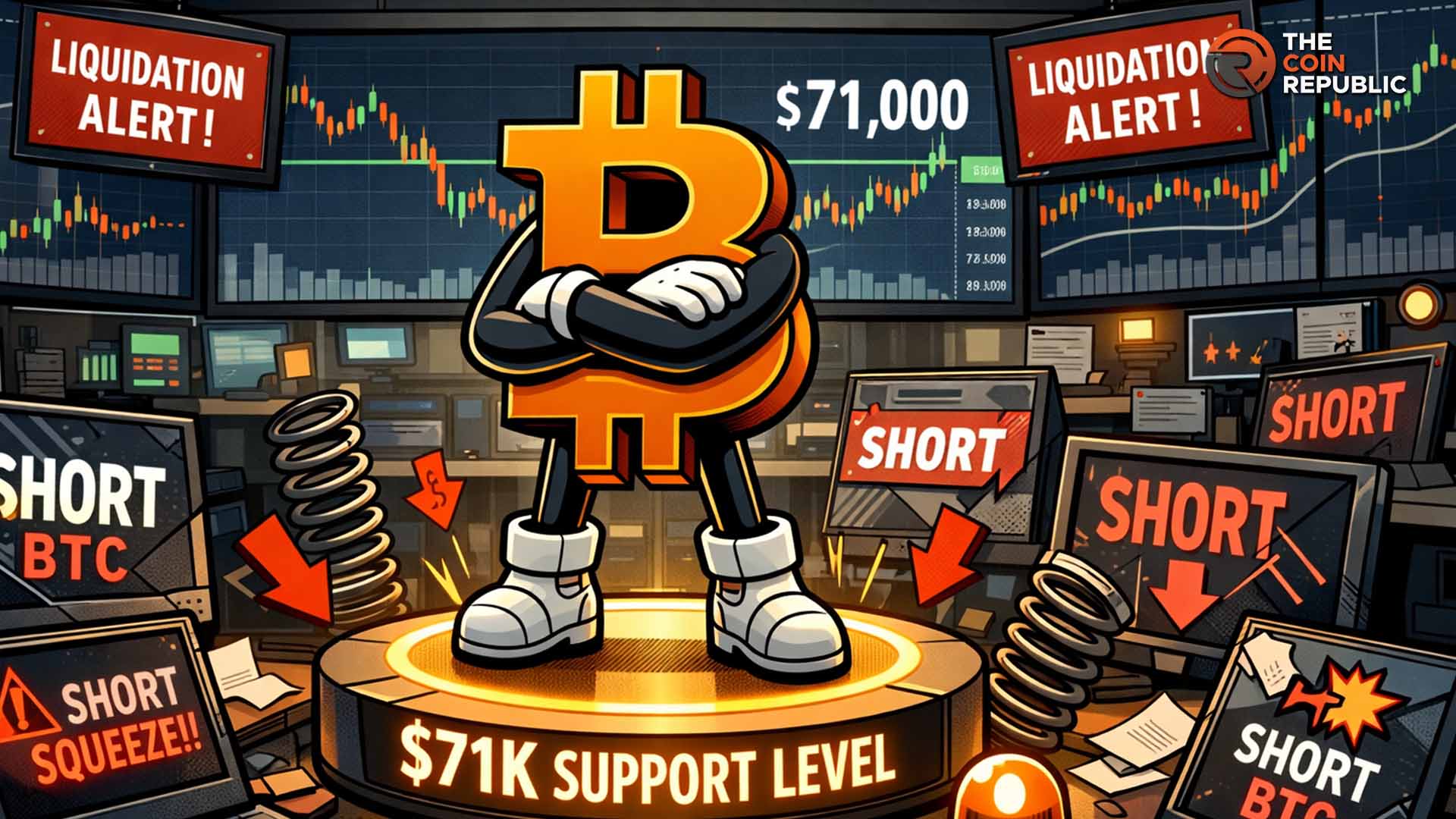
Extreme short positioning in Bitcoin derivatives markets, evidenced by a 6% funding rate, indicates a high probability of a short squeeze event.
Despite bearish sentiment and geopolitical concerns, Bitcoin's $71,000 support level is holding, suggesting underlying demand from institutional inflows via spot ETFs.
The current market structure, with significant shorting against strong fundamentals like increasing hash rates and ETF demand, presents a volatile setup ripe for a potential upward price movement if shorts are liquidated.
Traders should monitor the $75,000 level as a key upside target, with a sustained break above it potentially triggering further liquidations of short positions.
Deep Dive
Bitcoin is currently at a critical juncture, holding the $71,000 support level despite significant bearish bets from institutional investors. Market data reveals a substantial accumulation of contrarian short positions, which analysts warn could precede a sharp, violent price increase, often referred to as a short squeeze. This situation arises even as Bitcoin's supply reaches 20 million coins.
Analysis from Cryptoquant indicates that the 30-day Bitcoin funding rate percentile has fallen to 6%, the lowest point since early 2023. In perpetual futures markets, funding rates reflect the sentiment between long and short traders. A negative rate signifies that short sellers are paying long traders, indicating a dominant bearish outlook across the derivatives market. Historically, such one-sided positioning has led to volatile market reactions, raising questions about whether this will result in a temporary squeeze or a more significant downturn.
At the time of reporting, BTC was trading around $68,800, showing bearish dominance in short-term structures. The asset remains approximately 42% below its all-time high of $126,080. The next potential upside target is around $75,000, which would require sustained volume and a shift in the Fear & Greed Index, currently at an 'Extreme Fear' score of 13. If Bitcoin can maintain strength above the $70,000 support, it may retest higher resistance zones between $72K–$73K. However, failure to hold $70,000 could lead to a pullback towards the $69K–$70K region before another upward attempt.
Global macroeconomic factors, particularly geopolitical tensions in the Middle East, are contributing to trader caution. This uncertainty often leads traditional markets to adopt a risk-off approach, which can translate into increased hedging in digital assets. Investors are using short positions to protect their spot holdings, directly fueling the risk of a Bitcoin short squeeze. Despite the prevailing fear, network fundamentals remain strong, with hash rates consistently reaching new all-time highs. Furthermore, institutional inflows via spot ETFs are providing a consistent buy-side wall, creating a unique market dynamic of bearish bets against structural demand.
Source, catalyst, and sector overlap from the latest feed.
Jupiter Exchange's integration of Chainlink's data streams for its new prediction markets signifies a crucial step in enhancing trust and reliability for decentralized financial products on Solana. The adoption of Chainlink's oracle services by a major Solana DEX like Jupiter highlights the growing demand for secure and transparent data infrastructure in emerging DeFi applications. The reported LINK price surge following the integration announcement suggests positive market sentiment towards Chainlink's utility and its role in powering advanced financial tools. This development could pave the way for more sophisticated conditional trading systems and blockchain-based insurance solutions on Solana, leveraging Chainlink's robust data feeds.
MicroStrategy's continued use of STRC preferred stock issuance to fund Bitcoin accumulation demonstrates a robust and repeatable strategy for expanding its BTC treasury without diluting common shareholders. The record $300M volume in STRC trading signifies strong investor demand for the high-yield instrument, validating MicroStrategy's approach and potentially enabling accelerated Bitcoin acquisition. The market's positive reaction to MSTR stock, alongside Bitcoin holding steady, suggests that institutional investors are increasingly comfortable with and supportive of MicroStrategy's hybrid TradFi-crypto accumulation model.
The article positions sports predictive markets, exemplified by TrustDice, as a non-correlated alternative asset class for generating alpha, appealing to institutional and sophisticated retail investors seeking diversification from traditional markets facing inflation and compressed yields. TrustDice is presented as a sophisticated trading terminal leveraging blockchain for transparency, offering high liquidity, T+0 settlement, tight spreads, and high position limits, which are key advantages over traditional sportsbooks and illiquid alternative assets. The platform's emphasis on quantitative infrastructure, capital preservation via multi-sig cold storage, and provably fair technology aims to attract users seeking institutional-grade tools for risk management and tactical hedging in a decentralized finance context.
Geopolitical volatility in oil markets is driving significant trading volume on derivatives platforms like Hyperliquid, highlighting crypto's role as a venue for macro-driven leveraged bets. The correlation between oil price swings and crypto asset performance underscores crypto's current status as a risk-on asset, heavily influenced by broader macroeconomic and geopolitical events. Traders are utilizing Hyperliquid for leveraged exposure to commodity price movements, indicating a demand for continuous, high-leverage trading opportunities that mirror traditional market volatility. Mixed signals from political figures regarding geopolitical conflicts are creating market uncertainty, leading to rapid repositioning and increased trading activity across both traditional and digital asset markets.
The UK government's new fraud strategy highlights the increasing use of cryptocurrencies in criminal activities, signaling a heightened regulatory focus on the sector. The strategy's emphasis on international cooperation and a whole-system response suggests that efforts to combat crypto fraud will become more coordinated globally. While the report focuses on crime, the increased attention from governments worldwide on crypto regulation could lead to more clarity, potentially impacting market sentiment and adoption.
Despite trading below its 200-day moving average, XRP is showing subtle on-chain strength with its Sharpe Z-Score reaching its highest level in nearly a year, suggesting potential underlying accumulation by informed market participants. The positive shift in XRP's 7-day momentum and rising 30-day Sharpe Z-Score indicate a potential early-stage recovery, which traders should monitor as it precedes broader market attention. While institutional inflows into XRP-related ETFs are noted, the primary focus for traders should be on the improving risk-adjusted performance metrics and structural shifts rather than just price action.
The emergence of startups like EigenLayer, LayerZero, and Celestia highlights a significant trend towards modular blockchain architectures and enhanced interoperability, potentially reshaping Web3 infrastructure. Innovations in areas like restaking (EigenLayer) and cross-chain communication (LayerZero) are increasing capital efficiency and enabling seamless asset/data flow, which could drive broader adoption of decentralized applications. Projects focusing on scalable execution layers (Fuel Labs) and decentralized identity (Humanity Protocol) address critical bottlenecks for mass adoption, suggesting a maturing ecosystem beyond basic cryptocurrency functions. The article profiles six key startups in 2026, indicating a forward-looking perspective on the evolving landscape of blockchain technology and its potential to support real-world applications across various industries.
Adam Back's defense of Strategy Inc.'s Bitcoin accumulation as a 'free market' action suggests a bullish long-term outlook, framing large-scale buying as a natural market outcome rather than a concern. The commentary highlights the increasing institutional involvement in Bitcoin, contrasting it with the previous retail-dominated market and acknowledging rising concerns about potential market manipulation. With 20 million BTC mined and ongoing accumulation, the narrative of Bitcoin scarcity is reinforced, with proponents anticipating this will drive price appreciation in the medium to long term.
Kalshi's expansion into Brazil via XP International positions prediction markets as a 'new asset class' focused on macro events, aiming to leverage existing brokerage infrastructure and client base. The launch occurs amidst Brazil's significant efforts to combat gambling addiction, creating a regulatory and reputational tension between Kalshi's 'derivative' framing and the country's public health concerns. While initially focused on macro variables like inflation and interest rates, the upcoming election and World Cup in Brazil present potential future contract expansion, increasing regulatory scrutiny and market risk. Economic analysis of similar platforms suggests retail participants in prediction markets often face significant losses, raising questions about the long-term sustainability and user economics of Kalshi's offering in Brazil.
Live Feed
Loading the broader stream in the same flow as the homepage feed.

The CoinDesk 20 Index is down 0.6%, indicating a broad market weakness with specific underperformers like HBAR and XLM contributing to the decline. While the overall index is underperforming, specific assets like ICP and DOT are showing positive momentum, suggesting selective strength within the market. The performance update provides a snapshot of market sentiment for the day, highlighting which assets are leading and lagging within a curated index.

Shiba Inu's lead ambassador Shytoshi Kusama's temporary absence from X, indicated by a bio change to 'UI bug fixes', suggests ongoing development or internal work, creating anticipation within the community for future announcements. The SHIB token's price action shows a slight uptick amidst broader market fluctuations and liquidations, with traders monitoring macroeconomic data like the CPI report for directional cues. Kusama's previous mention of an independent AI project raises speculation about whether his current X hiatus is related to this development, potentially signaling future ecosystem expansion.

Ghana's SEC has launched a regulatory sandbox for 11 virtual asset service providers, signaling a proactive approach to crypto oversight. The 12-month sandbox program aims to gather data to inform future licensing guidelines, potentially paving the way for clearer regulations in the region. Companies demonstrating market readiness within the sandbox may receive full licenses after six months, creating a potential pathway for compliant VASP operations in Ghana.

The ECB's 'Appia' initiative outlines a long-term strategy for a European tokenized financial ecosystem, aiming to integrate DLT while keeping central bank money as the settlement anchor. This development signals a significant regulatory push towards tokenization in Europe, potentially impacting traditional finance infrastructure and paving the way for new digital asset services. The initiative, complemented by the 'Pontes' settlement solution launching in Q3 2026, suggests a structured, multi-year approach to digital asset market development by a major central bank. By focusing on central bank money as the core settlement asset, the ECB aims to ensure financial stability and strengthen the Euro's role in future digital markets, influencing global regulatory trends.

US Senator Adam Schiff has introduced the DEATH BETS Act, proposing to ban federally regulated prediction markets from listing contracts related to war, assassination, and death. This legislative action stems from recent concerns over insider trading on prediction markets, particularly following events related to the US-Iran confrontation where significant profits were made on war-related outcomes. The bill targets platforms overseen by the CFTC, aiming to prevent the misuse of classified information and protect national security by prohibiting 'death bets'.

Dogecoin has experienced a significant 100%+ surge in trading volume, indicating increased trader interest in meme coins despite its ongoing downtrend and price consolidation around $0.092. Despite the volume spike, Dogecoin remains technically in a downtrend, trading below key moving averages, suggesting that current price action may not yet reflect a sustainable trend reversal. The increase in volume and bullish long-short ratios on derivatives markets suggest anticipation of volatility, but a failure to materialize a rally could lead to liquidations and further downward pressure. Historically, meme coin activity often rises with overall market optimism or Bitcoin stabilization, implying that Dogecoin's current volume surge could be a leading indicator of broader speculative asset interest returning.

Foundry's expansion into Zcash mining with a compliance-focused pool signals a growing institutional interest in privacy-preserving assets, potentially attracting more regulated entities to the ZEC ecosystem. The introduction of a regulated mining infrastructure for Zcash addresses a key gap, potentially enhancing network stability and attracting miners who prioritize compliance and institutional-grade operations. Zcash's recent price outperformance, coupled with increasing demand for financial anonymity due to evolving tax regulations, suggests a favorable environment for privacy coins, with Foundry's move potentially amplifying this trend.
The U.S. Justice Department is reportedly investigating Iran's alleged use of Binance to evade sanctions, potentially impacting regulatory scrutiny on the exchange. Binance's lawsuit against the Wall Street Journal highlights a significant legal battle and a defense against allegations of facilitating illicit financial flows. While the investigation's direct target (Binance vs. customers) is unclear, the scale of alleged transactions ($1 billion) suggests a high-impact regulatory development for the crypto exchange sector.
The reported collaboration between Mastercard, Binance, PayPal, and Ripple signifies a major step towards integrating blockchain technology into mainstream payment systems, potentially reducing cross-border transaction costs and settlement times significantly. This partnership could accelerate the adoption of digital assets for everyday transactions by leveraging Binance's liquidity, PayPal's user base, and Ripple's settlement infrastructure, creating a robust blockchain payment rail. The initiative highlights growing institutional confidence in regulated crypto infrastructure and positions blockchain as a credible alternative to traditional banking systems like SWIFT, impacting global commerce and financial innovation.

The dismissal of anti-terrorism claims against Binance by a US federal court removes a significant legal overhang, potentially improving investor sentiment and reducing regulatory uncertainty for BNB. BNB's price action is increasingly tied to on-chain utility and ecosystem liquidity, suggesting a maturing asset that may see more structured price discovery driven by fundamental network health rather than pure speculation. With BNB consolidating around the $600 support level, a break below this critical zone could trigger a deeper correction towards $200, while holding above it may pave the way for a retest of $750 and a potential recovery towards $1,000 by year-end.

Dogecoin is exhibiting technical patterns historically preceding significant rallies, suggesting a potential breakout setup driven by speculative demand. Elon Musk's 'X Money' launch, while not explicitly mentioning DOGE, reignites speculation about its potential integration into the X ecosystem, a recurring catalyst for price sentiment. Increased whale transaction activity, coupled with a historical technical pattern, indicates a potential accumulation phase that could precede increased volatility and price appreciation. Traders are closely watching the $0.10 breakout level and $0.13 resistance, with a confirmed move above these points potentially signaling a shift towards higher targets around $0.20-$0.25.

U.S. February CPI data meeting forecasts reinforces the expectation of no near-term Federal Reserve interest rate cuts, potentially dampening speculative inflows into risk assets like Bitcoin. The Federal Reserve's continued hawkish stance, indicated by the unchanged interest rate outlook, suggests a less favorable environment for crypto assets that typically benefit from lower borrowing costs. Bitcoin's price decline following the CPI report indicates a negative market reaction to the sustained higher interest rate environment, suggesting traders are factoring in prolonged monetary tightening.
Ethereum is exhibiting a re-accumulation pattern on the monthly chart, suggesting a potential for a significant upward move if key resistance levels are broken. A decisive breakout above the $2,150 resistance level, followed by sustained momentum, could propel ETH towards the $2,400 target, indicating a bullish short-term outlook. Failure to overcome the $2,150 resistance could lead to a retest of lower support zones, highlighting the importance of this level for confirming continued bullish momentum.
Shiba Inu is exhibiting a classic falling wedge pattern on its 12-hour chart, suggesting a potential breakout is imminent. Historical analysis indicates that previous falling wedge formations on SHIB have led to significant price surges, with one instance resulting in a 455% increase. An analyst targets $0.0000311, a level aligning with previous highs, implying a potential 455% gain from current trading prices if the pattern resolves bullishly.

The current AI scaling paradigm is hitting physical and economic limits, leading to increased energy consumption and diminishing returns, which could signal a shift in investment focus away from brute-force scaling. AI's unreliability in critical applications like law and finance, due to issues like hallucination and fabricated data, creates a growing verification burden and erodes trust, suggesting a need for more robust reasoning capabilities. The high cost of training and inference for current AI models, coupled with their inherent limitations, points towards the potential for alternative architectures like neurosymbolic or decentralized AI to offer more sustainable and reliable solutions. Decentralized AI development, potentially leveraging blockchain, could reduce concentration risk and align AI deployment with local needs, offering a more community-driven and auditable approach to AI advancement.
Signal context only. Validate with price action, liquidity, and risk limits before taking a position.
