
Navigating Crypto News

CoinFeather
Navigating Crypto News

Quick market read from this story
The dismissal of anti-terrorism claims against Binance by a US federal court removes a significant legal overhang, potentially improving investor sentiment and reducing regulatory uncertainty for BNB.
BNB's price action is increasingly tied to on-chain utility and ecosystem liquidity, suggesting a maturing asset that may see more structured price discovery driven by fundamental network health rather than pure speculation.
With BNB consolidating around the $600 support level, a break below this critical zone could trigger a deeper correction towards $200, while holding above it may pave the way for a retest of $750 and a potential recovery towards $1,000 by year-end.
Deep Dive
Binance Coin (BNB) is demonstrating a fundamental shift, with its performance increasingly tied to on-chain utility and ecosystem liquidity rather than speculative volatility. The current technical narrative focuses on long-term accumulation around the $600 demand area, which has historically served as a strong support level. Despite broader market pessimism, BNB has shown resilience, consolidating above this crucial support.
In Q3 2025, BNB experienced a significant rally, reaching an all-time high of approximately $1,375 in late 2025. However, by Q1 2026, the price returned to the $600 demand zone. The weekly chart reveals a long-term ascending channel, with the current price testing the lower boundary around $600, aligning with a critical horizontal support. This zone is currently acting as a consolidation floor, suggesting institutional accumulation.
A significant legal development occurred on March 7th, when a US federal court dismissed all anti-terrorism claims against Binance. The court found that plaintiffs did not establish sufficient evidence that Binance had assisted or conspired with terrorist organizations, marking a positive step for the exchange.
If bullish pressure increases, BNB could retest the $750 level by the end of March 2026. Conversely, a decisive break below $600 would invalidate the current setup, increasing the probability of a correction toward the $200 demand zone.
On-chain data indicates network resilience, with daily transactions stabilizing at 15 million in Q1 2026 and total unique addresses nearing 800 million. These metrics signal consistent global adoption and a robust foundation for ecosystem growth.
Looking ahead, the primary bullish thesis anticipates a recovery toward the $1,000 psychological level in 2026. If the recovery pace mirrors previous cycles, BNB could reach the channel's middle band by Q3 2026. Long-term projections suggest BNB could trade between $2,500 and $4,500 by 2030, with potential highs reaching $12,000 by 2031 and $50,000 by 2050, assuming sustained relevance in enterprise blockchain use cases and continued global adoption.
Factors influencing Binance Coin's price include exchange network usage, liquidity, adoption trends, historical support/resistance zones, and institutional participation. Despite inherent risks in crypto investments, BNB is often viewed as a strong long-term asset due to its exchange utility, token burns, and ecosystem growth.
Source, catalyst, and sector overlap from the latest feed.
Dogecoin is exhibiting technical patterns historically preceding significant rallies, suggesting a potential breakout setup driven by speculative demand. Elon Musk's 'X Money' launch, while not explicitly mentioning DOGE, reignites speculation about its potential integration into the X ecosystem, a recurring catalyst for price sentiment. Increased whale transaction activity, coupled with a historical technical pattern, indicates a potential accumulation phase that could precede increased volatility and price appreciation. Traders are closely watching the $0.10 breakout level and $0.13 resistance, with a confirmed move above these points potentially signaling a shift towards higher targets around $0.20-$0.25.
The TRUMP token's significant decline, down over 96% from its all-time high, is primarily driven by political sentiment shifts and ongoing geopolitical tensions, rather than broader market weakness. Despite a substantial price drop, the TRUMP token maintains active trading with a $676 million market cap and $118 million in daily volume, indicating continued speculative interest. The token's price trajectory is highly sensitive to political developments, suggesting that future price action will be dictated by shifts in public opinion and election outcomes.
Geopolitical tensions between Iran and the US/Israel are escalating, with Iran naming major tech firms like Nvidia and Google as potential targets, increasing market uncertainty. The conflict's escalation could lead to increased volatility in crypto markets as investors move away from riskier assets, potentially pressuring Bitcoin prices further. While direct impact on crypto infrastructure is not specified, the targeting of tech firms highlights systemic risks that could indirectly affect digital asset markets through broader economic disruption.
The U.S. Department of Justice's investigation into Binance for alleged sanctions breaches involving Iran, potentially totaling $1.7 billion, introduces significant regulatory risk for the exchange. While Binance claims internal reviews found smaller exposure and cooperation with authorities, the ongoing DOJ probe could lead to substantial fines or operational restrictions, impacting its market position. This development highlights the increasing scrutiny on major crypto exchanges regarding compliance with international financial regulations, potentially affecting broader market sentiment towards centralized platforms.
The release of US February CPI data at 12:30 PM UTC is a key macroeconomic event that could influence crypto market sentiment and price action, particularly for risk assets like Bitcoin. Economists anticipate a slight uptick in monthly inflation to 0.3% and a stable yearly rate of 2.4%, with core CPI expected to rise 0.2%, providing a data point for the Federal Reserve's monetary policy considerations. While the data itself is informational, the market's reaction to the inflation figures will be crucial for assessing near-term trading opportunities and potential shifts in investor risk appetite.
Ripple's planned acquisition of an Australian AFSL license signifies a strategic expansion into the APAC region, aiming to enhance its regulated payments services and potentially increase transaction efficiency for institutional clients. The development, coupled with strong APAC growth and existing Australian client relationships, positions Ripple to leverage blockchain for faster, more transparent cross-border payments, supporting its broader business objectives. While Ripple's expansion is positive, XRP's price outlook is tempered by technical indicators suggesting a potential late-stage bearish cycle, implying a cautious approach to immediate upside despite growing institutional interest. The article highlights increasing institutional demand for XRP, evidenced by spot ETF inflows, which could provide a foundation for future price recovery, though the timing remains uncertain given current technical patterns.
Binance's defamation lawsuit against The Wall Street Journal, stemming from allegations of facilitating transactions for Iranian entities, highlights ongoing regulatory scrutiny and legal challenges faced by major exchanges. The legal action by Binance, seeking damages and a jury trial, signals a strong defense against reputational harm and could set a precedent for how crypto platforms respond to critical media reporting on compliance issues. While the lawsuit itself is a direct legal event, its market impact is likely to be indirect, primarily affecting Binance's operational environment and investor confidence rather than causing immediate price action for specific assets.
The arrest of a Darwin Labs co-founder in India's GainBitcoin scam probe highlights ongoing regulatory scrutiny and enforcement actions against fraudulent crypto schemes. This development underscores the significant financial losses investors can face in complex, long-running fraud cases, impacting trust in the broader crypto market. The involvement of Darwin Labs in building the technological infrastructure for GainBitcoin suggests a focus on tracing the technical enablers of such scams.
Ghana's SEC has launched a regulatory sandbox for 11 virtual asset service providers, signaling a proactive approach to crypto oversight. The 12-month sandbox program aims to gather data to inform future licensing guidelines, potentially paving the way for clearer regulations in the region. Companies demonstrating market readiness within the sandbox may receive full licenses after six months, creating a potential pathway for compliant VASP operations in Ghana.
The ECB's 'Appia' initiative outlines a long-term strategy for a European tokenized financial ecosystem, aiming to integrate DLT while keeping central bank money as the settlement anchor. This development signals a significant regulatory push towards tokenization in Europe, potentially impacting traditional finance infrastructure and paving the way for new digital asset services. The initiative, complemented by the 'Pontes' settlement solution launching in Q3 2026, suggests a structured, multi-year approach to digital asset market development by a major central bank. By focusing on central bank money as the core settlement asset, the ECB aims to ensure financial stability and strengthen the Euro's role in future digital markets, influencing global regulatory trends.
Mastercard's expanded Crypto Partner Program, integrating over 85 firms including Binance and PayPal, signifies a major push to embed blockchain payments into mainstream commerce via its new Multi-Token Network. The introduction of the Multi-Token Network (MTN) as a private settlement layer for tokenized bank deposits and stablecoins (USDC, PYUSD, USDG, SoFiUSD) aims to provide institutional-grade reliability and reduce cross-border transaction fees by up to 7%. Support for self-custody wallets like MetaMask, allowing direct spending from user-controlled wallets, indicates a significant adaptation to user behavior and a move towards more decentralized payment rails. With monthly crypto transaction volumes projected to hit $1 trillion by December 2026 and growing consumer interest, Mastercard is strategically positioning itself to capture a significant share of the emerging crypto commerce market.
The listing of Midnight (NIGHT) on Binance, the world's largest exchange, provides significant market access and liquidity, potentially driving near-term price discovery. Midnight's focus on privacy using zero-knowledge proofs, coupled with its Cardano ecosystem partnership, positions it within a growing niche that could attract specific investor interest. The initial price surge followed by a sell-off suggests immediate speculative trading activity, characteristic of new Binance listings, with longer-term price action dependent on adoption and utility.
Solmate Infrastructure's strategic pivot to becoming a Solana-focused digital infrastructure hub in Abu Dhabi, coupled with a reverse stock split, signals a move to attract institutional capital and streamline operations. The company's increased focus on Solana validators, staking services, and specialized hardware deployment in the UAE, backed by prior significant funding, positions it to capitalize on regional digital economy growth. While the corporate restructuring and rebranding aim to align with blockchain operations, the cancellation of the RockawayX merger indicates potential challenges in executing all strategic partnerships.
Bitcoin's rapid recovery above $70,000, mirroring broader risk assets, suggests a strong correlation with oil price movements and a potential decoupling from immediate Fed rate cut expectations. The market appears to be pricing in the current inflation data and the geopolitical situation, with Bitcoin's resilience indicating a potential shift in sentiment despite ongoing macro uncertainties. The correlation between Bitcoin and oil price action highlights the sensitivity of crypto markets to geopolitical events and commodity fluctuations, presenting both opportunities and risks for traders.
Live Feed
Loading the broader stream in the same flow as the homepage feed.
Significant liquidation events, particularly impacting long positions, suggest a potential shift in short-term sentiment for SHIB following a brief rally. The price action indicates that SHIB is currently facing overhead resistance at its 50-day and 100-day EMAs, suggesting a bearish technical outlook until these levels are decisively reclaimed. Broader market liquidations exceeding $248 million highlight a prevailing risk-off sentiment, which could continue to pressure altcoins like SHIB in the near term.

SlowMist's introduction of a Web3 security framework for AI agents addresses a growing attack surface as autonomous tools increasingly manage digital assets. The framework aims to mitigate risks like prompt injection and unauthorized asset loss without compromising AI efficiency, signaling a proactive approach to emerging threats in the crypto space. As more firms deploy AI trading bots, this security solution highlights the critical need for robust governance and execution-layer controls to prevent exploits and ensure operational integrity.
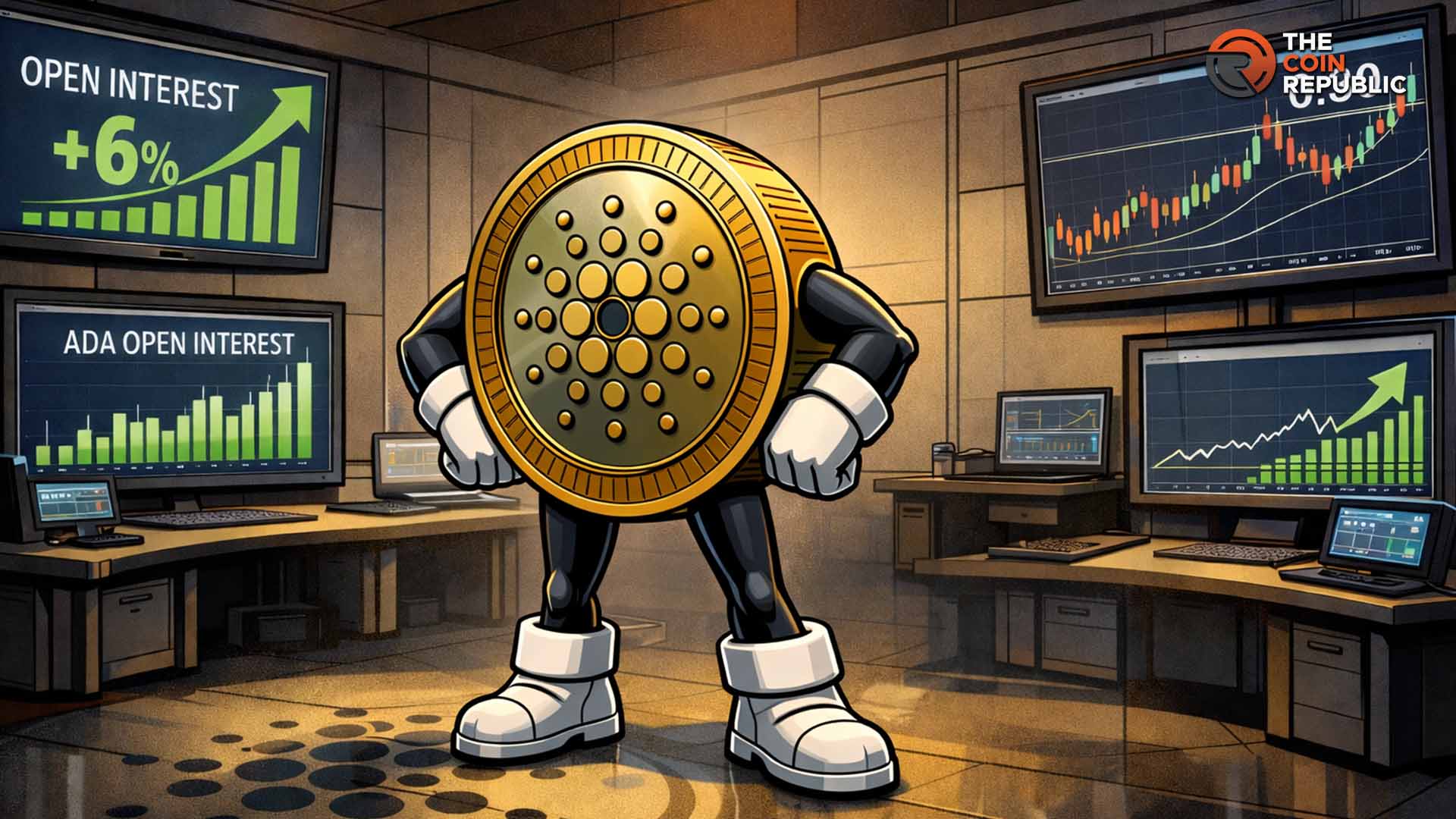
Increased futures market activity for Cardano, evidenced by a 6% rise in open interest, suggests growing trader confidence and a potential near-term price target of $0.3 resistance. Cardano's UTXO model, enhanced for smart contracts, combined with the upcoming Ouroboros Leios upgrade for parallel processing, positions the network for efficient, large-scale payment distributions. A governance proposal to withdraw 800,000 ADA from the treasury to establish legal and technical infrastructure marks a significant step towards a broader Cardano DeFi liquidity program. The combination of rising derivatives interest and foundational network improvements indicates a potential shift in Cardano's market perception, warranting a watchlist approach for traders.
Goldman Sachs' substantial $154 million investment in XRP ETFs signals strong institutional conviction, potentially validating the asset class and influencing broader institutional adoption trends. Despite a significant portion of XRP ETF assets being held by retail investors, the entry of a major player like Goldman Sachs provides a crucial layer of institutional legitimacy and could attract further capital. The diversification of Goldman Sachs' XRP ETF holdings across four issuers suggests a strategic approach to managing risk within the emerging crypto ETF landscape, rather than a speculative bet on a single product. With XRP ETFs launched in late 2025 and analysts projecting significant price targets, this institutional backing, coupled with ongoing utility in cross-border payments, positions XRP for potential near-term upside.

Strive's $50 million investment in Strategy's STRC preferred stock, alongside its own BTC accumulation and dividend increase, signals a strategic capital allocation towards yield-generating assets within the corporate treasury management space. The investment in STRC, which yields 11.5%, suggests Strive is seeking higher returns on its treasury, potentially indicating a shift in strategy for companies holding significant BTC reserves. Despite Strive's own stock underperformance and reverse stock split, its continued accumulation of Bitcoin and investment in MSTR's preferred shares highlights a persistent belief in BTC as a treasury asset, even amidst operational challenges. The market reaction to Strive's announcement, with ASST up 2.2% as BTC re-took $70,000, suggests a positive correlation between corporate treasury actions and broader market sentiment for Bitcoin.
The U.S. inflation rate holding at 2.4% met expectations, leading to a 'sell-the-news' reaction in Bitcoin as traders took profits, indicating that the market had already priced in the outcome. Persistent inflation above the Fed's 2% target suggests a 'higher for longer' interest rate stance, which typically reduces liquidity and can pressure speculative assets like Bitcoin. A rising portion of Bitcoin supply held at a loss signals potential increasing selling pressure, a pattern that historically can precede broader market stress and weakening sentiment. Future inflation trends, particularly concerning energy costs, will be critical; a resurgence could strengthen the USD and negatively impact crypto markets, while a continued decline might prompt Fed rate cuts later in 2026.
Bitcoin miners are resuming BTC sales due to rising operational costs exceeding $70,000 per coin, indicating potential selling pressure on the market. The shift in miner strategy, exemplified by MARA and Core Scientific, suggests a move towards liquidating reserves to cover expenses, potentially impacting Bitcoin's price stability. Market uncertainty and cautious investor sentiment, reflected in lower probabilities for future price targets, are exacerbating miner profitability concerns and driving sales. Despite Bitcoin's scarcity, rising mining costs and a lack of sustained demand indicate a consolidation phase, with even long-term holders realizing losses.
Despite trading below its 200-day moving average, XRP is showing subtle on-chain strength with its Sharpe Z-Score reaching its highest level in nearly a year, suggesting potential underlying accumulation by informed market participants. The positive shift in XRP's 7-day momentum and rising 30-day Sharpe Z-Score indicate a potential early-stage recovery, which traders should monitor as it precedes broader market attention. While institutional inflows into XRP-related ETFs are noted, the primary focus for traders should be on the improving risk-adjusted performance metrics and structural shifts rather than just price action.
The emergence of startups like EigenLayer, LayerZero, and Celestia highlights a significant trend towards modular blockchain architectures and enhanced interoperability, potentially reshaping Web3 infrastructure. Innovations in areas like restaking (EigenLayer) and cross-chain communication (LayerZero) are increasing capital efficiency and enabling seamless asset/data flow, which could drive broader adoption of decentralized applications. Projects focusing on scalable execution layers (Fuel Labs) and decentralized identity (Humanity Protocol) address critical bottlenecks for mass adoption, suggesting a maturing ecosystem beyond basic cryptocurrency functions. The article profiles six key startups in 2026, indicating a forward-looking perspective on the evolving landscape of blockchain technology and its potential to support real-world applications across various industries.

The CoinDesk 20 Index is down 0.6%, indicating a broad market weakness with specific underperformers like HBAR and XLM contributing to the decline. While the overall index is underperforming, specific assets like ICP and DOT are showing positive momentum, suggesting selective strength within the market. The performance update provides a snapshot of market sentiment for the day, highlighting which assets are leading and lagging within a curated index.

Shiba Inu's lead ambassador Shytoshi Kusama's temporary absence from X, indicated by a bio change to 'UI bug fixes', suggests ongoing development or internal work, creating anticipation within the community for future announcements. The SHIB token's price action shows a slight uptick amidst broader market fluctuations and liquidations, with traders monitoring macroeconomic data like the CPI report for directional cues. Kusama's previous mention of an independent AI project raises speculation about whether his current X hiatus is related to this development, potentially signaling future ecosystem expansion.

Adam Back's defense of Strategy Inc.'s Bitcoin accumulation as a 'free market' action suggests a bullish long-term outlook, framing large-scale buying as a natural market outcome rather than a concern. The commentary highlights the increasing institutional involvement in Bitcoin, contrasting it with the previous retail-dominated market and acknowledging rising concerns about potential market manipulation. With 20 million BTC mined and ongoing accumulation, the narrative of Bitcoin scarcity is reinforced, with proponents anticipating this will drive price appreciation in the medium to long term.
Signal context only. Validate with price action, liquidity, and risk limits before taking a position.
