
Navigating Crypto News

CoinFeather
Navigating Crypto News

Source, catalyst, and sector overlap from the latest feed.
Bitcoin's rapid recovery above $70,000, mirroring broader risk assets, suggests a strong correlation with oil price movements and a potential decoupling from immediate Fed rate cut expectations. The market appears to be pricing in the current inflation data and the geopolitical situation, with Bitcoin's resilience indicating a potential shift in sentiment despite ongoing macro uncertainties. The correlation between Bitcoin and oil price action highlights the sensitivity of crypto markets to geopolitical events and commodity fluctuations, presenting both opportunities and risks for traders.
Live Feed
Loading the broader stream in the same flow as the homepage feed.
Significant liquidation events, particularly impacting long positions, suggest a potential shift in short-term sentiment for SHIB following a brief rally. The price action indicates that SHIB is currently facing overhead resistance at its 50-day and 100-day EMAs, suggesting a bearish technical outlook until these levels are decisively reclaimed. Broader market liquidations exceeding $248 million highlight a prevailing risk-off sentiment, which could continue to pressure altcoins like SHIB in the near term.
Solmate Infrastructure's strategic pivot to becoming a Solana-focused digital infrastructure hub in Abu Dhabi, coupled with a reverse stock split, signals a move to attract institutional capital and streamline operations. The company's increased focus on Solana validators, staking services, and specialized hardware deployment in the UAE, backed by prior significant funding, positions it to capitalize on regional digital economy growth. While the corporate restructuring and rebranding aim to align with blockchain operations, the cancellation of the RockawayX merger indicates potential challenges in executing all strategic partnerships.

SlowMist's introduction of a Web3 security framework for AI agents addresses a growing attack surface as autonomous tools increasingly manage digital assets. The framework aims to mitigate risks like prompt injection and unauthorized asset loss without compromising AI efficiency, signaling a proactive approach to emerging threats in the crypto space. As more firms deploy AI trading bots, this security solution highlights the critical need for robust governance and execution-layer controls to prevent exploits and ensure operational integrity.
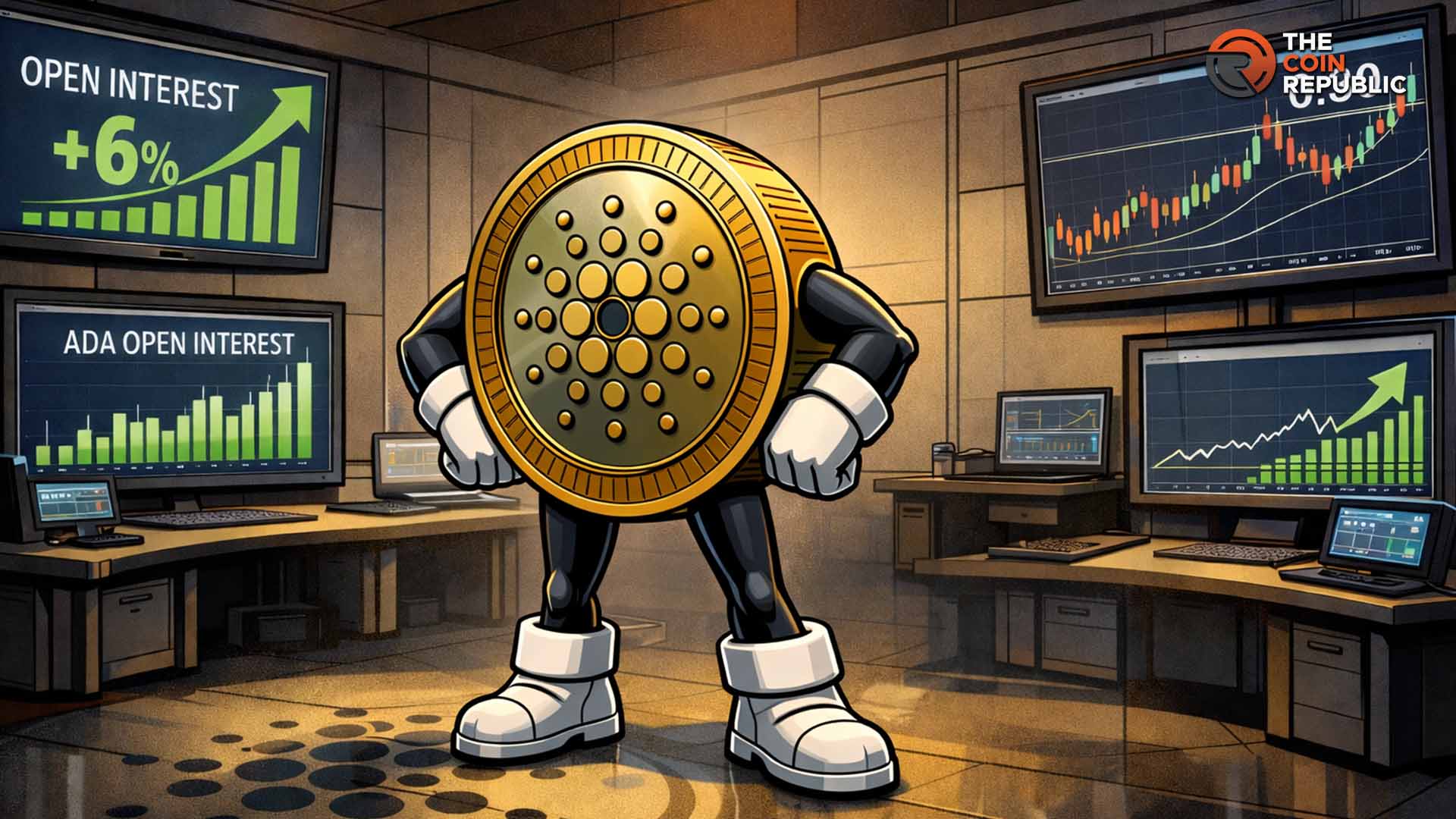
Increased futures market activity for Cardano, evidenced by a 6% rise in open interest, suggests growing trader confidence and a potential near-term price target of $0.3 resistance. Cardano's UTXO model, enhanced for smart contracts, combined with the upcoming Ouroboros Leios upgrade for parallel processing, positions the network for efficient, large-scale payment distributions. A governance proposal to withdraw 800,000 ADA from the treasury to establish legal and technical infrastructure marks a significant step towards a broader Cardano DeFi liquidity program. The combination of rising derivatives interest and foundational network improvements indicates a potential shift in Cardano's market perception, warranting a watchlist approach for traders.
The U.S. inflation rate holding at 2.4% met expectations, leading to a 'sell-the-news' reaction in Bitcoin as traders took profits, indicating that the market had already priced in the outcome. Persistent inflation above the Fed's 2% target suggests a 'higher for longer' interest rate stance, which typically reduces liquidity and can pressure speculative assets like Bitcoin. A rising portion of Bitcoin supply held at a loss signals potential increasing selling pressure, a pattern that historically can precede broader market stress and weakening sentiment. Future inflation trends, particularly concerning energy costs, will be critical; a resurgence could strengthen the USD and negatively impact crypto markets, while a continued decline might prompt Fed rate cuts later in 2026.
Bitcoin miners are resuming BTC sales due to rising operational costs exceeding $70,000 per coin, indicating potential selling pressure on the market. The shift in miner strategy, exemplified by MARA and Core Scientific, suggests a move towards liquidating reserves to cover expenses, potentially impacting Bitcoin's price stability. Market uncertainty and cautious investor sentiment, reflected in lower probabilities for future price targets, are exacerbating miner profitability concerns and driving sales. Despite Bitcoin's scarcity, rising mining costs and a lack of sustained demand indicate a consolidation phase, with even long-term holders realizing losses.
Despite trading below its 200-day moving average, XRP is showing subtle on-chain strength with its Sharpe Z-Score reaching its highest level in nearly a year, suggesting potential underlying accumulation by informed market participants. The positive shift in XRP's 7-day momentum and rising 30-day Sharpe Z-Score indicate a potential early-stage recovery, which traders should monitor as it precedes broader market attention. While institutional inflows into XRP-related ETFs are noted, the primary focus for traders should be on the improving risk-adjusted performance metrics and structural shifts rather than just price action.
The emergence of startups like EigenLayer, LayerZero, and Celestia highlights a significant trend towards modular blockchain architectures and enhanced interoperability, potentially reshaping Web3 infrastructure. Innovations in areas like restaking (EigenLayer) and cross-chain communication (LayerZero) are increasing capital efficiency and enabling seamless asset/data flow, which could drive broader adoption of decentralized applications. Projects focusing on scalable execution layers (Fuel Labs) and decentralized identity (Humanity Protocol) address critical bottlenecks for mass adoption, suggesting a maturing ecosystem beyond basic cryptocurrency functions. The article profiles six key startups in 2026, indicating a forward-looking perspective on the evolving landscape of blockchain technology and its potential to support real-world applications across various industries.

Shiba Inu's lead ambassador Shytoshi Kusama's temporary absence from X, indicated by a bio change to 'UI bug fixes', suggests ongoing development or internal work, creating anticipation within the community for future announcements. The SHIB token's price action shows a slight uptick amidst broader market fluctuations and liquidations, with traders monitoring macroeconomic data like the CPI report for directional cues. Kusama's previous mention of an independent AI project raises speculation about whether his current X hiatus is related to this development, potentially signaling future ecosystem expansion.

Adam Back's defense of Strategy Inc.'s Bitcoin accumulation as a 'free market' action suggests a bullish long-term outlook, framing large-scale buying as a natural market outcome rather than a concern. The commentary highlights the increasing institutional involvement in Bitcoin, contrasting it with the previous retail-dominated market and acknowledging rising concerns about potential market manipulation. With 20 million BTC mined and ongoing accumulation, the narrative of Bitcoin scarcity is reinforced, with proponents anticipating this will drive price appreciation in the medium to long term.
Signal context only. Validate with price action, liquidity, and risk limits before taking a position.
Quick market read from this story
Ghana's SEC has launched a regulatory sandbox for 11 virtual asset service providers, signaling a proactive approach to crypto oversight.
The 12-month sandbox program aims to gather data to inform future licensing guidelines, potentially paving the way for clearer regulations in the region.
Companies demonstrating market readiness within the sandbox may receive full licenses after six months, creating a potential pathway for compliant VASP operations in Ghana.
Deep Dive
Ghana’s Securities and Exchange Commission (SEC) has granted 11 companies access to a regulatory sandbox, allowing them to test cryptocurrency and digital asset services under the country’s Virtual Asset Service Providers Act, 2025. This initiative provides a controlled environment for companies to operate while regulators monitor risks and ensure compliance.
The sandbox program is set to run for 12 months and represents a significant step in Ghana's efforts to establish oversight in the crypto sector. The initiative aims to gather crucial data that will inform the development of detailed licensing guidelines for various virtual asset service providers. This data will cover essential areas such as investor protection, market integrity, and anti-money laundering controls.
The first cohort of companies includes several asset tokenization firms such as Africoin, Blu Penguin, Vaulta, XChain, and Goldbod. Additionally, cryptocurrency exchanges like Hyro Exchange, HanyPay, and WhiteBit are participating.
Companies that demonstrate market readiness and meet regulatory requirements during the sandbox period may be eligible for a full license after six months. Others will continue in the sandbox for the full 12-month duration to refine their services. Following the closure of the sandbox, the SEC plans to publish the final guidelines and officially open the licensing process for a wider range of virtual asset service providers.
Strive's $50 million investment in Strategy's STRC preferred stock, alongside its own BTC accumulation and dividend increase, signals a strategic capital allocation towards yield-generating assets within the corporate treasury management space. The investment in STRC, which yields 11.5%, suggests Strive is seeking higher returns on its treasury, potentially indicating a shift in strategy for companies holding significant BTC reserves. Despite Strive's own stock underperformance and reverse stock split, its continued accumulation of Bitcoin and investment in MSTR's preferred shares highlights a persistent belief in BTC as a treasury asset, even amidst operational challenges. The market reaction to Strive's announcement, with ASST up 2.2% as BTC re-took $70,000, suggests a positive correlation between corporate treasury actions and broader market sentiment for Bitcoin.
