
Navigating Crypto News

CoinFeather
Navigating Crypto News

Quick market read from this story
A misconfiguration in Aave's Capo oracle system led to $27 million in wstETH liquidations, highlighting ongoing oracle risk management challenges in DeFi.
Aave's commitment to compensate affected users mitigates immediate protocol damage but underscores the financial risks associated with decentralized lending platforms.
The incident, coupled with Aave's internal governance disputes, adds to existing scrutiny of DeFi protocol stability and operational integrity.
While the direct financial impact is contained by Aave's compensation plan, the event serves as a reminder of the potential for cascading liquidations due to oracle failures.
Deep Dive
A configuration error in Aave's risk-oracle system led to the liquidation of approximately $27 million in wrapped staked Ether (wstETH) positions. The protocol is now moving to compensate affected users for the incident, which involved an incorrect exchange rate calculation.
The error occurred when Aave applied an exchange rate for wstETH that was 2.85% below the live market rate. This misalignment stemmed from a discrepancy between a snapshot ratio and a snapshot timestamp within the Capo risk-oracle configuration. Consequently, the system calculated a maximum allowed exchange rate lower than the actual on-chain rate, triggering liquidations for positions nearing their thresholds.
Aave founder and CEO, Stani Kulechov, clarified on X that the issue was a technical misconfiguration and has since been remediated. He emphasized that the incident did not create any bad debt for the Aave protocol.
The liquidation resulted in liquidators capturing approximately 499 Ether (ETH) in bonuses and value tied to the pricing deviation. Kulechov further stated that a total of 345 Ether ($700,000) went to liquidators as an excess liquidation windfall.
To compensate users impacted by the erroneous liquidations, Aave plans to utilize recaptured funds. This includes 141 ETH ($285,000) in liquidation bonus revenue from BuilderNet refunds and an additional 13 ETH in liquidation fees. Any remaining shortfall will be covered by DAO treasury funds.
This incident occurs amidst heightened scrutiny of collateral pricing and oracle risk controls in decentralized finance lending markets. It follows a separate incident in late February where approximately $10 million was drained from a YieldBlox DAO-managed lending pool due to a price manipulation attack.
The liquidation event also coincides with internal tensions within the Aave ecosystem, particularly following the Aave Chan Initiative's (ACI) decision not to renew its engagement with the DAO due to concerns over governance standards and voting dynamics. Kulechov has suggested that DAOs need to re-evaluate the balance between token holder votes and leadership input, arguing that not all decisions should be subject to mass voting to avoid politicized or inefficient governance.
Source, catalyst, and sector overlap from the latest feed.
The Department of Justice's investigation into Iran's alleged use of Binance for sanctions evasion introduces significant regulatory risk for the exchange, potentially impacting its operations and user trust. While the investigation's scope (Binance itself or its users) is unclear, any findings could lead to further scrutiny and enforcement actions, affecting the broader crypto exchange sector. This development adds to Binance's ongoing regulatory challenges, following its previous $4.3 billion settlement for AML and sanctions violations, suggesting continued pressure on centralized exchanges operating globally.
The ECB's Appia roadmap outlines a strategic framework for tokenized wholesale markets anchored in central bank money, signaling a significant regulatory push towards integrating traditional finance with blockchain technology. The planned 2026 launch of Pontes, the Eurosystem's DLT settlement solution, indicates a concrete timeline for the adoption of blockchain infrastructure in European financial markets, potentially impacting institutional adoption and interoperability. The ECB's invitation for public and private sector feedback on the Appia roadmap suggests an open approach to developing Europe's tokenized ecosystem, which could foster innovation but also highlights the evolving nature of regulatory frameworks. The development of Appia and Pontes, alongside the ongoing digital euro project, points to a broader trend of central banks exploring and implementing blockchain-based solutions, which could reshape the future of finance and digital assets.
XRP's weekly chart exhibits a fractal pattern mirroring the 2017 cycle low, historically preceding significant upside rallies. A sustained breakout above the $2 resistance zone, coinciding with key moving averages and supply clusters, is crucial for confirming a bullish trend continuation. Declining XRP balances on exchanges suggest increasing accumulation and long-term holder confidence, potentially signaling future price appreciation. While technicals suggest a potential 1,500% rally, the immediate path requires overcoming substantial overhead resistance around the $2 mark.
US prosecutors are seeking to forfeit $3.44 million in USDt linked to a crypto investment scam, highlighting ongoing regulatory efforts to recover illicit funds. The scam involved victims sending Ether to fraudulent wallets, which were then converted to USDt, indicating a common money laundering pathway for crypto-based fraud. This action is part of a broader trend of increased law enforcement seizures and Tether's cooperation in freezing assets tied to illegal activities.
Spot Bitcoin ETFs continue to attract significant inflows, adding $251 million on Tuesday and reinforcing a positive March trend with cumulative inflows reaching $1.56 billion. Despite Bitcoin's price dip below $70,000, sustained ETF inflows suggest ongoing institutional demand and a potential floor for price action in the short term. XRP ETF outflows have eased but persist, indicating continued selling pressure, though Goldman Sachs' substantial holdings highlight institutional interest despite retail-driven demand.
A temporary oracle misconfiguration on Aave's CAPO system triggered a $27 million liquidation cascade, highlighting the critical reliance on accurate price feeds in DeFi lending. Despite the significant liquidation volume, Aave protocol incurred no bad debt and confirmed full reimbursement for affected users, suggesting resilience in its risk management framework. The market reaction to the Aave liquidation event was muted, with AAVE's price showing minimal volatility, indicating that traders perceive the incident as a technical glitch rather than a fundamental flaw.
Solv Protocol suffered a $2.7 million exploit due to a smart contract bug. The hacker minted tokens, swapped them for SolvBTC, and stole approximately 38.05 SolvBTC. Solv Protocol is offering a 10% bounty to the hacker for the return of funds. Security firms are investigating the re-entrancy attack, and Solv has implemented preventative measures.
RippleX is integrating AI into the XRP Ledger development cycle for enhanced security. AI tools will be used for code review and automated invariant detection. The integration aims to prevent future vulnerabilities and improve ledger security. This follows a critical bug in the Batch amendment that risked ledger destabilization.
A security flaw in a proposed XRP Ledger (XRPL) upgrade could have enabled unauthorized transactions, but researchers flagged the issue before it could reach the blockchain’s main network. The XRPL Foundation said Feb. 26 that the vulnerability was found in the proposed “Batch” amendment, a feature intended to let users bundle multiple actions into a […] The post XRP Ledger nearly shipped a feature that could drain accounts without owners signing appeared first on CryptoSlate.
A major logic flaw within the XRP Ledger (XRPL) codebase has been narrowly averted, preventing an exploit that would have enabled unauthorized fund transfers and account deletions..
The emergence of agentic commerce protocols like Google's Universal Commerce Protocol and Coinbase's x402 highlights a critical gap in verifying task completion, which could be a significant opportunity for crypto-native escrow solutions like ERC-8183. While established payment providers like Mastercard and Visa are focusing on authorization and audit trails, the lack of a standardized verification layer for AI agent work presents a potential competitive advantage for blockchain-based conditional payment systems. The "evaluator" role in agentic commerce, as highlighted by ERC-8183, represents a potential power center and trust bottleneck, suggesting that whoever controls this verification layer could capture significant value in future decentralized marketplaces. The ongoing race between Big Tech's authorization standards and crypto's programmable escrow solutions for agentic commerce will likely determine which infrastructure prevails, with adoption thresholds and economic activity being key determinants.
The article provides a guide on how to buy Shiba Inu (SHIB) in 2026, detailing exchange selection, account verification, fund deposit, and order placement, indicating ongoing retail interest and accessibility for the meme coin. Shiba Inu's ecosystem expansion into Layer-2 (Shibarium), DEX (ShibaSwap), and NFTs suggests a strategic move beyond its meme coin origins, aiming to build utility and potentially attract a broader investor base. Despite ecosystem developments, the article emphasizes SHIB's speculative nature and high volatility, cautioning investors about risk and the influence of market sentiment and social media hype on its price.
The article positions sports predictive markets, exemplified by TrustDice, as a non-correlated alternative asset class for generating alpha, appealing to institutional and sophisticated retail investors seeking diversification from traditional markets facing inflation and compressed yields. TrustDice is presented as a sophisticated trading terminal leveraging blockchain for transparency, offering high liquidity, T+0 settlement, tight spreads, and high position limits, which are key advantages over traditional sportsbooks and illiquid alternative assets. The platform's emphasis on quantitative infrastructure, capital preservation via multi-sig cold storage, and provably fair technology aims to attract users seeking institutional-grade tools for risk management and tactical hedging in a decentralized finance context.
Ethereum's active wallet count has surpassed Bitcoin's by over 312%, indicating significant user adoption growth driven by its DeFi, tokenization, and L2 ecosystems. The sustained increase in non-empty wallets for ETH highlights its role as a primary settlement layer, suggesting potential for continued network effects and user acquisition. While this data points to strong adoption for Ethereum, it is an observational metric and does not represent an immediate catalyst for price action, thus warranting a neutral stance on immediate trading signals.
Live Feed
Loading the broader stream in the same flow as the homepage feed.

Bitcoin's retreat below $70,000 is driven by macroeconomic concerns stemming from the IEA's proposed historic oil reserve release, which could signal persistent inflation and higher interest rates pressuring risk assets. Derivatives markets show traders are actively hedging against further downside, with put options commanding a premium, indicating a bearish sentiment and potential for further price declines toward the $54,000-$55,000 range if macroeconomic uncertainty persists. While not directly correlated, the IEA's intervention highlights broader financial market fragility, suggesting that any sustained recovery in Bitcoin will depend on stabilizing macroeconomic conditions and a shift in derivatives positioning towards a more balanced state.

Mastercard's new Crypto Partner Program, involving over 85 companies including Binance, Ripple, and PayPal, aims to bridge blockchain payments with traditional financial infrastructure. The initiative focuses on practical use cases like cross-border transfers and B2B payments, signaling a move towards integrating digital assets into mainstream commerce. This strategic move by Mastercard, a major player in global payments, suggests a growing institutional acceptance and integration of blockchain technology into existing financial networks. The program's success could lead to increased adoption of blockchain-based payment solutions, potentially impacting transaction speeds and costs for businesses and consumers globally.

Mastercard's collaboration with Ripple to facilitate CBDC usage signals a growing institutional interest in integrating blockchain technology into traditional financial systems. This partnership highlights the increasing role of established fintech players in exploring and enabling the practical application of digital currencies, potentially paving the way for wider adoption. The development aligns with Ripple's broader mission of bridging traditional finance and blockchain, suggesting a strategic move to leverage existing infrastructure for future digital asset settlement.
Ripple's continued pursuit of regulatory licenses globally, exemplified by the Australian Financial Services License, signals a strategic focus on bridging traditional finance with digital assets. The emphasis on XRP's central role in Ripple's future vision, particularly in cross-border payments and institutional adoption, suggests a long-term growth strategy that could influence XRP's market position. Developments like Confidential MPTs on the XRP Ledger indicate a push towards enhanced privacy features, a critical factor for attracting institutional capital and expanding utility.

MicroStrategy's continued use of STRC preferred stock issuance to fund Bitcoin accumulation demonstrates a robust and repeatable strategy for expanding its BTC treasury without diluting common shareholders. The record $300M volume in STRC trading signifies strong investor demand for the high-yield instrument, validating MicroStrategy's approach and potentially enabling accelerated Bitcoin acquisition. The market's positive reaction to MSTR stock, alongside Bitcoin holding steady, suggests that institutional investors are increasingly comfortable with and supportive of MicroStrategy's hybrid TradFi-crypto accumulation model.

Bitcoin's inability to sustain above $70,000 highlights investor caution ahead of key U.S. inflation data, suggesting a potential for increased volatility. Geopolitical tensions in the Middle East, specifically concerning the Strait of Hormuz, are contributing to broader market uncertainty and impacting crypto asset prices. Traders are closely watching the 50-day moving average for Bitcoin as a critical indicator for potential trend shifts, with a sustained break above it signaling a potential bullish turning point. The upcoming U.S. consumer price index report is a significant macro event that could influence Federal Reserve policy expectations and, consequently, crypto market sentiment.
Despite a strong bullish sentiment in XRP derivatives with a long/short ratio of 2.9032, the price remains stagnant, indicating a disconnect between trader positioning and market execution. XRP's price consolidation between $1.37 and $1.40, coupled with trading below key moving averages, suggests underlying bearish structural factors are overriding short-term bullish sentiment. The high long-short ratio in XRP derivatives could signal a potential for a sharp price decline if overleveraged long positions are liquidated, a common market dynamic when sentiment is heavily skewed. Market indecision is evident in XRP's muted volume despite high futures trading activity, suggesting traders are awaiting a clear catalyst to break the current consolidation phase and resistance levels.

Federal prosecutors are pursuing civil forfeiture of $3.4 million in USDT linked to an alleged Ethereum investment scam, highlighting ongoing regulatory scrutiny of crypto fraud. The scheme involved victims being lured into fake gold-backed Ethereum investments via text and DMs, demonstrating common social engineering tactics used in crypto scams. This action is part of a broader trend of law enforcement targeting illicit crypto proceeds, with significant past actions involving larger sums and different cryptocurrencies.

Bitcoin is exhibiting characteristics of a 'frustrating phase' in its cycle, marked by sideways price action and 'fake breakouts' due to weakening apparent demand and a bearish 'bull-bear indicator'. The current on-chain metrics, including a negative long-term holder SOPR and insufficient buying pressure, suggest continued volatility and a potential reset period before a new accumulation phase can begin. Despite near-term price uncertainty and a slip below $70,000, there are indications of institutional players quietly accumulating BTC at current 'discounted' prices, hinting at potential future upside.
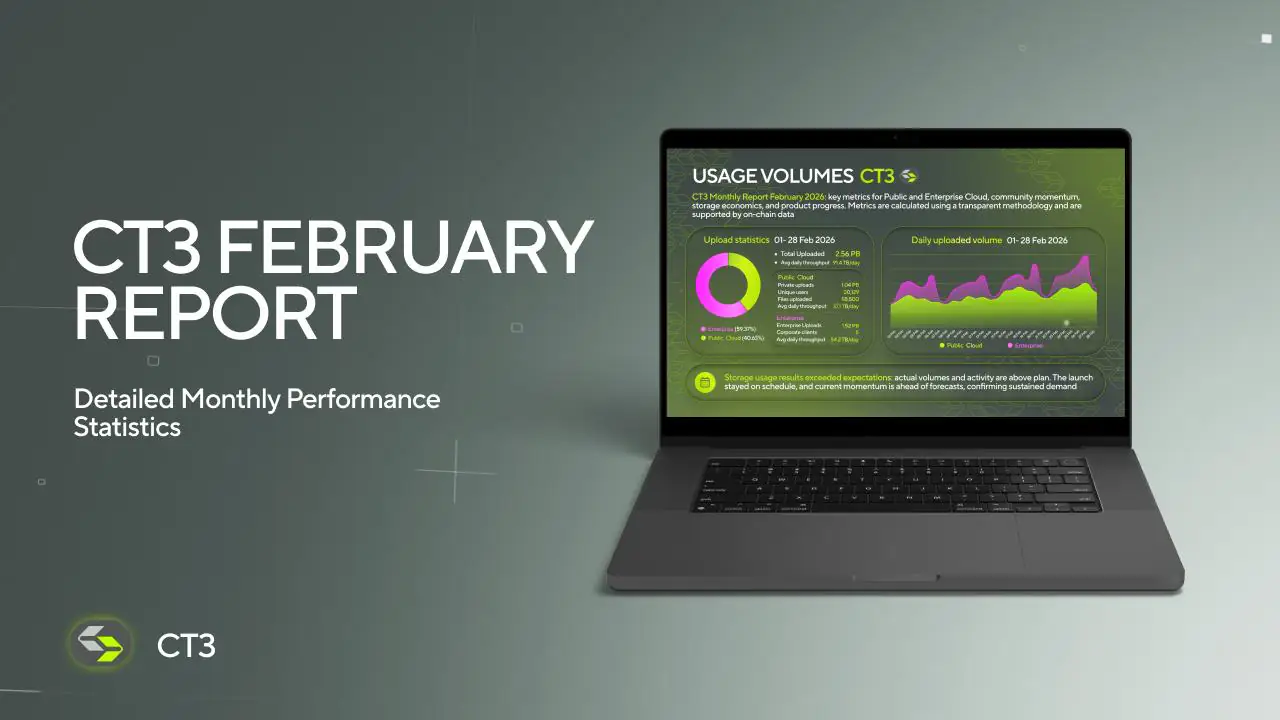
CT3's February 2026 report indicates actual performance metrics for its decentralized storage network exceeded initial estimates, suggesting strong underlying demand and operational efficiency. The sustained demand and growth in both public cloud and enterprise segments highlight CT3's increasing relevance as a scalable and secure data storage solution. Exceeding performance expectations in February provides a positive signal for CT3's infrastructure resilience and its capacity to handle increasing user activity and enterprise data loads.

Geopolitical uncertainty is driving cautious trading in Bitcoin, causing it to pull back from recent highs and impacting leveraged positions. AI tokens are showing resilience and outperforming the broader crypto market, driven by strong retail demand and specific catalysts like exchange listings and positive commentary from industry leaders. While Bitcoin and many altcoins are experiencing pullbacks due to macro-economic fears, the divergence in AI token performance suggests a sector-specific strength that traders should monitor. Decreased open interest in BTC and ETH futures on CME, alongside mixed signals in options markets, indicates a cautious institutional stance despite some retail-driven bets on higher prices.

Traditional financial infrastructure is fundamentally incompatible with the projected transaction volumes and speed requirements of AI agents, suggesting a significant shift towards blockchain-based payment rails. The projected growth of the AI agent market and its potential to influence trillions in purchases by 2030 highlights a structural demand for crypto's low fees, instant settlement, and 24/7 availability. While regulatory gaps and security risks like unauthorized mining and irreversible private key loss present challenges, frameworks like MiCA are beginning to address 'Know Your Agent' standards, indicating an evolving landscape for AI in finance. The convergence of AI capabilities and crypto infrastructure is an immediate development, with enterprise software and regulatory discussions laying the groundwork for a machine economy that may not wait for traditional finance to adapt.
Reels.io is integrating Web3 mechanics into its crypto-first casino and sports betting platform, aiming to enhance player engagement through NFT rewards and a planned REELS token launch. The platform's adoption of crypto payments and wallet-based transactions, alongside fiat on-ramps, signals a growing trend of blending traditional online gambling with decentralized finance principles. The expansion onto the Solana network for its loyalty program and the upcoming REELS token launch indicate a strategic move to capture a share of the rapidly growing iGaming market by leveraging blockchain technology. By offering features like NFT rewards, VIP status matching, and a wide array of casino and sports betting options, Reels.io targets both existing crypto users and traditional gamblers seeking a more modern, integrated experience.
Signal context only. Validate with price action, liquidity, and risk limits before taking a position.
