
Navigating Crypto News

CoinFeather
Navigating Crypto News

Quick market read from this story
Researchers have identified a significant security vulnerability in third-party AI LLM routers, enabling malicious actors to steal cryptocurrency by injecting code and extracting credentials.
The discovery highlights a critical trust boundary issue in the AI agent ecosystem, where sensitive data like private keys can be exposed through unsecured intermediary routers, potentially impacting crypto wallet security.
The 'YOLO mode' feature in AI agents, which allows automatic command execution without user confirmation, exacerbates the risk, as previously benign routers can be silently weaponized to steal user data.
Source, catalyst, and sector overlap from the latest feed.
The divergence in decentralization paths between Bitcoin mining and AI suggests a potential shift in network security concerns for BTC if centralization trends continue. The projected significant growth of the Edge AI market indicates a trend towards decentralized AI processing, potentially creating new infrastructure demands and opportunities. Geographic migration of Bitcoin mining operations to regions like the Global South due to energy costs could enhance network security by diversifying hash rate distribution. The contrasting decentralization trajectories of Bitcoin mining and AI highlight a fundamental tension between crypto's core promise and evolving technological landscapes.
Live Feed
Loading the broader stream in the same flow as the homepage feed.
Charles Schwab's upcoming Q2 2026 launch of spot ETH and BTC trading for 38.9 million clients, representing $12 trillion in assets, signals significant mainstream institutional adoption and potential for increased demand. The article highlights a presale for 'Pepeto' that has raised $8.9 million, positioning it as a high-growth opportunity with a claimed 150x potential return upon a Binance listing, contrasting with the more modest expected gains from large-cap assets. Despite broader market 'fear' narratives, institutional players like Schwab are accelerating crypto access, suggesting a divergence between public sentiment and strategic capital deployment in the market.

MicroStrategy's continued aggressive Bitcoin accumulation, buying nearly three times the new supply in March, signals strong conviction despite unrealized losses, potentially supporting BTC price action. The company's funding model via STRC preferred equity, requiring only a 2.05% annual BTC return to cover dividends, highlights a sustainable accumulation strategy as long as investor appetite for STRC remains robust. Michael Saylor's 'think bigger' posts have historically preceded significant BTC purchases, suggesting an imminent acquisition that could further concentrate holdings and influence market dynamics.

The analysis suggests XRP's theoretical $1000 price target is driven by long-term fiat debasement and potential demand, implying a gradual upward trend rather than an immediate event. Traders should focus on the underlying macro-economic forces and demand dynamics for XRP rather than fixating on specific, uncertain price targets. The discussion highlights that while a $1000 XRP price is theoretically possible due to currency devaluation, the timeline remains highly uncertain and dependent on market forces.
Jupiter (JUP) is showing signs of stabilization after a prolonged decline, transitioning from distribution to accumulation, which could precede a recovery cycle. The article presents long-term price predictions for JUP, with potential highs of $4.00 by 2026 and $10.00 by 2030, contingent on sustained Solana ecosystem growth and JUP's role as a liquidity aggregator. Current price action indicates JUP is in a range-bound phase with resistance around $0.22-$0.25, a breakout above which would signal a shift towards trend formation and potential upside.
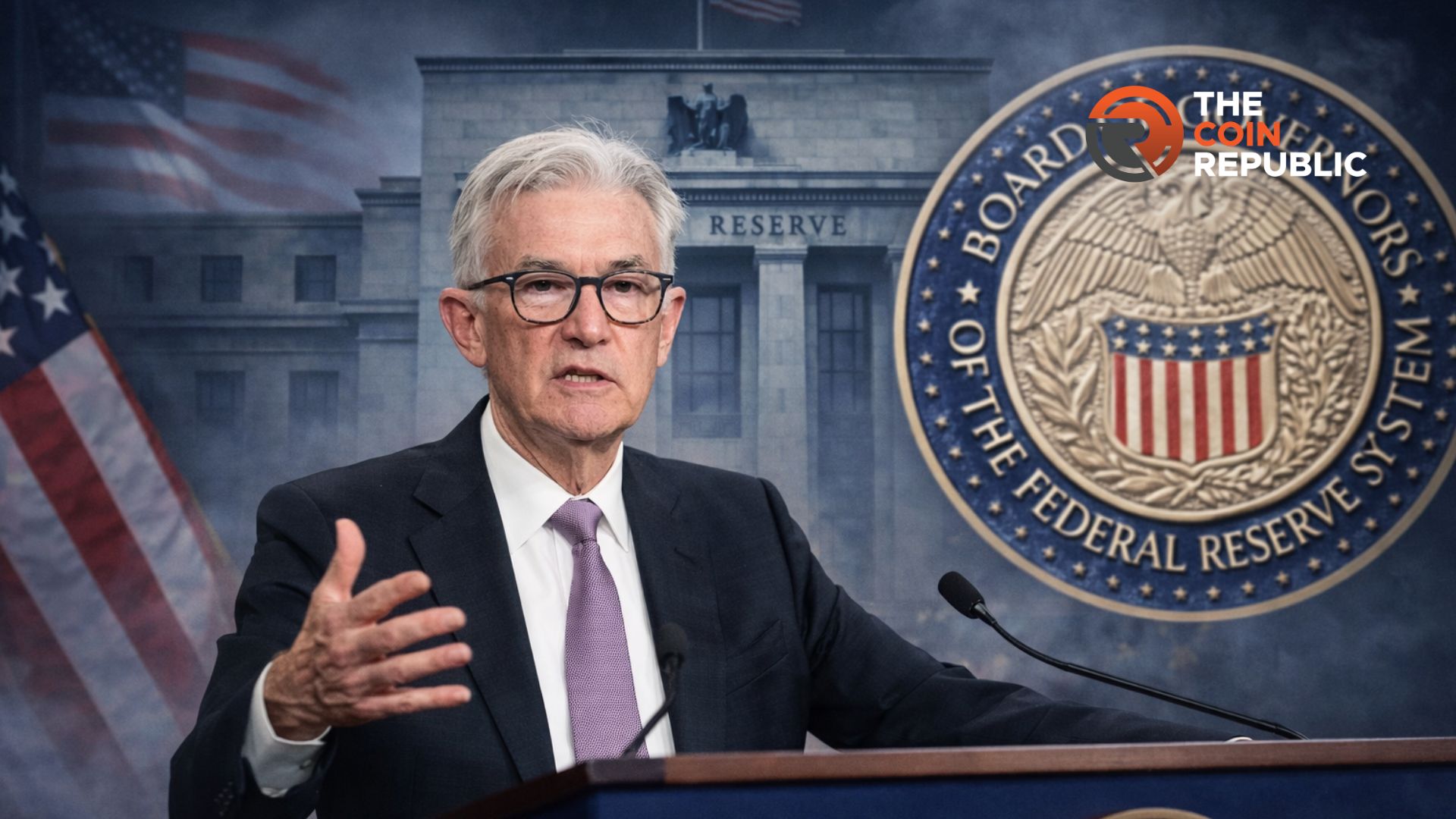
An analyst warns the Federal Reserve's high interest rate policy amid slowing growth and labor market weakness could be a significant policy error, potentially exacerbating a recession. The Federal Reserve is unlikely to cut rates until at least December, with market expectations reflecting a prolonged period of tight monetary policy despite increasing economic headwinds. Uncertainty surrounding Fed leadership and ongoing legal issues may contribute to policymakers maintaining a hawkish stance to defend their position, delaying potential policy shifts.

BlockDAG's Batch 4 is live at $0.0000061 with claims starting April 27, signaling a structured pricing phase before open market conditions and potential exchange listings. Solana (SOL) is trading around $82 with support near $80, indicating potential short-term market structure shifts based on price action. XRP is trading near $1.33, maintaining its focus on cross-border payments amidst ongoing developments in its legal status. Pepe Coin (PEPE) is trading at $0.0000034, with its price movement heavily influenced by market sentiment and retail activity, making it a volatile asset.
Bitcoin's potential double top formation near $72,000, coupled with declining volume on the second peak, suggests waning buyer conviction and a potential downside target around $69,000. XRP's price action shows a lack of significant volume accompanying recent declines, indicating potential bearish exhaustion and a possible consolidation or short-term recovery towards $1.38-$1.42 if support holds. Ethereum is exhibiting a constructive consolidation pattern with improving higher lows and stabilizing volume, signaling potential accumulation and a bullish setup for a breakout above $2,300-$2,400.
Geopolitical tensions stemming from the US-Iran peace talks collapse are introducing volatility into the crypto market, impacting major assets like Bitcoin and Ethereum. Despite short-term price dips, investors are adopting a cautious stance, avoiding panic selling and awaiting further developments before making significant trading decisions. The crypto market's reaction to geopolitical events highlights its correlation with broader market sentiment and its potential role as a 'refuge' asset similar to gold during times of global uncertainty. The failure of US-Iran negotiations introduces uncertainty, suggesting that crypto prices may face continued pressure and volatility in the near term.
Bitcoin faces immediate selling pressure from both spot and futures markets, suggesting continued short-term downside risk. Despite near-term weakness, Bitcoin is entering a historical accumulation zone, indicating improving long-term risk-reward potential. The current market structure suggests sellers are active across both spot and derivatives, implying a heavier downside than a simple liquidation event. While the long-term outlook improves, the market may experience further consolidation or downside before a sustained upward trend begins.
XRP ETF inflows outperforming BTC and ETH suggests a temporary rotation from major assets under pressure into more neutral, liquid alternatives. The significant surge in SHIB token burns, up 237%, indicates strong network activity and a deflationary pressure mechanism, potentially supporting its price rally. Adam Back's repeated denials of being Satoshi Nakamoto, coupled with David Schwartz's analysis on lost keys, reduce the market risk associated with dormant Bitcoin holdings. Charles Hoskinson's public criticism of XRP highlights ongoing inter-project rivalries and differing decentralization philosophies within the crypto space.
Bitcoin price has reclaimed the $73,000 level, driven by improving market sentiment stemming from U.S. military operations to clear mines in the Strait of Hormuz, suggesting a potential de-escalation of geopolitical tensions and increased stability in global trade flows. The recovery in Bitcoin's price above $73,000, despite a divergence with the software equity sector (IGV) which is hitting new lows, indicates a potential short-term decoupling from traditional tech market trends and warrants further observation for sustained strength. The U.S. military's efforts to secure the Strait of Hormuz are easing maritime safety concerns and normalizing energy markets, which historically supports risk-on assets like Bitcoin, contributing to its current rally.
Signal context only. Validate with price action, liquidity, and risk limits before taking a position.
Aave DAO's approval of a $25 million funding grant and 75,000 AAVE token allocation to Aave Labs signifies a strategic commitment to protocol development and scaling, potentially boosting AAVE's long-term value proposition. The 'Aave Will Win' framework, backed by a significant majority vote, represents a major shift in Aave's funding model, with Aave Labs transitioning to a DAO-funded operational structure and future revenues flowing to the DAO treasury. Despite past community concerns regarding funding size and governance dynamics, the overwhelming approval of this proposal suggests a strong consensus within the Aave ecosystem to accelerate growth and product development.
