
Navigating Crypto News

CoinFeather
Navigating Crypto News
Quick market read from this story
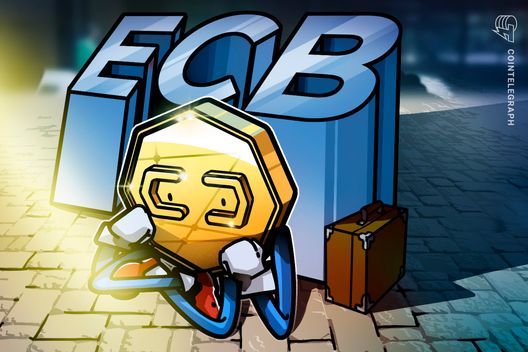
The European Central Bank's backing of a plan to centralize crypto supervision under ESMA signals a move towards greater regulatory integration and potentially reduced fragmentation in the EU market.
This development could lead to more consistent oversight for crypto companies operating across the EU, potentially impacting how firms choose jurisdictions for licensing and increasing compliance burdens.
The ECB's rationale highlights concerns about systemic risks from crypto-asset service providers linking with traditional banks, suggesting a proactive stance on financial stability within the EU.
Source, catalyst, and sector overlap from the latest feed.
The Bank of Korea's proposal for crypto exchange 'circuit breakers' signals a move towards enhanced regulatory oversight in South Korea following a significant operational error by Bithumb. The incident highlights systemic risks in the virtual asset industry, prompting calls for stricter internal controls and regulatory frameworks to prevent future market disruptions. Proposed measures to automatically verify internal assets against blockchain records and halt trading during extreme volatility could improve exchange stability and investor confidence.
Live Feed
Loading the broader stream in the same flow as the homepage feed.

AAVE has shown an 8% intraday surge, snapping its downtrend and signaling strong buyer interest near the $90-$95 demand zone, potentially leading to a reclaim of the $100 level. Improving derivatives activity, with rising volume and open interest, suggests a shift in trader positioning and growing participation, supporting the price rebound. The $100 level is identified as a critical breakout trigger for AAVE, where a sustained move above it could confirm structural reversal and potentially initiate a short-covering rally towards $110-$115. While AAVE shows signs of recovery, the $100 level remains the key determinant for its next move, with a failure to break through potentially leading to range-bound trading.

Aave's price action shows a technical correction with its 200-day SMA acting as resistance, indicating a bearish short-term outlook driven by broader market conditions rather than protocol-specific developments. Pepe is consolidating near a key support level, reflecting reduced market activity and a lack of fundamental utility updates, suggesting its price movement will remain sentiment-driven. BlockDAG is in a presale phase with a fixed price of $0.0000061, distinct from market-traded assets like Aave and Pepe, with its future pricing contingent on its upcoming Token Generation Event and subsequent market liquidity. The comparison highlights the divergence between established DeFi and meme coin assets facing market headwinds and a new project in its pre-launch phase, emphasizing the importance of upcoming TGE and ecosystem development for BlockDAG.

The escalating legal dispute between WLFI and Justin Sun, stemming from accusations of exploitative DeFi dealings and counter-accusations of misconduct, signals increased counterparty risk for projects involved in complex DeFi lending and collateralization. The public confrontation and threat of legal action between WLFI and Justin Sun, a prominent figure in crypto, could lead to increased scrutiny of DeFi lending platforms and the collateralization practices of associated projects. Past collaboration between WLFI and Justin Sun, now soured into a legal battle, highlights the volatile nature of partnerships in the crypto space and the potential for rapid shifts in sentiment and operational relationships.

A hacker exploited a vulnerability in the Hyperbridge cross-chain gateway, minting 1 billion fake DOT tokens and profiting approximately $237,000. The exploit highlights significant security risks inherent in cross-chain bridge infrastructure, potentially impacting investor confidence in interoperability solutions. This incident underscores the need for enhanced security audits and message validation mechanisms within bridge protocols to prevent similar exploits.

Bitcoin's price action has encountered resistance at a six-month descending trendline, challenging prior analyst optimism for an $88,000 surge. A rejection at this technical resistance level suggests that sellers are currently in control, potentially leading to further price declines. Traders should monitor for a decisive close above the trendline on significant volume to confirm a bullish reversal and align the chart with fundamental expectations. The current divergence between bullish fundamental narratives and bearish technical signals warrants caution, indicating a potential short-term downside risk.
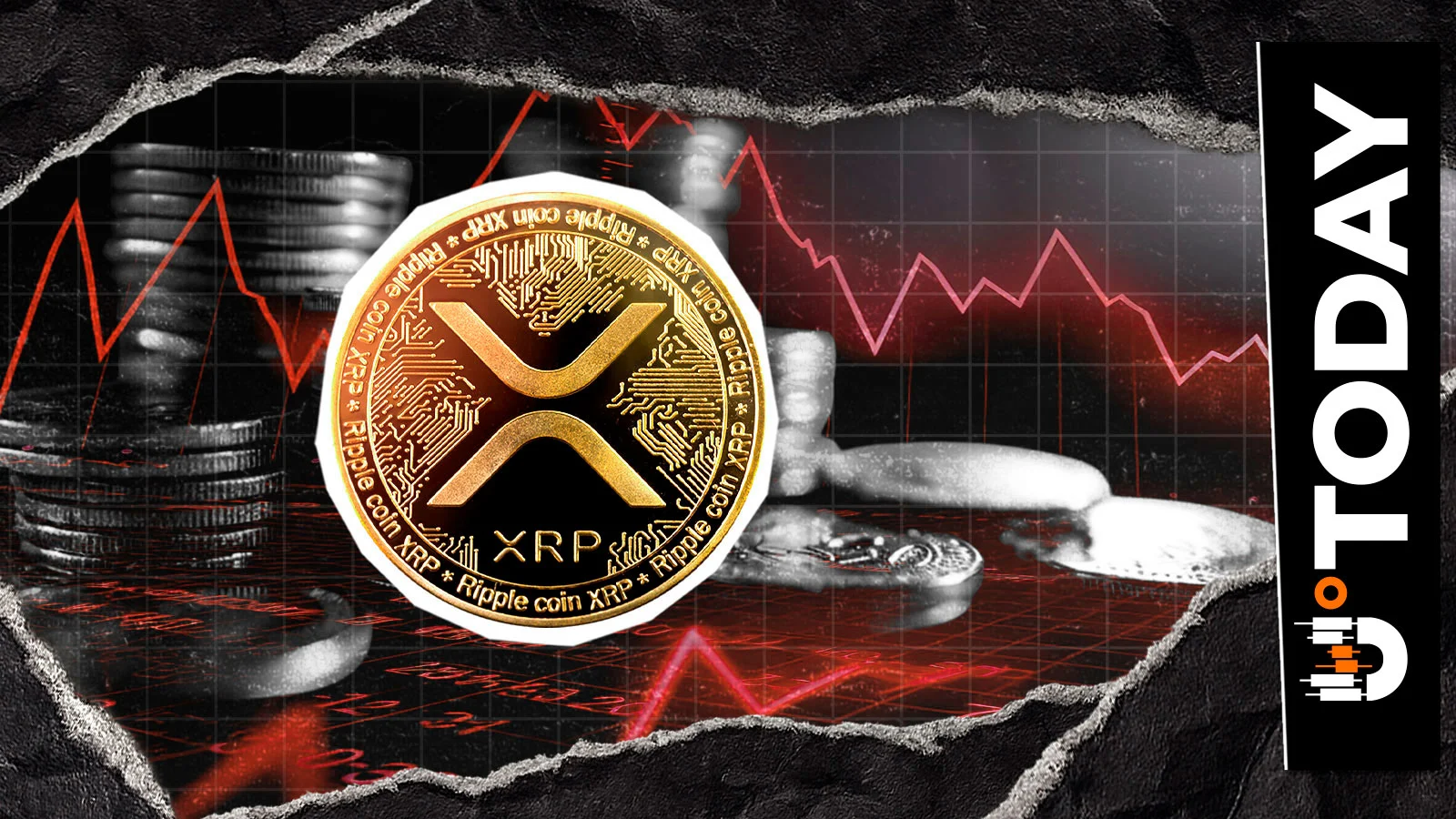
Extreme bearish sentiment on XRP, as indicated by Santiment, historically suggests a potential local bottom, implying a contrarian bullish signal for traders. Despite a significant price correction, the high level of FUD surrounding XRP could precede a relief rally as retail sentiment capitulates. While XRP ETFs saw inflows, they significantly lag behind ETH and SOL ETFs, indicating tepid institutional interest despite the potential bottoming sentiment.

Charles Schwab's upcoming Q2 2026 launch of spot ETH and BTC trading for 38.9 million clients, representing $12 trillion in assets, signals significant mainstream institutional adoption and potential for increased demand. The article highlights a presale for 'Pepeto' that has raised $8.9 million, positioning it as a high-growth opportunity with a claimed 150x potential return upon a Binance listing, contrasting with the more modest expected gains from large-cap assets. Despite broader market 'fear' narratives, institutional players like Schwab are accelerating crypto access, suggesting a divergence between public sentiment and strategic capital deployment in the market.

MicroStrategy's continued aggressive Bitcoin accumulation, buying nearly three times the new supply in March, signals strong conviction despite unrealized losses, potentially supporting BTC price action. The company's funding model via STRC preferred equity, requiring only a 2.05% annual BTC return to cover dividends, highlights a sustainable accumulation strategy as long as investor appetite for STRC remains robust. Michael Saylor's 'think bigger' posts have historically preceded significant BTC purchases, suggesting an imminent acquisition that could further concentrate holdings and influence market dynamics.

The analysis suggests XRP's theoretical $1000 price target is driven by long-term fiat debasement and potential demand, implying a gradual upward trend rather than an immediate event. Traders should focus on the underlying macro-economic forces and demand dynamics for XRP rather than fixating on specific, uncertain price targets. The discussion highlights that while a $1000 XRP price is theoretically possible due to currency devaluation, the timeline remains highly uncertain and dependent on market forces.
Jupiter (JUP) is showing signs of stabilization after a prolonged decline, transitioning from distribution to accumulation, which could precede a recovery cycle. The article presents long-term price predictions for JUP, with potential highs of $4.00 by 2026 and $10.00 by 2030, contingent on sustained Solana ecosystem growth and JUP's role as a liquidity aggregator. Current price action indicates JUP is in a range-bound phase with resistance around $0.22-$0.25, a breakout above which would signal a shift towards trend formation and potential upside.
Signal context only. Validate with price action, liquidity, and risk limits before taking a position.
Institutional participation in crypto markets has accelerated this year, contrasting with previous cycles where institutions exited alongside retail investors. The current market dynamic suggests a potential shift towards a more mature, institution-led crypto ecosystem, characterized by steadier accumulation and deeper liquidity. The cost-of-living crisis is cited as a primary reason for retail investor absence, indicating that this cycle may be longer and driven by institutional capital rather than retail FOMO. While near-term sentiment remains fragile and macro-driven, the medium-term outlook is more confident, contingent on factors like oil prices and inflation expectations.
