
Navigating Crypto News

CoinFeather
Navigating Crypto News

Quick market read from this story
Geopolitical tensions and US-Iran conflict escalation are driving volatility in traditional markets, with oil prices surging and Bitcoin experiencing a notable dip to $70.6K, indicating a risk-off sentiment influencing crypto assets.
Despite short-term price pressure from geopolitical events, Bitcoin has shown resilience, outperforming gold and the S&P 500 since the conflict began, suggesting a potential safe-haven narrative or uncorrelated asset behavior in certain market conditions.
The US announcement of a blockade of the Strait of Hormuz and failed peace talks with Iran are the primary drivers of immediate market reactions, impacting oil prices significantly and causing a correlated, albeit less severe, downturn in Bitcoin's price.
Source, catalyst, and sector overlap from the latest feed.
Researchers have identified a significant security vulnerability in third-party AI LLM routers, enabling malicious actors to steal cryptocurrency by injecting code and extracting credentials. The discovery highlights a critical trust boundary issue in the AI agent ecosystem, where sensitive data like private keys can be exposed through unsecured intermediary routers, potentially impacting crypto wallet security. The 'YOLO mode' feature in AI agents, which allows automatic command execution without user confirmation, exacerbates the risk, as previously benign routers can be silently weaponized to steal user data.
Live Feed
Loading the broader stream in the same flow as the homepage feed.
An analyst warns the Federal Reserve's high interest rate policy amid slowing growth and labor market weakness could be a significant policy error, potentially exacerbating a recession. The Federal Reserve is unlikely to cut rates until at least December, with market expectations reflecting a prolonged period of tight monetary policy despite increasing economic headwinds. Uncertainty surrounding Fed leadership and ongoing legal issues may contribute to policymakers maintaining a hawkish stance to defend their position, delaying potential policy shifts.

Grayscale's Q2 altcoin watchlist reduction to 30 assets and increased focus on AI themes signals a strategic shift towards infrastructure and utility-driven projects with demonstrable demand. The removal of the Consumer and Culture category and specific cuts in smart contracts and financial assets indicate Grayscale's reduced near-term product potential assessment for meme-driven or less functional narratives. The heightened emphasis on AI crypto, particularly in compute, agents, and data distribution, suggests Grayscale is aligning with strong institutional and commercial interest in generative AI applications. Grayscale's refined screening framework, favoring functionality and sector momentum over social reach, implies a more selective approach to future product research and potential investment.

BlockDAG's Batch 4 is live at $0.0000061 with claims starting April 27, signaling a structured pricing phase before open market conditions and potential exchange listings. Solana (SOL) is trading around $82 with support near $80, indicating potential short-term market structure shifts based on price action. XRP is trading near $1.33, maintaining its focus on cross-border payments amidst ongoing developments in its legal status. Pepe Coin (PEPE) is trading at $0.0000034, with its price movement heavily influenced by market sentiment and retail activity, making it a volatile asset.
Bitcoin's potential double top formation near $72,000, coupled with declining volume on the second peak, suggests waning buyer conviction and a potential downside target around $69,000. XRP's price action shows a lack of significant volume accompanying recent declines, indicating potential bearish exhaustion and a possible consolidation or short-term recovery towards $1.38-$1.42 if support holds. Ethereum is exhibiting a constructive consolidation pattern with improving higher lows and stabilizing volume, signaling potential accumulation and a bullish setup for a breakout above $2,300-$2,400.
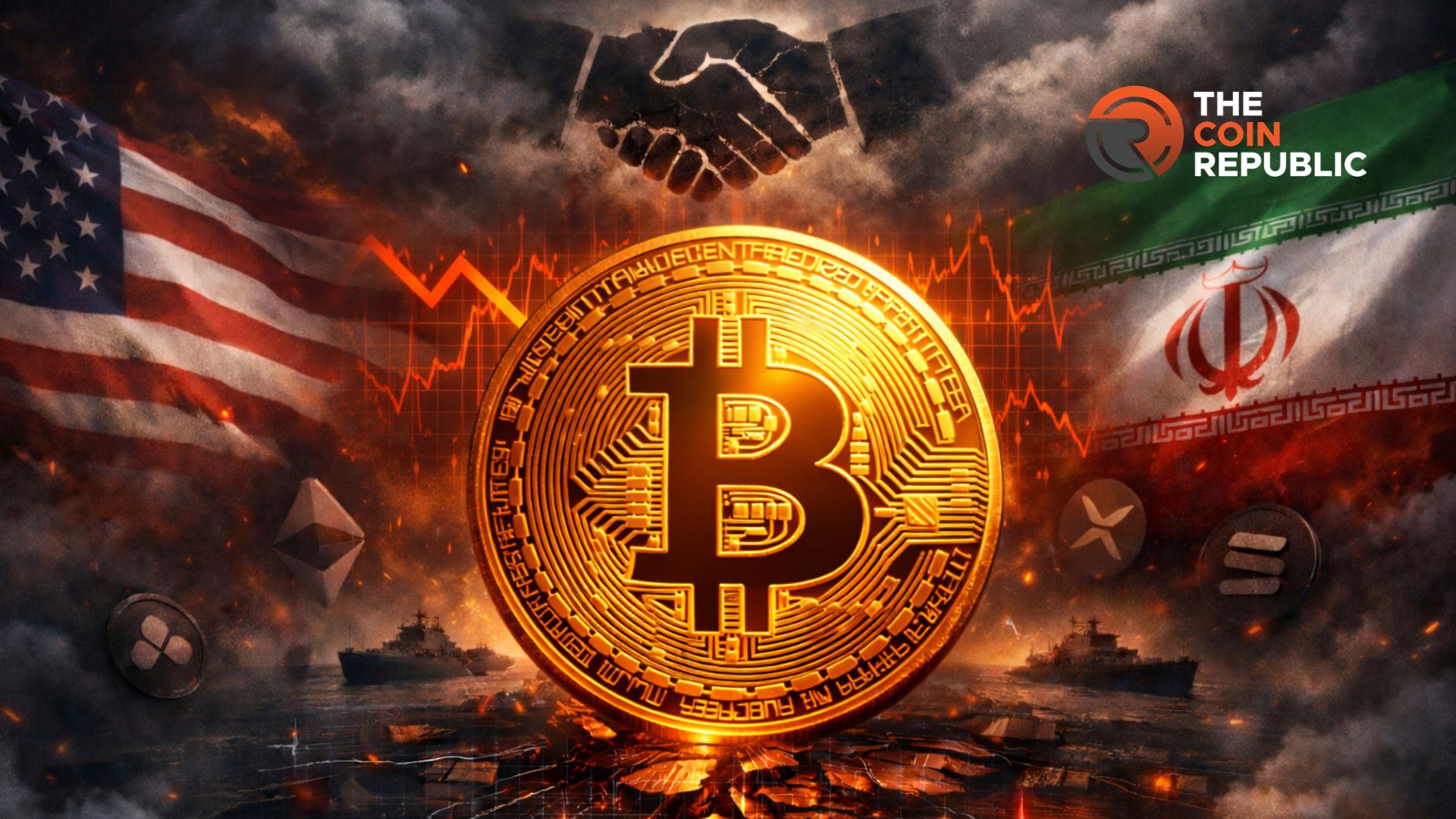
Geopolitical tensions stemming from the US-Iran peace talks collapse are introducing volatility into the crypto market, impacting major assets like Bitcoin and Ethereum. Despite short-term price dips, investors are adopting a cautious stance, avoiding panic selling and awaiting further developments before making significant trading decisions. The crypto market's reaction to geopolitical events highlights its correlation with broader market sentiment and its potential role as a 'refuge' asset similar to gold during times of global uncertainty. The failure of US-Iran negotiations introduces uncertainty, suggesting that crypto prices may face continued pressure and volatility in the near term.
Bitcoin faces immediate selling pressure from both spot and futures markets, suggesting continued short-term downside risk. Despite near-term weakness, Bitcoin is entering a historical accumulation zone, indicating improving long-term risk-reward potential. The current market structure suggests sellers are active across both spot and derivatives, implying a heavier downside than a simple liquidation event. While the long-term outlook improves, the market may experience further consolidation or downside before a sustained upward trend begins.
Kraken's Wyoming banking arm secured limited direct Federal Reserve account access, a first for a crypto-linked firm, potentially setting a precedent for future institutional integration into U.S. payment rails. The restricted nature of the Fed account, excluding interest on reserves and emergency lending, suggests regulators are cautiously experimenting with crypto firm access rather than granting full banking privileges. Despite the limited scope, this development could increase pressure on regulators to clarify oversight frameworks for digital asset firms seeking access to traditional financial infrastructure. Concerns raised by banking groups and lawmakers regarding money laundering and operational risks highlight ongoing regulatory friction and the need for robust risk management for crypto entities interacting with central bank systems.

XRP ETF inflows outperforming BTC and ETH suggests a temporary rotation from major assets under pressure into more neutral, liquid alternatives. The significant surge in SHIB token burns, up 237%, indicates strong network activity and a deflationary pressure mechanism, potentially supporting its price rally. Adam Back's repeated denials of being Satoshi Nakamoto, coupled with David Schwartz's analysis on lost keys, reduce the market risk associated with dormant Bitcoin holdings. Charles Hoskinson's public criticism of XRP highlights ongoing inter-project rivalries and differing decentralization philosophies within the crypto space.
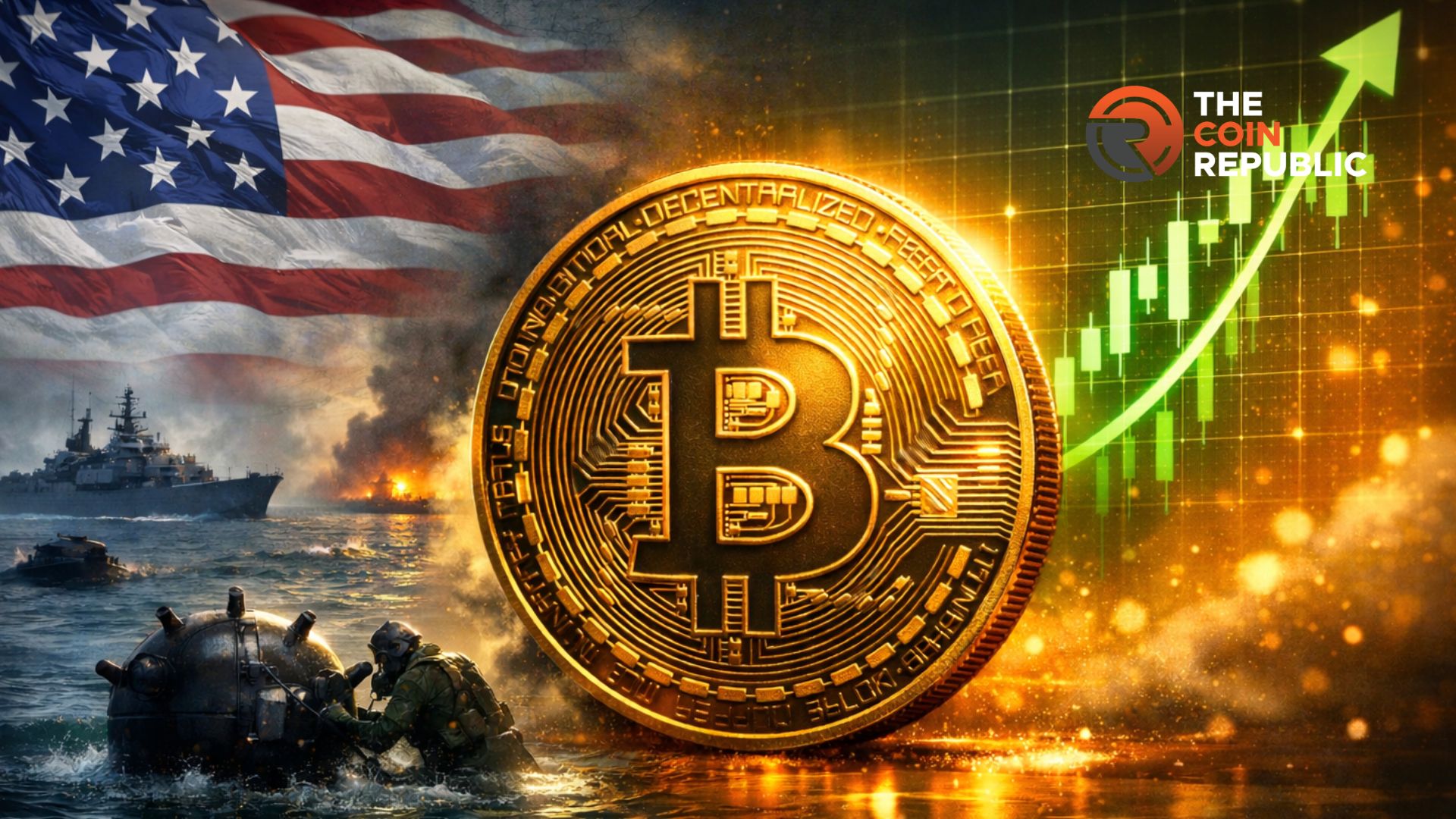
Bitcoin price has reclaimed the $73,000 level, driven by improving market sentiment stemming from U.S. military operations to clear mines in the Strait of Hormuz, suggesting a potential de-escalation of geopolitical tensions and increased stability in global trade flows. The recovery in Bitcoin's price above $73,000, despite a divergence with the software equity sector (IGV) which is hitting new lows, indicates a potential short-term decoupling from traditional tech market trends and warrants further observation for sustained strength. The U.S. military's efforts to secure the Strait of Hormuz are easing maritime safety concerns and normalizing energy markets, which historically supports risk-on assets like Bitcoin, contributing to its current rally.

Solana is implementing new security measures like STRIDE and SIRN in response to a significant $280M DeFi incident, indicating a focus on strengthening network resilience. Algorand's price experienced a short-term surge driven by a Google Quantum AI whitepaper mention, followed by consolidation, suggesting market reaction to external news rather than fundamental shifts. BlockDAG is executing a multi-exchange launch strategy alongside a presale, aiming for broader market accessibility while maintaining distinct pricing stages. The article highlights contrasting market dynamics: Solana addressing security, Algorand reacting to news, and BlockDAG focusing on exchange listings and presale allocation.

The article highlights a potential conflict of interest where Wall Street analysts, who rate Strategy (MSTR) a 'Strong Buy' with significant upside targets, also profit from the company's continuous stock issuance programs. Strategy's core valuation is tied to its Bitcoin holdings, with its stock acting as a leveraged proxy, meaning its price movements are amplified relative to Bitcoin's, creating significant risk if Bitcoin prices decline sharply. The company's aggressive capital raising and issuance strategy, while generating fees for banks, creates a self-reinforcing loop of optimism that could stall if investor appetite for new stock cools during a market downturn. Strategy's role as a primary institutional Bitcoin buyer outside of its own treasury operations makes its fundraising health a critical factor for sustained demand and price support in the broader Bitcoin market.

Senator Lummis emphasizes a critical April 13-20 deadline for the CLARITY Act, warning that missing this window could delay passage until 2030. The CLARITY Act's progress hinges on the Senate Banking Committee's upcoming hearing, with potential procedural hurdles and competing legislative priorities creating uncertainty. Treasury Secretary Scott Bessent supports urgent passage, highlighting scarce Senate floor time and the increasing need for digital asset regulation. Debates over stablecoin yields and broader financial oversight reforms add complexity, potentially impacting the CLARITY Act's timeline and final form.

Anthony Scaramucci predicts widespread corporate Bitcoin adoption, citing SpaceX's continued holding of its BTC treasury despite significant financial losses. SpaceX's upcoming IPO will necessitate the public disclosure of its $603 million Bitcoin holdings, potentially normalizing BTC as a strategic corporate reserve asset. The market may interpret SpaceX's commitment to Bitcoin as a strong proof-of-concept for other corporations considering similar treasury allocations.

The overwhelming reliance of US Bitcoin ETFs on Coinbase for custody, representing over 80% of assets ($74B+), creates a significant single point of failure risk for the entire spot ETF market. While ETF structures offer asset segregation, a disruption at Coinbase could trigger operational bottlenecks and settlement issues across multiple funds, testing institutional confidence in Bitcoin ETFs. The concentration risk highlights a potential structural vulnerability in the burgeoning Bitcoin ETF market, despite the presence of alternative custodians and Fidelity's self-custody approach. Coinbase's pending OCC national trust charter approval is poised to further solidify its dominant position as the default crypto back-office infrastructure for institutions, potentially exacerbating concentration concerns.

CFTC Chair Mike Selig asserts the agency's exclusive authority over prediction markets, signaling continued legal battles with states over regulatory jurisdiction. The CFTC's litigation strategy aims to establish federal oversight for prediction markets as derivatives, potentially impacting how these platforms are classified and regulated. Recent court rulings and ongoing legal arguments suggest a trend towards federal CFTC control over prediction markets, which could influence market access and operational frameworks.
Signal context only. Validate with price action, liquidity, and risk limits before taking a position.
No explicit catalyst tagged.
No sector mapping available.
Geopolitical tensions stemming from the Iran conflict are projected to significantly impact global markets through 2026, potentially delaying anticipated interest rate cuts until Q3 or Q4. Bitcoin's recovery above $71,000 is considered fragile, with key resistance at $74,000, suggesting a need for de-escalation of Middle East tensions and a drop in oil prices for further upside. The analyst suggests that a push towards $90,000 for BTC would require a confluence of factors including a ceasefire, lower oil prices, and dovish economic data, indicating a high bar for significant price appreciation.
