
Navigating Crypto News

CoinFeather
Navigating Crypto News

Quick market read from this story
CFTC Chair Mike Selig asserts the agency's exclusive authority over prediction markets, signaling continued legal battles with states over regulatory jurisdiction.
The CFTC's litigation strategy aims to establish federal oversight for prediction markets as derivatives, potentially impacting how these platforms are classified and regulated.
Recent court rulings and ongoing legal arguments suggest a trend towards federal CFTC control over prediction markets, which could influence market access and operational frameworks.
Source, catalyst, and sector overlap from the latest feed.
The current contraction in DeFi is a necessary consolidation phase, filtering out unsustainable models and revealing resilient protocols with durable economics. Despite protocol shutdowns and security concerns, the expansion of stablecoin market cap and institutional investment in protocols like Morpho indicate capital rotation rather than systemic collapse. DeFi lending remains economically rational in bear markets for long-term holders seeking liquidity without crystallizing losses, offering competitive rates and transparent, albeit algorithmic, liquidation risks. The path to broader DeFi adoption hinges on increased financial literacy and trusted distribution channels that abstract technical complexity, similar to how banks are gradually integrating crypto.
Live Feed
Loading the broader stream in the same flow as the homepage feed.

Anthony Scaramucci predicts widespread corporate Bitcoin adoption, citing SpaceX's continued holding of its BTC treasury despite significant financial losses. SpaceX's upcoming IPO will necessitate the public disclosure of its $603 million Bitcoin holdings, potentially normalizing BTC as a strategic corporate reserve asset. The market may interpret SpaceX's commitment to Bitcoin as a strong proof-of-concept for other corporations considering similar treasury allocations.

Justin Sun's public criticism of the WLFI platform regarding governance and token lockups, coupled with WLFI's threat of legal action, introduces significant reputational risk and potential legal entanglements for both parties. The WLFI token has experienced a sharp decline to an all-time low, exacerbated by news of the platform using its own tokens as collateral for loans, indicating severe market distrust and potential liquidity issues. The controversy surrounding WLFI, including accusations of non-transparent governance and tokenomics, highlights ongoing risks within DeFi protocols and the importance of robust community oversight.

The development of 'Qwopus' demonstrates the increasing capability of open-source AI models to replicate advanced reasoning, potentially democratizing access to powerful AI tools for developers and users. This advancement in AI model distillation allows for high-performance AI to run on consumer hardware, reducing reliance on expensive API services and enhancing data privacy for local applications. The successful replication of Claude Opus's reasoning in a local model, particularly in coding and creative writing tasks, suggests a significant shift in the accessibility and utility of cutting-edge AI for everyday use. The project's success in achieving near-Opus performance on consumer GPUs highlights a trend towards more efficient and accessible AI, which could impact the competitive landscape of AI service providers.

BlockDAG's final allocation phase at a fixed price of $0.0000061, coupled with its listing on 13 exchanges, signals a transition towards broader market accessibility and potential price discovery. Tron's continued high on-chain USDT transaction volume highlights its role in the stablecoin ecosystem, while ongoing discussions around centralization and regulation warrant monitoring for future impact. Dogecoin's market activity is primarily driven by community sentiment and potential payment integrations, indicating its performance is more susceptible to external narrative shifts than fundamental development. Cardano's focus on research-driven development and upgrades like Leios and Midnight aims for long-term scalability and privacy, though its slower development pace may present adoption challenges compared to competitors.
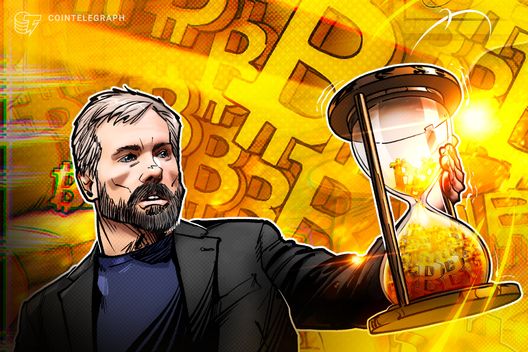
Michael Saylor's "Think bigger" comment, coupled with MicroStrategy's consistent BTC accumulation, signals an impending purchase, potentially impacting BTC supply dynamics. MicroStrategy's aggressive accumulation of BTC, exceeding new miner supply, suggests a strategic play on capital flows and potential supply squeeze, despite current unrealized losses. The company's contrarian approach to accumulating Bitcoin, even during price downturns and while holding significant unrealized losses, highlights a strong conviction in BTC's long-term value proposition.

Shiba Inu (SHIB) faces a critical juncture as its market capitalization nears the $3 billion psychological support level, threatening its top 30 ranking. Declining trading volume relative to market cap indicates waning speculative interest, exacerbated by a 51% price drop over the past year and a perceived lack of new marketing momentum. Underperformance of Shibarium in developer activity and real-world usage, coupled with general market risk-off sentiment, contributes to SHIB's current bearish outlook. The potential loss of top 30 status signifies a significant decline in SHIB's market relevance, driven by a loss of confidence from its community and key opinion leaders.
Michael Saylor's reintroduction of the 'orange dot' chart signals a potential resumption of aggressive Bitcoin accumulation by Strategy. Strategy's continued Bitcoin purchases, despite a current unrealized loss, underscore a long-term conviction in BTC's value, potentially influencing market supply dynamics. The company's stated target of 1 million BTC, if achieved by Q1 2027, suggests a sustained demand driver for Bitcoin over the medium term.

Bitwise's second amendment filing for the HYPE ETF suggests increased institutional interest and brings the ETF closer to potential approval, which could be a significant catalyst for Hyperliquid. Hyperliquid (HYPE) price has shown strong weekly momentum, rallying over 15% and retesting a key resistance level, indicating potential for short-term upside but also a risk of profit-taking. While HIP3 open interest has cooled from historic highs, the overall positive sentiment surrounding the potential HYPE ETF approval may continue to support HYPE's price action in the near term. The article presents a mixed outlook with HYPE price retesting resistance and whale short positions emerging, suggesting traders should monitor demand and supply dynamics closely for potential directional cues.

Cardano founder Charles Hoskinson is proposing a strategic shift from event-based marketing to establishing permanent global infrastructure hubs to bolster ADA's long-term price appreciation. The proposed treasury reallocation of 14 million ADA from events to infrastructure could create natural buy pressure if funded projects return capital to buy ADA from the market. Market sentiment is divided, with skeptics questioning the short-term price impact of offices versus price action, while supporters see it as a necessary move for long-term survival against competitors.
BNB Chain is mandating a critical node update for operators ahead of the Osaka/Mendel hard fork on April 28, signaling a significant network upgrade aimed at enhancing stability and transaction handling. The Osaka/Mendel hard fork introduces protocol-level transaction gas limits (EIP-7825 via BEP-652) and other improvements like reduced latency (BEP-648), which are expected to bolster network reliability and efficiency for BNB Chain. Failure to update nodes to BSC v1.7.2 before the April 28 hard fork poses a risk of nodes falling out of sync, highlighting the importance of proactive maintenance for network participants.
Signal context only. Validate with price action, liquidity, and risk limits before taking a position.
Bitcoin is showing signs of forming a base at $65,000, suggesting that speculative selling pressure has subsided and a potential recovery is underway. Fidelity's Jurrien Timmer views the current market as resilient, with strong earnings and contained credit spreads indicating that broader markets are absorbing geopolitical shocks effectively. The correlation between Bitcoin and gold, with Bitcoin acting more like a safe-haven asset, highlights a potential shift in investor perception and asset allocation strategies during times of uncertainty. Despite geopolitical risks, the market's measured response and investor skepticism, particularly towards AI, suggest a healthier, more sustainable economic expansion rather than an overheated bubble.
