
Navigating Crypto News

CoinFeather
Navigating Crypto News

Quick market read from this story
The development of 'Qwopus' demonstrates the increasing capability of open-source AI models to replicate advanced reasoning, potentially democratizing access to powerful AI tools for developers and users.
This advancement in AI model distillation allows for high-performance AI to run on consumer hardware, reducing reliance on expensive API services and enhancing data privacy for local applications.
The successful replication of Claude Opus's reasoning in a local model, particularly in coding and creative writing tasks, suggests a significant shift in the accessibility and utility of cutting-edge AI for everyday use.
The project's success in achieving near-Opus performance on consumer GPUs highlights a trend towards more efficient and accessible AI, which could impact the competitive landscape of AI service providers.
Source, catalyst, and sector overlap from the latest feed.
The DOJ's initiation of a compensation process for OneCoin victims, offering over $40 million in forfeited assets, signals a move towards asset recovery for those defrauded by the $4 billion scam. Victims of the OneCoin fraud must file claims by June 30, 2026, to access funds derived from prosecutions and asset seizures, highlighting the ongoing legal ramifications of major crypto scams. The ongoing pursuit of OneCoin co-founder Ruja Ignatova, despite her absence, underscores the persistent efforts by international authorities to bring perpetrators of large-scale crypto fraud to justice.
Live Feed
Loading the broader stream in the same flow as the homepage feed.

Deutsche Börse's $200 million investment in Kraken signifies a significant step towards bridging traditional finance and digital assets, potentially accelerating institutional adoption in Europe. The investment, valuing Kraken at $13.3 billion, underscores the exchange's strategic importance despite its IPO plans being temporarily on hold due to market conditions. This partnership between a major European exchange operator and a leading crypto exchange could unlock new institutional-grade products and services, impacting the broader digital asset market infrastructure.

Bitcoin's approach to $75,000 presents a liquidation risk of $200 million for short positions, potentially fueling an upside breakout and signaling increased market volatility. Rising open interest and positive funding rates across Bitcoin and Ether futures suggest growing bullish sentiment, though stabilizing implied volatility warrants caution regarding the sustainability of the rally. Dealer gamma positioning at $75,000 indicates a potential for accelerated price movement in either direction, as market makers may buy or sell to hedge their exposure. The current market focus is on Bitcoin's potential breakout, with altcoins and memecoins taking a secondary role, suggesting that capital rotation into more speculative assets may follow a successful BTC consolidation above $75,000.
Despite a significant surge in XRP Ledger's transactional activity, reaching hundreds of percent increases and millions of daily transactions, the XRP price has remained largely stagnant, indicating a disconnect between on-chain metrics and market valuation. The increase in XRP Ledger activity is attributed to a combination of factors including remittance flows, stablecoin transfers, DEX bot activity, and tokenized asset utilization, suggesting a structural shift towards payments and enterprise use, though the organic nature of some of this growth is questioned. Investors should monitor whether the current on-chain activity translates into genuine economic demand for XRP; a continuation and shift towards actual use cases could lead to a delayed price increase, while a fade or continued dominance by bots would likely see the price drift sideways.
Morgan Stanley's successful Bitcoin ETF launch, attracting significant initial investment and offering competitive fees, signals increased institutional adoption and potential for broader market access. While Bitcoin's ETF performance is positive, the article highlights a presale project, Pepeto, as a potentially higher-return opportunity, emphasizing early entry for exponential gains over large-cap assets. The narrative suggests that traditional price prediction models for large-cap assets like Bitcoin may overlook the exponential growth potential found in early-stage presale projects with strong development and upcoming exchange listings.

The DOJ's initiation of a compensation process for OneCoin victims, involving over $40 million in forfeited assets, signals a move towards restitution for a major historical crypto fraud. While the OneCoin case is a significant event in crypto's past, the compensation process itself has limited direct impact on current market dynamics or active trading strategies, given the fraud's conclusion and the long claim period. The ongoing fugitive status of founder Ruja Ignatova and the sentencing of Karl Sebastian Greenwood highlight the persistent legal ramifications for participants in large-scale crypto scams.

Nauru's appointment of a crypto entrepreneur as international trade commissioner signals a strategic pivot towards actively promoting its digital asset framework to attract global investment and partnerships. The move from regulatory framework establishment to active promotion indicates Nauru's intent to leverage virtual asset activity for economic resilience and new revenue streams. While Nauru aims to become a digital asset hub, the appointed commissioner's past regulatory issues in Switzerland warrant cautious observation of future developments and compliance.

Hyperliquid's (HYPE) price is testing a critical resistance zone between $44 and $48, with open interest nearing $2B, indicating a high-conviction, leveraged trade setup that could lead to a significant breakout or sharp volatility. The sustained rise in HYPE's price and open interest, coupled with the reclaim of the $36-$38 zone as support, suggests a strong bullish structure and potential for a move above $50 if current momentum continues. Traders should monitor the $48 resistance level closely; a decisive break could propel HYPE towards $52-$56, while a rejection might lead to a pullback towards $41 or lower.

Treasury Secretary Bessent's caution on Fed rate cuts due to war-driven inflation signals a potential prolonged period of higher capital costs, directly challenging Bitcoin's primary bullish narrative of liquidity-driven rallies. The current macro environment, characterized by persistent inflation and elevated interest rates, reduces discretionary spending and spare capital available for retail speculation, potentially dampening demand for Bitcoin from the bottom up. While Bitcoin's price may still be influenced by supply dynamics and ETF flows, the absence of a macro tailwind from anticipated Fed easing makes rallies more susceptible to unwinding and less supported by broad market liquidity.

The nominee for Bank of Korea governor favors a CBDC and bank-issued deposit tokens over stablecoins, signaling a potentially restrictive regulatory environment for private stablecoin issuers in South Korea. Shin Hyun-song's emphasis on AML and compliance controls for stablecoins suggests that any future issuance will likely be confined to regulated financial institutions, limiting broader adoption and innovation in the short term. The nominee's skepticism towards blockchain's FX efficiency and his view that cryptocurrencies lack fundamental monetary roles indicate a cautious approach to digital assets, potentially dampening speculative interest.

Kraken's proactive disclosure of an extortion attempt, despite internal system access by an employee, signals a commitment to transparency but highlights ongoing insider threats within exchanges. The incident, involving potential viewing of data for 2,000 clients but no fund compromise, suggests that while core systems remain secure, operational security and employee vetting are critical vulnerabilities. Kraken's collaboration with federal law enforcement indicates a serious pursuit of justice against the perpetrators, potentially setting a precedent for handling similar extortion cases in the industry. The event, alongside a similar incident at Galaxy Digital, underscores a growing trend of targeted cybersecurity threats against crypto firms, necessitating enhanced vigilance across the sector.
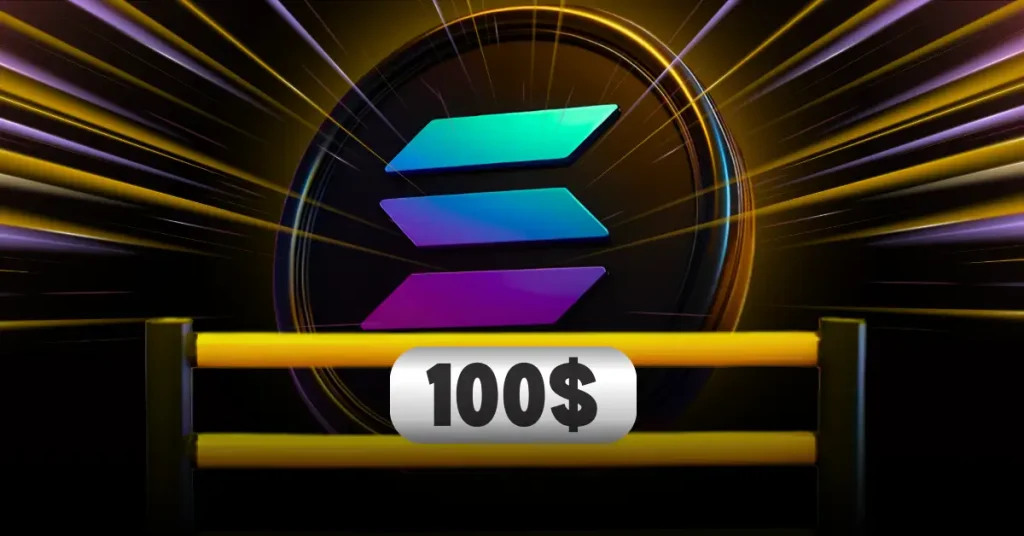
Solana's price has broken key resistance and is trading near $86, indicating a structural shift and potential continuation of the crypto rally. Increased on-chain activity, including a TVL of $5.88 billion and DEX volume above $1.4 billion, supports the current price surge. Derivatives data shows a significant increase in futures volume and open interest, suggesting strong trader conviction and positioning for further upside. The technical breakout above the descending trendline and sustained support above $83-$85 positions SOL for a potential retest of the $100 psychological level.
XRP's record low volatility suggests an imminent breakout, with technical indicators pointing to potential price targets of $2.00 or $1.15. Whale accumulation of over 20 million XRP indicates a potential shift towards long-term holding, supporting a bullish outlook despite current price compression. The market is in a state of fragile equilibrium, with the direction of the breakout heavily dependent on macro factors and liquidity shifts.

Despite Bitcoin's price surge past $74,000, US spot Bitcoin ETFs experienced significant outflows totaling $291 million, indicating potential investor caution or profit-taking despite positive price action. Fidelity's FBTC was the primary driver of outflows, accounting for $229 million, while BlackRock's ETF continued its inflow streak, highlighting divergence in institutional investor sentiment towards different Bitcoin ETPs. While Bitcoin ETFs saw net outflows, Ether ETFs recorded modest inflows, suggesting a potential rotation or continued interest in altcoin-related investment vehicles amidst Bitcoin's price rally. The market sentiment remains cautious, with "extreme fear" readings on the Crypto Fear & Greed Index and some analysts predicting potential downside to $50,000, suggesting that sustained upside for BTC may require renewed derivatives market activity.

MicroStrategy's STRC preferred stock experienced record trading volume, facilitating an estimated 7,800 BTC purchase, signaling strong demand for BTC exposure via MSTR's financial instruments. The surge in STRC volume, exceeding four times its 30-day average, suggests significant investor appetite for the 11.5% dividend yield, potentially driving further BTC accumulation by MSTR. With the ex-dividend date approaching, STRC trading volume may continue to set records, indicating sustained investor interest in the preferred security as a vehicle for BTC investment.
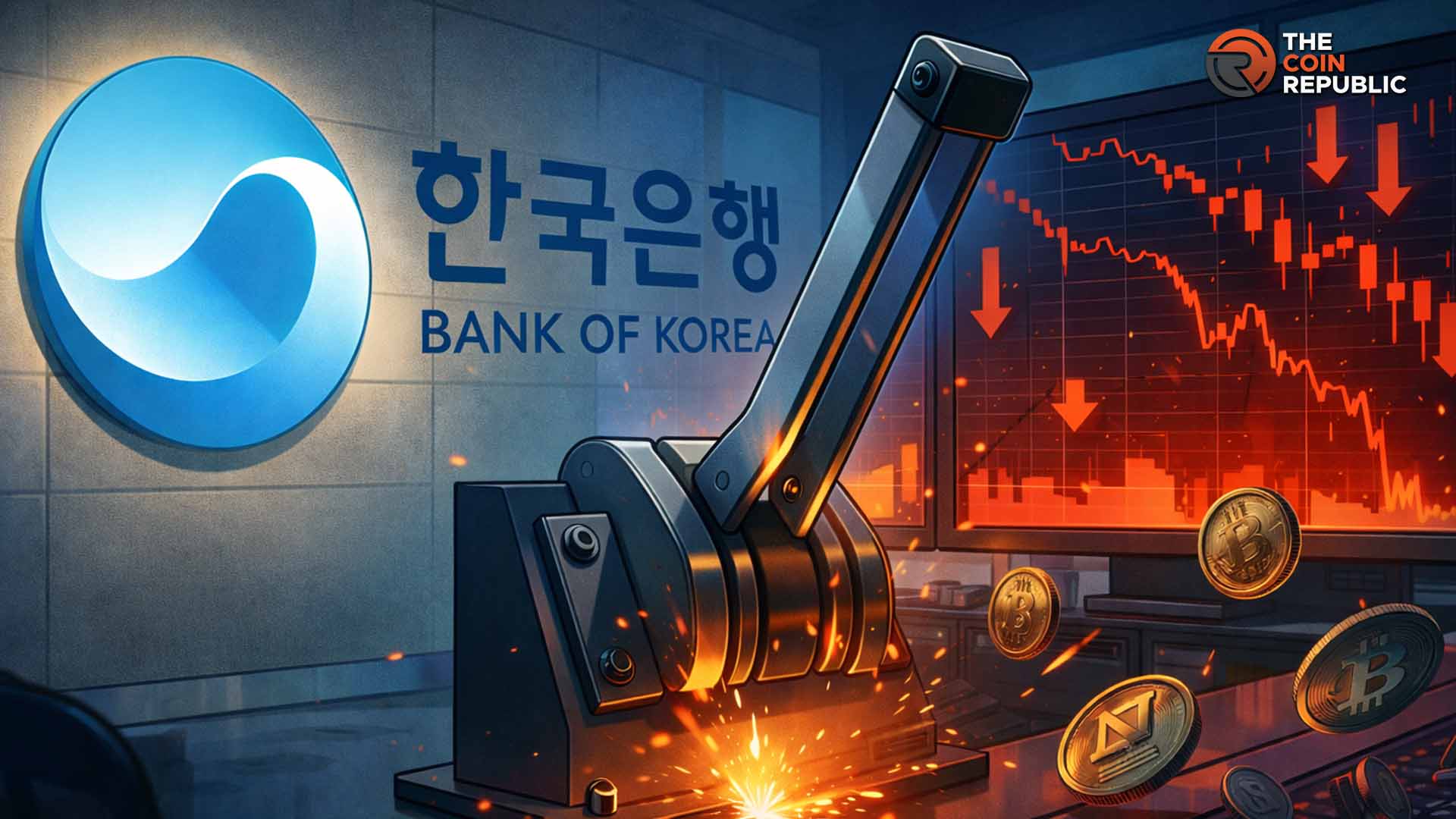
The Bank of Korea's proposal for crypto exchange circuit breakers, prompted by a Bithumb error, signals a move towards enhanced regulatory oversight in South Korea's digital asset market. While circuit breakers could mitigate immediate damage from localized exchange errors, their effectiveness in stabilizing global Bitcoin prices is limited due to 24/7 international trading. The push for circuit breakers highlights the ongoing challenge for regulators to adapt traditional financial safeguards to the unique, global nature of cryptocurrency markets.
Ripple CEO Brad Garlinghouse has tempered his optimism regarding the CLARITY Act, signaling a shift from strong conviction to a more pragmatic view that progress is imminent. Despite a less bullish stance, Garlinghouse's continued assertion that regulatory clarity is 'almost there' suggests underlying confidence in the CLARITY Act's eventual passage, potentially easing industry uncertainty. The CLARITY Act's potential passage is seen as a significant development that could provide XRP with a stronger regulatory footing, enhancing its institutional appeal and competitive positioning.

Web3 projects experienced $464.5 million in losses during Q1 2026, with phishing and social engineering attacks being the primary drivers, indicating a shift in attack vectors away from large-scale smart contract exploits. The increasing focus on operational and infrastructure security by regulators, exemplified by MiCA and DORA, suggests a growing demand for continuous monitoring and robust incident response frameworks within the crypto space. Despite a decrease in total losses compared to the previous year, the prevalence of mid-sized incidents and the significant impact of a single hardware wallet scam highlight persistent vulnerabilities in user-facing security and key management. The report's findings on the shift of costly failures outside on-chain code, coupled with regulatory tightening, implies that projects with strong operational security and compliance measures may gain a competitive advantage.

Bitcoin has demonstrated a significant decoupling from traditional safe-haven assets like gold and silver during a period of heightened geopolitical tension, suggesting a potential shift in investor perception towards BTC as a store of value. The article presents a narrative shift for Bitcoin, challenging its traditional role as a risk-on asset by showing outperformance against equities and safe havens amidst Middle Eastern conflict, implying a potential re-evaluation of its market positioning. Technical indicators like the rising 50 SMA and consolidating RSI suggest a stable foundation for Bitcoin's current price, but the article cautions that further upside requires new catalysts, with the next two weeks being critical for testing its structural resilience against escalating geopolitical events.
Solana is testing a critical support zone between $72 and $78, a level that technical analysts believe will determine its short-term price direction. Record $29 million in daily PreStocks trading volume on Solana, driven by tokenized assets like OpenAI, highlights growing demand for RWA on the network. The surge in tokenized asset trading volume, particularly for pre-IPO stocks, suggests a potential new use case and demand driver for the Solana ecosystem. While technical support is being tested, the strong on-chain activity in tokenized assets could provide a bullish counter-narrative if sustained.
Signal context only. Validate with price action, liquidity, and risk limits before taking a position.
Crypto.com is leveraging a high-profile UFC event at the White House to distribute $1 million in CRO tokens as fighter bonuses, aiming to increase visibility and utility for its native token. The partnership highlights Crypto.com's ongoing strategy to integrate its brand and token into mainstream sporting events, potentially driving adoption and reinforcing CRO's ecosystem. While the event is a significant marketing push, the direct market impact on CRO's price is likely to be limited in the short term, contingent on broader market sentiment and the actual distribution mechanics of the bonuses.
