
Navigating Crypto News

CoinFeather
Navigating Crypto News

Quick market read from this story
Japan's reclassification of crypto as financial instruments signals a significant regulatory shift, potentially attracting institutional capital and paving the way for ETFs, which could benefit projects with clear products and upcoming listings.
While Solana (SOL) and BNB show stalled price action and declining on-chain activity, the regulatory development in Japan creates a more favorable environment for compliant crypto assets and projects with confirmed exchange listings.
The article highlights Pepeto's presale success and upcoming Binance listing as a potential high-return opportunity, contrasting it with the sideways movement of established assets like SOL and BNB, suggesting a shift in focus towards projects with clear catalysts.
Source, catalyst, and sector overlap from the latest feed.
Justin Sun alleges World Liberty Financial embedded a secret backdoor in its smart contract, enabling unilateral freezing or seizure of investor tokens, directly contradicting its decentralized promises. The accusation, stemming from Sun's own frozen WLFI wallet, highlights potential risks in DeFi projects with undisclosed administrative controls, impacting investor trust and project legitimacy. Sun's public demand for token unlocking and transparency signals a potential dispute that could lead to further investigation or legal action, affecting the project's reputation and investor sentiment.
Live Feed
Loading the broader stream in the same flow as the homepage feed.

The development of 'Qwopus' demonstrates the increasing capability of open-source AI models to replicate advanced reasoning, potentially democratizing access to powerful AI tools for developers and users. This advancement in AI model distillation allows for high-performance AI to run on consumer hardware, reducing reliance on expensive API services and enhancing data privacy for local applications. The successful replication of Claude Opus's reasoning in a local model, particularly in coding and creative writing tasks, suggests a significant shift in the accessibility and utility of cutting-edge AI for everyday use. The project's success in achieving near-Opus performance on consumer GPUs highlights a trend towards more efficient and accessible AI, which could impact the competitive landscape of AI service providers.
Shiba Inu (SHIB) faces a critical juncture as its market capitalization nears the $3 billion psychological support level, threatening its top 30 ranking. Declining trading volume relative to market cap indicates waning speculative interest, exacerbated by a 51% price drop over the past year and a perceived lack of new marketing momentum. Underperformance of Shibarium in developer activity and real-world usage, coupled with general market risk-off sentiment, contributes to SHIB's current bearish outlook. The potential loss of top 30 status signifies a significant decline in SHIB's market relevance, driven by a loss of confidence from its community and key opinion leaders.

Bitwise's second amendment filing for the HYPE ETF suggests increased institutional interest and brings the ETF closer to potential approval, which could be a significant catalyst for Hyperliquid. Hyperliquid (HYPE) price has shown strong weekly momentum, rallying over 15% and retesting a key resistance level, indicating potential for short-term upside but also a risk of profit-taking. While HIP3 open interest has cooled from historic highs, the overall positive sentiment surrounding the potential HYPE ETF approval may continue to support HYPE's price action in the near term. The article presents a mixed outlook with HYPE price retesting resistance and whale short positions emerging, suggesting traders should monitor demand and supply dynamics closely for potential directional cues.

Cardano founder Charles Hoskinson is proposing a strategic shift from event-based marketing to establishing permanent global infrastructure hubs to bolster ADA's long-term price appreciation. The proposed treasury reallocation of 14 million ADA from events to infrastructure could create natural buy pressure if funded projects return capital to buy ADA from the market. Market sentiment is divided, with skeptics questioning the short-term price impact of offices versus price action, while supporters see it as a necessary move for long-term survival against competitors.
BNB Chain is mandating a critical node update for operators ahead of the Osaka/Mendel hard fork on April 28, signaling a significant network upgrade aimed at enhancing stability and transaction handling. The Osaka/Mendel hard fork introduces protocol-level transaction gas limits (EIP-7825 via BEP-652) and other improvements like reduced latency (BEP-648), which are expected to bolster network reliability and efficiency for BNB Chain. Failure to update nodes to BSC v1.7.2 before the April 28 hard fork poses a risk of nodes falling out of sync, highlighting the importance of proactive maintenance for network participants.

Bitcoin is showing signs of forming a base at $65,000, suggesting that speculative selling pressure has subsided and a potential recovery is underway. Fidelity's Jurrien Timmer views the current market as resilient, with strong earnings and contained credit spreads indicating that broader markets are absorbing geopolitical shocks effectively. The correlation between Bitcoin and gold, with Bitcoin acting more like a safe-haven asset, highlights a potential shift in investor perception and asset allocation strategies during times of uncertainty. Despite geopolitical risks, the market's measured response and investor skepticism, particularly towards AI, suggest a healthier, more sustainable economic expansion rather than an overheated bubble.
Justin Sun's accusation of a hidden blacklist function in the WLFI token contract raises serious concerns about project transparency and decentralization, potentially impacting investor trust. The allegations of unfair and opaque governance processes, coupled with a significant token price drop and borrowing activity scrutiny, suggest underlying structural issues within World Liberty Financial. The freezing of Justin Sun's wallet and the subsequent decline in WLFI's value highlight the risks associated with centralized control mechanisms in ostensibly decentralized platforms.

Geopolitical tensions and potential supply shocks in the oil market are driving significant trading volume on decentralized derivatives platforms like Hyperliquid, indicating a growing preference for on-chain price discovery during traditional market closures. The naval blockade of the Strait of Hormuz, coupled with dwindling strategic petroleum reserves, poses a substantial risk of an unprecedented oil supply shock, which could trigger broader market volatility across equities and risk assets like Bitcoin. The surge in WTI perpetual futures trading on Hyperliquid, surpassing many traditional instruments, highlights the increasing relevance of DeFi derivatives for hedging and speculating on macro events, even for non-crypto native assets.
Despite a recent price dip, Shiba Inu's open interest has risen by 5%, indicating active positioning by traders anticipating future volatility. The divergence between SHIB's price and increasing open interest suggests market participants are building positions, potentially signaling expectations for a breakout or significant price move. Shiba Inu faces a critical test at the $0.00000586 MA 50 level, with a decisive breakout above $0.000006 needed to target higher price levels like $0.000008 and $0.00001.
Solana's long-term chart suggests a potential $1,000 target if current consolidation patterns hold and momentum recovers. Short-term analysis indicates an immediate upside target for Solana between $88 and $90, contingent on maintaining support above the $71.92-$77.92 range. The current technical setup for Solana presents a dichotomy between a weak short-term momentum and a strong long-term bullish structure, requiring careful observation of price action at key support and resistance levels.
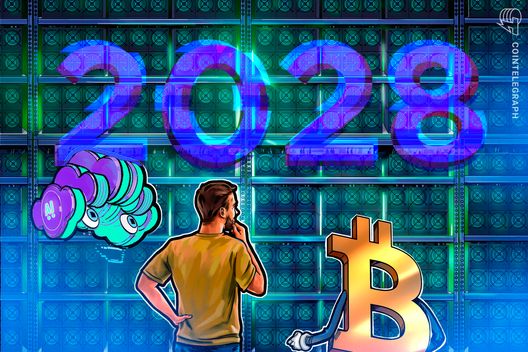
Bitcoin miners face significantly tighter margins and higher operational costs heading into the 2028 halving, necessitating a strategic shift towards capital discipline and diversified revenue streams beyond block rewards. The evolving regulatory landscape and energy market volatility are forcing mining operations to mature into infrastructure companies, prioritizing long-term power contracts and flexible business models that can pivot to AI workloads. Investors are increasingly favoring mining operators with robust balance sheets, diversified infrastructure, and secure energy contracts, signaling a potential re-rating of pure-play miners against those with more resilient business models. Despite increased pressure, some analysts believe the market has not fully priced in the scarcity effect of the next halving, anticipating a stronger ecosystem around Bitcoin by 2028 to meet reduced supply.
Signal context only. Validate with price action, liquidity, and risk limits before taking a position.
The Pi Network's PIRC token design implies a stablecoin-like liquidity for Pi, directly contradicting its observed volatile price action on centralized exchanges. A fundamental disconnect exists between Pi's DEX pricing mechanisms and its CEX speculative trading, raising transparency concerns within the community. The project's silence on the pricing paradox suggests a potential strategic avoidance of addressing the technical inconsistencies between its internal and external market valuations.
