
Navigating Crypto News

CoinFeather
Navigating Crypto News
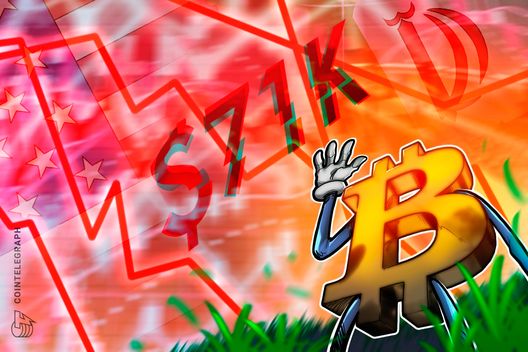
Quick market read from this story
Geopolitical tensions surrounding the US-Iran conflict have directly impacted Bitcoin's price, causing a sell-off below $71,000 and liquidating long positions.
The breakdown in US-Iran negotiations and potential escalation, including threats to the Strait of Hormuz, introduces significant macroeconomic uncertainty, potentially leading to higher inflation and impacting risk-on assets like Bitcoin.
Analysts suggest that despite rising inflation fears, economic weakness stemming from geopolitical events could pressure the Federal Reserve to inject liquidity, a scenario that might indirectly support Bitcoin in the medium term.
Source, catalyst, and sector overlap from the latest feed.
Geopolitical tensions stemming from the Iran conflict are projected to significantly impact global markets through 2026, potentially delaying anticipated interest rate cuts until Q3 or Q4. Bitcoin's recovery above $71,000 is considered fragile, with key resistance at $74,000, suggesting a need for de-escalation of Middle East tensions and a drop in oil prices for further upside. The analyst suggests that a push towards $90,000 for BTC would require a confluence of factors including a ceasefire, lower oil prices, and dovish economic data, indicating a high bar for significant price appreciation.
Live Feed
Loading the broader stream in the same flow as the homepage feed.
XRP ETF inflows outperforming BTC and ETH suggests a temporary rotation from major assets under pressure into more neutral, liquid alternatives. The significant surge in SHIB token burns, up 237%, indicates strong network activity and a deflationary pressure mechanism, potentially supporting its price rally. Adam Back's repeated denials of being Satoshi Nakamoto, coupled with David Schwartz's analysis on lost keys, reduce the market risk associated with dormant Bitcoin holdings. Charles Hoskinson's public criticism of XRP highlights ongoing inter-project rivalries and differing decentralization philosophies within the crypto space.

Solana is implementing new security measures like STRIDE and SIRN in response to a significant $280M DeFi incident, indicating a focus on strengthening network resilience. Algorand's price experienced a short-term surge driven by a Google Quantum AI whitepaper mention, followed by consolidation, suggesting market reaction to external news rather than fundamental shifts. BlockDAG is executing a multi-exchange launch strategy alongside a presale, aiming for broader market accessibility while maintaining distinct pricing stages. The article highlights contrasting market dynamics: Solana addressing security, Algorand reacting to news, and BlockDAG focusing on exchange listings and presale allocation.

The article highlights a potential conflict of interest where Wall Street analysts, who rate Strategy (MSTR) a 'Strong Buy' with significant upside targets, also profit from the company's continuous stock issuance programs. Strategy's core valuation is tied to its Bitcoin holdings, with its stock acting as a leveraged proxy, meaning its price movements are amplified relative to Bitcoin's, creating significant risk if Bitcoin prices decline sharply. The company's aggressive capital raising and issuance strategy, while generating fees for banks, creates a self-reinforcing loop of optimism that could stall if investor appetite for new stock cools during a market downturn. Strategy's role as a primary institutional Bitcoin buyer outside of its own treasury operations makes its fundraising health a critical factor for sustained demand and price support in the broader Bitcoin market.

Anthony Scaramucci predicts widespread corporate Bitcoin adoption, citing SpaceX's continued holding of its BTC treasury despite significant financial losses. SpaceX's upcoming IPO will necessitate the public disclosure of its $603 million Bitcoin holdings, potentially normalizing BTC as a strategic corporate reserve asset. The market may interpret SpaceX's commitment to Bitcoin as a strong proof-of-concept for other corporations considering similar treasury allocations.

The overwhelming reliance of US Bitcoin ETFs on Coinbase for custody, representing over 80% of assets ($74B+), creates a significant single point of failure risk for the entire spot ETF market. While ETF structures offer asset segregation, a disruption at Coinbase could trigger operational bottlenecks and settlement issues across multiple funds, testing institutional confidence in Bitcoin ETFs. The concentration risk highlights a potential structural vulnerability in the burgeoning Bitcoin ETF market, despite the presence of alternative custodians and Fidelity's self-custody approach. Coinbase's pending OCC national trust charter approval is poised to further solidify its dominant position as the default crypto back-office infrastructure for institutions, potentially exacerbating concentration concerns.

CFTC Chair Mike Selig asserts the agency's exclusive authority over prediction markets, signaling continued legal battles with states over regulatory jurisdiction. The CFTC's litigation strategy aims to establish federal oversight for prediction markets as derivatives, potentially impacting how these platforms are classified and regulated. Recent court rulings and ongoing legal arguments suggest a trend towards federal CFTC control over prediction markets, which could influence market access and operational frameworks.

Significant daily inflows into US spot Bitcoin ETFs, exceeding $240 million, indicate sustained institutional demand and support for BTC price above $72,000. Despite strong ETF inflows, mixed sentiment from derivatives data and analyst caution suggest potential for increased volatility and a possible near-term reversal after a short-term rally. Analysts project a potential short-term push towards $76,000 or even $80,000-$85,000 if key resistance levels are reclaimed, but warn of a subsequent reversal to new lows.

The current contraction in DeFi is a necessary consolidation phase, filtering out unsustainable models and revealing resilient protocols with durable economics. Despite protocol shutdowns and security concerns, the expansion of stablecoin market cap and institutional investment in protocols like Morpho indicate capital rotation rather than systemic collapse. DeFi lending remains economically rational in bear markets for long-term holders seeking liquidity without crystallizing losses, offering competitive rates and transparent, albeit algorithmic, liquidation risks. The path to broader DeFi adoption hinges on increased financial literacy and trusted distribution channels that abstract technical complexity, similar to how banks are gradually integrating crypto.

The development of 'Qwopus' demonstrates the increasing capability of open-source AI models to replicate advanced reasoning, potentially democratizing access to powerful AI tools for developers and users. This advancement in AI model distillation allows for high-performance AI to run on consumer hardware, reducing reliance on expensive API services and enhancing data privacy for local applications. The successful replication of Claude Opus's reasoning in a local model, particularly in coding and creative writing tasks, suggests a significant shift in the accessibility and utility of cutting-edge AI for everyday use. The project's success in achieving near-Opus performance on consumer GPUs highlights a trend towards more efficient and accessible AI, which could impact the competitive landscape of AI service providers.
BlockDAG's final allocation phase at a fixed price of $0.0000061, coupled with its listing on 13 exchanges, signals a transition towards broader market accessibility and potential price discovery. Tron's continued high on-chain USDT transaction volume highlights its role in the stablecoin ecosystem, while ongoing discussions around centralization and regulation warrant monitoring for future impact. Dogecoin's market activity is primarily driven by community sentiment and potential payment integrations, indicating its performance is more susceptible to external narrative shifts than fundamental development. Cardano's focus on research-driven development and upgrades like Leios and Midnight aims for long-term scalability and privacy, though its slower development pace may present adoption challenges compared to competitors.
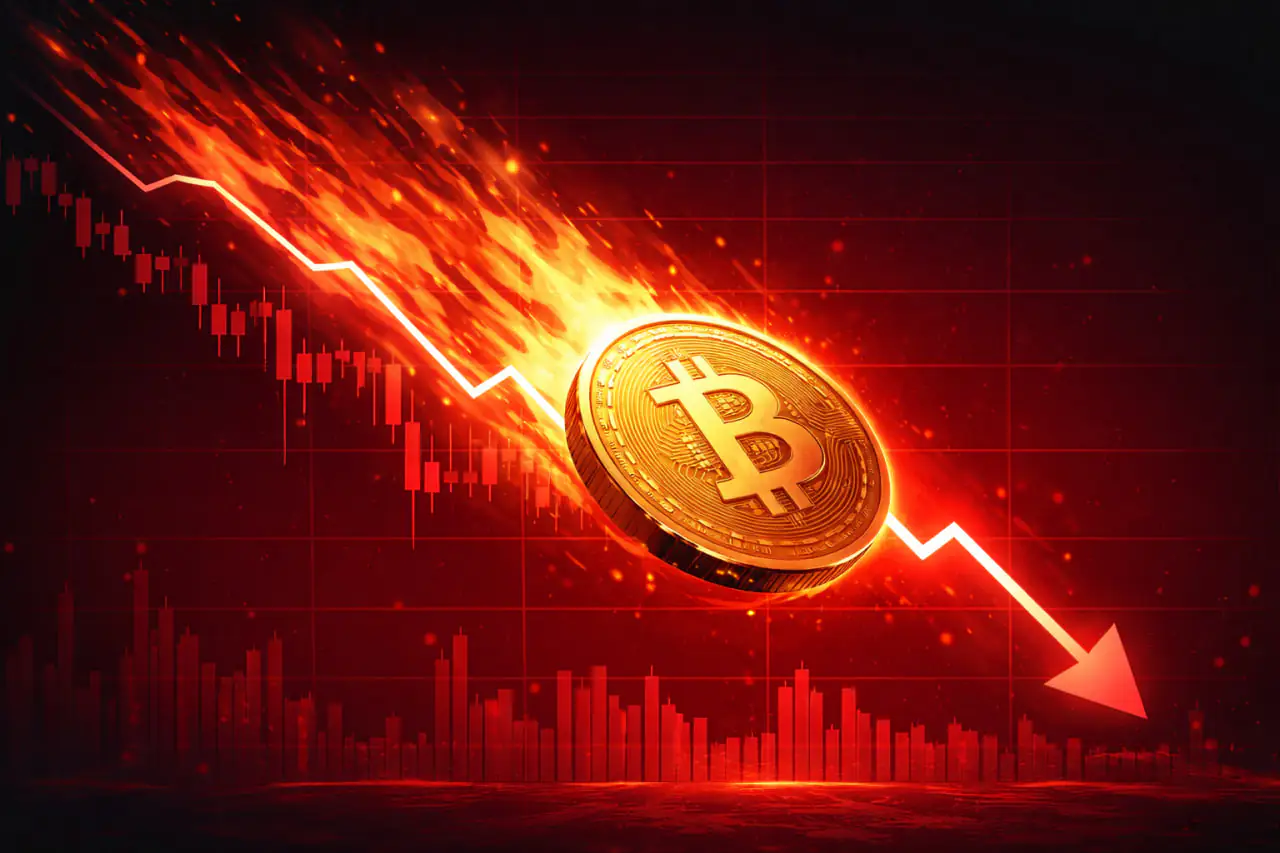
Bitcoin experienced a sharp sell-off below $71,000, triggered by geopolitical news, with nearly $1 billion in derivatives volume hitting Binance in one hour, indicating a capitulation event. The oversold RSI (28.69) and negative funding rates (-0.0065%) suggest a potential short-term bounce, but historical patterns indicate this could be a limited bear market rally rather than a bull market reversal without further macro catalysts. The declining 50 SMA at $72,482 is likely to act as resistance for any bounce, suggesting that without a significant diplomatic or economic shift, the current downtrend may resume after a short-lived squeeze.
Shiba Inu (SHIB) faces a critical juncture as its market capitalization nears the $3 billion psychological support level, threatening its top 30 ranking. Declining trading volume relative to market cap indicates waning speculative interest, exacerbated by a 51% price drop over the past year and a perceived lack of new marketing momentum. Underperformance of Shibarium in developer activity and real-world usage, coupled with general market risk-off sentiment, contributes to SHIB's current bearish outlook. The potential loss of top 30 status signifies a significant decline in SHIB's market relevance, driven by a loss of confidence from its community and key opinion leaders.
Michael Saylor's reintroduction of the 'orange dot' chart signals a potential resumption of aggressive Bitcoin accumulation by Strategy. Strategy's continued Bitcoin purchases, despite a current unrealized loss, underscore a long-term conviction in BTC's value, potentially influencing market supply dynamics. The company's stated target of 1 million BTC, if achieved by Q1 2027, suggests a sustained demand driver for Bitcoin over the medium term.
Despite a 42% price decline over 90 days and approaching oversold RSI levels, top XRP traders maintain a heavily net-long position, suggesting potential for a mean reversion rally if the current support holds. A significant drop in open interest across major exchanges indicates a clearing of leveraged positions, with remaining long positions held by high-conviction traders, which could precede a price recovery. The divergence between bearish price action and persistent long positioning among top traders presents a structural argument for a potential XRP recovery, contingent on holding the $1.31-$1.32 support level.
Signal context only. Validate with price action, liquidity, and risk limits before taking a position.
No explicit catalyst tagged.
Justin Sun's public criticism of the WLFI platform regarding governance and token lockups, coupled with WLFI's threat of legal action, introduces significant reputational risk and potential legal entanglements for both parties. The WLFI token has experienced a sharp decline to an all-time low, exacerbated by news of the platform using its own tokens as collateral for loans, indicating severe market distrust and potential liquidity issues. The controversy surrounding WLFI, including accusations of non-transparent governance and tokenomics, highlights ongoing risks within DeFi protocols and the importance of robust community oversight.
