
Navigating Crypto News

CoinFeather
Navigating Crypto News

Quick market read from this story
MoonPay's launch of the Open Wallet Standard (OWS) addresses critical fragmentation in AI agent crypto fund management, potentially unlocking new use cases and demand for blockchain infrastructure.
The OWS framework, with backing from major players like PayPal and Ethereum Foundation, signals a significant step towards integrating AI agents into the crypto economy, creating a foundational layer for agentic payments.
This development highlights a growing trend of AI-native infrastructure in crypto, with OWS aiming to simplify cross-chain transactions and enhance security for AI developers managing digital assets.
Deep Dive
Crypto payments infrastructure company MoonPay has introduced the Open Wallet Standard (OWS), an open-source framework enabling AI agents to manage funds and execute transactions across multiple blockchains. This initiative addresses fragmentation challenges in wallet and key management, aiming to enhance security for AI developers and facilitate the integration of AI with crypto.
The OWS was developed with significant contributions from major industry players including PayPal, the Ethereum Foundation, the Solana Foundation, Ripple, OKX, Tron, and the TON Foundation. MoonPay co-founder and CEO Ivan Soto-Wright stated that the standard provides the necessary wallet layer for the emerging agent economy. The framework supports the x402 open payment protocol and Stripe and Tempo’s Machine Payments Protocol (MPP) for micropayments. It also builds upon MoonPay's prior collaboration with Ledger for hardware wallet signing.
The standard aims to simplify processes by providing a unified representation for wallet addresses across different blockchains, allowing AI agents to focus on higher-level tasks. A key security feature of OWS is that a wallet’s private key is never exposed to agents, LLM contexts, or parent applications during transactions. Mysten Labs co-founder and CTO Sam Blackshear highlighted that a unified representation streamlines operations.
The launch of OWS aligns with a growing trend of AI agents requiring sophisticated financial capabilities for autonomous operation. MoonPay is making a deliberate shift towards AI-native infrastructure. This development follows similar industry moves, such as Coinbase launching a wallet for AI agents with built-in guardrails, Stripe-backed Tempo Network focusing on AI agent payment capabilities, and Sam Altman's World using Coinbase's protocol to verify humans behind AI agents.
Source, catalyst, and sector overlap from the latest feed.
Geopolitical de-escalation initially fueled a short squeeze in AI altcoins like TAO, FET, and RENDER, demonstrating their sensitivity to macro risk sentiment. Conflicting reports regarding Iran talks created significant volatility, leading to over $670 million in crypto liquidations and highlighting the market's reaction to uncertainty. While AI altcoins saw short-term gains, the broader market faces headwinds from elevated oil prices and Treasury yields, potentially testing Bitcoin's store-of-value narrative. The convergence of geopolitical events and the Nvidia GTC conference provided a dual catalyst for AI-related crypto assets, suggesting sector-specific narratives can drive performance amidst macro noise.
MicroStrategy's announcement of a $44 billion equity plan to potentially buy more Bitcoin signals continued institutional commitment to BTC accumulation, despite the lack of immediate price reaction. The bipartisan bill targeting sports betting on prediction markets represents a significant regulatory risk for platforms like Kalshi and Polymarket, potentially impacting their core revenue streams and user activity. Polymarket and Kalshi's proactive measures, including referral programs, fee structure adjustments, and insider trading bans, indicate an effort to preemptively address regulatory scrutiny and bolster platform integrity. Coinbase's user complaints regarding excessive March Madness push notifications highlight a potential disconnect in user experience management and the need for greater notification customization.
OKX's launch of equity perpetual swaps using crypto collateral expands access to traditional markets for retail traders, potentially increasing demand for collateral assets like BTC and ETH. The offering provides synthetic exposure to major U.S. equities, allowing 24/7 trading and leveraging crypto assets that can continue to earn yield, a novel approach to bridging traditional and digital finance. This move by OKX, following its investment from ICE, signals a growing trend of crypto exchanges integrating real-world asset exposure, which could drive further innovation in derivatives and tokenized assets.
Australian pension fund Hostplus is exploring crypto offerings, signaling growing institutional interest beyond Bitcoin and potentially tokenized assets like music rights. The move by Hostplus, managing $105 billion, could set a precedent for other Australian super funds to follow if regulatory clarity improves, driven by member demand. While Hostplus explores broader digital asset exposure, the recent exit of AMP Super from most of its Bitcoin futures position highlights ongoing volatility concerns for institutional investors. The exploration of crypto by a major Australian pension fund, even with a focus on a self-directed window, represents a positive step for sector legitimacy and potential future adoption.
Balancer Labs is winding down operations six months after a significant $128 million exploit, citing legal exposure and lack of sustainable revenue as primary drivers. The shutdown highlights broader concerns about the sustainability of older DeFi models reliant on token incentives and emissions, which are increasingly facing pressure. While Balancer Labs is ceasing operations, the protocol is expected to continue under a DAO, foundation, and service-provider structure, with potential for key staff to move to a new entity. The event underscores the critical need for robust security and sustainable revenue models in DeFi, as exploits can lead to severe reputational and financial consequences.
The Solana Foundation's new developer platform, backed by major payment processors, aims to simplify enterprise adoption of blockchain for financial applications, potentially increasing institutional demand for SOL. Integration of AI tools like Claude Code and OpenAI Codex into the Solana Developer Platform suggests a focus on enhancing developer experience and accelerating the creation of sophisticated financial products on Solana. The platform's modules for tokenized deposits, stablecoins, and RWA issuance, alongside payment support, indicate a strategic push to leverage Solana for traditional finance use cases, signaling a potential shift in market focus.
Institutional investors are shifting focus from pure price appreciation to yield generation in crypto, signaling a maturing market seeking income streams. Coinbase's launch of a tokenized Bitcoin Yield Fund on Base, alongside BlackRock's Staked Ethereum ETF, highlights a growing trend of structured products and yield-bearing strategies catering to institutional demand. The increasing institutional interest in yield and tokenization, supported by clearer regulatory frameworks, suggests a potential for increased capital inflow and product innovation within the digital asset space. The 'second wave' of institutional money is characterized by banks and payment firms exploring blockchain for faster, cheaper transactions and yield opportunities, moving beyond early adopters focused solely on price speculation.
The NYSE's partnership with Securitize to launch a 24/7 tokenized trading platform signifies a major institutional embrace of blockchain for traditional securities, potentially increasing demand for tokenization infrastructure and stablecoins. This development could accelerate the integration of traditional finance (TradFi) with decentralized finance (DeFi) by offering instant settlement and stablecoin payments for tokenized stocks and ETFs, impacting the RWA sector. As the NYSE's first digital transfer agent, Securitize is positioned to benefit from the issuance and management of these tokenized assets, highlighting a significant catalyst for companies specializing in RWA tokenization.
Apex Group's tokenization of the Omnes Mining Note on Coinbase's Base platform signifies a growing trend of traditional finance integrating with blockchain for structured products, offering institutional investors exposure to Bitcoin hashrate via a tokenized note. The use of the ERC-3643 standard on Base highlights the increasing adoption of on-chain protocols for managing real-world assets, potentially enhancing liquidity and collateralization opportunities for institutional-grade instruments. This development, coupled with broader institutional interest in tokenization as seen with BlackRock, suggests a maturing market for tokenized real-world assets, potentially driving further adoption and innovation in the RWA sector.
Despite a broader crypto market slump in 2026, the AI and stablecoin sectors demonstrate significant resilience, indicating a market rotation towards fundamental utility over speculative assets. The stablecoin market cap reaching a record $320 billion with $1.8 trillion in monthly transactions highlights their critical role as financial infrastructure and settlement rails, even in a downturn. AI tokens, led by assets like TAO and NEAR, are showing strong performance with a 30% market cap increase in 30 days, suggesting robust investor interest driven by technological advancements and productivity gains. The convergence of AI and stablecoins signifies a potential market transition from pure speculation to infrastructure development, with AI requiring efficient payment systems and stablecoins providing them.
Solana's introduction of a spectrum-based privacy model for enterprises addresses key adoption barriers, potentially attracting institutional capital by balancing confidentiality with regulatory compliance. The enhanced privacy features, coupled with Solana's high throughput, position the network as a viable platform for complex enterprise applications, which could drive demand for SOL. While SOL shows early bullish strength above a key support level, immediate price action hinges on breaking the $96 resistance, with a target of $120-$121 if successful.
Live Feed
Loading the broader stream in the same flow as the homepage feed.

Institutional adoption of Bitcoin is accelerating through pension funds and corporate treasuries, driven by regulatory clarity and new accounting standards that favor direct asset holding. The increasing involvement of large pension funds like Hostplus and corporate entities like Strategy in Bitcoin and tokenized assets signals a maturing market and potential for sustained demand. The growth of the tokenized real-world asset market, alongside direct Bitcoin allocations by institutions, indicates a broader structural shift in finance towards blockchain-based infrastructure. While regulatory approval remains a key gating factor, the trend towards direct institutional Bitcoin exposure suggests a positive long-term outlook for the asset class.

Bernstein reiterates a $150,000 year-end Bitcoin price target, signaling a belief that the cryptocurrency has found its bottom after a significant correction. The analysis highlights resilient ETF flows and increasing corporate treasury demand as key drivers supporting Bitcoin's rebound, suggesting sustained institutional interest. MicroStrategy (MSTR) is identified as a high-beta proxy for Bitcoin, with Bernstein maintaining an outperform rating and a $450 price target, underscoring the company's strategic importance in the Bitcoin ecosystem. Despite recent volatility driven by macro factors and leveraged position unwinds, Bernstein characterizes the Bitcoin pullback as a temporary sentiment reset rather than a fundamental breakdown, implying a constructive outlook.
Dogecoin price is showing strong recovery momentum from recent lows, with support holding firm around $0.0930 and $0.074, suggesting potential for an upward move towards $0.12 resistance. Significant accumulation is observed near $0.074, with 28 billion DOGE tokens exchanged, indicating strong buyer conviction and a potential floor against further price declines. The price action respects a rising channel, with recent bounces from $0.087 mirroring historical patterns that preceded significant rallies, reinforcing a bullish short-term outlook. Analysts highlight the strategic positioning of large holders around key support levels, suggesting that the current consolidation phase could precede a notable upward trend.

ParaFi's successful $125 million raise for a new venture fund, despite a crypto market downturn, signals investor confidence in long-term blockchain infrastructure. The new fund's focus on stablecoins, tokenization, and institutional onchain products indicates a strategic shift towards RWA and institutional DeFi adoption. The development suggests a growing separation between short-term token price volatility and the fundamental value proposition of blockchain financial services.
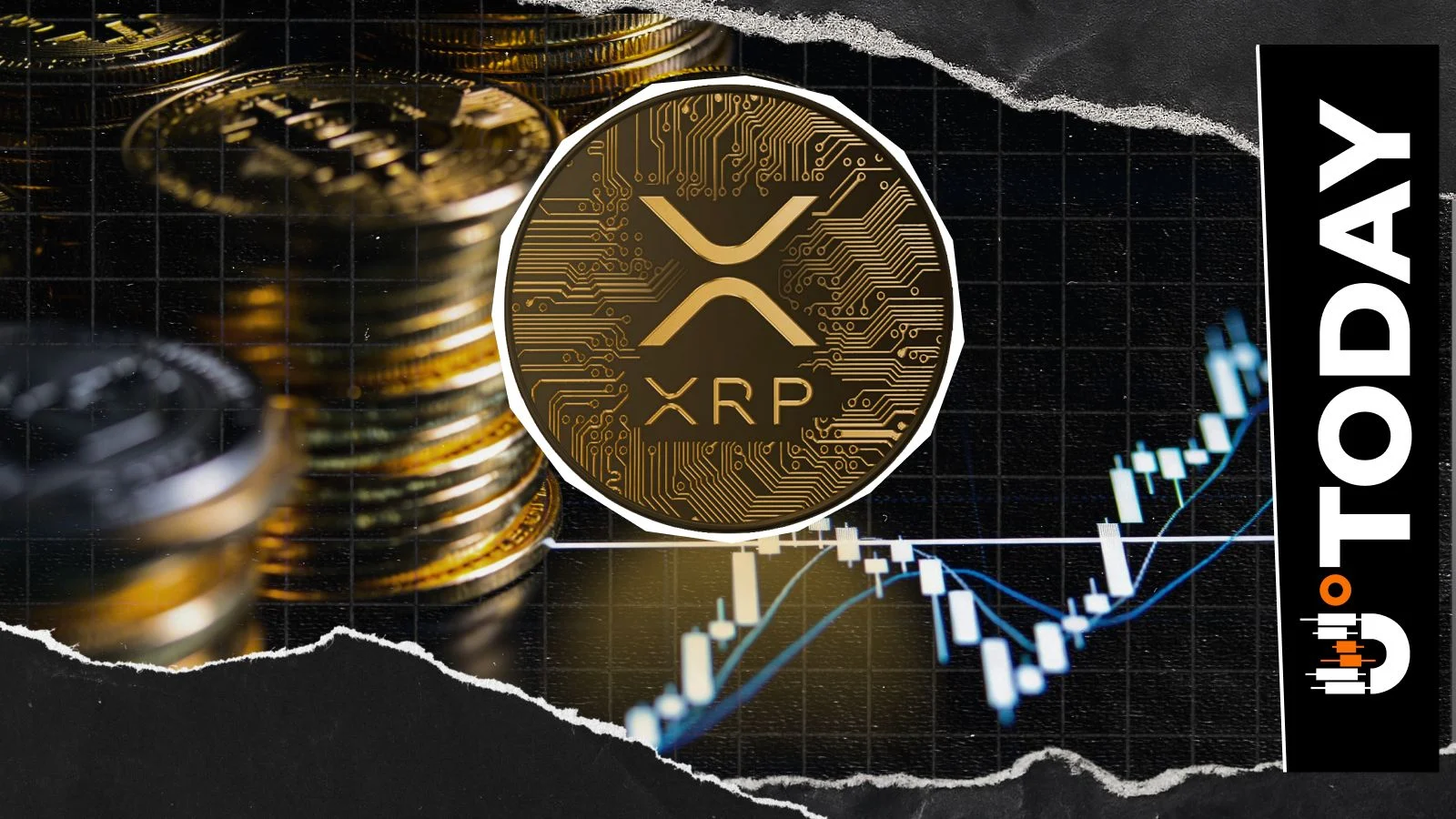
Despite XRP breaking a five-month losing streak with a recent price surge, a prominent analyst warns of a potential 'dead cat bounce' due to unchanged fundamentals, suggesting a risk of trapped bulls. Technical indicators like the RSI at 50.04 signal a neutral stance for XRP, indicating vulnerability to broader market sentiment shifts and potential downward pressure if sellers dominate. The analyst's Elliott Wave analysis suggests XRP is in a temporary recovery phase (Wave 2), with a failure to break above $1.51-$1.55 potentially leading to a retracement towards $0.87, unless it can decisively hold above $1.65. While XRP has seen a significant increase in trading volume and a positive monthly close, the underlying bearish technical signals and lack of fundamental change suggest caution for short-term traders.

The New York Stock Exchange's partnership with Securitize to build a tokenized stock platform signals a significant move by traditional finance infrastructure to adopt blockchain technology for equities. This development, alongside Nasdaq's regulatory approval for a similar framework, indicates a growing trend towards integrating crypto-like trading features such as 24/7 access and faster settlements into mainstream stock markets. The collaboration positions Securitize as a key player in the burgeoning tokenized securities market, potentially driving demand for its services and influencing the broader RWA sector.

Regulation will not fragment DeFi but rather integrate TradFi into its ecosystem by creating compliant tiers that leverage permissionless infrastructure for liquidity. Institutions will be drawn to DeFi's superior onchain liquidity, speed, and composability, overriding concerns about complexity and innovation risks. Security innovations will continue to originate in permissionless DeFi due to adversarial conditions, with these advancements subsequently adopted by regulated entities. The evolving regulatory landscape is expected to cement DeFi's central role in global finance by fostering interoperable ecosystems with varying compliance profiles.
Uniswap's price is consolidating in a key demand zone, suggesting a potential long-term accumulation phase as it completes a market cycle, with technical targets pointing to a retest of $10.00 in 2026. The dismissal of the Risley class action lawsuit provides a significant regulatory green light for Uniswap Labs, removing federal and state claims and potentially de-risking the protocol for investors. The integration of BlackRock's BUIDL fund via Securitize into UniswapX signifies a bridging of TradFi and DeFi, potentially increasing institutional adoption and on-chain asset trading volume. Long-term price predictions for UNI range from $32.00 by 2030 to $70.00 by 2050, contingent on continued DeFi growth, Layer-2 adoption, and sustained protocol activity.
ORDI is consolidating in a critical demand zone ($1-$5) after a significant 95% drop from its all-time high, suggesting potential for a bottoming pattern in 2026 if bulls reclaim $5 resistance. Technical analysis indicates a lack of buyer interest and persistent selling pressure, with key support levels failing to hold, potentially leading to a drop to $1.00 if the current $2.00 level breaks. Long-term price predictions for ORDI range from $30 by 2026 to $68.50 by 2032, contingent on the continued adoption of Bitcoin Ordinals, BRC-20 token usage, and overall crypto market sentiment.

A proposed amendment to Kentucky's HB 380 could mandate hardware wallet providers to offer backdoor recovery mechanisms, potentially undermining self-custody principles established by prior legislation (HB 701). Critics argue that requiring hardware wallet providers to facilitate password or seed phrase resets would necessitate building cryptographic backdoors, forcing companies to choose between compliance and their core product design. If passed as written, the amendment could lead some hardware wallet manufacturers to restrict sales in Kentucky or withdraw from the market, thereby reducing self-custody options for residents. The Senate has a narrowing window to amend or remove the controversial Section 33, which could preserve Kentucky's consumer protection framework for crypto kiosks without compromising wallet sovereignty.
Ethereum's ongoing accumulation phase, supported by key price levels and increasing whale transactions, suggests a potential bullish breakout toward $4,076 in 2026. The network's fundamental growth, evidenced by $20.4 billion in tokenized RWAs and $38.2 billion in Layer 2 TVL, alongside decreasing exchange supply, indicates increasing demand and bullish pressure for ETH. Long-term projections place ETH's potential at $71,594 by 2030, driven by continued adoption, Layer 2 expansion, and growing institutional interest, positioning it as a strong long-term investment. Despite bullish long-term outlooks, the article highlights the possibility of continued consolidation if demand fails to meet current support levels, suggesting a cautious approach to immediate price action.

The FSB's annual report highlights significant risks posed by USD-denominated stablecoins to emerging market economies, including currency substitution and weakened monetary policy effectiveness. The report indicates that despite market growth, stablecoins and crypto assets still lack widespread adoption in real economic use cases, suggesting limited immediate impact on broader adoption trends. The FSB's continued emphasis on regulatory gaps and inconsistencies in stablecoin frameworks suggests ongoing scrutiny and potential for future regulatory actions that could impact the sector.
Sei's 'Giga upgrade' with Autobahn consensus and asynchronous execution aims for over 200,000 TPS and sub-400ms finality, positioning it for high-frequency applications like RWA tokenization, gaming, and AI-agent economies. Despite a bearish trend in 2026 with price potentially retesting the $0.020 demand zone, long-term projections are bullish, forecasting SEI to reach $1.26-$1.45 by 2032, driven by ecosystem maturity and adoption. The transition to an EVM-only architecture from Cosmos-based transactions, facilitated by Coinbase Markets, signifies a strategic shift to leverage Ethereum's developer ecosystem while retaining high performance.
Signal context only. Validate with price action, liquidity, and risk limits before taking a position.
