
Navigating Crypto News

CoinFeather
Navigating Crypto News
Quick market read from this story
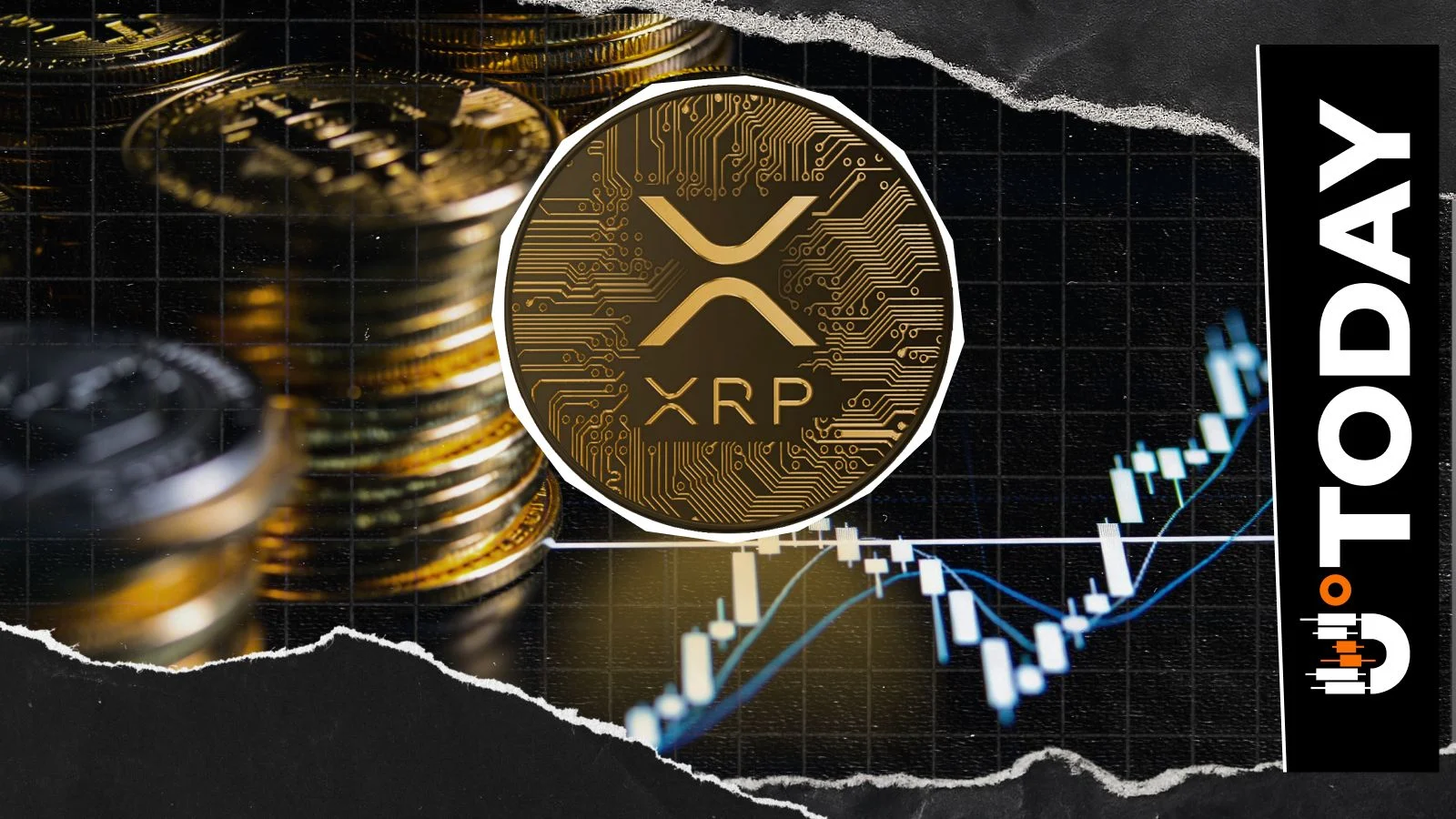
Despite XRP breaking a five-month losing streak with a recent price surge, a prominent analyst warns of a potential 'dead cat bounce' due to unchanged fundamentals, suggesting a risk of trapped bulls.
Technical indicators like the RSI at 50.04 signal a neutral stance for XRP, indicating vulnerability to broader market sentiment shifts and potential downward pressure if sellers dominate.
The analyst's Elliott Wave analysis suggests XRP is in a temporary recovery phase (Wave 2), with a failure to break above $1.51-$1.55 potentially leading to a retracement towards $0.87, unless it can decisively hold above $1.65.
While XRP has seen a significant increase in trading volume and a positive monthly close, the underlying bearish technical signals and lack of fundamental change suggest caution for short-term traders.
Deep Dive
XRP has experienced a notable 6% price increase, surpassing the $1.40 resistance level in the past 24 hours. However, crypto analyst CasiTrades suggests this surge may be a "dead cat bounce," potentially trapping bullish investors, as fundamental factors for the asset have not significantly changed beyond ending its negative monthly streak.
CasiTrades' analysis indicates a potential for another price drop for XRP, despite the recent bullish movement. The Relative Strength Index (RSI) is currently at 50.04, signaling a neutral position that could shift based on investor sentiment. While short-term bias leans cautiously bullish, market shocks could trigger a downturn. The price has moved above a consolidation trend line, but this level is now acting as resistance, suggesting bearish momentum. If selling pressure increases, XRP could see a significant price decline.
Using the Elliot Wave structure, the analyst believes XRP is in Wave 2 of a temporary recovery. A failure to break above the $1.51 to $1.55 range could lead to a retracement. A severe reversal might push the price down to the next crucial support level at $0.87. To invalidate this bearish outlook, XRP must decisively break and sustain a price above $1.65.
As of the latest data, XRP is trading at $1.44, marking a 6.06% increase over the last 24 hours. The asset had previously reached $1.46 before a minor pullback. Trading volume has surged by 83.77% to $3.3 billion in the same period, indicating strong market interest.
The recent price action and increased volume have enabled XRP to break its five-month losing streak. Since October 2025, XRP had consistently closed the month with double-digit losses, including -11.9% in October, -13.8% in November, and -14.8% in December. This bearish trend continued into 2026 with drawdowns of 10.6% in January and 16.2% in February. March, however, has seen a positive shift, with XRP currently up by 2.74%.
Additionally, XRP has shown stronger performance than Ethereum in crypto fund flows, with institutional investors reportedly increasing their positions in the Ripple asset. These developments could contribute to XRP's potential price breakout.
Source, catalyst, and sector overlap from the latest feed.
A 2010 BitcoinTalk post highlights an early miner's sentiment of having "missed the bus" with 600 BTC, underscoring the dramatic historical underestimation of Bitcoin's future value. The anecdote serves as a stark reminder of Bitcoin's exponential growth trajectory, with 600 BTC now valued at over $42 million, illustrating the immense long-term wealth creation potential for early adopters. This historical perspective, shared in the context of Bitcoin's current market, may reinforce investor conviction in the asset's long-term prospects despite short-term volatility.
Dogecoin experienced a 6% price surge despite a short-term death cross on its 3-hour chart, indicating potential short covering or a bear trap scenario. The price action suggests that market participants are overlooking bearish technical signals in favor of broader market recovery and short liquidation dynamics, with shorts being liquidated at a significantly higher rate than longs. Near-term price action for DOGE will likely be dictated by its ability to break above the daily MA 50 at $0.096, with potential upside targets at $0.12 and $0.16 if bullish momentum sustains.
Bitcoin's technical indicators suggest a potential 19-21% rally towards $84,600 if key resistance at $72,800 is overcome, indicating a bullish short-term outlook based on moving average tests. Binance's launch of AI Pro trading on March 25th introduces an AI agent integrating ChatGPT and Claude for automated analysis and execution, potentially enhancing trading efficiency for users at a beta price of $9.99/month. The listing of Ripple's RLUSD stablecoin in South Korea, coupled with XRP's dominant trading volume on Upbit, solidifies the region as a key market for Ripple's ecosystem, driven by strong retail investor interest. The potential passage of the U.S. Clarity Act in early April, with a 70% probability, poses a significant regulatory risk to stablecoins by potentially banning yield payments without a banking license, which could lead to substantial outflows from DeFi protocols.
XRP is showing signs of a potential trend reversal, aiming to close its first positive month in early 2026 after five consecutive declines. A sustained March rally could signal a shift in market sentiment for XRP, potentially attracting renewed investor interest if momentum continues. Despite recent price strength, the article notes poor institutional investor demand and weak ETF flows, suggesting caution is warranted for significant upside.
XRP Ledger's 100% surge in daily payments indicates a significant increase in network activity, potentially signaling renewed user engagement or speculative interest. Despite the strong on-chain activity, XRP's technicals remain in a neutral-to-bearish structure, suggesting that sustained price recovery is contingent on breaking key resistance levels. The divergence between improving network fundamentals and fragile price action presents a potential setup for momentum traders if on-chain activity persists and technicals confirm an uptrend.
Bitcoin is demonstrating a notable decoupling from traditional equity markets, holding strong near $70,000 while the S&P 500 experiences a sell-off due to geopolitical tensions, suggesting a potential shift in its role towards a safe-haven asset. Despite recent price drops and negative media sentiment, Bitcoin ETFs are experiencing significant inflows, with BlackRock's IBIT already showing positive year-to-date performance, indicating strong institutional conviction and a potential catalyst for future price appreciation. On-chain data reveals that long-term Bitcoin holders are not selling, a behavior distinct from previous market downturns, which, combined with increasing institutional adoption via ETFs, suggests a potential consolidation phase rather than a traditional bear market. Technical indicators on Bitcoin's 4-hour chart show a bullish MACD crossover and neutral RSI, with key price levels around $71,500 for upside and $68,500 for downside, indicating a critical juncture that could precede a significant price move if key resistance is broken.
A prominent figure from the precious metals sector allocating 10% of his portfolio to XRP signals a potential shift in traditional finance's perception of digital assets, despite his cautious approach. The CEO of Miles Franklin Precious Metals views XRP as a high-risk, high-reward opportunity, emphasizing that its success is contingent on widespread bank adoption for cross-border payments. While acknowledging the speculative nature and usability challenges of crypto, the allocation highlights a strategy of diversifying into digital assets for potential upside without jeopardizing core wealth preservation. The mention of Goldman Sachs' significant XRP exposure, alongside this individual's investment, suggests growing institutional interest that could influence XRP's market dynamics.
Bitcoin's correlation with gold at 79% indicates it is currently trading as a macro-sensitive asset, driven by external geopolitical events rather than internal crypto market dynamics. Geopolitical tensions in the Middle East and a refinery fire in Texas have triggered a broad market sell-off, impacting Bitcoin and other major cryptocurrencies as risk assets. With Bitcoin trading below key support levels, traders should monitor the $69,141 and $68,423 price points for potential further downside if the current macro-driven sentiment persists. The current market environment, characterized by fear and weakening momentum, suggests a cautious approach is warranted for short-term trading strategies.
Solana's launch of an enterprise-focused developer platform, backed by major payment players like Mastercard, signals a strategic pivot towards institutional adoption and real-world asset integration. The platform's modular design and embedded compliance tools, including Chainalysis KYT, aim to bridge the gap between traditional finance and blockchain, potentially accelerating the issuance of stablecoins and tokenized assets. This development positions Solana as a contender for enterprise-grade financial applications, shifting the competitive landscape from raw performance to integration capabilities and regulatory alignment.
Live Feed
Loading the broader stream in the same flow as the homepage feed.
Pi Network's second migration wave is now live, enabling users to move additional Pi tokens to Mainnet and increasing the potential for ecosystem participation. The migration includes referral bonuses for KYC-verified team members, creating an incentive for users to complete verification before the window closes. An analyst highlighted the potential value of accumulated Pi tokens, suggesting early and consistent miners could hold assets worth up to $63,000 if Pi reaches $3. With tokens now migrating to Mainnet, the Pi Network experiment is transitioning from theoretical development to tangible asset movement, potentially attracting renewed interest.
Geopolitical de-escalation between the US and Iran has triggered a sharp sell-off in gold, reversing safe-haven demand and pushing prices down from recent highs. The market is repricing geopolitical risk, with a pause in strikes easing fears of energy supply shocks and broader conflict, leading to a risk-on sentiment shift. While gold has pulled back significantly, lingering geopolitical tensions and potential shifts in Fed policy remain key factors to watch for future price direction. The sharp decline in gold, silver, and oil prices indicates a broad unwinding of risk premiums, suggesting a temporary shift away from inflation and supply disruption hedges.
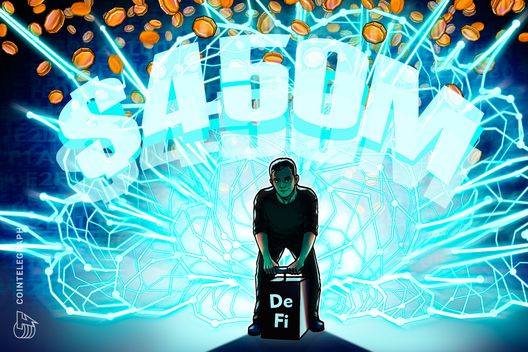
Fira's launch with $450M in deposits signals strong demand for predictable fixed-rate DeFi lending, potentially attracting capital seeking stability over floating rates. The introduction of yield curves and defined maturities by Fira aims to bridge the gap between traditional fixed-income markets and DeFi, enhancing long-term lending predictability. Migration of liquidity from Euler Finance highlights user confidence in Fira's model, despite the protocol's relatively small Total Value Locked (TVL) compared to established players like Aave.
Shiba Inu is consolidating below the 50 EMA, indicating a potential shift from capitulation to a watching phase, but a confirmed trend reversal requires sustained acceptance above this key resistance level. Analysts caution that a single close above the 50 EMA is insufficient for a trend reversal, especially for meme coins prone to false breakouts, emphasizing the need for multi-session acceptance. The current consolidation phase, marked by reduced volatility and slowed downward momentum, presents a neutral outlook, suggesting traders should remain on the sidelines until a clear breakout is confirmed. While SHIB is showing early signs of a potential trend shift, the technical fragility and reliance on sustained price action above the 50 EMA mean that current price action should be treated with skepticism rather than as a buy signal.

Invesco's acquisition of management for a $900 million tokenized Treasury fund signifies a major institutional embrace of RWA, potentially accelerating the integration of traditional finance products onto blockchain infrastructure. The move by a $2.2 trillion AUM asset manager into the $12 billion tokenized Treasury market indicates growing demand for yield-generating, stable on-chain assets, positioning tokenized Treasuries as a key entry point for institutional capital. By stepping into an existing fund rather than launching a new one, Invesco demonstrates a pragmatic approach to market entry, suggesting other large asset managers may follow suit by acquiring or partnering with existing on-chain platforms.

NoOnes's integration of AI into its P2P escrow system represents a significant advancement in fraud prevention for crypto transactions, potentially setting a new standard for platform security. The reported 28% reduction in disputed transactions and 85% identification of risky scenarios suggest that AI-driven behavioral analysis can effectively mitigate risks in P2P crypto trading. This development highlights the growing sophistication of fraud prevention tools in the crypto space, moving beyond traditional methods to proactive, AI-powered risk assessment. While not directly impacting asset prices, this enhancement in platform security could foster greater user trust and adoption in P2P crypto marketplaces.

A debate over Bitcoin's governance is reignited by BIP-110, a proposal to limit non-monetary data, with concerns that node support signaling may be artificially inflated (Sybil attack). The flashpoint stems from Bitcoin Core 30's loosening of OP_RETURN policies, prompting BIP-110 as a reaction to curb data storage and restore Bitcoin's monetary focus, though it risks technical constraints on Taproot. The core issue mirrors past Bitcoin governance battles, questioning who counts and who decides, with the current dispute highlighting the tension between visible node counts and actual economic support for rule changes. The 55% miner signaling threshold for BIP-110 activation introduces a concrete risk of chain split if broader consensus from economic actors is not achieved, making this a critical governance test.

Bitcoin's resilience above $71,000 despite geopolitical tensions and hawkish Fed signals suggests a decoupling from traditional risk assets, driven by sustained institutional inflows into digital asset products. The market is closely watching the $75,000 level as a potential catalyst for further upside, with dealer hedging flows expected to accelerate momentum if breached, while a retreat in oil prices would further support this move. While geopolitical events initially caused volatility, Bitcoin's ability to hold its ground and attract significant investment product inflows indicates a maturing market less susceptible to short-term macro shocks and more influenced by fundamental demand. The interplay between oil prices, inflation expectations, and Fed policy remains critical; a sustained rise in crude could pressure Bitcoin by maintaining a tighter monetary backdrop, potentially capping upside near $72,000-$82,000.
Bittensor's TAO price surge past $300 is supported by a strong narrative around its positive-sum tokenomics and growing ecosystem, indicating potential for further upside if current momentum sustains. The partnership between Bittensor subnet SN4 Targon and Intel on decentralized compute using trusted execution environments represents a significant technical development that could drive real-world adoption and demand for TAO. While the narrative and ecosystem growth are bullish, the article cautions that TAO's price action is walking a tightrope, suggesting traders should monitor for signs of exhaustion or a potential pullback to the 200-day EMA.

The Resolv protocol has been halted following an exploit where 80 million unbacked USR tokens were minted, causing the stablecoin to depeg significantly and trade near $0.24. The exploit has reignited fears of stablecoin risk within the DeFi ecosystem, drawing parallels to the Terra (LUNA) collapse and potentially leading to increased scrutiny of stablecoin mechanisms. Resolv has offered the exploiter a white hat deal to return funds, indicating a potential resolution path but also highlighting the ongoing risks associated with unbacked stablecoin designs. The incident has triggered liquidations and outflows from other DeFi protocols, demonstrating the interconnectedness and potential contagion risk within the DeFi space when a stablecoin fails.

Solana's launch of an enterprise-focused developer platform, backed by major players like Mastercard and Western Union, signals a strategic push to integrate traditional finance with its blockchain for practical use cases like stablecoin settlement and cross-border payments. The adoption of Solana's platform by established financial institutions indicates a growing trend of enterprise blockchain integration, potentially increasing demand for SOL and enhancing its utility beyond speculative trading. With a trading module expected later in 2026, the platform's full impact on market liquidity and transaction volume is still developing, suggesting a 'watchlist' approach for immediate trading decisions.

Increased state-level regulatory actions against prediction markets like Kalshi, including bans and criminal charges, signal a growing trend that could lead to federal intervention. The legal classification of prediction markets as 'swaps' under the CEA by some courts suggests potential CFTC jurisdiction, creating regulatory uncertainty and a potential conflict with state gambling laws. Proposed legislation and ongoing regulatory scrutiny highlight the potential for new taxes and stricter compliance requirements (AML/KYC) on prediction markets, impacting operational costs and revenue. The debate over prediction market regulation, particularly concerning potential tax revenue and consumer protection, indicates a significant push for clearer federal oversight or state-specific frameworks.

Kalshi's partnership with FIS introduces new clearing infrastructure, potentially increasing institutional access and trading volume for prediction markets. The integration with FIS allows institutional users to access prediction markets via their existing platforms, reducing friction and encouraging broader adoption. With $10.4 billion in trading volume last month and a recent $22 billion valuation, Kalshi's expansion signals significant growth and investor confidence in the prediction market sector.
Signal context only. Validate with price action, liquidity, and risk limits before taking a position.
