
Navigating Crypto News

CoinFeather
Navigating Crypto News
Quick market read from this story
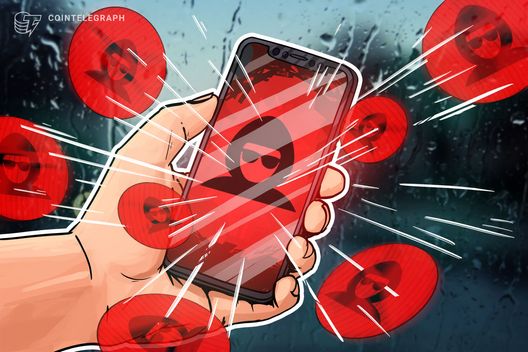
A critical vulnerability in MediaTek chipsets, affecting approximately 25% of Android devices, has been patched, mitigating a rapid seed phrase theft risk for mobile crypto wallets.
The rapid 45-second exploit highlights the inherent security challenges of general-purpose mobile chips for storing sensitive crypto assets, reinforcing the need for dedicated secure hardware.
While the vulnerability is patched, the incident underscores ongoing security risks for mobile-first crypto users and may prompt increased demand for hardware wallets or more secure mobile solutions.
Deep Dive
A critical vulnerability in MediaTek chipsets, patched in January, could have allowed attackers to steal cryptocurrency seed phrases from affected Android devices using only a USB connection. The flaw, discovered by Ledger's security team Donjon, exploited MediaTek's secure boot chain, a mechanism designed to ensure safe device startup. Users who have not installed the latest security patches are still at risk.
Ledger detailed that an attacker with physical access to an Android phone could connect it via USB to a computer, bypass security protections, and potentially access sensitive data, including crypto wallet seed phrases. This vulnerability affects approximately 25% of Android phones that use both Trustonic Trusted Execution Environment (TEE) and MediaTek processors.
In a demonstration, Donjon compromised a Nothing CMF Phone 1 in about 45 seconds. The exploit automatically recovered the phone's PIN, decrypted storage, and extracted seed phrases from popular software wallets such as Trust Wallet, Base, Kraken Wallet, Rabby, Tangem's Mobile Wallet, and Phantom, without even booting into the Android operating system.
Ledger has previously highlighted security concerns regarding mobile phones for managing digital assets. In December 2025, Ledger demonstrated bypassing security measures on a MediaTek Dimensity 7300 chip, gaining complete control over a smartphone. Ledger's CTO, Charles Guillemet, stated that smartphones are inherently difficult to secure for sensitive applications, noting that user data, including PINs and seed phrases, can be extracted in under a minute, even when the device is powered off.
Guillemet emphasized the difference between general-purpose chips, built for convenience, and dedicated Secure Elements, built for key protection. Secure Elements isolate secrets from the main system, offering protection even against physical attacks. Despite the potential risk, a Ledger spokesperson indicated they do not anticipate this to be an ongoing issue, suggesting the patch has effectively mitigated the threat for updated devices.
Source, catalyst, and sector overlap from the latest feed.
Kalshi's preemptive lawsuit against Iowa regulators highlights ongoing jurisdictional battles between prediction markets and state-level gambling laws. The outcome of this legal challenge, alongside previous conflicting federal court rulings, will significantly shape the regulatory landscape for event contracts and potentially impact market access for similar platforms. Traders should monitor this case as it could signal increased regulatory scrutiny or provide clarity on the CFTC's exclusive jurisdiction over federally regulated contract markets.
White House crypto chief Patrick Witt argues that stablecoin yields will drive capital into US banks, countering claims that they will siphon deposits. The debate highlights a potential conflict between traditional banking interests and the growing stablecoin ecosystem, with regulatory clarity (CLARITY Act) as a focal point. Witt's perspective suggests that demand for USD-backed stablecoins, particularly from foreign entities, represents net new capital inflow for the US banking system. The differing views between industry participants like Standard Chartered and White House officials underscore the ongoing tension and uncertainty surrounding stablecoin regulation and its impact on financial markets.
The Bank of England's openness to alternative stablecoin risk management strategies beyond holding limits signals a more pragmatic regulatory approach, potentially easing concerns for UK-based crypto innovation. The explicit exclusion of self-custody wallets from the UK's stablecoin regulatory regime highlights a key divergence from other jurisdictions and may push users towards regulated entities. The Bank of England's commitment to opening applications for sterling stablecoin issuers by year-end 2026 indicates a clear timeline for regulatory clarity, potentially attracting new projects to the UK market.
Crypto ATM fraud losses in the US have surged 33% to $333 million in 2025, driven by industrialized scam networks leveraging AI deepfakes, indicating a significant escalation in financial crime targeting vulnerable demographics. The increasing sophistication of AI in social engineering, making scams 4.5 times more profitable, poses a growing threat to crypto ATM users, particularly the elderly, and highlights the need for enhanced security measures beyond current forensic tracing capabilities. Regulatory efforts, including proposed legislation like the Crypto ATM Fraud Prevention Act, aim to address the rise in ATM fraud, but the inherent anonymity and speed of crypto transactions at kiosks present ongoing challenges for law enforcement and consumer protection.
Metaplanet's establishment of Metaplanet Ventures signals a strategic move to foster Bitcoin ecosystem growth in Japan, anticipating regulatory clarity and potential international competitiveness. The venture firm's focus on payments, lending, stablecoins, and tokenization indicates a broad approach to building regulated Bitcoin financial infrastructure, potentially impacting DeFi and RWA sectors. With a planned investment of 4 billion JPY over 2-3 years, Metaplanet is demonstrating significant commitment to developing Japan's crypto landscape, funded by its existing Bitcoin operations.
The domain hijacking of Bonk.fun, a Solana launchpad backed by Raydium and BONK, highlights ongoing frontend vulnerabilities in the crypto space despite increasing institutional interest. While the full extent of losses is undisclosed, the swift community alerts and the operator's statement suggest that damage may be limited to users who interacted with the compromised site post-breach. This incident serves as a reminder for users to remain vigilant regarding domain security and to verify terms-of-service agreements on any platform, especially during periods of rapid development.
Hackers compromised the Bonk.fun domain, deploying a wallet-draining phishing prompt that targeted users who signed a fake terms-of-service message. While the attack highlights ongoing phishing risks in crypto, the prompt detection and rapid social media warnings appear to have limited potential losses. The incident serves as a reminder for users to exercise extreme caution with domain interactions and transaction signing, especially on platforms related to token launches.
A newly discovered vulnerability in MediaTek processors on Android phones allows for the extraction of crypto seed phrases, highlighting the inherent security risks of mobile-based hot wallets. While Ledger's research points to a significant flaw affecting millions of Android devices, the immediate impact on specific cryptocurrencies is limited, suggesting a 'watch' scenario for broader market sentiment. The development reinforces the security advantage of hardware wallets over software solutions, potentially driving increased adoption of cold storage methods for safeguarding digital assets.
A newly disclosed MediaTek processor vulnerability allows extraction of sensitive data, including crypto wallet seed phrases, from certain Android phones via USB, highlighting inherent security risks in general-purpose mobile hardware. The exploit, demonstrated on a Nothing CMF Phone 1, underscores the ongoing threat to software wallet users and reinforces the security advantage of dedicated hardware wallets for safeguarding private keys. While MediaTek issued a fix in January, the delayed public disclosure and the potential impact across millions of devices suggest a lingering risk for users of affected Android phones, potentially increasing demand for more secure storage solutions.
South Korea's liquidation of 320 BTC, recovered after a hack and subsequent return, generated approximately $21.5 million for the national treasury. The incident highlights significant security vulnerabilities within South Korean government agencies managing digital assets, including a separate loss of 22 BTC and a leaked recovery phrase. While the recovery and liquidation are positive for treasury funds, the repeated security failures raise concerns about the broader operational security of digital asset management by state entities.
Australia's financial regulator, ASIC, is prioritizing regulation based on economic function over technological labels, signaling a shift towards applying existing securities and payment laws to crypto assets. The upcoming Digital Assets Framework Bill 2025, with a June 30, 2026 licensing deadline, aims to bring crypto intermediaries under established financial regulations, potentially unlocking significant productivity gains but also imposing substantial penalties for non-compliance. ASIC's stance that identifiable parties influencing protocols are subject to regulation, even in decentralized systems, challenges the notion of decentralization as a regulatory shield and will impact how projects structure their governance. While the framework could resolve de-banking issues by providing clear legal status, industry leaders are pushing for more precise definitions to avoid overly broad regulatory powers and extensive discretionary authority for ASIC.
Metaplanet is pivoting from pure Bitcoin accumulation to ecosystem development by launching venture and asset management arms, signaling a strategic shift to generate diversified revenue streams beyond direct BTC holdings. The firm's $25 million investment plan in Japan's Bitcoin infrastructure, including a stake in the first licensed yen stablecoin (JPYC), aims to capitalize on favorable regulatory frameworks and foster local innovation. Despite significant unrealized losses on its BTC holdings, Metaplanet's move into venture capital and asset management could provide a pathway to long-term value creation by supporting the growth of Bitcoin-related services.
Live Feed
Loading the broader stream in the same flow as the homepage feed.
The article provides a forward-looking overview of top investment banks in 2026, highlighting their roles in capital raising, M&A, and trading, which are foundational to traditional finance. While the article focuses on traditional finance, its mention of Goldman Sachs' activity in 'fintech investments' and links to related crypto news suggest potential intersections with the digital asset space. The analysis of major investment banks like JPMorgan, Goldman Sachs, and Morgan Stanley offers context for how large financial institutions operate, which can indirectly inform strategies for crypto projects seeking institutional adoption or partnerships.

XRP is consolidating near $1.38, with Bollinger Bands tightening on the daily chart, indicating a potential breakout is imminent as traders await U.S. CPI data. Despite subdued price action, robust on-chain activity with over 2.7 million daily transactions and $1.4 billion in XRP-linked investment products suggests underlying network health and sustained institutional interest. Ripple's commencement of a $750 million share buyback, valuing the company at approximately $50 billion, provides a fundamental positive backdrop for XRP, independent of short-term market fluctuations. Traders are closely monitoring the $1.35-$1.37 support and $1.40-$1.42 resistance levels, with a decisive break in either direction likely to dictate XRP's near-term price trajectory.

Geopolitical tensions in the Middle East are directly impacting Bitcoin's price, causing it to fall below $69,500 as oil prices surge above $100. The repeated pattern of Bitcoin rallies being cut short by Middle East conflict escalations suggests a lack of fundamental bullish momentum, with on-chain data indicating negative demand and rising supply in loss. The resurgence of oil prices above $100 due to geopolitical events complicates the macroeconomic outlook, potentially delaying anticipated interest rate cuts from the Federal Reserve. The correlation between rising oil prices and declining Bitcoin price highlights a risk-off sentiment in the market, impacting other major cryptocurrencies like Ether, Solana, and XRP.
The SEC and CFTC's coordination pact aims to harmonize crypto regulations, potentially reducing compliance friction and encouraging institutional capital to enter the market by clarifying asset classifications and jurisdictional overlaps. This regulatory alignment signals a maturing phase for the digital asset industry, offering a more predictable framework for builders and potentially preventing firms from seeking more favorable jurisdictions offshore. The agreement could streamline processes for compliant products to reach the market by reducing redundant approvals and navigating divergent supervisory expectations between the two agencies.
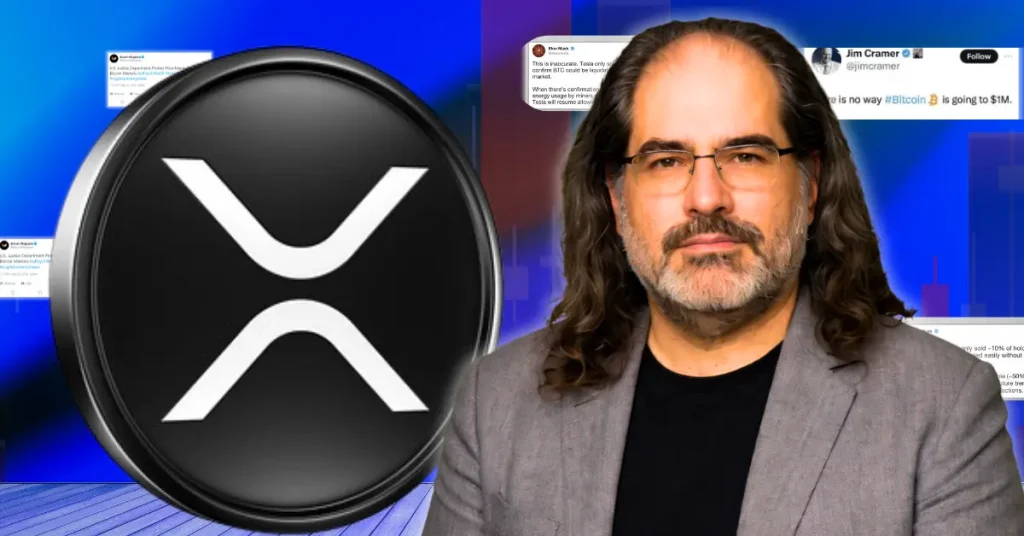
Ripple CTO David Schwartz clarifies that XRP's value drivers extend beyond the XRP Ledger itself, encompassing exchange trading, liquidity provision, and speculation, which represent significant economic activity. Schwartz highlights that XRP's future utility will increasingly involve on-chain financial tools like DEXs and lending solutions, aiming for broader adoption beyond initial institutional focus. The narrative shift from pure price tracking to underlying technology and future utility suggests a potential re-evaluation of XRP's market positioning by investors.

The appointment of a new CEO with a strong compliance background signals Binance.US's strategic pivot towards rebuilding trust and navigating the complex US regulatory landscape. Binance.US's stated intention to expand offerings into DeFi and tokenized assets, following the SEC lawsuit's dismissal, indicates a renewed push for growth and diversification. The leadership change and focus on compliance suggest a potential stabilization and renewed operational capacity for Binance.US, which could positively influence its market position.

Ghana's SEC has launched a regulatory sandbox for 11 crypto companies, signaling a move towards clearer crypto regulations and potential future licensing. The sandbox program aims to foster crypto innovation while ensuring consumer protection and compliance with AML/CFT standards, setting a precedent for other African nations. The expansion of companies like Blockchain.com into Ghana, coupled with regulatory clarity, suggests growing institutional interest and potential for increased crypto adoption in the region.

Prime brokers Clear Street and Marex Group are integrating prediction markets, signaling growing institutional interest in alternative financial instruments beyond traditional crypto assets. The expansion of prediction markets into prime brokerage services suggests a potential shift towards these platforms as a core financial ecosystem pillar, offering new hedging and return generation opportunities. Despite increasing institutional adoption, regulatory uncertainty surrounding prediction markets, particularly concerning sports betting classifications and insider trading, remains a significant headwind for broader market acceptance. The call for regulatory clarity from major exchange executives like Nasdaq's CEO highlights the need for a defined framework to unlock further institutional capital and ensure investor protection in this evolving market.
The listing of ICP on South Korea's Upbit exchange, the largest in the region, is a significant catalyst for increased demand and potential price appreciation. The introduction of ICP Cloud Engines, enabling major cloud providers to deploy smart contracts, signals a strategic move to integrate Internet Computer into existing cloud infrastructure, potentially boosting adoption and long-term value. Despite past performance, the combination of exchange listings and new product developments suggests a potential shift in market sentiment for ICP, warranting a closer look for short-to-medium term trading opportunities.
Signal context only. Validate with price action, liquidity, and risk limits before taking a position.
