
Navigating Crypto News

CoinFeather
Navigating Crypto News

Quick market read from this story
The appointment of a new CEO with a strong compliance background signals Binance.US's strategic pivot towards rebuilding trust and navigating the complex US regulatory landscape.
Binance.US's stated intention to expand offerings into DeFi and tokenized assets, following the SEC lawsuit's dismissal, indicates a renewed push for growth and diversification.
The leadership change and focus on compliance suggest a potential stabilization and renewed operational capacity for Binance.US, which could positively influence its market position.
Deep Dive
Binance.US, the United States affiliate of the global crypto exchange Binance, has appointed Stephen Gregory as its new Chief Executive Officer. Gregory, a seasoned compliance executive with prior experience at CEX.IO and Gemini, took over the role from Norman Reed on March 9. Reed will now transition to an advisory position within the company.
Gregory brings a wealth of experience in compliance and leadership to Binance.US. He previously served as CEO of the crypto exchange Currency.com and held key compliance roles at CEX.IO and Gemini. In his new capacity, Gregory expressed his honor in leading the Binance.US team and emphasized the powerful Binance.US brand and its founder Changpeng Zhao's (CZ) vision for the U.S. to become a global crypto capital.
The appointment comes as Binance.US seeks to re-establish and expand its presence in the U.S. market. The company had previously faced legal challenges, including a lawsuit from the Securities and Exchange Commission (SEC) in 2023. However, the SEC dismissed its case against Binance.US with prejudice in May. Following this, Binance.US reinstated U.S. dollar deposits and withdrawals over a year ago, after operating as a crypto-only platform post-SEC lawsuit.
Binance.US has signaled its intention to broaden its service offerings. The company plans to continue expanding its crypto staking products and introduce new services related to decentralized finance (DeFi) and tokenized assets. This strategic move aligns with broader industry trends where crypto exchanges are diversifying beyond core trading services to include yield-generating opportunities and digital assets tied to traditional markets.
Source, catalyst, and sector overlap from the latest feed.
The Bank of England's openness to alternative stablecoin risk management strategies beyond holding limits signals a more pragmatic regulatory approach, potentially easing concerns for UK-based crypto innovation. The explicit exclusion of self-custody wallets from the UK's stablecoin regulatory regime highlights a key divergence from other jurisdictions and may push users towards regulated entities. The Bank of England's commitment to opening applications for sterling stablecoin issuers by year-end 2026 indicates a clear timeline for regulatory clarity, potentially attracting new projects to the UK market.
Crypto ATM fraud losses in the US have surged 33% to $333 million in 2025, driven by industrialized scam networks leveraging AI deepfakes, indicating a significant escalation in financial crime targeting vulnerable demographics. The increasing sophistication of AI in social engineering, making scams 4.5 times more profitable, poses a growing threat to crypto ATM users, particularly the elderly, and highlights the need for enhanced security measures beyond current forensic tracing capabilities. Regulatory efforts, including proposed legislation like the Crypto ATM Fraud Prevention Act, aim to address the rise in ATM fraud, but the inherent anonymity and speed of crypto transactions at kiosks present ongoing challenges for law enforcement and consumer protection.
Metaplanet's establishment of Metaplanet Ventures signals a strategic move to foster Bitcoin ecosystem growth in Japan, anticipating regulatory clarity and potential international competitiveness. The venture firm's focus on payments, lending, stablecoins, and tokenization indicates a broad approach to building regulated Bitcoin financial infrastructure, potentially impacting DeFi and RWA sectors. With a planned investment of 4 billion JPY over 2-3 years, Metaplanet is demonstrating significant commitment to developing Japan's crypto landscape, funded by its existing Bitcoin operations.
A critical vulnerability in MediaTek chipsets, affecting approximately 25% of Android devices, has been patched, mitigating a rapid seed phrase theft risk for mobile crypto wallets. The rapid 45-second exploit highlights the inherent security challenges of general-purpose mobile chips for storing sensitive crypto assets, reinforcing the need for dedicated secure hardware. While the vulnerability is patched, the incident underscores ongoing security risks for mobile-first crypto users and may prompt increased demand for hardware wallets or more secure mobile solutions.
Ghana's SEC has launched a regulatory sandbox for 11 crypto companies, signaling a move towards clearer crypto regulations and potential future licensing. The sandbox program aims to foster crypto innovation while ensuring consumer protection and compliance with AML/CFT standards, setting a precedent for other African nations. The expansion of companies like Blockchain.com into Ghana, coupled with regulatory clarity, suggests growing institutional interest and potential for increased crypto adoption in the region.
Metaplanet is pivoting from pure Bitcoin accumulation to ecosystem development by launching venture and asset management arms, signaling a strategic shift to generate diversified revenue streams beyond direct BTC holdings. The firm's $25 million investment plan in Japan's Bitcoin infrastructure, including a stake in the first licensed yen stablecoin (JPYC), aims to capitalize on favorable regulatory frameworks and foster local innovation. Despite significant unrealized losses on its BTC holdings, Metaplanet's move into venture capital and asset management could provide a pathway to long-term value creation by supporting the growth of Bitcoin-related services.
Geopolitical tensions in the Middle East are directly impacting Bitcoin's price, causing it to fall below $69,500 as oil prices surge above $100. The repeated pattern of Bitcoin rallies being cut short by Middle East conflict escalations suggests a lack of fundamental bullish momentum, with on-chain data indicating negative demand and rising supply in loss. The resurgence of oil prices above $100 due to geopolitical events complicates the macroeconomic outlook, potentially delaying anticipated interest rate cuts from the Federal Reserve. The correlation between rising oil prices and declining Bitcoin price highlights a risk-off sentiment in the market, impacting other major cryptocurrencies like Ether, Solana, and XRP.
The SEC and CFTC's coordination pact aims to harmonize crypto regulations, potentially reducing compliance friction and encouraging institutional capital to enter the market by clarifying asset classifications and jurisdictional overlaps. This regulatory alignment signals a maturing phase for the digital asset industry, offering a more predictable framework for builders and potentially preventing firms from seeking more favorable jurisdictions offshore. The agreement could streamline processes for compliant products to reach the market by reducing redundant approvals and navigating divergent supervisory expectations between the two agencies.
Live Feed
Loading the broader stream in the same flow as the homepage feed.

XRP is consolidating near $1.38, with Bollinger Bands tightening on the daily chart, indicating a potential breakout is imminent as traders await U.S. CPI data. Despite subdued price action, robust on-chain activity with over 2.7 million daily transactions and $1.4 billion in XRP-linked investment products suggests underlying network health and sustained institutional interest. Ripple's commencement of a $750 million share buyback, valuing the company at approximately $50 billion, provides a fundamental positive backdrop for XRP, independent of short-term market fluctuations. Traders are closely monitoring the $1.35-$1.37 support and $1.40-$1.42 resistance levels, with a decisive break in either direction likely to dictate XRP's near-term price trajectory.

The domain hijacking of Bonk.fun, a Solana launchpad backed by Raydium and BONK, highlights ongoing frontend vulnerabilities in the crypto space despite increasing institutional interest. While the full extent of losses is undisclosed, the swift community alerts and the operator's statement suggest that damage may be limited to users who interacted with the compromised site post-breach. This incident serves as a reminder for users to remain vigilant regarding domain security and to verify terms-of-service agreements on any platform, especially during periods of rapid development.
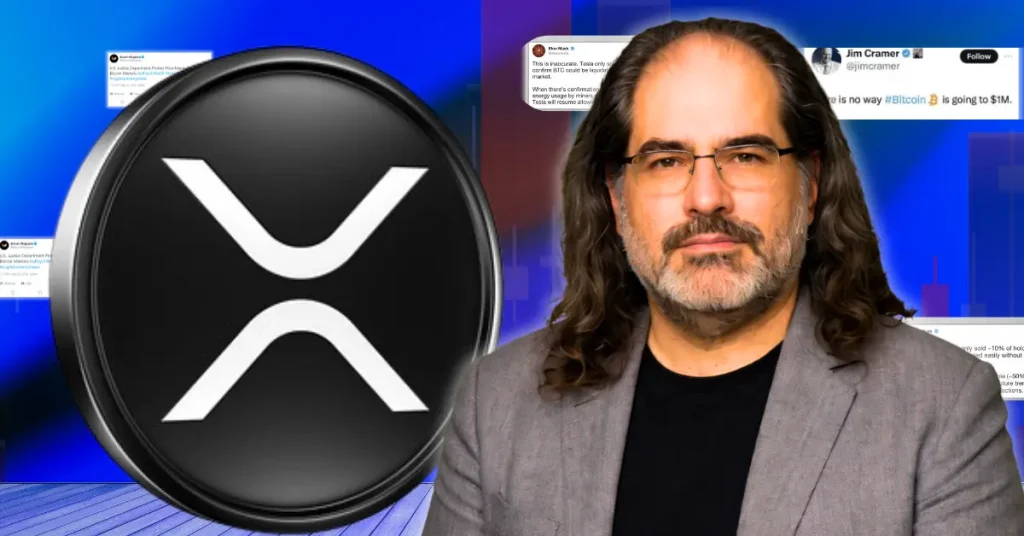
Ripple CTO David Schwartz clarifies that XRP's value drivers extend beyond the XRP Ledger itself, encompassing exchange trading, liquidity provision, and speculation, which represent significant economic activity. Schwartz highlights that XRP's future utility will increasingly involve on-chain financial tools like DEXs and lending solutions, aiming for broader adoption beyond initial institutional focus. The narrative shift from pure price tracking to underlying technology and future utility suggests a potential re-evaluation of XRP's market positioning by investors.

Hackers compromised the Bonk.fun domain, deploying a wallet-draining phishing prompt that targeted users who signed a fake terms-of-service message. While the attack highlights ongoing phishing risks in crypto, the prompt detection and rapid social media warnings appear to have limited potential losses. The incident serves as a reminder for users to exercise extreme caution with domain interactions and transaction signing, especially on platforms related to token launches.

Prime brokers Clear Street and Marex Group are integrating prediction markets, signaling growing institutional interest in alternative financial instruments beyond traditional crypto assets. The expansion of prediction markets into prime brokerage services suggests a potential shift towards these platforms as a core financial ecosystem pillar, offering new hedging and return generation opportunities. Despite increasing institutional adoption, regulatory uncertainty surrounding prediction markets, particularly concerning sports betting classifications and insider trading, remains a significant headwind for broader market acceptance. The call for regulatory clarity from major exchange executives like Nasdaq's CEO highlights the need for a defined framework to unlock further institutional capital and ensure investor protection in this evolving market.
The listing of ICP on South Korea's Upbit exchange, the largest in the region, is a significant catalyst for increased demand and potential price appreciation. The introduction of ICP Cloud Engines, enabling major cloud providers to deploy smart contracts, signals a strategic move to integrate Internet Computer into existing cloud infrastructure, potentially boosting adoption and long-term value. Despite past performance, the combination of exchange listings and new product developments suggests a potential shift in market sentiment for ICP, warranting a closer look for short-to-medium term trading opportunities.

A newly discovered vulnerability in MediaTek processors on Android phones allows for the extraction of crypto seed phrases, highlighting the inherent security risks of mobile-based hot wallets. While Ledger's research points to a significant flaw affecting millions of Android devices, the immediate impact on specific cryptocurrencies is limited, suggesting a 'watch' scenario for broader market sentiment. The development reinforces the security advantage of hardware wallets over software solutions, potentially driving increased adoption of cold storage methods for safeguarding digital assets.

Vitalik Buterin's concerns highlight a critical UX and security challenge for Ethereum as AI integration progresses, potentially impacting user adoption and protocol safety. The debate around AI agents replacing traditional wallets like MetaMask signals a potential shift in user interaction paradigms for Ethereum, necessitating careful consideration of security implications. Ethereum's price action remains sensitive to the $2000 support level, with a breakdown risking a decline to $1900, while a sustained hold could pave the way for a retest of higher resistance levels. The ongoing discussion on AI integration and security risks, coupled with price action analysis, suggests a near-term focus on stability and risk management for ETH traders.
Ripple's $750 million stock buyback has increased its valuation to $50 billion, a 25% rise, which could signal increased investor confidence in the company's long-term prospects. Despite the significant corporate valuation increase, XRP's price reaction has been muted, indicating a disconnect between Ripple Labs' equity performance and its native token's market sentiment. Community sentiment appears divided, with some XRP holders expressing dissatisfaction that the buyback primarily benefits shareholders rather than token holders, potentially impacting broader ecosystem trust. While the buyback itself is not a direct catalyst for XRP, some analysts suggest that Ripple's higher valuation and potential XRP ETF inflows could drive XRP price appreciation towards $2.80-$5.00 by year-end.

The SEC and CFTC's memorandum of understanding signals a move towards coordinated regulatory oversight, potentially reducing conflicting rules and fostering a more predictable environment for crypto market participants. A 'minimum effective dose' regulatory strategy aims to balance innovation with market integrity, suggesting a cautious but potentially supportive approach to emerging technologies like crypto. This inter-agency coordination could lead to greater regulatory clarity in the US, which has historically been a point of friction for the crypto industry and may reduce the incentive for projects to seek less regulated jurisdictions.
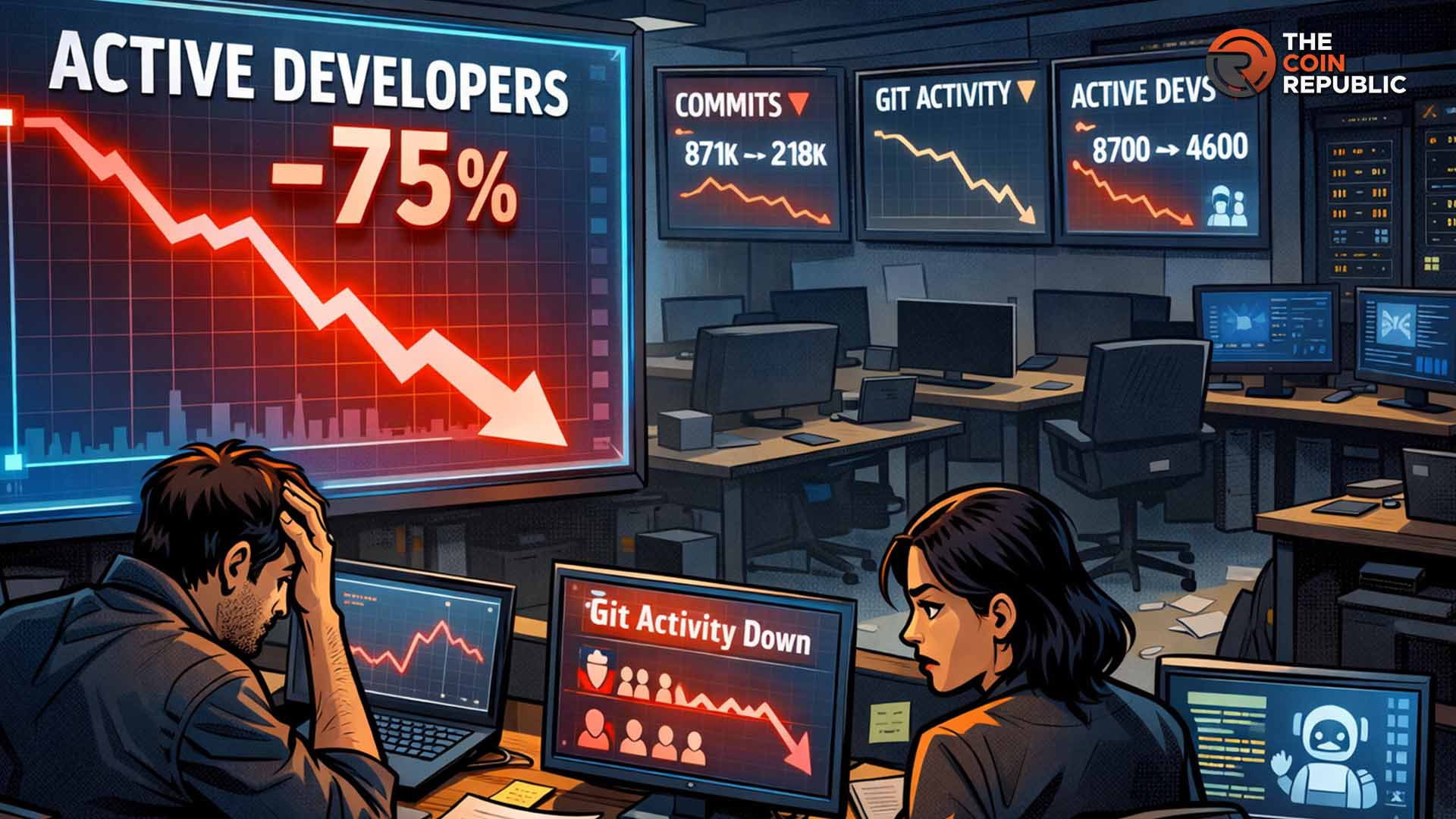
Developer activity across major blockchains has seen a significant decline, with weekly commits down 75% and active developers down 50%, indicating a potential slowdown in public innovation. The rise of AI tools is cited as a primary driver for reduced public commits, as developers can achieve greater output with fewer open-source updates, suggesting a shift in development methodology. The crypto industry is transitioning to an 'app era' where projects launch with integrated infrastructure and applications, potentially explaining the reduced focus on standalone infrastructure development. The prevailing crypto market downturn and a shift in public interest towards AI are contributing factors to the observed decrease in developer activity and confidence.
Signal context only. Validate with price action, liquidity, and risk limits before taking a position.
