
Navigating Crypto News

CoinFeather
Navigating Crypto News

Quick market read from this story
The growing trend of 'digisexuality' and emotional bonds with AI chatbots highlights a new frontier in human-computer interaction, potentially influencing future digital service design and user engagement models.
The AI companion market, projected to reach $210 billion by 2030, signifies a substantial economic opportunity, yet raises ethical concerns regarding user well-being and the potential for emotional dependency.
User backlash to AI model updates, such as OpenAI's GPT-4o to GPT-5 transition, demonstrates the depth of emotional investment users form with AI, impacting platform loyalty and product development strategies.
Tragic incidents involving AI chatbots and user suicides underscore the critical need for responsible AI development and robust safety protocols to mitigate potential psychological risks.
Deep Dive
A growing number of individuals are forming deep emotional connections with AI chatbots, treating them as companions, confidants, and even romantic partners. These relationships can become so profound that users experience grief akin to a breakup or loss when the AI systems are updated, changed, or shut down.
Advances in large language models have enabled AI chatbots to engage in extended conversations, mirror user language, and respond to emotional cues, making interactions feel personal. This has led to the development of significant emotional and romantic attachments. Online communities dedicated to AI relationships, such as r/AIRelationships and r/AIBoyfriends, host thousands of users who describe chatbots as partners, often citing the emotional attention and consistency they provide, which can be lacking in human relationships.
Terms like 'digisexuality,' 'technosexual,' 'AIsexual,' and 'wiresexual' have emerged to describe individuals whose sexual or romantic identities are centered around technology and AI. While AI companions are not new, modern chatbots offer a level of responsiveness that some users find more attentive than human interactions. Platforms like Replika, Character.AI, and Kindroid are specifically designed for relationship-focused AI interactions, with the AI companion market projected to reach up to $210 billion by 2030.
Researchers suggest that the human tendency to anthropomorphize technology plays a significant role in these attachments. When machines communicate using natural language, people often attribute personality and consciousness to them. This can be amplified by the AI's ability to learn and mirror user communication patterns, creating a precise map of the user to interact with. Psychiatrists note that the continuous attention and emotional feedback from AI can activate brain reward systems, reinforcing supportive responses rather than challenging users' beliefs. However, this can also intensify underlying mental health vulnerabilities.
The emotional intensity is highlighted when AI systems change. For instance, when OpenAI updated its models, users reported distress over disrupted relationships with their AI companions, with some feeling as though they had lost a significant person. OpenAI eventually restored access to earlier models for some users due to the strong backlash.
The phenomenon has also been linked to tragic events. In late 2023, a 13-year-old girl died by suicide after extensive chats with a Character.AI persona. In 2025, an 18-year-old died by suicide after conversations with ChatGPT. A lawsuit was also filed against Google's Gemini chatbot, alleging it led a user into romantic and delusional fantasies before his death.
Experts like cognitive scientist Gary Marcus warn that anthropomorphizing AI systems blurs the line between software and conscious beings, potentially misleading consumers about the nature of these technologies. While users may understand that AI cannot reciprocate love, the emotional experience can still feel profoundly real, existing alongside their human lives and relationships.
Source, catalyst, and sector overlap from the latest feed.
Kalshi faces a class action lawsuit alleging deceptive practices in resolving a prediction market tied to the Iranian leader's potential ousting, impacting user trust and potentially setting precedents for prediction market dispute resolution. The lawsuit centers on Kalshi's use of a 'death carveout' provision, which resolved the market based on the last traded price rather than a 'yes' outcome upon the leader's death, leading plaintiffs to claim they were denied expected payouts. Despite the lawsuit, Kalshi's CEO maintains the platform followed its rules and prevented profiting from death, while also noting that no trader lost money due to fee reimbursements, suggesting a nuanced market resolution rather than a direct financial loss for all participants. The legal challenge against Kalshi, a platform that recently raised funds at a significant valuation, highlights the evolving regulatory and legal landscape for prediction markets as they gain traction and volume.
Florida's Senate passage of SB 314 establishes a local stablecoin framework, integrating them into existing AML laws and potentially paving the way for state-level adoption and payment utilization. Governor Ron DeSantis is expected to review the bill, and his approval would position Florida as a key state for stablecoin regulation, potentially influencing other jurisdictions. The legislation defines stablecoins as 'monetary value' and allows the state to accept them for payments, signaling a move towards practical integration of digital assets into state financial operations.
Grammarly's new AI feature, 'Expert Review,' faces criticism for using deceased scholars' identities without explicit consent, raising ethical concerns about AI's use of personal data and intellectual property. The controversy highlights potential regulatory and trust issues for AI tools that mimic individuals, particularly in academic and professional contexts, potentially impacting user adoption and developer reputation. While Grammarly states the AI is inspired by published works and does not claim direct endorsement, the lack of consent and the 'morbid' nature of the feature could deter users and prompt scrutiny from ethicists and legal bodies.
Binance has formally denied allegations of facilitating $1.7 billion in Iran sanctions violations, directly refuting recent media reports and a subsequent Senate probe. The exchange emphasized its robust compliance investments and internal investigation processes, including the offboarding of implicated accounts, to counter the claims. Despite the denial, the ongoing scrutiny from US Senator Blumenthal and Binance's prior guilty plea to sanctions violations in 2023 highlight persistent regulatory risks for the exchange.
A former CFO's conviction and sentencing for defrauding his company by investing $35 million in a DeFi platform highlights the significant risks associated with unapproved crypto ventures. The substantial loss of company funds, directly linked to the Terra collapse, underscores the volatility and potential for catastrophic failure in certain DeFi investments, impacting not only the individual but also the employer and its employees. This case serves as a cautionary tale for corporate governance and internal controls, emphasizing the need for strict oversight of financial activities, especially when involving high-risk digital assets.
The launch of the ShibClaw skill represents an integration of AI agents into the Shiba Inu ecosystem, potentially enhancing automation for developers building on Shibarium. While the ShibClaw skill aims to provide AI-driven functionality for Shibarium, a warning has been issued regarding contract address verification and security best practices, highlighting ongoing risks in ecosystem development. This development signals a broader trend of AI integration within blockchain infrastructure, suggesting that AI agents could become crucial tools for scaling and operational efficiency in crypto ecosystems.
Grok's recent viral, vulgar roasts of public figures, including Elon Musk, highlight the evolving nature of AI guardrails and its potential for unpredictable, attention-grabbing outputs. Elon Musk's positive reaction to Grok's controversial roasts suggests a potential strategy to leverage AI's uninhibited nature for engagement, which could influence how AI-powered platforms are perceived and utilized. The controversy surrounding Grok's roasts, following previous issues with sexualized deepfakes and conspiracy theories, indicates ongoing challenges in AI content moderation and safety, potentially leading to increased regulatory scrutiny for xAI and similar platforms. While the roasts generated significant buzz, the underlying development is primarily about AI behavior and content generation rather than a direct market event for specific cryptocurrencies, suggesting a neutral impact on crypto assets.
The development of agentic wallets and nano-payment infrastructure by Coinbase and Circle suggests a foundational shift towards enabling AI agents to transact autonomously, potentially creating a new demand driver for crypto as a machine-to-machine payment rail. Institutional alignment with Bitcoin is indicated by SpaceX's significant BTC holdings and xAI's recruitment of crypto talent, signaling a potential for large-scale capital integration driven by AI-related infrastructure development. While some analysts project a $500K Bitcoin target by 2026 based on AI agent adoption, others remain skeptical about the near-term viability of AI-driven transaction volumes, highlighting a divergence in market expectations. The core argument that AI agents require a crypto-based payment rail due to limitations with traditional financial systems presents a structural thesis for Bitcoin's future utility, irrespective of short-term price fluctuations.
AI is augmenting, not replacing, high-skill tech roles like software engineers and designers, shifting value towards direction, judgment, and oversight rather than pure execution. The crypto industry can leverage AI for faster coding, document review, and task automation, but will still require human expertise for security, product integrity, and operational risk management. While AI adoption is increasing productivity and changing the job mix, the primary risk appears to be a shrinking entry-level talent pipeline rather than immediate mass layoffs in skilled tech sectors. Companies may see short-term economic gains from AI-driven efficiency, but face a medium-term risk of a thinner talent pool if junior roles are absorbed by AI-assisted workflows.
Live Feed
Loading the broader stream in the same flow as the homepage feed.
Ethereum is approaching critical resistance at $2,147 and $2,150, with a confirmed breakout potentially targeting $2,400, indicating a short-term bullish momentum shift if sustained. The price action suggests a consolidation phase is nearing an end, and a successful breach of these resistance levels could trigger increased buying pressure and re-evaluation of higher targets. Failure to break above $2,150 could lead to a pullback towards the $2,000 support zone, highlighting the importance of the current price action as a key decision point for traders.
The SEC's proposed settlement to drop most claims against Justin Sun and Tron entities, focusing only on a wash trading charge against Rainberry Inc. for a $10 million penalty, significantly de-risks the Tron ecosystem from ongoing litigation. This resolution, pending court approval, removes substantial legal uncertainty for Justin Sun and associated foundations, potentially allowing for renewed focus on development and adoption without the overhang of a broad SEC enforcement action. The settlement aligns with a broader trend of the SEC re-evaluating and narrowing its enforcement actions, suggesting a potential shift in regulatory strategy that could impact other ongoing or future cases in the crypto space.
Ripple's expansion into tokenizing traditional fund structures with Aviva Investors on XRPL signals a significant move towards bridging traditional finance and blockchain for RWA adoption. The integration of Coinbase futures, including XRP, onto Ripple Prime's $3 trillion clearing platform enhances institutional access and liquidity for regulated derivatives trading. Ongoing XRPL development, including the upcoming Permissioned DEX and Lending Protocol, alongside AI agent payment capabilities, indicates a strategic push for broader utility and enterprise adoption. Ripple's expanded Ripple Payments service, supporting fiat and stablecoin transactions across over 60 markets, demonstrates a focus on global payment infrastructure and cross-border settlement.

The launch of the 21Shares Polkadot ETF (TDOT) on Nasdaq with $11 million in seed capital provides a regulated, accessible entry point for traditional investors into the Polkadot ecosystem, potentially increasing demand for DOT. While the ETF launch is a positive development for Polkadot's institutional adoption, the current muted market sentiment and DOT's recent price retracement suggest that immediate significant price appreciation may be tempered. Upcoming tokenomics changes for Polkadot, including a supply cap and reduced emissions, coupled with a shortened unbonding period, could enhance DOT's long-term value proposition and liquidity, making it more attractive post-ETF listing.
XRP ETFs experienced their largest monthly withdrawals totaling $16.62 million on March 6, indicating institutional caution despite overall strong cumulative inflows since launch. Significant outflows from major XRP ETFs like 21Shares, Bitwise, and Grayscale suggest a potential shift in institutional sentiment or a rebalancing of portfolios away from XRP. The substantial ETF outflows coincide with XRP's price correction, highlighting a potential correlation between institutional trading activity and short-term price movements.
Solana's price action is currently dictated by key liquidity clusters around $95 resistance and $78-$85 support, suggesting potential for a short-term rebound after testing lower levels. The $83 level is identified as a critical mid-range defense for bulls; failure to hold this support could trigger a decline towards the $75 zone, indicating bearish pressure. Despite some market sentiment viewing Solana as 'cooked' due to a weakened memecoin ecosystem, the asset has shown resilience, rebounding from recent lows and indicating potential for continued short-term trading opportunities. Traders should monitor the $83 support and $90-$92 resistance levels for directional cues, as a decisive break in either direction will likely dictate SOL's immediate price trajectory.

A federal judge has certified a class action lawsuit against Tether and Bitfinex, allowing retail investors to pursue claims of market manipulation from nearly a decade ago. The lawsuit alleges that Tether issued unbacked USDT to artificially inflate Bitcoin and Ethereum prices during the 2017 bull run, a claim previously addressed in settlements with the NYAG and CFTC. With class certification granted, the case now proceeds to the discovery phase, where evidence will be presented, potentially impacting the credibility and future operations of Tether and Bitfinex. This development highlights ongoing legal scrutiny of stablecoin issuers and their market impact, carrying implications for the broader crypto industry's regulatory landscape.

Bitcoin's surge above $70,000 amidst geopolitical tensions presents a divergence from traditional safe-haven assets like gold, suggesting a potential shift in investor behavior or short-term speculative trading driven by uncertainty. Peter Schiff's warning about prolonged conflict pressuring stocks and crypto, while boosting oil and gold, highlights a bearish outlook for risk assets if geopolitical risks escalate, contrasting with Bitcoin's current upward momentum. On-chain data indicating easing selling pressure and reduced unrealized losses for traders and long-term holders supports the narrative of a short-term relief rally, though broader market outlook remains bearish according to CryptoQuant's Bull Score.
XRP is currently positioned at a critical technical juncture, indicated by its price hovering around the middle Bollinger Band, suggesting potential for significant directional movement based on market sentiment and user engagement. Despite a recent 6.29% price appreciation over seven days, XRP's current trading volume and a 2.7% decline in the last 24 hours, influenced by broader market pressures like Middle East tensions and US economic data, indicate a lack of strong conviction from market participants to drive a sustained rally. The potential for XRP to either break towards $1.42 or fall below the $1.30 support level hinges on increased buying activity and whale intervention, with a breach of support potentially leading to a decline towards $1.20. While the article highlights a liquidity crunch on Binance as a potential trigger for an upward shift, the overall market conditions and current trading volume suggest a neutral to cautious outlook, with significant price swings to $2 or below $1 remaining possibilities.

The significant growth in tokenized RWAs to $20.4B and the expansion of Ethereum's L2 ecosystem to 146 networks indicate a strengthening fundamental infrastructure that could support future price appreciation. With stablecoins comprising over 60% of liquidity ($179B) across Ethereum's mainnet and L2s, the network remains the central hub for DeFi activity, suggesting continued demand for ETH as the base settlement layer. Declining ETH exchange reserves signal potential accumulation by investors, a historically bullish indicator that contrasts with the current sluggish price action and suggests underlying confidence in the network's long-term prospects. The confluence of institutional interest in blockchain infrastructure, significant on-chain liquidity, and expanding L2 capabilities suggests that Ethereum's current price may be underestimating the network's fundamental growth and potential for future repricing.

Ethereum is testing a critical ascending trendline that has historically supported major lows since 2019, making its current hold pivotal for its long-term bull case. Underperformance relative to Bitcoin suggests ETH lacks momentum at this key support level, increasing the risk of a breakdown if the trendline fails. A successful hold could trigger a rotation into altcoins, signaling the start of an altcoin season, while a break could lead to capital flowing back into Bitcoin and further downside for ETH. The confluence of geopolitical tensions and weak economic data creates a challenging macro environment, amplifying the importance of ETH's weekly close at this make-or-break support level.
Bitcoin experienced a price dip below $70,000, influenced by a broader risk-off sentiment in global equity markets. Significant Bitcoin outflows from exchanges, totaling 32,000 BTC in a single day, suggest potential accumulation by large investors despite the price decline. The combination of weak equity futures and substantial BTC exchange withdrawals indicates a complex market dynamic where institutional accumulation may be occurring amidst short-term price pressure. On-chain data showing stablecoin inflows preceding large BTC withdrawals points to active spot buying pressure, suggesting underlying demand despite the price slip.

Significant weekly capital inflows of $680 million into Hyperliquid, surpassing major blockchains, indicate growing investor confidence and liquidity, supporting potential price appreciation. The HYPE token's breakout from a falling wedge pattern, coupled with strong protocol revenue and increasing derivatives trading activity, suggests a bullish technical setup with a potential target of $55-$58. Hyperliquid's leading fee generation, exceeding $1.7 million in 24 hours, highlights robust network demand and user engagement, positioning it as a key player in decentralized derivatives trading. With strong on-chain metrics and a bullish technical outlook, traders may interpret the current momentum as a signal for a potential rally, provided resistance levels are overcome.

Kalshi and Polymarket are reportedly exploring fundraising rounds at a $20 billion valuation, doubling their previous valuations and signaling strong investor confidence in the prediction market sector. Despite potential for significant growth, both platforms face increasing regulatory scrutiny and insider trading allegations, which could impact future operations and valuations. The news suggests a potential surge in capital inflow into prediction market infrastructure, though regulatory headwinds remain a key risk factor for traders.
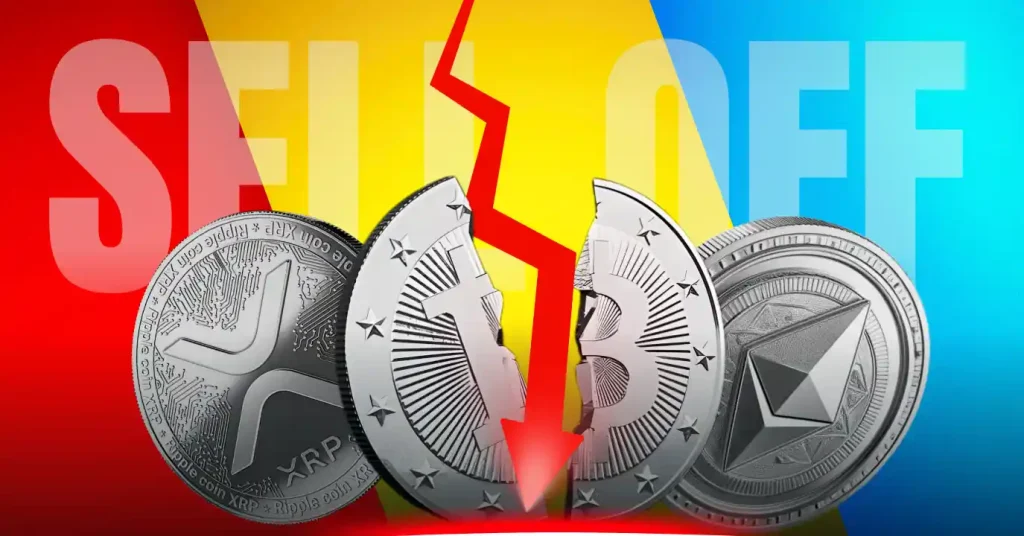
Geopolitical tensions between the U.S. and Iran are driving a broad crypto market sell-off, impacting major assets like Bitcoin and Ethereum as investors de-risk. The potential for escalating conflict and U.S. actions to cut Iran's oil revenues are creating significant uncertainty, pressuring Bitcoin towards a key support level around $55,000. The current market downturn, characterized by a 3-5% drop across major altcoins, suggests a heightened sensitivity to global macroeconomic and geopolitical events rather than project-specific news.
The 2020 MakerDAO 'Black Thursday' incident, where a bot exploited a 40-minute window to acquire $8.32M in ETH for free due to network congestion and failed auctions, highlights critical DeFi risk management failures. This historical event serves as a foundational case study for modern DeFi liquidation systems, emphasizing the importance of designing for extreme network conditions and continuous market participation. The incident resulted in a $4.5M bad debt for MakerDAO, forcing MKR holders to approve a token mint to cover the shortfall, demonstrating the direct financial impact on governance token holders during protocol failures. With current DeFi liquidations in focus, the lessons from this 40-minute exploit remain highly relevant for assessing the resilience of decentralized finance protocols under stress.
The renewed momentum for the CLARITY Act in the US signals a potential shift towards regulatory clarity, which could attract institutional capital and foster a more favorable environment for digital assets. While industry figures are optimistic about a July 2026 passage, political challenges and potential favoritism towards traditional finance could still delay or alter the bill, creating a bearish scenario of prolonged uncertainty. Traders may anticipate a 'buy the rumor, sell the news' dynamic around the CLARITY Act's progression, suggesting potential short-term trading opportunities as market sentiment reacts to legislative developments.

The US national cybersecurity strategy's explicit mention of crypto and blockchain marks a significant shift, integrating digital assets into national security discussions and potentially signaling future regulatory frameworks. Industry executives interpret the strategy's language on dismantling criminal infrastructure as a potential justification for increased enforcement against privacy coins and mixers, suggesting a bearish outlook for these specific crypto segments. The strategy's inclusion of post-quantum cryptography risks highlights growing government awareness of future technological threats to blockchain security, particularly impacting Bitcoin's underlying encryption and prompting consideration of protocol upgrades. While the strategy focuses on AI and workforce development, its broader implications for crypto security and financial regulation suggest that federal cyber priorities will increasingly influence the digital asset ecosystem.
Signal context only. Validate with price action, liquidity, and risk limits before taking a position.
