
Navigating Crypto News

CoinFeather
Navigating Crypto News

Quick market read from this story
The development of agentic wallets and nano-payment infrastructure by Coinbase and Circle suggests a foundational shift towards enabling AI agents to transact autonomously, potentially creating a new demand driver for crypto as a machine-to-machine payment rail.
Institutional alignment with Bitcoin is indicated by SpaceX's significant BTC holdings and xAI's recruitment of crypto talent, signaling a potential for large-scale capital integration driven by AI-related infrastructure development.
While some analysts project a $500K Bitcoin target by 2026 based on AI agent adoption, others remain skeptical about the near-term viability of AI-driven transaction volumes, highlighting a divergence in market expectations.
The core argument that AI agents require a crypto-based payment rail due to limitations with traditional financial systems presents a structural thesis for Bitcoin's future utility, irrespective of short-term price fluctuations.
Deep Dive
A bold prediction suggests Bitcoin could reach $500,000 before the end of the year, driven by the emergence of AI agents requiring a new payment infrastructure. This forecast, popularized by crypto investor Wei Zhao, posits that existing financial systems are inadequate for autonomous machine-to-machine transactions, positioning cryptocurrency, particularly Bitcoin, as the essential payment rail.
The underlying infrastructure for AI-driven transactions is rapidly being built. In February 2026, Coinbase launched "agentic wallets" designed for AI systems to autonomously manage funds on-chain via the x402 protocol. Concurrently, Circle has enabled nano-payments on its testnet, allowing for micro-transactions with minimal fees, a feature crucial for high-frequency AI commerce. Analysts anticipate the x402 protocol could significantly impact transaction volume on Coinbase's Base network.
Institutional interest is also a key factor. Elon Musk’s xAI, now merged with SpaceX and valued at approximately $1.25 trillion, is actively recruiting crypto and finance experts with blockchain backgrounds, indicating a strategic move towards on-chain capabilities. Furthermore, SpaceX reportedly holds around 8,300 BTC, valued in the hundreds of millions of dollars, signaling substantial institutional commitment.
Zhao's aggressive timeline projects Bitcoin surpassing $100,000 in Q2 2026, with AI transaction volume becoming parabolic in Q3, leading to the $500,000 target in Q4 as the machine economy matures.
Despite the optimistic outlook, some analysts remain cautious. Geoff Kendrick of Standard Chartered has pushed his $500K Bitcoin target to 2030. Others, like Haseeb Qureshi, argue that AI agents will not be transacting significant amounts of money in 2026, viewing current projects as prototypes. Research also indicates consumer trust in AI for purchases is still developing, suggesting that business-to-business adoption will be the primary driver for early AI transaction volumes.
Currently, Bitcoin is trading around $70,000–$71,000, with the Alerian Galaxy Global Cryptocurrency Index down over 13% year-to-date. While a gap exists between the developed infrastructure and its widespread economic application, the fundamental question of what payment system autonomous agents will use remains a critical consideration for the future of digital assets.
Source, catalyst, and sector overlap from the latest feed.
Dubai's VARA has ordered KuCoin entities to cease all operations for unlicensed virtual asset activities, signaling increased regulatory scrutiny in the region. The regulatory action against KuCoin in Dubai, coupled with ongoing issues in the US, Canada, and Europe, highlights a pattern of global compliance challenges for the exchange. Dubai users of KuCoin are warned of potential financial loss and legal risks due to the lack of consumer protections from unlicensed operations. KuCoin's response indicates a commitment to global compliance, but the immediate impact of the Dubai order and ongoing international pressures warrants close monitoring.
BlockDAG's record-breaking public launch and immediate top 100 CoinMarketCap ranking, coupled with anticipated major US exchange listings, suggest significant near-term upside potential, positioning it as a leading speculative opportunity. Solana and Ethereum show resilience despite recent price drops, with strong underlying fundamentals like increased fund inflows for SOL and record-low exchange balances for ETH, indicating potential for recovery and accumulation by long-term holders. Litecoin's current discount to its all-time high and upcoming 2027 halving event present a long-term accumulation opportunity, while Hyperliquid's recent surge in trading volume and network activity highlight its growing utility in derivatives trading.
BlockDAG's successful $452 million presale and simultaneous multi-exchange launch on Coinstore, LBank, and BitMart indicate strong community backing and liquidity, positioning it for a potential $1.2B market cap and top-50 ranking. Market maker projections suggesting prices could reach $0.20-$0.50 signal immediate demand and professional interest, potentially driving rapid market cap expansion in the short term. The project's strategy of leveraging a large global community and securing multiple exchange listings from the outset aims to accelerate liquidity and market visibility, crucial for sustained growth beyond its initial launch phase. While the article highlights potential upside, the inherent volatility of crypto markets means that achieving the $1.2B valuation is contingent on continued market participation and community engagement, making it a key development to watch.
BlockDAG's debut on multiple global exchanges, supported by market maker projections of $0.20 to $0.50, signals strong initial market confidence and potential for significant price discovery. The project's substantial presale success ($452 million raised) and large international community provide a robust foundation for its open-market trading debut, potentially leading to stronger early liquidity. The simultaneous listing across Coinstore, LBank, BitMart, and Direct Swap aims to maximize initial liquidity and accessibility, a strategic move for a new asset entering price discovery. Market maker price expectations are based on presale scale, community size, and exchange listings, suggesting a potential mid-cap valuation if optimistic targets are met.
The arrest of a contractor's son for allegedly stealing $46M in crypto from U.S. government seizure wallets highlights significant security vulnerabilities in federal digital asset custody protocols. The incident, exposed by a blockchain investigator rather than internal controls, suggests a critical need for enhanced oversight and auditing of government contractors handling seized cryptocurrencies. While Bitcoin and Ethereum prices showed no immediate reaction, the event is likely to trigger policy reviews and potentially stricter regulations for government crypto seizure and storage practices. The reliance on a third-party investigator to uncover the theft underscores a potential systemic weakness in federal agencies' ability to safeguard high-value digital assets.
SushiSwap's strategic shift to a modular 'Sushi Labs' ecosystem and multi-chain expansion, including Solana integration, aims to revitalize its competitive edge in the DEX market. Projected price targets for SUSHI range from $0.7311 in 2026 to $10.38 by 2030, contingent on increased trading volumes, rising Total Value Locked (TVL), and successful adoption of its cross-chain liquidity solutions. Despite a significant decline in TVL from its peak, SushiSwap's ongoing product innovation and focus on cross-chain functionality suggest a potential recovery, though current technical analysis indicates a bearish trend that requires breaking key resistance levels. The long-term investment outlook for SUSHI is considered suitable for high-risk tolerance investors, emphasizing the project's reliance on future development and market adoption rather than immediate catalysts.
Despite a wave of positive institutional news including ETF custodianship and banking access, Bitcoin's price action was dominated by macro factors like a strengthening dollar and shifting interest rate expectations, highlighting crypto's increasing correlation with traditional risk assets. The pullback suggests that short-term holders are more sensitive to macro uncertainty and geopolitical events, leading to profit-taking rather than conviction-driven long-term holding. While short-term price action was negative, underlying structural developments like expanded custody services and exchange investments point to a maturing crypto market infrastructure, even as macro headwinds currently overshadow crypto-native catalysts. Positive net inflows into spot Bitcoin ETFs and unwound leveraged positions suggest a potential foundation for future rallies, contingent on a stabilization of macro conditions and reduced speculative excess.
Kraken's direct access to the Federal Reserve's payment rails represents a significant integration milestone, potentially reducing reliance on traditional banking partners and streamlining dollar flows for crypto firms. The development signals continued maturation of crypto infrastructure and its integration with traditional finance, despite broader market headwinds, suggesting a potential for increased institutional comfort. MARA Holdings' clarification on its Bitcoin treasury strategy, emphasizing flexibility rather than imminent liquidation, aims to quell market concerns and maintain investor confidence in its holdings. The NYSE's proposed tokenization framework, supported by TD Securities analysis, could attract greater institutional participation by offering 24-hour trading and near-instant settlement for tokenized assets.
Cardano Foundation CEO Frederik Gregaard highlights a critical accountability gap in AI development, emphasizing that the ability to trace authorization and responsibility for AI actions is paramount for future business integration. The integration of Cardano (ADA) for payments at 137 SPAR stores in Switzerland, facilitated by DFX.swiss and Open Crypto Pay, represents a tangible step in expanding real-world utility and adoption for the network. While the discussion around AI accountability is forward-looking, the practical integration of ADA for retail payments demonstrates immediate utility and potential for increased transaction volume on the Cardano network.
JasmyCoin is consolidating near a critical support level of $0.005-$0.0055, with a potential breakout above its descending resistance structure indicating a shift from a prolonged downtrend to recovery. The long-term outlook for JasmyCoin hinges on the growth of decentralized data infrastructure and IoT adoption, with price predictions suggesting significant upside potential by 2030 if these trends materialize. Traders should monitor the $0.008-$0.009 resistance level as a key indicator for a potential structural shift, with a sustained move above this zone likely to build momentum towards higher price targets.
Crypto executive Austin Campbell argues that community banks and the crypto industry should ally on the CLARITY Act, as a failure to do so benefits only large banks. The narrative suggests that major banks are manipulating the debate to prevent competition and maintain their market dominance, potentially at the expense of consumers and smaller financial institutions. Former President Donald Trump has publicly supported the passage of crypto market structure legislation, criticizing large banks for lobbying against it and emphasizing the need to advance the "Crypto Agenda.". The debate highlights a potential conflict between established banking interests and the growing stablecoin ecosystem, with implications for deposit flows and financial regulation.
Florida's Senate has passed a comprehensive stablecoin regulation bill (Bill 314), establishing a clear framework that classifies stablecoins as money transmission services and mandates operational licenses, KYC, and 1:1 reserves for issuers. This legislation, borrowing from the GENIUS Act, aims for federal compliance and positions Florida as a leader in defining stablecoin operational standards within the US, potentially influencing future national regulations. The bill's clarification that stablecoins are not securities, coupled with requirements for issuers to act as Money Services Businesses, signals a move towards greater institutionalization and regulatory oversight for stablecoins. While the bill addresses issuer requirements, it defers the contentious issue of stablecoin yield farming to federal law, indicating ongoing debate and uncertainty surrounding interest-bearing stablecoin products.
AI is augmenting, not replacing, high-skill tech roles like software engineers and designers, shifting value towards direction, judgment, and oversight rather than pure execution. The crypto industry can leverage AI for faster coding, document review, and task automation, but will still require human expertise for security, product integrity, and operational risk management. While AI adoption is increasing productivity and changing the job mix, the primary risk appears to be a shrinking entry-level talent pipeline rather than immediate mass layoffs in skilled tech sectors. Companies may see short-term economic gains from AI-driven efficiency, but face a medium-term risk of a thinner talent pool if junior roles are absorbed by AI-assisted workflows.
Live Feed
Loading the broader stream in the same flow as the homepage feed.
BlackRock's $26 billion private credit fund limiting withdrawals to 5% due to $1.2 billion in exit requests highlights liquidity challenges inherent in private credit, which may not directly impact crypto but signals potential risk aversion from large institutions. While the article suggests this is a traditional finance issue, significant institutional holdings of BTC and ETH by BlackRock mean that broader liquidity stress could indirectly pressure crypto assets if firms need to liquidate holdings. The situation with BlackRock's fund, alongside similar pressures on Blackstone and Blue Owl, underscores a growing trend of liquidity constraints in the $1.8 trillion private credit market, potentially impacting institutional capital allocation across asset classes.
Despite a reported 53,000% surge in SHIB token burns, the actual reduction in circulating supply is negligible (0.00003%), failing to impact price due to the massive existing supply. SHIB's price decline of over 2%, coupled with a breach of key moving averages, indicates bearish technical momentum and potential further downside if support levels fail. Isolated spikes in burn rates for high-supply tokens like SHIB should be viewed with caution by traders, as they do not represent a fundamental shift in supply-demand dynamics without sustained, large-scale burns or significant ecosystem demand.

Bitcoin's retreat below $68,000, coupled with a strengthening dollar and persistent inflation fears, suggests a challenging macro environment for risk assets, potentially delaying rate cut expectations and pressuring crypto prices. The significant portion of Bitcoin supply now at a loss (43%) indicates potential selling pressure from underwater holders looking to break even, creating resistance for upward price movements and reinforcing range-bound trading. Despite the price pullback, a substantial increase in stablecoin inflows suggests underlying retail interest and available capital, posing a question of whether this 'dry powder' will be deployed on dips or await further price discovery.
The unexpected negative U.S. employment report caused a ~3% dip in Bitcoin below $70,000, triggering immediate selling due to recession fears despite the data typically signaling potential Fed rate cuts. While the immediate reaction was bearish, the "bad" labor data could be interpreted as a bullish catalyst if it leads the Federal Reserve to consider earlier or larger rate cuts, which would benefit risk assets like Bitcoin. Upcoming CPI data and the FOMC meeting on March 17-18 are critical for determining the Fed's stance on interest rates, with any dovish signals potentially reigniting bullish sentiment for BTC and the broader crypto market.

Whale selling pressure combined with increasing retail accumulation suggests that Bitcoin's recent correction may not be over, potentially indicating further downside before a sustained recovery. Significant outflows from US spot Bitcoin ETFs, totaling $348.9 million, reinforce the bearish short-term sentiment and could signal reduced institutional demand. Despite recent price drops, some analysts maintain a bullish long-term outlook, suggesting that levels around $60,000 have historically marked bottoms for Bitcoin.
Macroeconomic pressures including rising oil prices and weak U.S. jobs data are creating a risk-off environment, negatively impacting crypto assets like BTC, ETH, and XRP. Over $302 million in leveraged crypto positions were liquidated, with BTC and ETH accounting for the largest shares, amplifying the current market sell-off. Key support levels for BTC ($67k-$68k), ETH ($1.85k-$1.9k), and XRP ($1.30) are being tested, with a breakdown potentially leading to further downside corrections. The combination of inflation concerns from energy prices and fears of economic slowdown from weak labor data creates significant uncertainty for crypto markets sensitive to global liquidity.

The investment firm ZX Squared Capital predicts a further 30% price drop for Bitcoin in 2026, citing the historical four-year cycle and potential forced selling by treasury firms as key bearish drivers. The four-year cycle, historically tied to Bitcoin's mining reward halvings, appears to be playing out as expected, suggesting a continuation of the bear market phase despite recent price recovery attempts. Human psychology and the tendency for individual investors to amplify market swings are identified as core reasons why Bitcoin continues to exhibit boom-and-bust cycles rather than acting as a stable store of value. While institutional adoption is growing, its current limited scope and the potential for treasury firms to liquidate holdings during a downturn pose significant risks to Bitcoin's price stability.

SUI's price is currently in a corrective phase, testing critical support at $0.80, with a potential downside to $0.50 if this level fails, indicating a 'buy the dip' opportunity for long-term investors. A sustained break above the descending trendline near $3.50 is required to confirm a trend reversal, with immediate resistance targets at $1.05, $1.60, and $2.00. Long-term price predictions suggest significant upside potential, with targets ranging from $15-$18 by 2030 and potentially $150+ by 2050, contingent on continued ecosystem growth and adoption.

The inclusion of 'crypto and blockchain technologies' in the US National Cyber Strategy signals a potential shift towards government recognition and protection, which could foster a more supportive regulatory environment. While explicit support is noted, the strategy's language on 'uprooting criminal infrastructure' and denying 'financial exit' could also signal increased scrutiny on privacy-enhancing tools like mixers and privacy coins, creating a dual-edged implication for the sector. The mention of 'post-quantum cryptography' in the strategy highlights a forward-looking cybersecurity concern that, while not an immediate threat, indicates the government is considering long-term risks to blockchain security, including Bitcoin.

Kazakhstan's central bank plans to allocate $350 million into cryptocurrencies and related companies, signaling a significant governmental embrace of digital assets and potentially influencing market sentiment towards broader institutional adoption. The planned investment, potentially funded by gold and FX reserves, suggests a strategic diversification by the central bank, indicating a belief in the long-term value and integration potential of digital assets within traditional financial systems. New regulations and licensing for crypto exchanges are being introduced, aiming to legitimize trading and combat illicit activities, which could foster a more secure environment for both domestic and international participants in Kazakhstan's crypto market.
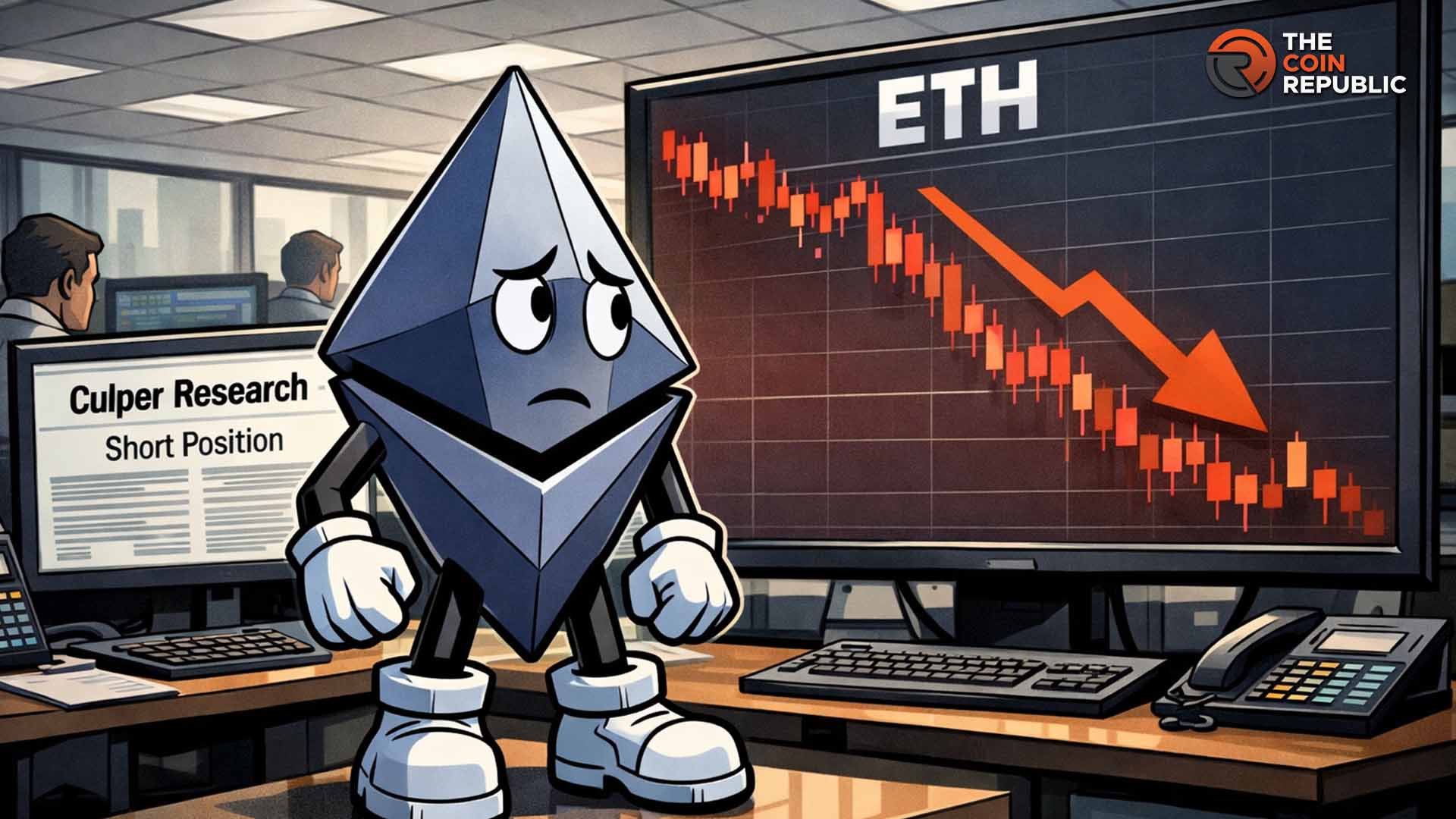
Culper Research has initiated a short position on ETH, citing concerns that the Fusaka upgrade has weakened its tokenomics and could lead to increased supply. Ethereum proponents counter that the upgrade successfully reduced transaction fees, while ETH burn rates remain higher than inflation, and L2 activity is robust. Recent outflows from U.S. spot Ethereum ETFs suggest a degree of institutional caution, potentially reinforcing bearish sentiment despite ongoing network development. The debate between Culper Research and Ethereum supporters highlights key metrics like transaction fees, ETH burn, L2 growth, and ETF flows as crucial indicators for future price action.

Significant inflows of over 157 billion SHIB tokens to exchanges indicate a strong increase in selling pressure, potentially ending any short-term rally expectations. The substantial exchange inflow suggests that holders are preparing to sell, which typically precedes further price declines and reinforces bearish sentiment for SHIB. With SHIB trading below key moving averages and indicators sloping downward, any recovery attempts are likely to face strong resistance, limiting upside potential in the near term. The current market dynamics, characterized by increased supply pressure and cautious volume, suggest that SHIB may continue to test lower support levels until a more robust demand emerges.

Jiuzi's planned 10,000 BTC acquisition via equity swap signals a growing trend of non-crypto native companies diversifying treasuries, potentially influencing institutional adoption narratives. The 78% surge in Jiuzi's stock price highlights immediate market reaction to corporate Bitcoin treasury strategies, suggesting a positive sentiment towards companies integrating digital assets. If the deal completes, Jiuzi's position among the top 15 Bitcoin-holding public companies could normalize Bitcoin as a corporate reserve asset, impacting broader market perception. The strategic shift of Jiuzi from an EV firm to a 'digital asset treasury powerhouse' indicates a potential new playbook for companies seeking hedges against market volatility.
Signal context only. Validate with price action, liquidity, and risk limits before taking a position.
