
Navigating Crypto News

CoinFeather
Navigating Crypto News
Quick market read from this story
Dubai's VARA has ordered KuCoin entities to cease all operations for unlicensed virtual asset activities, signaling increased regulatory scrutiny in the region.
The regulatory action against KuCoin in Dubai, coupled with ongoing issues in the US, Canada, and Europe, highlights a pattern of global compliance challenges for the exchange.
Dubai users of KuCoin are warned of potential financial loss and legal risks due to the lack of consumer protections from unlicensed operations.
KuCoin's response indicates a commitment to global compliance, but the immediate impact of the Dubai order and ongoing international pressures warrants close monitoring.
Deep Dive
Dubai's Virtual Assets Regulatory Authority (VARA) has ordered multiple entities operating under the KuCoin brand to immediately cease all virtual asset activities within the emirate. The regulator found that these entities were serving local residents without the necessary regulatory approval, a move that prohibits all marketing, advertising, and solicitation tied to the KuCoin brand in Dubai.
The enforcement notice specifically names four entities: Phoenixfin Pte Ltd, MEK Global Limited, Peken Global Limited, and KuCoin Exchange EU GmbH. VARA also alleged that KuCoin misrepresented its licensing status to users in the jurisdiction. Under Dubai Law No. (4) of 2022, all virtual asset service providers require a valid VARA license to operate, a license KuCoin did not possess.
For users in Dubai, the consequences are immediate, requiring the cessation of all unlicensed trading, deposit activity, and platform use. Crucially, because KuCoin lacked VARA approval, local users have no access to investor protections or dispute resolution mechanisms available to customers of licensed exchanges. VARA has warned that continued use of the platform exposes residents to financial loss and potential legal liability.
In response, a KuCoin spokesperson stated the exchange "respects applicable laws and regulatory processes globally" and intends to pursue a "cooperative approach with regulators." The exchange has not confirmed plans to exit the Dubai market or provided a timeline for obtaining the required VARA licensing.
This action in Dubai is part of a broader pattern of regulatory pressure on KuCoin across multiple jurisdictions. In January 2025, KuCoin pleaded guilty to anti-money laundering violations in the United States, resulting in a $297 million penalty and an agreement to withdraw from the U.S. market for at least two years. In September 2025, Canadian regulator FINTRAC imposed a C$19.6 million fine for registration failures. More recently, in February 2026, Austria's Financial Market Authority barred KuCoin EU from accepting new customers due to inadequate compliance staffing.
Since January 2025, under new CEO BC Wong, KuCoin has publicly emphasized a "compliance-first" direction. However, the increasing global restrictions suggest this pivot has yet to yield significant results.
Source, catalyst, and sector overlap from the latest feed.
Strike's acquisition of a BitLicense and Money Transmitter License in New York signifies a major regulatory hurdle cleared, enabling full service expansion into a key financial hub. The approval allows Strike to offer its full suite of Bitcoin payment services, including paycheck conversion and bill pay from BTC balances, potentially driving greater adoption of Bitcoin for everyday transactions. Gaining regulatory approval in New York, a jurisdiction known for its stringent crypto regulations, enhances Strike's credibility and may serve as a blueprint for other companies seeking to operate in similar markets. Strike's expansion into New York, coupled with its planned Bitcoin-backed lending product, positions the company to compete directly with traditional financial institutions and cater to long-term BTC holders.
Vitalik Buterin's 2026 roadmap emphasizes self-sovereignty and long-term resilience, pushing developers to build applications that function independently of developers or centralized infrastructure. The planned 'Glamsterdam' and 'Hegotá' protocol upgrades aim to enhance Ethereum's base layer scalability and reduce node bloat, potentially increasing transaction throughput and accessibility. The focus on 'sanctuary tech' and privacy as infrastructure signals a strategic shift away from speculative trends towards building resilient tools for real-world pressures, potentially impacting the narrative around Ethereum's utility. With ETH trading significantly below its ATH and facing competition, Buterin's directives for increased censorship resistance, resilience, and privacy infrastructure represent a core strategy to re-establish Ethereum's foundational strengths.
The development of agentic wallets and nano-payment infrastructure by Coinbase and Circle suggests a foundational shift towards enabling AI agents to transact autonomously, potentially creating a new demand driver for crypto as a machine-to-machine payment rail. Institutional alignment with Bitcoin is indicated by SpaceX's significant BTC holdings and xAI's recruitment of crypto talent, signaling a potential for large-scale capital integration driven by AI-related infrastructure development. While some analysts project a $500K Bitcoin target by 2026 based on AI agent adoption, others remain skeptical about the near-term viability of AI-driven transaction volumes, highlighting a divergence in market expectations. The core argument that AI agents require a crypto-based payment rail due to limitations with traditional financial systems presents a structural thesis for Bitcoin's future utility, irrespective of short-term price fluctuations.
BlockDAG's record-breaking public launch and immediate top 100 CoinMarketCap ranking, coupled with anticipated major US exchange listings, suggest significant near-term upside potential, positioning it as a leading speculative opportunity. Solana and Ethereum show resilience despite recent price drops, with strong underlying fundamentals like increased fund inflows for SOL and record-low exchange balances for ETH, indicating potential for recovery and accumulation by long-term holders. Litecoin's current discount to its all-time high and upcoming 2027 halving event present a long-term accumulation opportunity, while Hyperliquid's recent surge in trading volume and network activity highlight its growing utility in derivatives trading.
BlockDAG's successful $452 million presale and simultaneous multi-exchange launch on Coinstore, LBank, and BitMart indicate strong community backing and liquidity, positioning it for a potential $1.2B market cap and top-50 ranking. Market maker projections suggesting prices could reach $0.20-$0.50 signal immediate demand and professional interest, potentially driving rapid market cap expansion in the short term. The project's strategy of leveraging a large global community and securing multiple exchange listings from the outset aims to accelerate liquidity and market visibility, crucial for sustained growth beyond its initial launch phase. While the article highlights potential upside, the inherent volatility of crypto markets means that achieving the $1.2B valuation is contingent on continued market participation and community engagement, making it a key development to watch.
The U.S. government's new cybersecurity strategy explicitly includes cryptocurrency and blockchain technologies for the first time, signaling a potential shift towards increased regulatory scrutiny and integration into national security policy. The strategy's focus on "uprooting criminal infrastructure" and "denying financial exit" could lead to crackdowns on privacy coins and crypto mixers, impacting assets and services perceived as enabling illicit activity. While the strategy emphasizes cyber offense and AI-driven defense, the lack of detailed implementation plans and oversight frameworks raises questions about its practical execution and potential for unintended consequences on the crypto ecosystem. The inclusion of crypto in a national security context, coupled with a shorter, high-level strategic document, suggests a move towards more assertive cyber policies that could directly affect crypto market participants and infrastructure.
Florida's Senate passage of SB 314 establishes a state-level regulatory framework for payment stablecoins, signaling a move towards clearer operational guidelines for issuers within the state. The bill's alignment with federal guidelines and clarification that certain stablecoins will not be classified as securities provides a more predictable environment for regulated stablecoin operations. This legislative development in Florida, alongside other state-level initiatives, contributes to a fragmented but evolving regulatory landscape for stablecoins in the US, potentially influencing broader adoption and integration.
The unexpected negative U.S. employment report caused a ~3% dip in Bitcoin below $70,000, triggering immediate selling due to recession fears despite the data typically signaling potential Fed rate cuts. While the immediate reaction was bearish, the "bad" labor data could be interpreted as a bullish catalyst if it leads the Federal Reserve to consider earlier or larger rate cuts, which would benefit risk assets like Bitcoin. Upcoming CPI data and the FOMC meeting on March 17-18 are critical for determining the Fed's stance on interest rates, with any dovish signals potentially reigniting bullish sentiment for BTC and the broader crypto market.
The inclusion of 'crypto and blockchain technologies' in the US National Cyber Strategy signals a potential shift towards government recognition and protection, which could foster a more supportive regulatory environment. While explicit support is noted, the strategy's language on 'uprooting criminal infrastructure' and denying 'financial exit' could also signal increased scrutiny on privacy-enhancing tools like mixers and privacy coins, creating a dual-edged implication for the sector. The mention of 'post-quantum cryptography' in the strategy highlights a forward-looking cybersecurity concern that, while not an immediate threat, indicates the government is considering long-term risks to blockchain security, including Bitcoin.
SushiSwap's strategic shift to a modular 'Sushi Labs' ecosystem and multi-chain expansion, including Solana integration, aims to revitalize its competitive edge in the DEX market. Projected price targets for SUSHI range from $0.7311 in 2026 to $10.38 by 2030, contingent on increased trading volumes, rising Total Value Locked (TVL), and successful adoption of its cross-chain liquidity solutions. Despite a significant decline in TVL from its peak, SushiSwap's ongoing product innovation and focus on cross-chain functionality suggest a potential recovery, though current technical analysis indicates a bearish trend that requires breaking key resistance levels. The long-term investment outlook for SUSHI is considered suitable for high-risk tolerance investors, emphasizing the project's reliance on future development and market adoption rather than immediate catalysts.
Kazakhstan's central bank plans to allocate $350 million into cryptocurrencies and related companies, signaling a significant governmental embrace of digital assets and potentially influencing market sentiment towards broader institutional adoption. The planned investment, potentially funded by gold and FX reserves, suggests a strategic diversification by the central bank, indicating a belief in the long-term value and integration potential of digital assets within traditional financial systems. New regulations and licensing for crypto exchanges are being introduced, aiming to legitimize trading and combat illicit activities, which could foster a more secure environment for both domestic and international participants in Kazakhstan's crypto market.
Dubai's VARA has ordered KuCoin to cease all operations within the emirate due to unlicensed activity, signaling increased regulatory enforcement in the region. KuCoin faces a dual regulatory challenge, with Dubai's action following an earlier restriction in Austria over AML compliance issues, highlighting broader operational risks for exchanges. The crackdown on KuCoin by VARA underscores Dubai's commitment to strengthening its crypto regulatory framework, potentially impacting other exchanges operating without proper licensing. While KuCoin faces regulatory hurdles, VARA's ongoing work on approving projects like diamond tokenization with Ripple indicates a parallel effort to foster regulated innovation.
Live Feed
Loading the broader stream in the same flow as the homepage feed.

Bitcoin's consolidation near $71K, coupled with decelerating long-term holder distribution, signals a potential exhaustion of profit-taking and sets the stage for a bullish breakout. The current market equilibrium, characterized by a shift from selling to accumulation and healthy price action, suggests that Bitcoin is building a strong foundation for an upward movement, with analysts targeting $80K in March. Institutional demand via spot ETFs continues to counterbalance retail sell-offs, providing a safety net for Bitcoin's price and indicating an approaching balance between supply and demand, which could drive prices higher.
BlackRock's $26 billion private credit fund limiting withdrawals to 5% due to $1.2 billion in exit requests highlights liquidity challenges inherent in private credit, which may not directly impact crypto but signals potential risk aversion from large institutions. While the article suggests this is a traditional finance issue, significant institutional holdings of BTC and ETH by BlackRock mean that broader liquidity stress could indirectly pressure crypto assets if firms need to liquidate holdings. The situation with BlackRock's fund, alongside similar pressures on Blackstone and Blue Owl, underscores a growing trend of liquidity constraints in the $1.8 trillion private credit market, potentially impacting institutional capital allocation across asset classes.
Despite a reported 53,000% surge in SHIB token burns, the actual reduction in circulating supply is negligible (0.00003%), failing to impact price due to the massive existing supply. SHIB's price decline of over 2%, coupled with a breach of key moving averages, indicates bearish technical momentum and potential further downside if support levels fail. Isolated spikes in burn rates for high-supply tokens like SHIB should be viewed with caution by traders, as they do not represent a fundamental shift in supply-demand dynamics without sustained, large-scale burns or significant ecosystem demand.

Bitcoin's retreat below $68,000, coupled with a strengthening dollar and persistent inflation fears, suggests a challenging macro environment for risk assets, potentially delaying rate cut expectations and pressuring crypto prices. The significant portion of Bitcoin supply now at a loss (43%) indicates potential selling pressure from underwater holders looking to break even, creating resistance for upward price movements and reinforcing range-bound trading. Despite the price pullback, a substantial increase in stablecoin inflows suggests underlying retail interest and available capital, posing a question of whether this 'dry powder' will be deployed on dips or await further price discovery.

Whale selling pressure combined with increasing retail accumulation suggests that Bitcoin's recent correction may not be over, potentially indicating further downside before a sustained recovery. Significant outflows from US spot Bitcoin ETFs, totaling $348.9 million, reinforce the bearish short-term sentiment and could signal reduced institutional demand. Despite recent price drops, some analysts maintain a bullish long-term outlook, suggesting that levels around $60,000 have historically marked bottoms for Bitcoin.

JasmyCoin is consolidating near a critical support level of $0.005-$0.0055, with a potential breakout above its descending resistance structure indicating a shift from a prolonged downtrend to recovery. The long-term outlook for JasmyCoin hinges on the growth of decentralized data infrastructure and IoT adoption, with price predictions suggesting significant upside potential by 2030 if these trends materialize. Traders should monitor the $0.008-$0.009 resistance level as a key indicator for a potential structural shift, with a sustained move above this zone likely to build momentum towards higher price targets.
Macroeconomic pressures including rising oil prices and weak U.S. jobs data are creating a risk-off environment, negatively impacting crypto assets like BTC, ETH, and XRP. Over $302 million in leveraged crypto positions were liquidated, with BTC and ETH accounting for the largest shares, amplifying the current market sell-off. Key support levels for BTC ($67k-$68k), ETH ($1.85k-$1.9k), and XRP ($1.30) are being tested, with a breakdown potentially leading to further downside corrections. The combination of inflation concerns from energy prices and fears of economic slowdown from weak labor data creates significant uncertainty for crypto markets sensitive to global liquidity.

The investment firm ZX Squared Capital predicts a further 30% price drop for Bitcoin in 2026, citing the historical four-year cycle and potential forced selling by treasury firms as key bearish drivers. The four-year cycle, historically tied to Bitcoin's mining reward halvings, appears to be playing out as expected, suggesting a continuation of the bear market phase despite recent price recovery attempts. Human psychology and the tendency for individual investors to amplify market swings are identified as core reasons why Bitcoin continues to exhibit boom-and-bust cycles rather than acting as a stable store of value. While institutional adoption is growing, its current limited scope and the potential for treasury firms to liquidate holdings during a downturn pose significant risks to Bitcoin's price stability.

SUI's price is currently in a corrective phase, testing critical support at $0.80, with a potential downside to $0.50 if this level fails, indicating a 'buy the dip' opportunity for long-term investors. A sustained break above the descending trendline near $3.50 is required to confirm a trend reversal, with immediate resistance targets at $1.05, $1.60, and $2.00. Long-term price predictions suggest significant upside potential, with targets ranging from $15-$18 by 2030 and potentially $150+ by 2050, contingent on continued ecosystem growth and adoption.
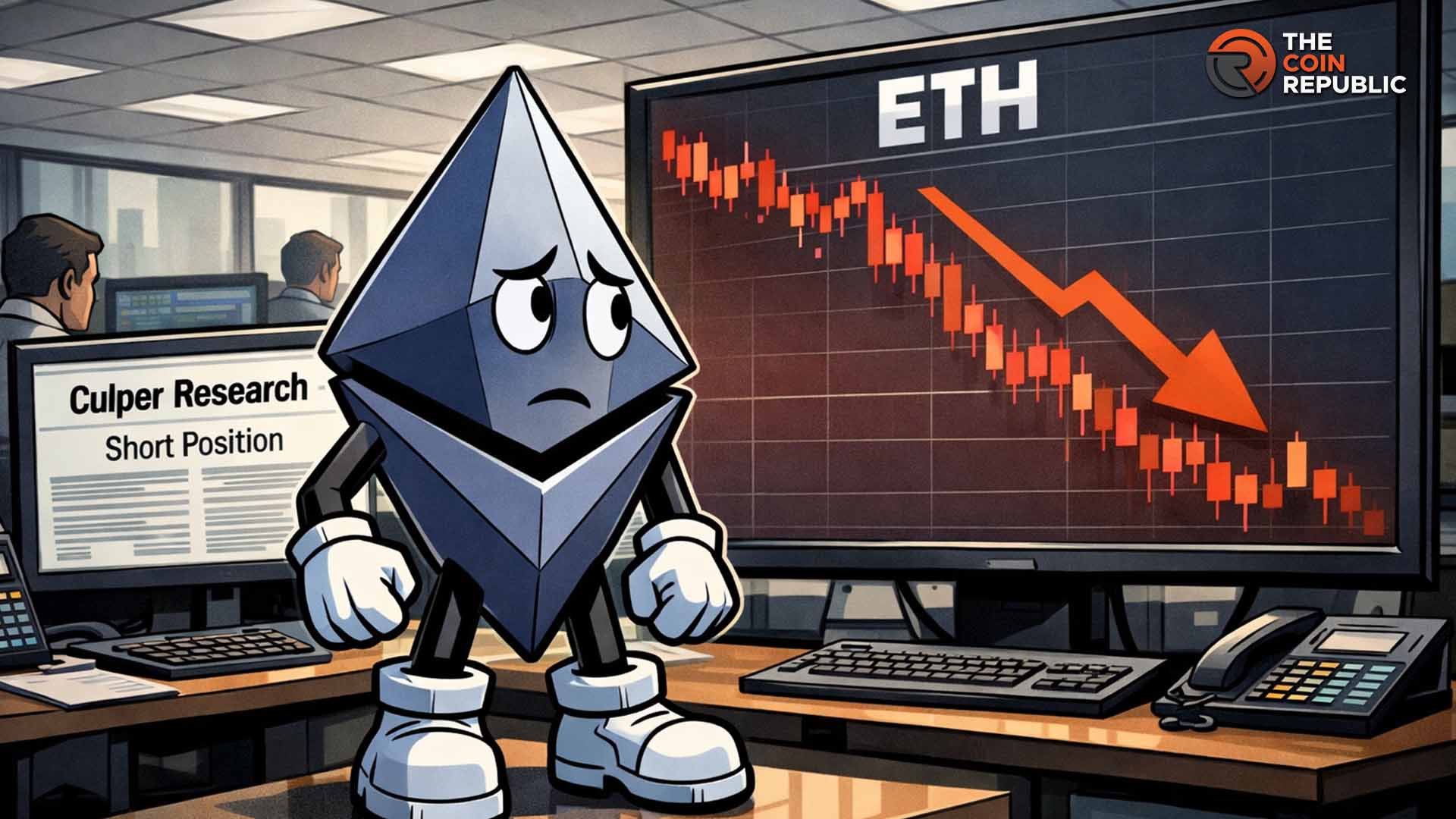
Culper Research has initiated a short position on ETH, citing concerns that the Fusaka upgrade has weakened its tokenomics and could lead to increased supply. Ethereum proponents counter that the upgrade successfully reduced transaction fees, while ETH burn rates remain higher than inflation, and L2 activity is robust. Recent outflows from U.S. spot Ethereum ETFs suggest a degree of institutional caution, potentially reinforcing bearish sentiment despite ongoing network development. The debate between Culper Research and Ethereum supporters highlights key metrics like transaction fees, ETH burn, L2 growth, and ETF flows as crucial indicators for future price action.
Signal context only. Validate with price action, liquidity, and risk limits before taking a position.
