
Navigating Crypto News

CoinFeather
Navigating Crypto News
Quick market read from this story
Ripple's expansion into tokenizing traditional fund structures with Aviva Investors on XRPL signals a significant move towards bridging traditional finance and blockchain for RWA adoption.
The integration of Coinbase futures, including XRP, onto Ripple Prime's $3 trillion clearing platform enhances institutional access and liquidity for regulated derivatives trading.
Ongoing XRPL development, including the upcoming Permissioned DEX and Lending Protocol, alongside AI agent payment capabilities, indicates a strategic push for broader utility and enterprise adoption.
Ripple's expanded Ripple Payments service, supporting fiat and stablecoin transactions across over 60 markets, demonstrates a focus on global payment infrastructure and cross-border settlement.
Deep Dive
Ripple is significantly expanding its institutional offerings and advancing its XRP Ledger (XRPL) ecosystem, according to a recent report by Token Relations. Key developments include new partnerships and the expansion of its Ripple Payments service, aiming to enhance institutional adoption and utility for XRP and RLUSD.
Recent strategic partnerships highlight Ripple's focus on institutional growth. Collaborations with Securosys and Figment are set to integrate hardware-based security features and staking support into Ripple Custody. Furthermore, Ripple is partnering with Aviva Investors, the asset management arm of Aviva plc, to tokenize traditional fund structures on the XRP Ledger. This initiative, expected to extend through 2026 and beyond, marks Aviva's first tokenization effort and Ripple's first with a European investment management firm.
Ripple has also expanded its Ripple Payments service, enabling enterprises to manage fiat and stablecoin transactions across more than 60 markets. The company released an institutional DeFi roadmap for XRP Ledger, detailing existing features like Multi-Purpose Tokens and Credentials, alongside upcoming developments such as a Permissioned DEX, a Lending Protocol, Confidential Transfers for MPTs, and Smart Escrows. A technical breakdown of the Permissioned DEX (XLS-81) was published by developer Anthonio Kaplan, intended as a conversion layer for Ripple Payments.
The XRP Ledger has seen the launch of the x402 protocol facilitator, which enables AI agents to utilize XRP and RLUSD for API services. In a significant move for institutional clients, Ripple's $3 trillion clearing platform, Ripple Prime, now offers Coinbase crypto futures cleared by Nodal Clear. These futures contracts include Bitcoin, Ethereum, SOL, and XRP, available for round-the-clock trading within a regulated U.S. market.
Source, catalyst, and sector overlap from the latest feed.
Cardano's Input Output Group clarifies the USDCx infrastructure aims for direct withdrawals to Cardano, bypassing traditional bridge complexities and enhancing DeFi and payment functionalities. The USDCx integration represents an ecosystem-level upgrade for Cardano's financial rails, signaling potential for increased liquidity and adoption as it connects directly to Circle's xReserve. By enabling direct USDC deposits and swaps to Cardano native assets, the USDCx initiative aims to streamline user experience and unlock new use cases for stablecoin liquidity within the ecosystem.
Despite a 3.14% price decline in the last 24 hours, the significant trading volume of 1.7 billion ADA suggests underlying market interest that could fuel a rebound if key support levels hold. Geopolitical tensions and broader market risk aversion are currently pressuring ADA, leading to capital rotation away from the asset and increasing selling pressure. Positive adoption news, such as the integration with DFX for payments in Swiss SPAR supermarkets, provides a fundamental tailwind that could support ADA's price recovery, contingent on increased trading volume. Cardano's price is at a critical juncture, with its immediate direction likely influenced by Bitcoin's ability to maintain stability above $68,000, highlighting broader market correlation.
XRP ETFs experienced their largest monthly withdrawals totaling $16.62 million on March 6, indicating institutional caution despite overall strong cumulative inflows since launch. Significant outflows from major XRP ETFs like 21Shares, Bitwise, and Grayscale suggest a potential shift in institutional sentiment or a rebalancing of portfolios away from XRP. The substantial ETF outflows coincide with XRP's price correction, highlighting a potential correlation between institutional trading activity and short-term price movements.
XRP is currently positioned at a critical technical juncture, indicated by its price hovering around the middle Bollinger Band, suggesting potential for significant directional movement based on market sentiment and user engagement. Despite a recent 6.29% price appreciation over seven days, XRP's current trading volume and a 2.7% decline in the last 24 hours, influenced by broader market pressures like Middle East tensions and US economic data, indicate a lack of strong conviction from market participants to drive a sustained rally. The potential for XRP to either break towards $1.42 or fall below the $1.30 support level hinges on increased buying activity and whale intervention, with a breach of support potentially leading to a decline towards $1.20. While the article highlights a liquidity crunch on Binance as a potential trigger for an upward shift, the overall market conditions and current trading volume suggest a neutral to cautious outlook, with significant price swings to $2 or below $1 remaining possibilities.
The launch of the ShibClaw skill represents an integration of AI agents into the Shiba Inu ecosystem, potentially enhancing automation for developers building on Shibarium. While the ShibClaw skill aims to provide AI-driven functionality for Shibarium, a warning has been issued regarding contract address verification and security best practices, highlighting ongoing risks in ecosystem development. This development signals a broader trend of AI integration within blockchain infrastructure, suggesting that AI agents could become crucial tools for scaling and operational efficiency in crypto ecosystems.
PI Network's price is showing increased trading volume, which, combined with a recent 15% jump, suggests potential accumulation rather than a speculative frenzy, indicating a cautious but positive market sentiment. The critical technical hurdle for PI Network remains the $0.28 resistance level; a decisive break above this could signal a shift from a potential fakeout scenario to sustained upward momentum, validating the rising volume. Recent protocol upgrades (v19.9 migration, v20.2 planned) and a proof-of-concept for decentralized AI training using Pi Nodes are driving renewed investor interest and could provide fundamental catalysts for future growth.
Circle's internal adoption of USDC for $68 million in intercompany transfers highlights the efficiency gains of stablecoins over traditional banking for corporate treasury operations. The successful use of Circle Mint for rapid settlement demonstrates a practical application of stablecoin technology beyond speculative trading, potentially increasing institutional confidence. This internal use case signals Circle's commitment to leveraging its own infrastructure, potentially paving the way for broader adoption of USDC for business-to-business payments and treasury management.
The US National Cybersecurity Strategy's inclusion of crypto and blockchain signifies governmental recognition of these technologies as critical infrastructure, potentially leading to increased focus on their security and integration into national defense frameworks. While acknowledging crypto's infrastructure role, the strategy's emphasis on combating financial crime suggests a potential for stricter regulatory actions against privacy-enhancing tools like mixers and privacy coins. The strategy's proactive stance on quantum computing threats indicates a forward-looking approach to cybersecurity, which could eventually impact blockchain security and necessitate the adoption of post-quantum cryptography. The dual approach of supporting crypto infrastructure while signaling enforcement against illicit use creates a complex regulatory environment that market participants must navigate, potentially shaping future policy and market development.
Ripple's acquisition of a UK EMI license and FCA crypto registration signifies a significant step in its regulatory compliance efforts, potentially paving the way for broader institutional adoption and integration of its services in a key European market. The XRP price is currently testing critical monthly support around $1.40, with a sustained hold above this level being crucial for maintaining a bullish technical structure and potentially targeting higher resistance levels as indicated by market analysis. Declining XRP reserves on exchanges suggest reduced selling pressure, which, combined with Ripple's ongoing product development and strategic partnerships, could support price stability and renewed demand.
Consistent ETF inflows totaling $1.45 billion suggest sustained institutional demand for Solana, even amidst price declines, indicating underlying investor conviction. Solana's technical setup shows a breakout retest above a $75-$90 consolidation range, with a successful hold potentially paving the way for a move towards the $100 price target. The confluence of strong ETF flows and a bullish technical breakout retest positions Solana for potential upside, making it a key asset to watch for near-term price appreciation.
Live Feed
Loading the broader stream in the same flow as the homepage feed.
The $9 million SEC penalty for the NYSE's 2023 opening auction failure highlights regulatory oversight on traditional market infrastructure, potentially influencing confidence in exchange operations. While this event primarily impacts traditional finance infrastructure, it occurs as the NYSE explores tokenization, suggesting a need for robust systems before expanding into digital asset markets. The NYSE's proactive implementation of safeguards post-incident indicates a focus on operational stability, which could be a positive signal for its future digital market initiatives.
Dubai's VARA has issued cease and desist orders against KuCoin and MEXC entities for operating without the required licenses, signaling increased regulatory scrutiny on exchanges targeting the emirate. The regulatory action against KuCoin and MEXC highlights the importance of compliance with local licensing frameworks for crypto service providers operating in or marketing to Dubai residents. Traders should monitor potential impacts on user access and operational continuity for KuCoin and MEXC within the Dubai jurisdiction, which could affect trading volumes and sentiment for these platforms.

Significant outflows from spot Bitcoin ETFs on March 6, totaling $348.9 million, indicate a shift towards risk-off sentiment among institutional investors. The broad-based outflows across Bitcoin, Ethereum, Solana, and XRP ETFs, coupled with the Crypto Fear & Greed Index entering 'extreme fear', suggest a potential near-term bearish trend for the broader crypto market. While Bitcoin ETFs saw the largest redemptions, the negative flows into Ethereum, Solana, and XRP ETFs highlight a general weakening of demand across major altcoins as well.

President Trump's proposed 'Strategic Bitcoin Reserve' remains stalled due to a lack of congressional authorization, highlighting the limitations of executive orders in enacting significant policy changes. The potential inclusion of Bitcoin reserve legislation within the National Defense Authorization Act presents a narrow window for progress, contingent on the Trump administration prioritizing the initiative. Despite industry enthusiasm, the absence of concrete legislative action means the U.S. government's Bitcoin holdings and potential future acquisitions are uncertain, impacting market expectations for institutional demand.
Ethereum is approaching critical resistance at $2,147 and $2,150, with a confirmed breakout potentially targeting $2,400, indicating a short-term bullish momentum shift if sustained. The price action suggests a consolidation phase is nearing an end, and a successful breach of these resistance levels could trigger increased buying pressure and re-evaluation of higher targets. Failure to break above $2,150 could lead to a pullback towards the $2,000 support zone, highlighting the importance of the current price action as a key decision point for traders.
The SEC's proposed settlement to drop most claims against Justin Sun and Tron entities, focusing only on a wash trading charge against Rainberry Inc. for a $10 million penalty, significantly de-risks the Tron ecosystem from ongoing litigation. This resolution, pending court approval, removes substantial legal uncertainty for Justin Sun and associated foundations, potentially allowing for renewed focus on development and adoption without the overhang of a broad SEC enforcement action. The settlement aligns with a broader trend of the SEC re-evaluating and narrowing its enforcement actions, suggesting a potential shift in regulatory strategy that could impact other ongoing or future cases in the crypto space.

The launch of the 21Shares Polkadot ETF (TDOT) on Nasdaq with $11 million in seed capital provides a regulated, accessible entry point for traditional investors into the Polkadot ecosystem, potentially increasing demand for DOT. While the ETF launch is a positive development for Polkadot's institutional adoption, the current muted market sentiment and DOT's recent price retracement suggest that immediate significant price appreciation may be tempered. Upcoming tokenomics changes for Polkadot, including a supply cap and reduced emissions, coupled with a shortened unbonding period, could enhance DOT's long-term value proposition and liquidity, making it more attractive post-ETF listing.
Solana's price action is currently dictated by key liquidity clusters around $95 resistance and $78-$85 support, suggesting potential for a short-term rebound after testing lower levels. The $83 level is identified as a critical mid-range defense for bulls; failure to hold this support could trigger a decline towards the $75 zone, indicating bearish pressure. Despite some market sentiment viewing Solana as 'cooked' due to a weakened memecoin ecosystem, the asset has shown resilience, rebounding from recent lows and indicating potential for continued short-term trading opportunities. Traders should monitor the $83 support and $90-$92 resistance levels for directional cues, as a decisive break in either direction will likely dictate SOL's immediate price trajectory.

A federal judge has certified a class action lawsuit against Tether and Bitfinex, allowing retail investors to pursue claims of market manipulation from nearly a decade ago. The lawsuit alleges that Tether issued unbacked USDT to artificially inflate Bitcoin and Ethereum prices during the 2017 bull run, a claim previously addressed in settlements with the NYAG and CFTC. With class certification granted, the case now proceeds to the discovery phase, where evidence will be presented, potentially impacting the credibility and future operations of Tether and Bitfinex. This development highlights ongoing legal scrutiny of stablecoin issuers and their market impact, carrying implications for the broader crypto industry's regulatory landscape.

The growing trend of 'digisexuality' and emotional bonds with AI chatbots highlights a new frontier in human-computer interaction, potentially influencing future digital service design and user engagement models. The AI companion market, projected to reach $210 billion by 2030, signifies a substantial economic opportunity, yet raises ethical concerns regarding user well-being and the potential for emotional dependency. User backlash to AI model updates, such as OpenAI's GPT-4o to GPT-5 transition, demonstrates the depth of emotional investment users form with AI, impacting platform loyalty and product development strategies. Tragic incidents involving AI chatbots and user suicides underscore the critical need for responsible AI development and robust safety protocols to mitigate potential psychological risks.
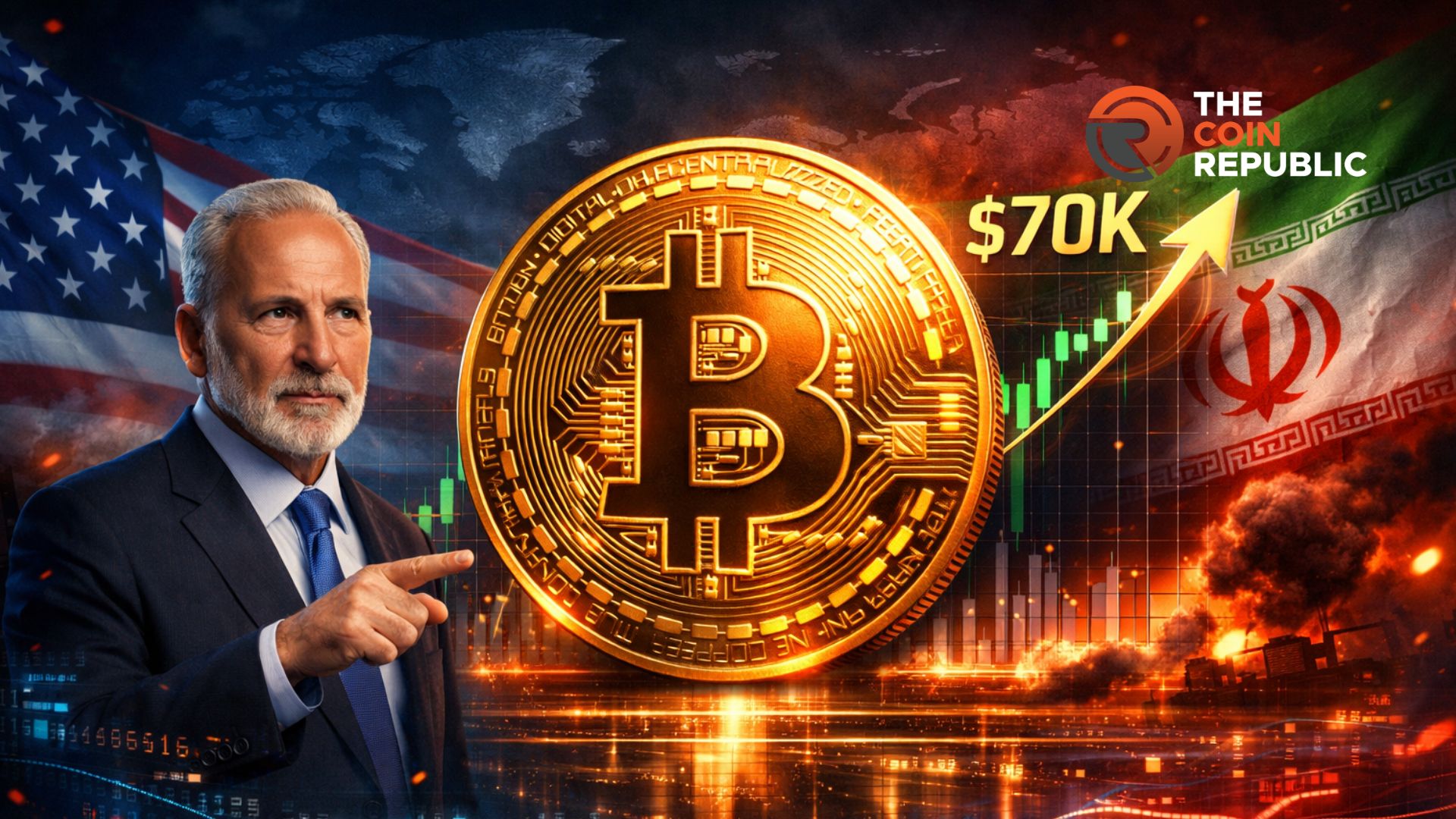
Bitcoin's surge above $70,000 amidst geopolitical tensions presents a divergence from traditional safe-haven assets like gold, suggesting a potential shift in investor behavior or short-term speculative trading driven by uncertainty. Peter Schiff's warning about prolonged conflict pressuring stocks and crypto, while boosting oil and gold, highlights a bearish outlook for risk assets if geopolitical risks escalate, contrasting with Bitcoin's current upward momentum. On-chain data indicating easing selling pressure and reduced unrealized losses for traders and long-term holders supports the narrative of a short-term relief rally, though broader market outlook remains bearish according to CryptoQuant's Bull Score.
Signal context only. Validate with price action, liquidity, and risk limits before taking a position.
