
Navigating Crypto News

CoinFeather
Navigating Crypto News

Source, catalyst, and sector overlap from the latest feed.
Paradigm's development of a prediction market terminal and potential market-making desk signals a significant institutional push into a rapidly growing crypto sector, potentially increasing liquidity and sophistication for traders. The expansion of prediction market infrastructure by a major VC like Paradigm, alongside interest from traditional finance players, suggests a maturing market with substantial growth potential, though regulatory hurdles remain a key concern. While the news highlights growing interest and infrastructure development in prediction markets, the lack of direct token launches or specific asset mentions from Paradigm means the immediate trading impact is indirect, focusing on the broader ecosystem's development.
Live Feed
Loading the broader stream in the same flow as the homepage feed.
The public exchange between Ripple CEO and Avalanche founder, stemming from an April Fools' joke, highlights ongoing competitive narratives within the blockchain space, though it lacks direct market-moving catalysts. While the dispute is primarily reputational, it underscores the distinct market positioning of Ripple in cross-border payments and Avalanche in tokenization, with both projects continuing to secure enterprise partnerships. The commentary does not introduce new fundamental information or immediate trading opportunities, suggesting a neutral stance for short-term price action for both XRP and AVAX.

Traders are advised to look beyond geopolitical rhetoric and focus on fundamental indicators like SPR depletion and shipping insurance premiums for market direction. A significant drawdown in strategic oil reserves and persistently high insurance costs for Hormuz transit suggest a heightened risk aversion environment for assets like Bitcoin. The article highlights that a material increase in tanker traffic through the Strait of Hormuz is a prerequisite for sustained rallies in risk assets, indicating current market sentiment is fragile. Despite President Trump's shifting statements on Iran, the underlying supply-demand dynamics in the oil market and associated shipping risks are the primary drivers of potential market volatility.
Stani Kulechov's net worth, estimated around $300 million, is primarily derived from his substantial holdings in AAVE tokens and his founding role in the Aave DeFi protocol. Aave's strategic pivot towards institutional finance with Aave V4 and the 'hub-and-spoke' architecture signals a significant push to scale DeFi and integrate tokenized real-world assets, potentially broadening its market appeal and utility. The transfer of Lens Protocol stewardship to Mask Network indicates Aave's strategic refocusing on core DeFi infrastructure, moving away from social applications to concentrate on scalable financial ecosystems. Kulechov's diversified investments beyond Aave, including venture capital in over 49 blockchain projects, highlight a broader strategy to capitalize on emerging Web3 opportunities and support decentralized technology growth.

Geopolitical tensions stemming from the Iran conflict are creating macro uncertainty, pressuring Bitcoin below $67K while Ethereum shows relative strength above $2,000. The next 2-3 weeks are critical, with potential for further downside in BTC if tensions escalate, or a relief rally if de-escalation occurs. Ethereum's resilience above $2,000 suggests accumulation and potential outperformance if it breaks above $2,100, signaling a shift from defense to expansion. Market participants should anticipate volatility and divergence between assets, with news headlines likely to be a primary driver over technicals in the near term.

Geopolitical tensions are directly impacting crypto markets, causing a sell-off in major assets like Bitcoin, Ether, and Solana as risk-off sentiment prevails. The market's reaction to geopolitical news highlights its sensitivity to macro events, overriding typical seasonal bullish expectations for April and reinforcing a pattern of volatility tied to conflict headlines. Despite a familiar pattern of price swings, the underlying market sentiment remains deeply fearful, as indicated by the Fear and Greed Index, suggesting a cautious outlook for near-term price action.

MicroStrategy's resumption of Bitcoin purchases, triggered by its stock (STRC) trading above par, signals renewed institutional demand and supports Bitcoin's price rebound. The company's ability to issue new shares above par value directly translates into capital for Bitcoin accumulation, acting as a proxy for institutional buying pressure. The correlation between STRC's stock price and MicroStrategy's Bitcoin buying activity highlights a key dynamic influencing Bitcoin's near-term price action, with sustained STRC strength likely to drive further BTC accumulation. MicroStrategy's significant Bitcoin holdings and its capital plan indicate a long-term commitment, suggesting continued demand for Bitcoin as a corporate treasury asset.
Shiba Inu shows signs of stabilization with higher lows and a tightening wedge pattern, suggesting a potential breakout, but requires a clear break above resistance with increased volume to confirm a reversal. Ethereum is exhibiting structural recovery signs with higher lows and price compression near $2,000-$2,200, indicating accumulation and a potential path towards $3,000 if it can sustain a break above the 50 EMA. Dogecoin remains in a structural downtrend, with price action below key moving averages and a lack of significant buying pressure, making the 'zero removal' narrative increasingly improbable without substantial capital inflow and demand growth.
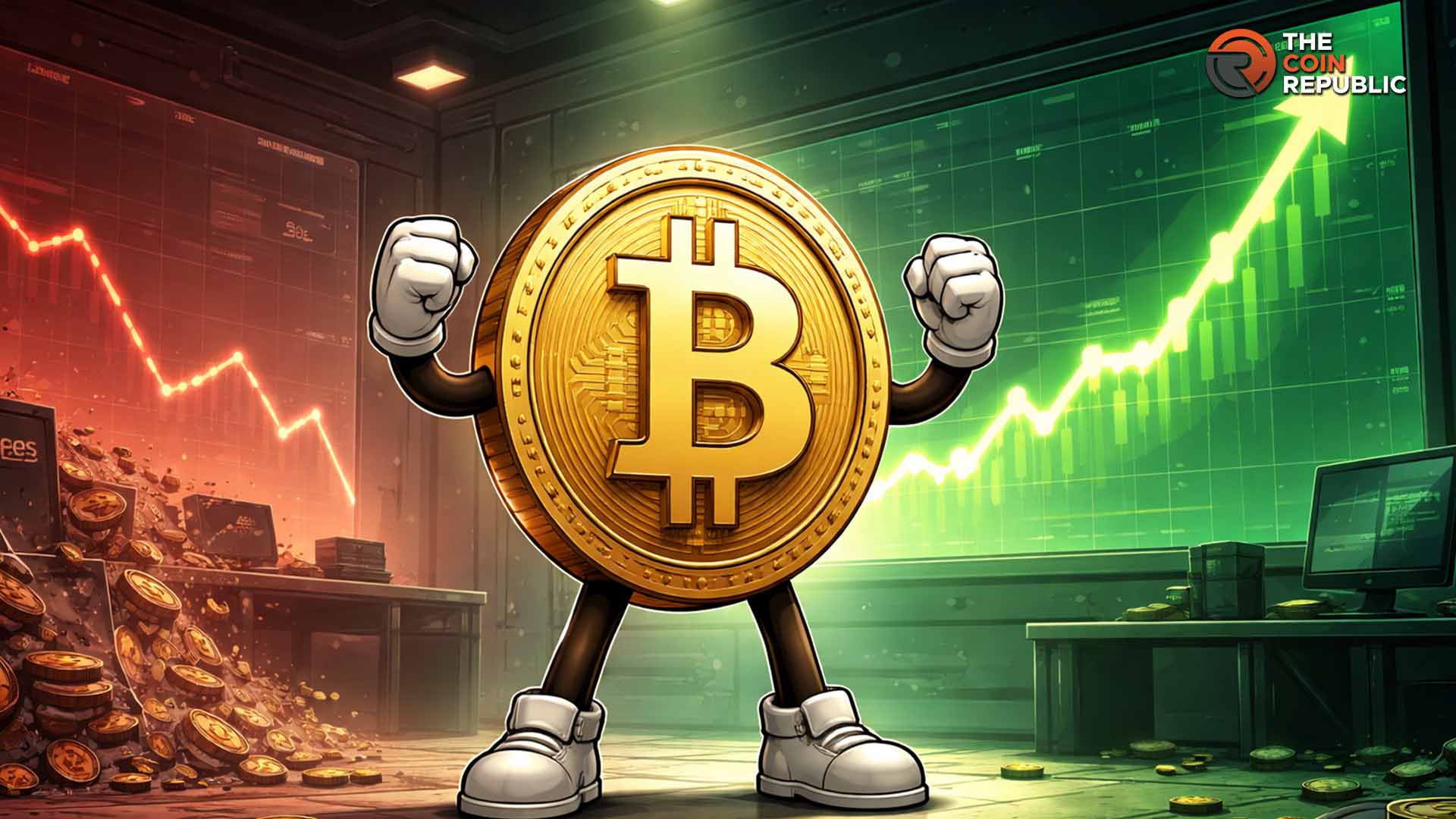
Bitcoin transaction fees have fallen to a 9-year low, indicating reduced network congestion and potentially lower operational costs for users, which could be a subtle bullish signal for network utility if demand remains stable. BTC's price breaking a 5-month losing streak and closing March in the green, coupled with historically strong April performance, suggests a potential near-term upward trend, supported by recent ETF inflows and whale activity. A rare signal of increased average Bitcoin transaction fees sent to exchanges (2.62 BTC) suggests potential whale distribution and increased selling pressure, which could counteract the positive price momentum despite low network fees.
Drift Protocol is investigating unusual activity, leading to a significant price drop in its native DRIFT token, signaling potential exploit concerns within the Solana DeFi ecosystem. The suspected exploit on Drift Protocol has caused a sharp decline in the DRIFT token, highlighting the market's sensitivity to security events in DeFi protocols and impacting investor confidence. While Drift faces potential exploitation, the broader Solana (SOL) ecosystem shows relative resilience, with traders watching key resistance levels around $100 for potential upward momentum.
Signal context only. Validate with price action, liquidity, and risk limits before taking a position.
Quick market read from this story
The extradition of Li Xiong, a key figure in the Huione Group, to China signifies a significant step in the crackdown on large-scale crypto scams, potentially impacting illicit finance flows.
The successful extradition and ongoing pursuit of other syndicate members suggest increased international cooperation against crypto-enabled fraud, which could deter future criminal activity.
With over $89 billion in cryptoassets reportedly handled by Huione Group, this development highlights the substantial financial scale of crypto scams and the regulatory challenges they present.
Deep Dive
Li Xiong, a central figure in a criminal syndicate that facilitated crypto scams across Asia, has been extradited from Cambodia to China to face fraud and money laundering charges. The extradition, confirmed by Hong Kong-based outlet Ta Kung Wen Wei, was carried out by a task force from China’s Ministry of Public Security on April 1st.
Xiong previously chaired the Huione Group, an organization accused of operating scam centers in Cambodia that conducted “pig butchering” scams and other investment schemes to defraud victims globally. This group was reportedly responsible for one of the world's largest illicit online marketplaces, handling over $89 billion in cryptoassets.
Xiong's extradition follows the arrest of Chen Zhi, the alleged head of Prince Group and operator of Huione Group, three months prior. In October, the U.S. Department of Justice seized 127,271 Bitcoin (BTC), valued at over $15 billion, from Zhi. The U.S. Treasury Department's Financial Crimes Enforcement Network also directed U.S. banks in October to sever ties with Huione Group.
Chinese public security authorities have indicated that other members of the syndicate are being brought to justice. They have issued a warning to remaining fugitives, urging them to surrender promptly to receive lenient treatment.
Genius Group's liquidation of its entire Bitcoin treasury to cover $8.5M in debt signals financial pressure, contrasting with its prior 'Bitcoin first' strategy. The trend of Bitcoin treasury liquidations by companies like Genius Group, MARA Holdings, and Bitdeer highlights a broader market deleveraging, potentially indicating reduced corporate demand for BTC. While Genius Group liquidates, Michael Saylor's Strategy continues aggressive Bitcoin accumulation, creating a divergence in corporate treasury strategies and potentially impacting market sentiment. Genius Group's reported strong Q1 financial results alongside its Bitcoin sale suggests a strategic prioritization of debt repayment over holding volatile assets, despite a stated intention to re-enter the market later.
