
Navigating Crypto News

CoinFeather
Navigating Crypto News

Quick market read from this story
MicroStrategy's resumption of Bitcoin purchases, triggered by its stock (STRC) trading above par, signals renewed institutional demand and supports Bitcoin's price rebound.
The company's ability to issue new shares above par value directly translates into capital for Bitcoin accumulation, acting as a proxy for institutional buying pressure.
The correlation between STRC's stock price and MicroStrategy's Bitcoin buying activity highlights a key dynamic influencing Bitcoin's near-term price action, with sustained STRC strength likely to drive further BTC accumulation.
MicroStrategy's significant Bitcoin holdings and its capital plan indicate a long-term commitment, suggesting continued demand for Bitcoin as a corporate treasury asset.
Deep Dive
Strategy has resumed its Bitcoin accumulation strategy, purchasing over 1,100 BTC after its preferred stock, STRC, closed above its par value. This development allowed the firm to raise approximately $76.25 million, directly contributing to the recent rebound in Bitcoin's price, which climbed over 5% and neared $69,300.
The ability for Strategy to issue new shares and deploy capital into Bitcoin is contingent on STRC trading above its $100 par value. When the stock fell below this threshold, the firm paused its buying activities due to limited issuance capacity. The resumption of buying occurred as STRC's price recovered, reopening the capital-raising pathway and enabling fresh Bitcoin purchases.
STRC.LIVE estimates indicated that the capital raised by Tuesday's close was sufficient for over 1,085 Bitcoin purchases, with weekly accumulation reaching 1,111 BTC. This renewed demand follows a period of constrained accumulation that coincided with a price decline in Bitcoin.
Strategy's accumulation model relies heavily on capital markets rather than solely on operational cash flows. Regulatory filings from late March revealed that Strategy held 762,099 BTC with an average acquisition price near $75,694, positioning it as one of the largest corporate Bitcoin holders globally.
The pause in accumulation, when STRC traded below par, led to a 14.55% drop in Bitcoin's price over two weeks. However, once STRC moved back above par, Strategy quickly resumed issuing preferred equity and deploying funds into Bitcoin, mirroring previous accumulation cycles where issuance conditions dictated the pace.
A broader capital plan disclosed on March 23 shows Strategy has a capacity to raise up to $44.1 billion through preferred stock sales, signaling a long-term commitment to expanding its Bitcoin holdings. This strategy allows the firm to convert investor capital directly into Bitcoin exposure, effectively acting as a proxy for institutional Bitcoin demand.
The market closely monitors STRC's pricing as an indicator of Strategy's potential buying activity. With Strategy continuing to deploy capital, Bitcoin faces resistance near the $70,000 level. The sustainability of this buying cycle hinges on STRC maintaining its position above par.
Source, catalyst, and sector overlap from the latest feed.
A significant $80 million leveraged bet against Bitcoin by a Hyperliquid whale, coupled with a long position in oil, highlights a contrarian strategy against prevailing market optimism driven by easing geopolitical tensions. The whale's history of substantial losses on previous leveraged trades, including a $40 million loss in February, suggests this large bet carries a high-risk profile and may not signal a confirmed market downturn. Despite the bearish signal from the whale's position, Bitcoin's resilience above $68,000, supported by macro news, indicates that market sentiment is currently overriding individual large-scale speculative bets. The divergence between the whale's positioning and the broader market's recovery in risk assets underscores the potential for amplified volatility if the whale's thesis is challenged or validated by shifting macro conditions.
Bitcoin transaction fees have fallen to a 9-year low, indicating reduced network congestion and potentially lower operational costs for users, which could be a subtle bullish signal for network utility if demand remains stable. BTC's price breaking a 5-month losing streak and closing March in the green, coupled with historically strong April performance, suggests a potential near-term upward trend, supported by recent ETF inflows and whale activity. A rare signal of increased average Bitcoin transaction fees sent to exchanges (2.62 BTC) suggests potential whale distribution and increased selling pressure, which could counteract the positive price momentum despite low network fees.
Spot Bitcoin ETFs experienced a significant rebound in inflows on March 31, totaling $117.5 million, indicating renewed institutional interest despite mixed signals from other market participants. BlackRock's IBIT led the inflows with $98.4 million, highlighting its dominant position among spot Bitcoin ETFs and suggesting a preference for lower-fee options over GBTC. While ETF inflows are positive, Bitcoin faces technical resistance around the $69,000-$70,000 zone, with potential for choppiness and a short-term rally towards resistance or a fall towards support levels if selling pressure increases. Despite the ETF inflow resurgence, notable outflows from institutions like CoinShares and a pause in MicroStrategy's Bitcoin accumulation suggest underlying caution or strategic shifts within the broader market.
The CFTC's explicit warning on insider trading in prediction markets signals increased regulatory scrutiny, potentially impacting platforms and traders engaging in high-value trades ahead of events. The classification of event contracts as swaps by the CFTC brings prediction markets under existing derivatives regulations, suggesting a move towards stricter oversight and enforcement. Legislative proposals like the Public Integrity in Financial Prediction Markets Act and the PREDICT Act indicate a growing political will to address insider trading risks in these markets. While platforms like Kalshi and Polymarket are implementing internal compliance, the CFTC's proactive stance suggests a focus on enforcement actions for clear misuse of non-public information.
Ripple's routine 1 billion XRP escrow unlock, while standard practice, introduces potential short-term liquidity shifts that traders monitor for price impact. The integration of XRP Ledger into Bitget Wallet signifies an expansion of payment infrastructure, aiming to drive real-world utility and potentially increase demand for XRP over time. Significant RLUSD burns, exceeding 180 million tokens, indicate a reduction in stablecoin supply due to institutional redemptions, reflecting a dynamic balance between minting and demand within Ripple's ecosystem.
SpaceX's confidential IPO filing, targeting a valuation exceeding $1.75 trillion, signals a significant potential influx of traditional capital into a company with deep ties to AI and space exploration. The potential $75 billion IPO could set a new record, indicating strong investor appetite for high-growth, technology-focused companies, and may influence future valuations of similar ventures. With a projected June launch, SpaceX aims to precede other major AI IPOs, potentially capturing market attention and capital before competitors like OpenAI and Anthropic. The IPO's stated goal of funding Starship development, space-based AI data centers, and a lunar base highlights the capital-intensive nature of advanced space technology and AI infrastructure.
Intel's strategic buyback of a 49% stake in its Irish Fab 34 facility for $14.2 billion signals renewed confidence in its AI and CPU growth strategy, potentially boosting EPS and strengthening its credit profile. The market reaction, with a 10% surge in Intel stock, reflects investor optimism regarding the company's ability to capitalize on the increasing demand for CPUs in the AI era, where they play a critical role beyond GPUs. While the buyback and strategic positioning in AI are positive, Intel faces ongoing challenges with intense competition and the need for consistent execution to fully realize its turnaround.
Franklin Templeton's launch of a dedicated crypto investment management platform, Franklin Crypto, signals increased institutional commitment to digital assets. The acquisition of 250 Digital and liquid strategies from CoinFund by Franklin Templeton indicates a strategic move to bolster its crypto investment capabilities and product offerings. This development suggests a growing trend of traditional asset managers establishing specialized units to cater to institutional demand for regulated and sophisticated crypto investment products.
Cango is actively raising capital through a $10 million convertible note and a $65 million insider round to address its precarious financial situation and potential NYSE delisting. The company's pivot towards AI and computing infrastructure, alongside its ongoing efforts to regain NYSE compliance, signals a strategic shift to diversify revenue beyond bitcoin mining. Despite recent capital raises, Cango's share price remains significantly below the $1 threshold, indicating ongoing market pressure and a challenging path to compliance.
Franklin Templeton's acquisition of 250 Digital and launch of Franklin Crypto signals a strategic shift towards active crypto strategies to capture institutional capital. The use of BENJI tokens for part of the acquisition payment demonstrates Franklin Templeton's growing acceptance of tokenized instruments as legitimate financial tools. This move, coupled with partnerships with Binance and Ondo, positions Franklin Templeton as a comprehensive institutional crypto infrastructure provider, anticipating increased demand from pension and sovereign wealth funds. The acquisition is likely to be viewed positively by the market, reflecting a growing trend of traditional finance firms building out dedicated crypto divisions to cater to institutional needs.
Shiba Inu shows signs of stabilization with higher lows and a tightening wedge pattern, suggesting a potential breakout, but requires a clear break above resistance with increased volume to confirm a reversal. Ethereum is exhibiting structural recovery signs with higher lows and price compression near $2,000-$2,200, indicating accumulation and a potential path towards $3,000 if it can sustain a break above the 50 EMA. Dogecoin remains in a structural downtrend, with price action below key moving averages and a lack of significant buying pressure, making the 'zero removal' narrative increasingly improbable without substantial capital inflow and demand growth.
Drift Protocol is investigating unusual activity, leading to a significant price drop in its native DRIFT token, signaling potential exploit concerns within the Solana DeFi ecosystem. The suspected exploit on Drift Protocol has caused a sharp decline in the DRIFT token, highlighting the market's sensitivity to security events in DeFi protocols and impacting investor confidence. While Drift faces potential exploitation, the broader Solana (SOL) ecosystem shows relative resilience, with traders watching key resistance levels around $100 for potential upward momentum.
Volatility Shares has launched 2x leveraged ETFs for Cardano, Stellar, and Chainlink, expanding derivative product offerings beyond Bitcoin and Ethereum. The introduction of these altcoin-specific leveraged ETFs caters to sophisticated traders seeking targeted exposure, potentially increasing trading volume and volatility for these assets. While spot Bitcoin ETFs opened institutional access, these leveraged products signal a growing demand for more complex derivative instruments within the crypto market. Regulatory scrutiny on higher leverage ratios (3x-5x) suggests a cautious approach from the SEC, potentially limiting the scope of future leveraged ETF products.
The exploit of Drift Protocol, a Solana-based perpetuals DEX, has resulted in the loss of over $200 million, with estimates reaching $285 million, indicating a significant security breach within the DeFi ecosystem. The suspected cause of the exploit being a leaked private key, rather than a smart contract vulnerability, suggests a human error component that could impact investor confidence in operational security for DeFi protocols. Drift Protocol's native token, DRIFT, has seen a sharp decline of nearly 28% following the exploit, highlighting the immediate market repricing of assets affected by major security incidents. The incident's scale and the involvement of a prominent Solana DeFi protocol underscore the ongoing risks in decentralized finance and may lead to increased scrutiny of security practices across the sector.
Live Feed
Loading the broader stream in the same flow as the homepage feed.
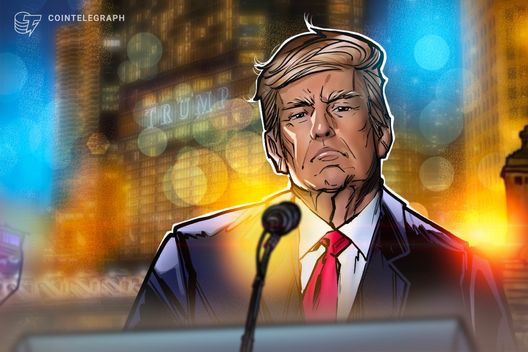
Geopolitical tensions surrounding Iran's conflict and potential de-escalation are directly impacting Bitcoin's price, suggesting a short-term correlation with risk-off/risk-on sentiment driven by global events. President Trump's statements on winding down military operations and the potential reopening of oil supply channels could lead to a decrease in oil prices and a corresponding shift in investor appetite for risk assets like Bitcoin. The market's reaction to Trump's speech, with oil rising and Bitcoin dipping, indicates a complex interplay of factors where immediate geopolitical uncertainty is outweighing potential future economic recovery signals.

An IPO and valuation above $1.75 trillion would make SpaceX a top-10 public company by market capitalization, above the likes of Meta and Tesla.

Bithumb's IPO delay until post-2028, a significant setback from its 2025 target, indicates ongoing internal restructuring and regulatory challenges impacting its public market readiness. The extended timeline for Bithumb's IPO suggests potential headwinds for South Korean crypto exchanges seeking public listings, possibly influencing investor sentiment towards the sector. Despite the IPO delay, Bithumb's focus on strengthening accounting and internal controls, alongside regulatory scrutiny, highlights the increasing compliance demands on major crypto exchanges.

The US Treasury's proposed rulemaking under the GENIUS Act delegates state-level stablecoin regulation for tokens under $10 billion market cap, provided they meet federal standards like 1:1 backing and monthly reporting. This move clarifies regulatory pathways for smaller stablecoins while ensuring larger issuers remain under direct federal oversight, potentially impacting market structure and compliance costs for issuers. The ongoing debate around yield-bearing stablecoins and potential deposit flight, as highlighted by banking lobby opposition, suggests continued regulatory friction and uncertainty for specific stablecoin functionalities.

A significant $80 million leveraged bet against Bitcoin and the S&P 500, coupled with a long position on Brent crude oil, has been placed by a Hyperliquid whale, signaling potential market volatility. Given the whale's documented history of substantial losses and inconsistent trading signals, this large position may represent a contrarian bet that could ultimately prove unprofitable. The trade's timing coincides with geopolitical tensions and market sentiment shifts, suggesting the whale is betting against the prevailing optimism surrounding a potential de-escalation of the US-Iran conflict.
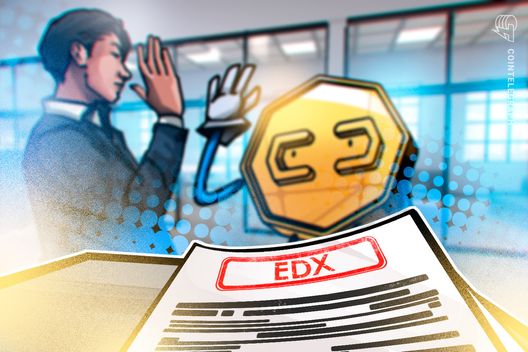
EDX Markets' application for a national trust bank charter signifies a strategic move towards regulated institutional crypto custody and asset management, aiming to mitigate structural risks by separating these functions from trading. The pursuit of OCC bank charters by multiple crypto firms, including EDX, Coinbase, and Zerohash, indicates a growing trend of seeking federal oversight to enhance institutional trust and expand regulated services within the digital asset space. While EDX's move aims to address market risks, the increasing number of applications and the American Bankers Association's call for a slower process highlight ongoing regulatory scrutiny and potential challenges in the path to broader institutional adoption of crypto banking services.

The formation of a pro-crypto Super PAC, led by a Tether executive, signals increased industry investment in political lobbying ahead of the 2026 US midterms. The PAC's focus on regulatory clarity and innovation suggests a strategic effort to influence legislation favorable to digital assets, potentially impacting stablecoin regulations. With significant funding claimed and comparisons to existing PACs like Fairshake, this development indicates a growing trend of institutionalized political engagement within the crypto sector. The ongoing debate in the Senate over stablecoin yield and market structure bills, coupled with this PAC's formation, highlights the critical juncture for crypto policy in the US.
The golden cross on Shiba Inu's hourly chart is a bullish technical signal, but it is tempered by a significant surge in exchange inflows, suggesting potential profit-taking pressure that could limit upside momentum. Despite the bullish technical indicator, subdued trading volume and a cautious derivatives market with rising open interest but stable funding rates indicate a lack of strong conviction from traders, suggesting a potentially volatile but directionless short-term outlook. The divergence between the golden cross and on-chain data showing increased supply moving to exchanges without corresponding demand highlights a fragile setup, implying that sustained price appreciation will require stronger buyer participation.

Google's release of Veo 3.1 Lite significantly reduces AI video generation costs to $0.05 per second, making high-volume applications more accessible for developers and potentially driving broader adoption of AI-powered video features. The timing of Veo 3.1 Lite's launch, shortly after OpenAI's reported shutdown of Sora due to high operational costs, highlights a critical market shift towards cost-efficiency in generative AI, potentially impacting future development and investment in the sector. With Veo 3.1 Fast also seeing a price reduction, Google is positioning its AI video models to cater to a wider range of developers, from those needing basic features to those requiring higher quality, signaling a strategic infrastructure play for the next generation of AI applications. The competitive landscape in AI video generation, particularly with Chinese competitors offering lower-cost alternatives, underscores the importance of economic viability alongside technical performance for market success.

Geopolitical threats targeting major US tech and financial firms now pose a direct risk to crypto infrastructure, as these companies provide essential services like cloud computing and payment rails. The entanglement of crypto with traditional tech giants and banks means that geopolitical tensions can impact digital assets through disruptions to cloud services, payment flows, and corporate treasury holdings before directly affecting token prices. Companies like Google, JPMorgan, and Tesla, named in Iran's threats, have significant ties to the crypto ecosystem through cloud services, blockchain payment platforms, and direct Bitcoin holdings, highlighting the expanding indirect exposure of digital assets. The market's next test will be whether these threats materialize into actual disruptions of critical infrastructure, which could manifest as reduced cloud resilience or payment flow issues before impacting crypto asset prices.

EDX Markets, backed by major TradFi players like Citadel Securities, is pursuing a national trust bank charter, signaling a strategic move to enhance institutional trust and compliance by separating custody and settlement functions. The application for a trust charter by EDX Markets aims to bridge the gap between traditional finance infrastructure and digital assets, potentially attracting more institutional capital by offering regulated services akin to established financial institutions. By seeking a regulated trust charter, EDX Markets is positioning itself to meet the stringent requirements of institutional investors, which could lead to increased adoption and trading volume on its platform if approved.

Drift Protocol's $270 million exploit marks the second-largest hack on the Solana blockchain and the ninth-largest in crypto history, highlighting ongoing security vulnerabilities in DeFi protocols. The exploit, impacting a native Solana DeFi application rather than a bridge, represents the largest ever drain on a Solana-based DeFi protocol, potentially eroding confidence in the ecosystem's security infrastructure. With deposits and withdrawals suspended, the immediate impact is a loss of user funds and a significant blow to Drift Protocol's reputation, necessitating a thorough security review and recovery plan.
Signal context only. Validate with price action, liquidity, and risk limits before taking a position.
