
Navigating Crypto News

CoinFeather
Navigating Crypto News
Source, catalyst, and sector overlap from the latest feed.
The extradition of Li Xiong, a key figure in the Huione Group, to China signifies a significant step in the crackdown on large-scale crypto scams, potentially impacting illicit finance flows. The successful extradition and ongoing pursuit of other syndicate members suggest increased international cooperation against crypto-enabled fraud, which could deter future criminal activity. With over $89 billion in cryptoassets reportedly handled by Huione Group, this development highlights the substantial financial scale of crypto scams and the regulatory challenges they present.
Live Feed
Loading the broader stream in the same flow as the homepage feed.

Geopolitical tensions are directly impacting crypto markets, causing a sell-off in major assets like Bitcoin, Ether, and Solana as risk-off sentiment prevails. The market's reaction to geopolitical news highlights its sensitivity to macro events, overriding typical seasonal bullish expectations for April and reinforcing a pattern of volatility tied to conflict headlines. Despite a familiar pattern of price swings, the underlying market sentiment remains deeply fearful, as indicated by the Fear and Greed Index, suggesting a cautious outlook for near-term price action.

MicroStrategy's resumption of Bitcoin purchases, triggered by its stock (STRC) trading above par, signals renewed institutional demand and supports Bitcoin's price rebound. The company's ability to issue new shares above par value directly translates into capital for Bitcoin accumulation, acting as a proxy for institutional buying pressure. The correlation between STRC's stock price and MicroStrategy's Bitcoin buying activity highlights a key dynamic influencing Bitcoin's near-term price action, with sustained STRC strength likely to drive further BTC accumulation. MicroStrategy's significant Bitcoin holdings and its capital plan indicate a long-term commitment, suggesting continued demand for Bitcoin as a corporate treasury asset.
Shiba Inu shows signs of stabilization with higher lows and a tightening wedge pattern, suggesting a potential breakout, but requires a clear break above resistance with increased volume to confirm a reversal. Ethereum is exhibiting structural recovery signs with higher lows and price compression near $2,000-$2,200, indicating accumulation and a potential path towards $3,000 if it can sustain a break above the 50 EMA. Dogecoin remains in a structural downtrend, with price action below key moving averages and a lack of significant buying pressure, making the 'zero removal' narrative increasingly improbable without substantial capital inflow and demand growth.

A significant $80 million leveraged bet against Bitcoin by a Hyperliquid whale, coupled with a long position in oil, highlights a contrarian strategy against prevailing market optimism driven by easing geopolitical tensions. The whale's history of substantial losses on previous leveraged trades, including a $40 million loss in February, suggests this large bet carries a high-risk profile and may not signal a confirmed market downturn. Despite the bearish signal from the whale's position, Bitcoin's resilience above $68,000, supported by macro news, indicates that market sentiment is currently overriding individual large-scale speculative bets. The divergence between the whale's positioning and the broader market's recovery in risk assets underscores the potential for amplified volatility if the whale's thesis is challenged or validated by shifting macro conditions.

Bitcoin transaction fees have fallen to a 9-year low, indicating reduced network congestion and potentially lower operational costs for users, which could be a subtle bullish signal for network utility if demand remains stable. BTC's price breaking a 5-month losing streak and closing March in the green, coupled with historically strong April performance, suggests a potential near-term upward trend, supported by recent ETF inflows and whale activity. A rare signal of increased average Bitcoin transaction fees sent to exchanges (2.62 BTC) suggests potential whale distribution and increased selling pressure, which could counteract the positive price momentum despite low network fees.
Drift Protocol is investigating unusual activity, leading to a significant price drop in its native DRIFT token, signaling potential exploit concerns within the Solana DeFi ecosystem. The suspected exploit on Drift Protocol has caused a sharp decline in the DRIFT token, highlighting the market's sensitivity to security events in DeFi protocols and impacting investor confidence. While Drift faces potential exploitation, the broader Solana (SOL) ecosystem shows relative resilience, with traders watching key resistance levels around $100 for potential upward momentum.
Volatility Shares has launched 2x leveraged ETFs for Cardano, Stellar, and Chainlink, expanding derivative product offerings beyond Bitcoin and Ethereum. The introduction of these altcoin-specific leveraged ETFs caters to sophisticated traders seeking targeted exposure, potentially increasing trading volume and volatility for these assets. While spot Bitcoin ETFs opened institutional access, these leveraged products signal a growing demand for more complex derivative instruments within the crypto market. Regulatory scrutiny on higher leverage ratios (3x-5x) suggests a cautious approach from the SEC, potentially limiting the scope of future leveraged ETF products.

A significant $80 million leveraged bet against Bitcoin and the S&P 500, coupled with a long position on Brent crude oil, has been placed by a Hyperliquid whale, signaling potential market volatility. Given the whale's documented history of substantial losses and inconsistent trading signals, this large position may represent a contrarian bet that could ultimately prove unprofitable. The trade's timing coincides with geopolitical tensions and market sentiment shifts, suggesting the whale is betting against the prevailing optimism surrounding a potential de-escalation of the US-Iran conflict.
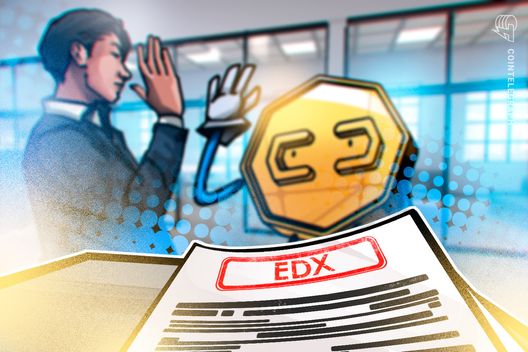
EDX Markets' application for a national trust bank charter signifies a strategic move towards regulated institutional crypto custody and asset management, aiming to mitigate structural risks by separating these functions from trading. The pursuit of OCC bank charters by multiple crypto firms, including EDX, Coinbase, and Zerohash, indicates a growing trend of seeking federal oversight to enhance institutional trust and expand regulated services within the digital asset space. While EDX's move aims to address market risks, the increasing number of applications and the American Bankers Association's call for a slower process highlight ongoing regulatory scrutiny and potential challenges in the path to broader institutional adoption of crypto banking services.

The exploit of Drift Protocol, a Solana-based perpetuals DEX, has resulted in the loss of over $200 million, with estimates reaching $285 million, indicating a significant security breach within the DeFi ecosystem. The suspected cause of the exploit being a leaked private key, rather than a smart contract vulnerability, suggests a human error component that could impact investor confidence in operational security for DeFi protocols. Drift Protocol's native token, DRIFT, has seen a sharp decline of nearly 28% following the exploit, highlighting the immediate market repricing of assets affected by major security incidents. The incident's scale and the involvement of a prominent Solana DeFi protocol underscore the ongoing risks in decentralized finance and may lead to increased scrutiny of security practices across the sector.

The formation of a pro-crypto Super PAC, led by a Tether executive, signals increased industry investment in political lobbying ahead of the 2026 US midterms. The PAC's focus on regulatory clarity and innovation suggests a strategic effort to influence legislation favorable to digital assets, potentially impacting stablecoin regulations. With significant funding claimed and comparisons to existing PACs like Fairshake, this development indicates a growing trend of institutionalized political engagement within the crypto sector. The ongoing debate in the Senate over stablecoin yield and market structure bills, coupled with this PAC's formation, highlights the critical juncture for crypto policy in the US.
The golden cross on Shiba Inu's hourly chart is a bullish technical signal, but it is tempered by a significant surge in exchange inflows, suggesting potential profit-taking pressure that could limit upside momentum. Despite the bullish technical indicator, subdued trading volume and a cautious derivatives market with rising open interest but stable funding rates indicate a lack of strong conviction from traders, suggesting a potentially volatile but directionless short-term outlook. The divergence between the golden cross and on-chain data showing increased supply moving to exchanges without corresponding demand highlights a fragile setup, implying that sustained price appreciation will require stronger buyer participation.

Google's release of Veo 3.1 Lite significantly reduces AI video generation costs to $0.05 per second, making high-volume applications more accessible for developers and potentially driving broader adoption of AI-powered video features. The timing of Veo 3.1 Lite's launch, shortly after OpenAI's reported shutdown of Sora due to high operational costs, highlights a critical market shift towards cost-efficiency in generative AI, potentially impacting future development and investment in the sector. With Veo 3.1 Fast also seeing a price reduction, Google is positioning its AI video models to cater to a wider range of developers, from those needing basic features to those requiring higher quality, signaling a strategic infrastructure play for the next generation of AI applications. The competitive landscape in AI video generation, particularly with Chinese competitors offering lower-cost alternatives, underscores the importance of economic viability alongside technical performance for market success.

Geopolitical threats targeting major US tech and financial firms now pose a direct risk to crypto infrastructure, as these companies provide essential services like cloud computing and payment rails. The entanglement of crypto with traditional tech giants and banks means that geopolitical tensions can impact digital assets through disruptions to cloud services, payment flows, and corporate treasury holdings before directly affecting token prices. Companies like Google, JPMorgan, and Tesla, named in Iran's threats, have significant ties to the crypto ecosystem through cloud services, blockchain payment platforms, and direct Bitcoin holdings, highlighting the expanding indirect exposure of digital assets. The market's next test will be whether these threats materialize into actual disruptions of critical infrastructure, which could manifest as reduced cloud resilience or payment flow issues before impacting crypto asset prices.
Signal context only. Validate with price action, liquidity, and risk limits before taking a position.
Quick market read from this story
Geopolitical tensions surrounding Iran's conflict and potential de-escalation are directly impacting Bitcoin's price, suggesting a short-term correlation with risk-off/risk-on sentiment driven by global events.
President Trump's statements on winding down military operations and the potential reopening of oil supply channels could lead to a decrease in oil prices and a corresponding shift in investor appetite for risk assets like Bitcoin.
The market's reaction to Trump's speech, with oil rising and Bitcoin dipping, indicates a complex interplay of factors where immediate geopolitical uncertainty is outweighing potential future economic recovery signals.
Deep Dive
US President Donald Trump announced a vow to strike Iran "extremely hard" in the coming weeks, following escalating conflict in the Middle East. The announcement coincided with crude oil prices surging back above $100 a barrel, while Bitcoin experienced a 2% decline.
Speaking from the White House, Trump stated that the US military is nearing the completion of "Operation Epic Fury," claiming significant damage to Iran's nuclear and naval capabilities, as well as its drone, missile, and weapon production facilities. He indicated that all American military objectives are expected to be met shortly, with intensified strikes planned over the next two to three weeks.
Discussions are reportedly ongoing, with the US demanding Iran dismantle its nuclear programs, open commercial shipping channels, and cease support for proxy groups. Iran's demands include a permanent end to the conflict, compensation for damages, and the withdrawal of US military forces from the region.
Trump also commented on the ongoing negotiations, noting that the current group is
Taiwan should reconsider Bitcoin as a reserve asset to hedge against geopolitical risks and potential US dollar debasement, according to a Bitcoin Policy Institute report. Bitcoin offers unique geopolitical resilience for Taiwan, remaining accessible even during a blockade or invasion, unlike gold or USD reserves. While Taiwan's central bank previously cited volatility and custody concerns, these issues are diminishing with broader adoption and can be addressed with institutional expertise. Taiwan already holds 210 BTC confiscated from criminal investigations, positioning it as a significant national holder if a reserve strategy is adopted.
