
Navigating Crypto News

CoinFeather
Navigating Crypto News

Quick market read from this story
Genius Group's liquidation of its entire Bitcoin treasury to cover $8.5M in debt signals financial pressure, contrasting with its prior 'Bitcoin first' strategy.
The trend of Bitcoin treasury liquidations by companies like Genius Group, MARA Holdings, and Bitdeer highlights a broader market deleveraging, potentially indicating reduced corporate demand for BTC.
While Genius Group liquidates, Michael Saylor's Strategy continues aggressive Bitcoin accumulation, creating a divergence in corporate treasury strategies and potentially impacting market sentiment.
Genius Group's reported strong Q1 financial results alongside its Bitcoin sale suggests a strategic prioritization of debt repayment over holding volatile assets, despite a stated intention to re-enter the market later.
Deep Dive
AI-powered Bitcoin treasury and education firm Genius Group announced on Tuesday that it sold its remaining Bitcoin holdings in the first quarter (Q1) to pay off debt. The company stated it will resume building its Bitcoin treasury when market conditions become more favorable, a move that contrasts with its previous "Bitcoin first" strategy announced in November 2024, where it committed to holding 90% or more of its reserves in Bitcoin.
Genius Group held 84 BTC, valued at approximately $5.7 million, as of March 2026. However, these holdings had been decreasing since April 2025, a period that also saw the company temporarily barred by a US court from expanding its Bitcoin treasury. The company resumed purchasing Bitcoin in June of that year. The recent announcement coincided with Genius Group reporting strong Q1 results, with revenue increasing 171% year-on-year to $3.3 million and gross profit rising 228% to $2 million. The company achieved a $2.7 million net profit in Q1 2026, a significant turnaround from a $500,000 operating loss in Q1 2025.
Genius Group is part of a growing trend of Bitcoin-related companies liquidating assets in recent months. MARA Holdings sold 15,133 BTC for approximately $1.1 billion in March, reducing its treasury to 38,689 BTC. The proceeds were used to repurchase convertible senior notes and for general corporate purposes. Mining company Bitdeer liquidated its entire stash of 943 BTC and sold newly mined coins in February, bringing its corporate holdings to zero. Other notable sales include Cango Inc., which sold 4,451 BTC, and GD Culture Group, which authorized the sale of some of its 7,500 BTC treasury in February.
In contrast to the trend of liquidations, Michael Saylor's company, the world's largest corporate Bitcoin treasury, has continued to purchase Bitcoin, dominating the market's buying activity this year. Analytics outlet BitcoinMiningStock reported that excluding Strategy's purchases, the rest of the ecosystem's buying pace has significantly declined. Strategy's last purchase was 1,031 BTC on March 23, and it has accumulated 89,581 BTC worth around $6.1 billion year-to-date, according to the Saylor Tracker.
Source, catalyst, and sector overlap from the latest feed.
Nishad Singh's $3.7M fine and industry bans from the CFTC and SEC represent a finalization of legal proceedings related to the FTX collapse, signaling a move towards closure for some aspects of the scandal. Singh's cooperation with authorities, which led to reduced penalties, highlights the ongoing impact of internal whistleblowers on regulatory investigations within the crypto space. The resolution of Singh's case, while not directly impacting current market prices, contributes to the broader narrative of regulatory accountability for past failures in the digital asset industry.
Alabama's adoption of the DUNA Act grants DAOs legal entity status, providing crucial real-world legal frameworks and liability protections. This regulatory development addresses a key uncertainty for DAOs, potentially encouraging greater institutional adoption and development within the crypto ecosystem. As other states like West Virginia consider similar legislation, this trend signals a growing recognition of decentralized governance structures by traditional legal systems.
Paradigm's development of a prediction market terminal and potential market-making desk signals a significant institutional push into a rapidly growing crypto sector, potentially increasing liquidity and sophistication for traders. The expansion of prediction market infrastructure by a major VC like Paradigm, alongside interest from traditional finance players, suggests a maturing market with substantial growth potential, though regulatory hurdles remain a key concern. While the news highlights growing interest and infrastructure development in prediction markets, the lack of direct token launches or specific asset mentions from Paradigm means the immediate trading impact is indirect, focusing on the broader ecosystem's development.
The extradition of Li Xiong, a key figure in the Huione Group, to China signifies a significant step in the crackdown on large-scale crypto scams, potentially impacting illicit finance flows. The successful extradition and ongoing pursuit of other syndicate members suggest increased international cooperation against crypto-enabled fraud, which could deter future criminal activity. With over $89 billion in cryptoassets reportedly handled by Huione Group, this development highlights the substantial financial scale of crypto scams and the regulatory challenges they present.
Taiwan should reconsider Bitcoin as a reserve asset to hedge against geopolitical risks and potential US dollar debasement, according to a Bitcoin Policy Institute report. Bitcoin offers unique geopolitical resilience for Taiwan, remaining accessible even during a blockade or invasion, unlike gold or USD reserves. While Taiwan's central bank previously cited volatility and custody concerns, these issues are diminishing with broader adoption and can be addressed with institutional expertise. Taiwan already holds 210 BTC confiscated from criminal investigations, positioning it as a significant national holder if a reserve strategy is adopted.
Shiba Inu's price is exhibiting a Bollinger Bands squeeze, historically a precursor to significant volatility and potential price breakouts, suggesting a near-term repricing event is possible. The recent golden cross and substantial outflows of SHIB from exchanges indicate growing bullish sentiment and accumulation, which could fuel an upward price movement if confirmed by increased trading volume. While technical indicators suggest a potential breakout, the reliance on a surge in burn rates and trading volume highlights that current bullish signals are not yet fully validated, warranting a cautious approach.
Solana's substantial $650 billion stablecoin volume in February, significantly outpacing traditional markets like CME gold futures, indicates a strong shift towards blockchain-based settlement systems. Despite recent price consolidation and an 11% weekly decline, Solana's ability to hold the $80 support level suggests potential for a breakout, with analysts watching for a move above $85 to trigger liquidations. The introduction of new stablecoins like Western Union's USDPT and Jupiter's JUPUSD is driving ecosystem growth and user attraction, signaling a maturing DeFi landscape on Solana. While bullish signals are present with consolidation near key support, a breakdown below $80 could invalidate the setup, highlighting the critical nature of upcoming price action for SOL.
Ripple's burn of 9.89 million RLUSD on Ethereum, following a recent large mint, indicates active supply management of its stablecoin. The RLUSD stablecoin's expansion to the South Korean exchange Coinone, trading against KRW, signifies an effort to broaden its market accessibility and adoption. The broader discussion on stablecoin supply drivers, including real yield and payments infrastructure, highlights the evolving role of stablecoins in the crypto economy and their competition with traditional finance.
XRP's monthly close below the $1.99 Bollinger Bands midline signals a bearish trend, with the $0.62 lower boundary now serving as the primary technical target due to a lack of strong intermediate support. The movement of 900 million DOGE from Bithumb, while not confirmed as a hack, suggests strategic accumulation or distribution ahead of the Qubic mainnet launch, potentially impacting DOGE's short-term price action. Bitcoin's historical April performance, with a 69% win rate and average 12.4% returns since 2013, combined with current macro factors and defense of the $67,000 zone, supports a potential rally towards $75,000-$90,000 if key economic data and regulatory clarity align. Upcoming U.S. economic data (ISM manufacturing, labor reports) and CLARITY Act Senate hearings are critical for determining whether Bitcoin will act as a safe-haven asset or a high-beta macro indicator, influencing broader crypto market liquidity.
Gemini's $128M RLUSD burn on XRPL, while presented as a standard redemption, reduces circulating supply and highlights ongoing liquidity management dynamics within Ripple's stablecoin ecosystem. Despite community concerns linking the burn to Gemini's financial health, the event is framed as a routine operational process, suggesting no immediate systemic risk to RLUSD or XRPL stability. The shift in RLUSD supply, with XRPL supply decreasing and Ethereum supply increasing, alongside Bitget Wallet's integration of XRPL for payments, indicates evolving network usage and stablecoin distribution patterns.
BlockDAG's price prediction of $0.005 by 2030 appears weak compared to the potential 100x returns forecasted for Pepeto, driven by its upcoming Binance listing and presale success. The article contrasts BlockDAG's perceived execution shortfalls with Pepeto's strong presale performance ($8.69M raised) and confirmed Binance listing, suggesting a significant opportunity shift for traders. The narrative emphasizes the 'millionaire math' of early entry, drawing parallels to SHIB's success, and positions Pepeto's presale as the current prime opportunity before its Binance listing removes the low entry price.
Bittensor's recent price pullback, despite high volume, suggests accumulation rather than distribution, indicating potential for a rebound if key support levels hold. The narrative shift for TAO towards a 'real infrastructure layer' for decentralized AI, coupled with compute access expansion, strengthens its fundamental value proposition beyond speculative trading. The market is pricing in potential positive outcomes from the pending Grayscale decision, creating a forward-looking catalyst that could drive TAO's price higher. While a $350-$365 target remains plausible on a bullish continuation, a breakdown below $300 could signal a deeper correction, highlighting the critical support zone for traders.
The potential finalization of the CLARITY Act within 48 hours signals a significant regulatory development for the US crypto market, potentially resolving long-standing ambiguities between the SEC and CFTC. A resolution on stablecoin rewards, a key sticking point, could unlock greater competition and user benefits, impacting stablecoin adoption and DeFi platform growth. While a deal is imminent, the bill still requires passage through the Senate and alignment with the House, with delays potentially pushing clarity into 2026. The market may interpret this as a positive step towards regulatory certainty, potentially reducing risk premiums for stablecoins and related assets.
The article highlights that while Bitcoin ETFs saw significant Q1 inflows and exchange supply is at a six-year low, the narrative of 'insider' capital flow, exemplified by the Trump family's alleged profits and current movements into the Pepeto presale, suggests potential for outsized returns beyond Bitcoin's projected growth. Bernstein's optimistic Bitcoin price targets of $150K-$200K are presented, but the core thesis emphasizes that true 'life-changing returns' historically come from identifying and entering undervalued projects before the broader market, drawing parallels between past meme coin successes and the current Pepeto presale. Pepeto is positioned as a high-potential opportunity due to its combination of meme coin appeal, a zero-fee cross-chain exchange with AI scam detection, a SolidProof audit, and backing from a former Pepe co-founder and a Binance developer, aiming to capture capital seeking alpha before its anticipated Binance listing.
Live Feed
Loading the broader stream in the same flow as the homepage feed.
Geopolitical tensions and hawkish rhetoric from Donald Trump have directly triggered a breakdown in Bitcoin's technical support, erasing recent gains and signaling potential further downside. The market's reaction to escalating geopolitical rhetoric, evidenced by Bitcoin's sharp decline and oil price surge, highlights its sensitivity to global instability and supply chain concerns. Despite a historically strong April for Bitcoin, current geopolitical risks and a bearish technical setup suggest that seasonal tailwinds may be overshadowed by immediate macro-driven selling pressure. While significant downside is priced in at current RSI levels, any de-escalation in the Iran conflict could trigger a rapid upside reversal, making the market highly sensitive to future headlines.

Iran's demand for cryptocurrency or Yuan for passage through the Strait of Hormuz introduces a novel geopolitical use case for digital assets, potentially increasing demand from sanctioned entities or nations seeking alternative payment rails. The requirement for crypto payments, alongside Yuan, suggests a strategic move by Iran to bypass traditional financial systems and potentially diversify its foreign reserves, impacting the perceived utility and adoption of specific digital assets in international trade. With shipping traffic reportedly down 90%, this development highlights significant geopolitical risk impacting trade routes, which could indirectly affect global supply chains and commodity prices, with crypto potentially serving as a niche payment solution.

Ripple's integration of XRP and RLUSD into its enterprise treasury management system signifies a major step towards mainstream corporate adoption of digital assets. The new features enable CFOs to manage digital assets alongside fiat within a single platform, reducing operational friction and potentially increasing demand for supported tokens. This development positions Ripple Treasury as a first-mover in offering native digital asset management within traditional treasury solutions, potentially setting a new industry standard. The expansion into cross-border settlement and yield generation powered by stablecoins indicates a broader strategy to leverage digital assets for enhanced corporate finance functionalities.

Drift Protocol experienced a significant exploit resulting in a $280 million loss, highlighting ongoing security vulnerabilities within DeFi protocols despite claims of no smart contract bugs. The attack's methodology, involving pre-signed durable nonce transactions and social engineering of multisig signers, indicates a sophisticated threat actor, suggesting potential for similar attacks on other protocols with similar security architectures. This large-scale exploit is likely to increase scrutiny on DeFi security practices and could lead to a temporary decrease in investor confidence and capital flow into the sector.
Aave's price is consolidating around $100 despite steady protocol usage, suggesting a potential accumulation phase ahead of a breakout or a lack of immediate upward momentum. The Aave V4 upgrade launch, while causing a temporary trading volume spike, has not yet translated into a sustained price breakout, indicating cautious market participation post-event. Future AAVE price performance is heavily dependent on the broader DeFi market's liquidity and adoption trends, with projections ranging significantly based on bullish, base-case, or conservative scenarios.
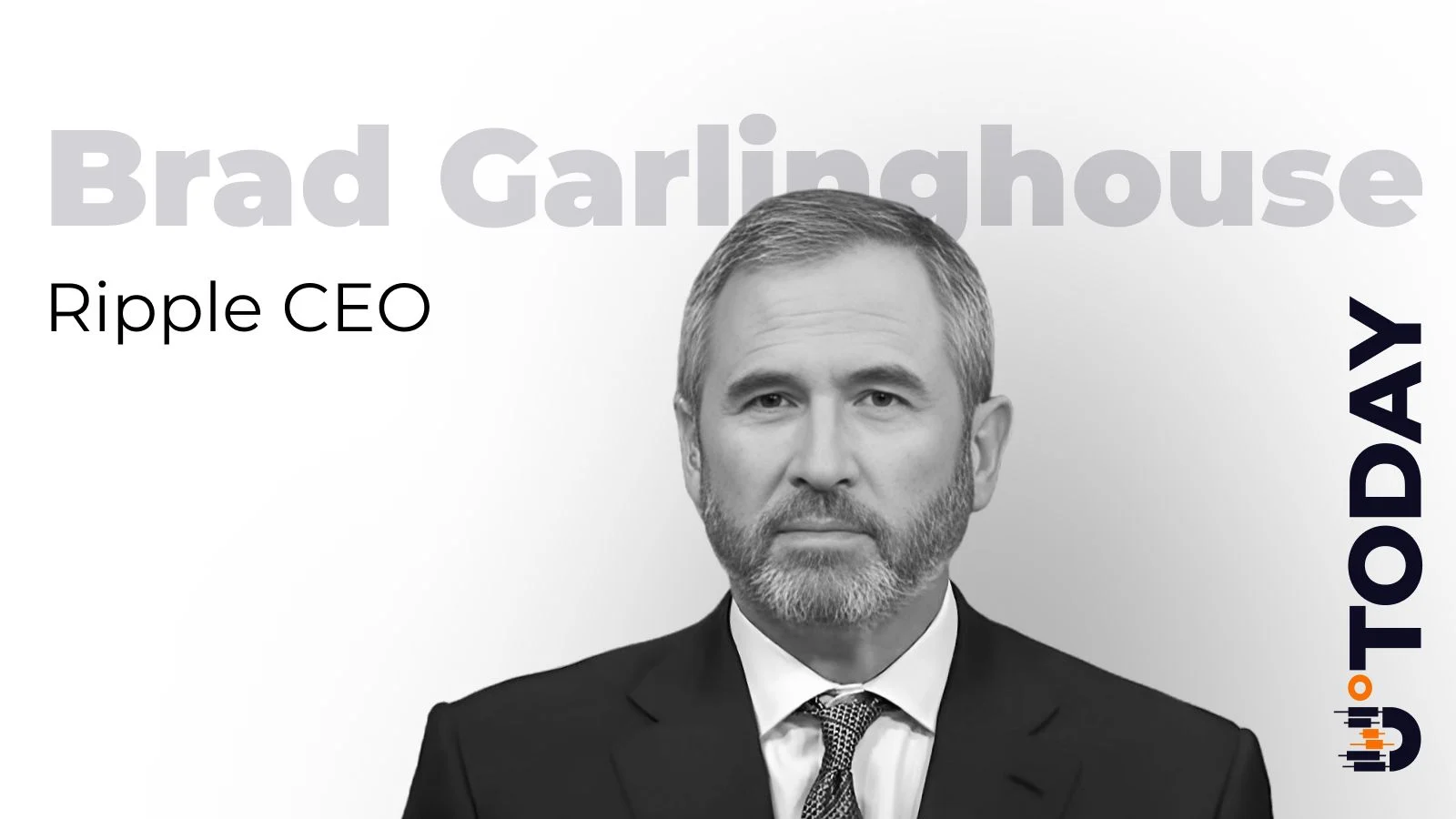
The public exchange between Ripple CEO and Avalanche founder, stemming from an April Fools' joke, highlights ongoing competitive narratives within the blockchain space, though it lacks direct market-moving catalysts. While the dispute is primarily reputational, it underscores the distinct market positioning of Ripple in cross-border payments and Avalanche in tokenization, with both projects continuing to secure enterprise partnerships. The commentary does not introduce new fundamental information or immediate trading opportunities, suggesting a neutral stance for short-term price action for both XRP and AVAX.

Traders are advised to look beyond geopolitical rhetoric and focus on fundamental indicators like SPR depletion and shipping insurance premiums for market direction. A significant drawdown in strategic oil reserves and persistently high insurance costs for Hormuz transit suggest a heightened risk aversion environment for assets like Bitcoin. The article highlights that a material increase in tanker traffic through the Strait of Hormuz is a prerequisite for sustained rallies in risk assets, indicating current market sentiment is fragile. Despite President Trump's shifting statements on Iran, the underlying supply-demand dynamics in the oil market and associated shipping risks are the primary drivers of potential market volatility.
Stani Kulechov's net worth, estimated around $300 million, is primarily derived from his substantial holdings in AAVE tokens and his founding role in the Aave DeFi protocol. Aave's strategic pivot towards institutional finance with Aave V4 and the 'hub-and-spoke' architecture signals a significant push to scale DeFi and integrate tokenized real-world assets, potentially broadening its market appeal and utility. The transfer of Lens Protocol stewardship to Mask Network indicates Aave's strategic refocusing on core DeFi infrastructure, moving away from social applications to concentrate on scalable financial ecosystems. Kulechov's diversified investments beyond Aave, including venture capital in over 49 blockchain projects, highlight a broader strategy to capitalize on emerging Web3 opportunities and support decentralized technology growth.
Geopolitical tensions stemming from the Iran conflict are creating macro uncertainty, pressuring Bitcoin below $67K while Ethereum shows relative strength above $2,000. The next 2-3 weeks are critical, with potential for further downside in BTC if tensions escalate, or a relief rally if de-escalation occurs. Ethereum's resilience above $2,000 suggests accumulation and potential outperformance if it breaks above $2,100, signaling a shift from defense to expansion. Market participants should anticipate volatility and divergence between assets, with news headlines likely to be a primary driver over technicals in the near term.

Tokenized oil futures on Hyperliquid experienced significant liquidations, highlighting the increasing integration of traditional assets and their volatility within crypto derivatives markets. Geopolitical events are now directly impacting crypto derivatives markets through tokenized commodities, demonstrating a growing correlation between macro events and crypto trading volumes. The substantial liquidations in tokenized oil suggest that traders are using crypto platforms for leveraged exposure to traditional markets, absorbing geopolitical shocks and influencing overall market sentiment. The event underscores the maturity of crypto derivatives platforms like Hyperliquid in handling large volumes and complex market movements, even those originating from outside the crypto space.

Geopolitical tensions are directly impacting crypto markets, causing a sell-off in major assets like Bitcoin, Ether, and Solana as risk-off sentiment prevails. The market's reaction to geopolitical news highlights its sensitivity to macro events, overriding typical seasonal bullish expectations for April and reinforcing a pattern of volatility tied to conflict headlines. Despite a familiar pattern of price swings, the underlying market sentiment remains deeply fearful, as indicated by the Fear and Greed Index, suggesting a cautious outlook for near-term price action.
Signal context only. Validate with price action, liquidity, and risk limits before taking a position.
