
Navigating Crypto News

CoinFeather
Navigating Crypto News

Quick market read from this story
Despite a 5% price slip in DOGE, Dogecoin ETF investors recorded zero net inflows for the eighth consecutive day, suggesting a lack of immediate buying conviction despite potential price consolidation.
The sustained zero inflow into Dogecoin ETFs, even during price dips, indicates that ETF investors are adopting a cautious stance, potentially awaiting clearer signals of long-term viability or a significant upward trend.
While some on-exchange investors accumulated DOGE during a previous dip, the continued absence of ETF inflows highlights a divergence in sentiment and suggests that the meme coin's potential breakout faces significant hurdles.
Deep Dive
Despite a recent 5% slip in Dogecoin (DOGE) price over the past 24 hours, investors in Dogecoin Exchange-Traded Funds (ETFs) have recorded zero net inflow. This marks the eighth consecutive day of stagnant flows, indicating a cautious stance from ETF investors despite market volatility.
The consistent zero inflow suggests that Dogecoin ETF investors are optimistic about a potential breakout and view current price fluctuations as temporary. However, their reluctance to increase holdings also points to skepticism regarding the product's long-term viability. This contrasts with recent activity on exchanges like Kraken, where investors accumulated 4.5 million DOGE within 12 hours during a previous price dip, demonstrating a less hesitant approach to buying the dip.
Traders appear to be treating Dogecoin's volatility as a period of price consolidation, signaling anticipation for future movements. This sentiment persists even as technical indicators, such as a death cross on its chart, present a bearish outlook. Notably, Dogecoin experienced a 6% price jump earlier in the week, rallying alongside Bitcoin, despite the bearish technical signal.
As of the latest data, Dogecoin is trading at $0.09224, reflecting a 5.1% decrease in the last 24 hours. The meme coin failed to breach the $0.98 resistance level, dropping from a daily peak of $0.09772 to a low of $0.09220. Trading volume also saw a decline of 11.21%, amounting to $1.09 billion.
The cryptocurrency faces the challenge of closing March in positive territory to break a five-month streak of negative price performance. Earlier in the week, there were indications that Dogecoin might end March on a positive note, potentially breaking the bearish streak that began in October 2025. However, with Dogecoin ETF investors remaining on the sidelines, the path to a significant breakout for DOGE appears to require further validation.
Source, catalyst, and sector overlap from the latest feed.
Binance CEO Richard Teng emphasizes that the crypto ecosystem's growth is fundamentally driven by human participation, including builders, traders, educators, and regulators, rather than solely by technology. The article highlights a maturing crypto market, with institutional ownership and ETFs contributing to stability, suggesting a potential extension of the current bull cycle and a revised price target for Bitcoin. While the core message focuses on human drivers, the article also mentions Binance's support for Ethereum soft staking and lists several other tokens, indicating ongoing platform development and user engagement.
Declining on-chain activity and technical weakness on XRP suggest a bearish outlook, increasing the probability of the support structure failing. The simultaneous decrease in XRP Ledger payments and active accounts indicates a fundamental decline in network usage, undermining a key justification for demand. With both technical and on-chain indicators pointing downwards, traders should temper recovery expectations and anticipate potential downside price action.
Willy Woo's analysis suggests Bitcoin faces several more weeks of consolidation below the short-term holder price (STH price) of $84,000, indicating a potential continuation of bearish sentiment in the near term. The STH price acting as a key resistance level highlights market psychology where new entrants are losing money, suggesting a lack of strong buying conviction and potential for further downside pressure. With BTC trading around $70,100 and large players waiting for a bottom, the coming weeks are critical for determining the trend for the remainder of spring 2026, implying a period of heightened volatility and uncertainty. The analyst's view points to a 'mid-bear consolidation' phase, implying that current price action is not a recovery but a redistribution period where investors are exiting at break-even points.
XRP's failure to break above the 50 EMA invalidates a short-term bullish pattern, signaling increased downside risk and a potential drop below the $1 psychological level. The inability to reclaim key moving averages and persistent rejection at resistance indicate a bearish regime, suggesting that rallies are being sold and the trend may continue downward. The immediate threat for XRP is a breakdown of its local support zone, which could lead to a swift return to lower levels if the ascending trendline fails, highlighting a weakening market sentiment.
The Hashdex Nasdaq CME Crypto Index ETF (NCIQ) has expanded its holdings to include Cardano (ADA) and Chainlink (LINK), diversifying its exposure beyond Bitcoin and Ether. This expansion signals increased institutional acceptance and product development within the multi-asset crypto ETF space, following recent SEC approvals for similar products. The ETF's year-end filing reveals $121.3 million in total net assets and a NAV per share of $22.71, providing a baseline for future performance tracking.
Mastercard's adoption of Solana for enterprise solutions, including stablecoin settlement and tokenized assets, signals a growing institutional interest in blockchain infrastructure beyond speculative assets. The article contrasts the fading meme sentiment around SHIB with the development of utility-focused platforms like Pepeto and the AI narrative around TAO, suggesting a market shift towards fundamental value and advanced technology. Pepeto's presale, highlighted as a potential 100x opportunity before a Binance listing, positions itself as a tool to bridge the gap between institutional adoption and retail traders, emphasizing risk control and data analysis. While SHIB's price prediction remains weak and speculative, the narrative around Pepeto suggests a potential near-term catalyst driven by its upcoming exchange listing and the platform's utility features.
A significant $23 million token transfer from a team-associated wallet to a new address suggests potential distribution, raising concerns of a near-term sell-off for the $TRUMP memecoin. Despite the large transfer, conflicting whale metrics showing increased accumulation create a high-volatility environment, indicating unpredictable price swings ahead. The $TRUMP coin is trading within a descending structure below critical resistance at $3.80-$4.00, with a breakdown below the $3.00-$3.10 support zone potentially accelerating downside momentum.
A significant 1,086% surge in SHIB token burns, removing over 23 million tokens from circulation, indicates increased community-driven supply reduction efforts. While the burn rate increase is notable, its direct impact on SHIB's price is likely limited given the massive existing supply and the nature of meme coin volatility. The concurrent report of growing SHIB holder numbers and decreasing exchange holdings suggests potential accumulation by long-term holders, though this is not a direct price catalyst.
Bithumb's significant system error and AML penalties erode trust in centralized exchanges, potentially driving capital towards more verifiable early-stage projects like Pepeto. Dogecoin's price prediction is bearish short-term due to declining risk appetite and technical indicators, contrasting with the projected 100x gains for Pepeto post-Binance listing. The narrative suggests that missing Pepeto's presale, similar to past opportunities with Pepe and Dogecoin, will lead to chasing the asset at a higher price post-listing.
Pump.fun's new rule to lock creator fee redirects to a single instance aims to reduce token manipulation and 'griefing' by deployers. This change restricts token deployers to one post-launch adjustment of fee recipients, potentially impacting creator revenue streams and transparency. While the update acknowledges issues with fee distribution, community sentiment suggests it may not fully resolve existing challenges on the memecoin launchpad.
Live Feed
Loading the broader stream in the same flow as the homepage feed.
Infosys's strategic acquisitions of Optimum Healthcare IT and Stratus for a combined $560 million signal a significant expansion into the healthcare and insurance technology sectors. The acquisitions are expected to bolster Infosys's capabilities in AI-led digital transformation and cloud services, potentially enhancing its competitive positioning in these specialized IT markets. While the news focuses on traditional IT services, the emphasis on AI and data transformation could indirectly benefit companies involved in AI infrastructure or data analytics within the crypto space.

CRV is trading significantly below its all-time high, presenting a potential recovery play if the DeFi sector sees renewed demand and capital efficiency improvements. The article suggests a potential bottoming out around $0.18, with technical indicators mirroring patterns seen before a previous rally, indicating a possible accumulation phase. Recent integrations, such as with River for satUSD liquidity, highlight ongoing development and utility expansion within the Curve ecosystem, which could support future price appreciation. Long-term price predictions for CRV range from $3.00 by 2026 to $8.00 by 2030, contingent on sustained DeFi relevance and broader market cycles.

Binance's listing of Tether Gold (XAUt) with multiple trading pairs, including XAUt/BTC and XAUt/USDT, significantly increases accessibility and liquidity for tokenized gold assets. The introduction of XAUt on a major exchange like Binance provides a new avenue for traders to gain exposure to gold price movements through a digital asset, potentially attracting capital from both crypto and traditional markets. The 'Seed Tag' applied to XAUt suggests it is a newer or higher-risk asset, which may warrant caution for traders despite the increased trading opportunities.

Avalanche (AVAX) price predictions suggest significant long-term growth potential, with forecasts indicating a possible rise to $518.50 by 2030, driven by factors like DeFi expansion and network adoption. Despite recent price declines, on-chain analysis for AVAX shows strong institutional accumulation and bullish sentiment, suggesting a potential reversal and rally ahead. The article presents a speculative price outlook for AVAX across multiple years, highlighting a wide range of potential price targets that depend heavily on market conditions and adoption trends.
Solana is approaching key resistance levels around $95, with a confirmed breakout above this zone potentially signaling a continuation towards $102. Despite a recent rebound, Solana faces multiple overhead resistance bands at $97.65, $106.82, and $116.99, indicating a cautious outlook until these are decisively cleared. The current technical setup suggests Solana is in a recovery phase, with its short-term direction contingent on overcoming immediate resistance rather than indicating a confirmed bullish trend reversal.

Hyperliquid's innovative consensus mechanism and zero-KYC approach are driving significant adoption, evidenced by ATHs in transaction fees and trading volume, suggesting strong fundamental growth. Projected price targets for HYPE range from $40-$105 in 2026 and up to $185 by 2030, indicating substantial upside potential if current adoption trends continue. The platform's ability to facilitate trading of major perpetual futures without owning underlying assets positions it as a competitive alternative to established exchanges, potentially capturing significant market share.

Bitcoin's support at $70,000 is under pressure due to escalating geopolitical tensions in Iran, increasing the probability of a near-term pullback as leverage-driven gains become vulnerable. The market is pricing in significant volatility, evidenced by a surging VIX futures reading, suggesting traders are bracing for potential shocks, which could lead to rapid price swings in Bitcoin. While some 'stronger hands' are accumulating defensively, the lack of a substantial base of committed buyers below $70,200 indicates that the current rally may not be sustainable without further macro-driven catalysts or de-escalation. The convergence of on-chain support vulnerability and heightened macro uncertainty creates a pivotal moment for Bitcoin, with potential for both sharp downside if risks materialize or a quick recovery if geopolitical fears subside.

Tazapay's $36M Series B extension, led by Circle Ventures and including Coinbase Ventures and Ripple, signals continued institutional interest in stablecoin payment infrastructure. The funding will fuel Tazapay's expansion into new geographies and the development of 'agentic payments,' potentially increasing adoption of digital settlement rails. This development highlights a growing trend of crypto-native firms building out cross-border payment solutions, competing with traditional systems like SWIFT.

Bitcoin's current low volatility, contrasted with rising volatility in oil and Treasuries, suggests potential market complacency that could precede a significant price correction. The ongoing geopolitical tensions and macro-economic pressures, including rising yields and a strengthening dollar, create a risk-off environment that may negatively impact crypto assets. While Bitcoin shows apparent resilience, the article posits this may be complacency, indicating a potential for a 'brutal reality check' if broader market risks materialize.
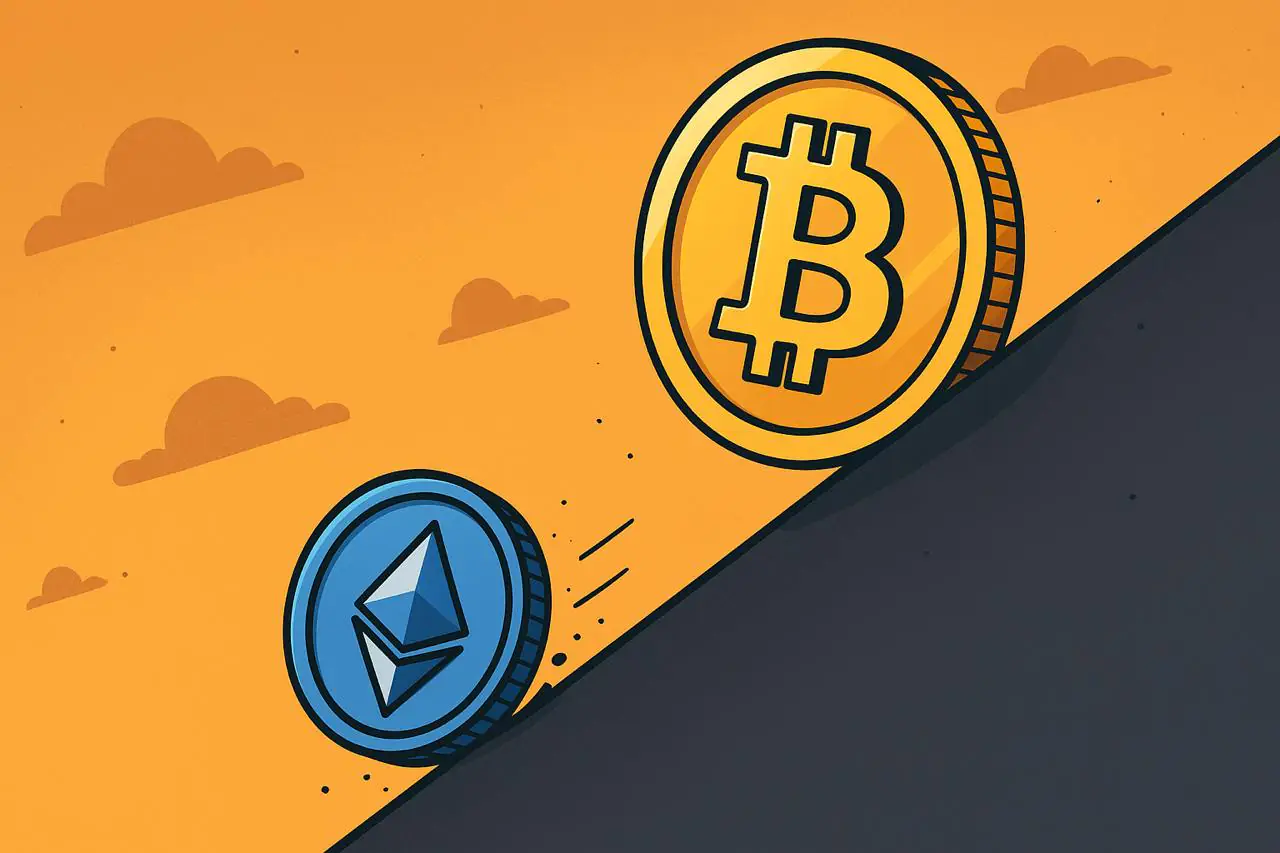
Bitcoin ETFs show tentative stabilization with modest inflows, indicating a potential shift in institutional sentiment despite broader market uncertainty. Ethereum ETFs continue to experience significant outflows, suggesting sustained institutional caution and a divergence in demand compared to Bitcoin. Concentrated corporate accumulation of Bitcoin by a single entity highlights a market increasingly influenced by strategic, long-term holders rather than broad institutional participation. The fragmented ETF flow data across Bitcoin, Ethereum, Solana, and XRP points to selective institutional positioning and tactical allocation rather than a unified market expansion.

The corporate Bitcoin treasury trend has significantly declined, with Strategy accounting for 99% of recent purchases, indicating a lack of broad institutional conviction beyond a few key players. The dwindling participation in corporate Bitcoin treasuries suggests a potential weakening of a previously cited structural argument for Bitcoin's price floor, shifting reliance to a smaller group of committed entities. While most companies have reduced or exited their Bitcoin treasury positions, Strategy's aggressive accumulation during price dips highlights a divergence in institutional sentiment and conviction. The concentration of corporate Bitcoin holdings in just two entities, Strategy and Metaplanet, implies increased sensitivity to their individual buying and selling decisions, potentially impacting market dynamics.

FTX's $2.2 billion creditor payout on March 31 could see significant capital redeployed into the market, potentially influencing altcoin performance. Pepeto is positioning itself as a capital-preserving exchange with a Binance listing imminent, aiming to attract funds from FTX creditors seeking safer alternatives. The article highlights Pepeto's presale, promising 1000x returns and features like zero-fee trading and free cross-chain bridges, suggesting a speculative opportunity for early investors. Despite ongoing market volatility and low Fear and Greed Index readings, BTC and ETH are holding key support levels, indicating underlying resilience.

On-chain data indicates Bitcoin is in the late stages of a bear market, with significant unrealized losses and reduced realized profits suggesting demand exhaustion. Key price levels to watch for Bitcoin are $70,000 as immediate support, with potential downside targets around $65,000-$60,000 and resistance at $82,200. The current market sentiment is characterized by extreme fear and elevated losses, historically requiring time, further price drops, or substantial capital inflow to resolve.

The certification of an investor class-action lawsuit against Nvidia regarding its disclosures on crypto mining revenue advances a significant legal challenge that could have implications for how tech companies report revenue tied to volatile crypto markets. While class certification is a procedural step, it signals increased legal scrutiny on corporate transparency concerning cryptocurrency-related revenue streams, potentially impacting investor confidence and future disclosure practices. The case, which centers on alleged misstatements about GPU sales to miners during the 2017-2018 boom, highlights the historical impact of crypto cycles on hardware manufacturers and the subsequent legal ramifications.

Rising oil prices and macro jitters are driving risk-off sentiment in crypto markets, leading to significant price drops in Bitcoin and Ethereum. Weak liquidity and increased short positioning in derivatives markets suggest potential for amplified downside pressure on altcoins, particularly in AI and DeFi sectors. Despite current market weakness, the 'Altcoin Season' index remains neutral, indicating a potential for recovery if market support can be re-established.

Bittensor (TAO) has demonstrated significant market strength, climbing to second place among AI crypto coins with a $3.2 billion market cap and a 106% monthly gain, indicating strong investor interest and adoption. Positive developments, including NVIDIA CEO Jensen Huang's comments on Bittensor's decentralized LLM training and a projected $500 billion market cap by some analysts, suggest a strong long-term narrative for decentralized AI. Despite a bullish trend confirmed by a golden cross, traders should monitor the $320-$340 zone for potential short-term retracement and consolidation before further upward movement.
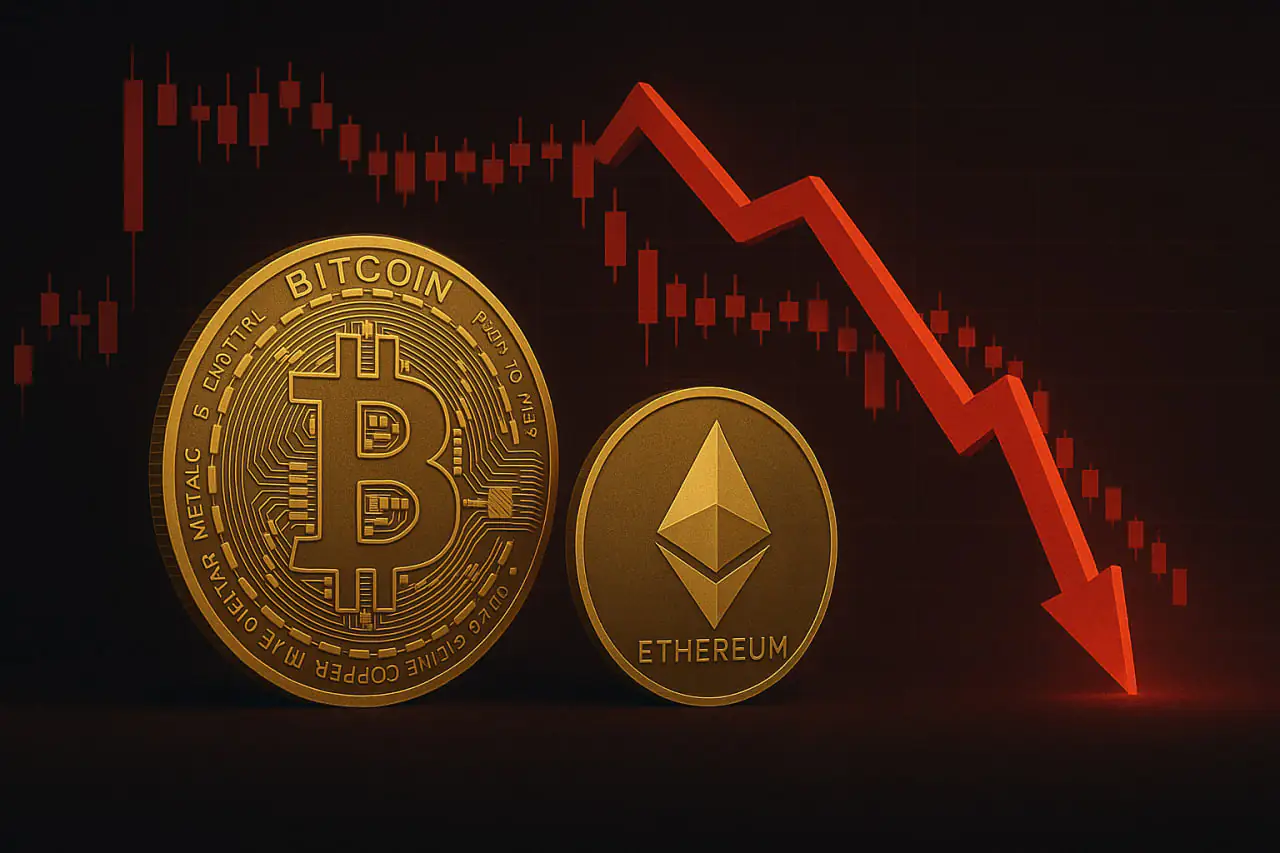
Geopolitical tensions surrounding Iran are creating a risk-off environment, causing Bitcoin to trade as a correlated risk asset and fall below $70,000. The market is particularly vulnerable due to a confluence of factors including an upcoming $15 billion Bitcoin options expiry, a hawkish Fed stance, and deteriorating sentiment, amplifying the impact of the Pentagon's military planning. Despite current market pressure, some analysts like Bernstein maintain a bullish long-term outlook for Bitcoin, citing a lack of structural breakdown, though near-term liquidity conditions remain a concern. The correlation between Bitcoin and equity futures on geopolitical news highlights a shift away from its 'store of value' narrative, suggesting traders should monitor macro events closely for short-term price action.

Bitcoin miners are increasingly selling BTC to fund operations and pivot to AI infrastructure, signaling a shift from holding treasuries to acting as commodity producers under pressure. The AI pivot is creating a bifurcation in miner stocks, with AI/HPC-linked companies potentially earning valuation premiums over pure-play miners due to diversified revenue streams. Miners with significant debt loads face dual headwinds from potential BTC price weakness and execution risk on AI contracts, increasing their refinancing stress. The changing dynamics suggest a market where efficient, well-capitalized operators will survive, while older fleets and those heavily reliant on legacy mining may face forced shutdowns or asset sales.
Signal context only. Validate with price action, liquidity, and risk limits before taking a position.
