
Navigating Crypto News

CoinFeather
Navigating Crypto News

Quick market read from this story
Bitcoin miners are increasingly selling BTC to fund operations and pivot to AI infrastructure, signaling a shift from holding treasuries to acting as commodity producers under pressure.
The AI pivot is creating a bifurcation in miner stocks, with AI/HPC-linked companies potentially earning valuation premiums over pure-play miners due to diversified revenue streams.
Miners with significant debt loads face dual headwinds from potential BTC price weakness and execution risk on AI contracts, increasing their refinancing stress.
The changing dynamics suggest a market where efficient, well-capitalized operators will survive, while older fleets and those heavily reliant on legacy mining may face forced shutdowns or asset sales.
Deep Dive
Bitcoin miners are experiencing a significant identity shift, driven by four converging pressures: squeezed profit margins, an accelerated pivot towards Artificial Intelligence (AI) infrastructure, increasing debt burdens, and a diminished capacity for treasury sales. This fracturing landscape is reshaping the operational and financial strategies of public mining companies.
Recent reports indicate that public miners' weighted-average cash cost per Bitcoin reached approximately $79,995 in the fourth quarter of 2025. Concurrently, the hash price, a key profitability metric, fell to around $36-$38 per PH/s/day in the same period, further declining to approximately $29 in the first quarter of 2026. The Bitcoin network has also seen three consecutive negative difficulty adjustments, a trend not observed since July 2022, with the current live hash price hovering around $32.36/PH/day and transaction fees constituting a minimal 0.40% of block rewards.
Public mining companies collectively hold an estimated 121,516 BTC, valued at roughly $8.63 billion. However, the pressure on margins has forced many to shift from holding to selling. Companies like Marathon Digital (MARA) have adjusted their strategies to permit sales of Bitcoin from both operations and balance sheets. Riot Platforms sold 1,818 BTC in December 2025 for $161.6 million, and Core Scientific sold over 1,900 BTC in January 2026 for approximately $175 million, reducing its holdings to under 1,000 BTC. Riot also funded a land purchase by selling approximately 1,080 BTC from its balance sheet, challenging the retail assumption that miners are default holders.
A significant driver of this identity split is the accelerating pivot towards AI and High-Performance Computing (HPC) infrastructure. CoinShares estimates that listed miners could generate up to 70% of their revenues from AI by the end of 2026, a substantial increase from the current approximately 30%. Companies like Core Scientific are energizing significant megawatts for AI clients, with Q4 2025 revenue showing $42.2 million from self-mining versus $31.3 million from colocation. Hut 8 has secured a 15-year AI data center lease with a substantial base-term value, while Iris Energy (IREN) reported $17.3 million in AI Cloud Services revenue and targets $3.4 billion in Annual Recurring Revenue (ARR) by the end of 2026. TeraWulf and Riot have also entered into significant AI-related contracts and leases.
This strategic shift redefines what a miner stock represents, now bundling exposure to BTC price, hyperscaler demand, lease execution, capital expenditures, financing costs, and counterparty risk. CoinShares notes a valuation premium for AI/HPC-linked companies over pure-play miners, despite sharing the same ticker symbols.
The divergence is further amplified by increasing debt loads. Iris Energy carries nearly $3.7 billion in convertible notes, while TeraWulf's balance sheet shows substantial short-term and long-term convertible debt. Core Scientific has expanded its financing facility to $1 billion, and Cipher disclosed $3.73 billion in recent senior secured note financing. These financial structures necessitate a focus on interest rates, refinancing windows, and build-cost inflation, aspects less critical for traditional Bitcoin miners.
The network hashrate remains high at approximately 961 EH/s. However, older hardware fleets, particularly those with energy efficiencies between 25–38 J/TH, are operating at a loss, earning an implied revenue of about $42/MWh against an estimated network power cost of $50/MWh. This economic pressure leads to marginal fleets disappearing when conditions tighten.
Looking ahead, two scenarios emerge. If Bitcoin recovers towards $100,000, hash price eases, and treasury stress lessens, operators with credible AI/HPC execution alongside recovering mining margins are poised to benefit, capturing both BTC appreciation and an infrastructure rerating. Companies like Core, Riot, Hut 8, TeraWulf, and IREN are positioned to widen the gap with pure-play miners.
Conversely, if BTC remains below stress thresholds, hash price stays in the high-$20s to low-$30s, and treasury drawdowns continue, forced shutdowns and reserve monetization would accelerate. The sector's substantial BTC treasuries could become a supply overhang during soft market conditions. Miners with significant convertible debt face refinancing stress if AI contract execution falters or capital markets tighten. These highly leveraged hybrids would face headwinds from both BTC price weakness and infrastructure build credibility challenges.
Ultimately, the Bitcoin mining sector is splitting into distinct categories: forced commodity sellers, debt-funded AI landlords, and a shrinking group of efficient pure-play operators who can survive without pivoting their core business model.
Source, catalyst, and sector overlap from the latest feed.
Cravin's integration of provably fair verification in mystery boxes, coupled with a Fair Value Guarantee, demonstrates a potential shift in consumer product design, prioritizing auditability over direct crypto payments. The development suggests that crypto's verification models, rather than its payment rails, may find broader adoption in non-financial consumer applications, impacting user trust and engagement. While the article highlights Cravin's use of crypto-style verification, the actual payment mechanism converts to internal Credits, indicating a limited direct impact on cryptocurrency transaction volume or utility. The trend of adopting verifiable outcomes in consumer products could foster greater user trust and transparency, potentially influencing how other platforms approach digital item reveals and fairness claims.
Bitcoin's post-FOMC meeting performance has evolved from inconsistent reactions to a systematic downside bias, indicating its integration into the broader risk asset complex. This 'sell the Fed' tendency, particularly evident from 2024 through early 2026, suggests traders are increasingly using Fed events as de-risking opportunities, impacting short-term price action. The growing sensitivity to FOMC dates signifies Bitcoin's maturation as a global asset, responding to policy cadence and liquidity expectations within established macro frameworks. Traders should incorporate this recurring post-event weakness into their playbook, recognizing that calendar risk now plays a significant role in Bitcoin's pricing architecture.
Bitcoin's current drawdown of 43.26% from its all-time high positions it as a relative strength benchmark, outperforming most non-stablecoins in the market. Only nine non-stable tokens, including LEO, TRON, and Hyperliquid, are currently closer to their all-time highs than Bitcoin, indicating pockets of resilience but highlighting Bitcoin's role as a market baseline. The market is at a critical juncture where the relative performance of these nine tokens against Bitcoin's drawdown will determine if the exception list expands or contracts, signaling broader market health. Traders should monitor the performance spread between Bitcoin and these top-performing altcoins, as shifts in this hierarchy can provide early indicators of market sentiment and potential rotation.
Easing geopolitical tensions between the US and Iran are reducing inflation fears tied to oil supply disruptions, which could allow for a return of rate-cut expectations and improve liquidity for risk assets like Bitcoin. Bitcoin's recent price action above $70,000 appears driven by macro liquidity conditions and stabilization in broader markets rather than crypto-native catalysts, suggesting its correlation with traditional risk assets remains strong. A sustained de-escalation in the Middle East, leading to lower oil prices and a less hawkish central bank stance, presents a clearer path for Bitcoin to potentially retest and surpass recent highs. The market is sensitive to oil supply dynamics, with any breakdown in diplomatic efforts potentially reversing the positive sentiment and reintroducing stagflationary concerns that would pressure risk assets.
Cardano's ADA faces extreme bearish sentiment with record short positions and a 71% price crash, suggesting a potential capitulation point that could precede a short squeeze if the Midnight privacy network launch acts as a catalyst. The launch of the Midnight privacy network, targeting institutional compliance with zero-knowledge proofs, aims to attract new capital to Cardano's ecosystem, despite its native token ADA not directly benefiting from transaction fees paid in the DUST token. While ADA's on-chain metrics remain low, the successful rollout of Midnight and recent integrations like LayerZero and USDCx present Cardano with its most significant growth experiment in years, potentially revitalizing its ecosystem if adoption materializes.
Bhutan's continued Bitcoin sales, exceeding $150 million this year, raise concerns about the long-term funding narrative for the Gelephu Mindfulness City project. The sell-off creates a tension between Bhutan's stated long-term national development goals for its Bitcoin reserve and the current pace of liquidations, potentially impacting investor confidence in the project's financial backing. While Gelephu is a multi-faceted project, the shrinking Bitcoin reserve draws increased scrutiny on its ability to fulfill the role originally described by officials, despite no official project pause.
Bittensor's significant price appreciation is underpinned by a structural supply shock from its December 2025 halving, which reduced daily emissions by 50%, creating a foundation for sustained growth independent of narrative hype. Nvidia CEO Jensen Huang's endorsement of Bittensor's decentralized AI compute model provides high-level validation, positioning TAO as a credible player in AI infrastructure and potentially attracting institutional interest beyond typical crypto speculation. Despite a strong rally, sentiment data indicates a lack of retail euphoria, suggesting that the market has room for further upside before reaching a speculative top, supported by ongoing network upgrades and ecosystem expansion. The combination of reduced supply, high-profile validation, and active network development suggests a structurally sound rally for TAO, with potential for continued price appreciation towards its previous all-time high.
Bittensor's recent 130% rally is underpinned by a structural supply shock from its December 2025 halving, which reduced daily TAO emissions by half, combined with increasing demand. Nvidia CEO Jensen Huang's endorsement of Bittensor's decentralized AI compute model as a 'remarkable technical achievement' provides significant validation, potentially attracting institutional interest and shifting market perception from narrative to credible AI infrastructure. Despite significant price appreciation, on-chain data shows a mixed sentiment with a notable negative bias, which historically can signal further upside potential as it suggests a lack of retail euphoria and overleveraged traders. Ongoing protocol upgrades like the Lightning Protocol and the Dynamic TAO reward system, alongside increased network utilization and discussions to expand subnet capacity, indicate active development and growing demand for Bittensor's AI infrastructure capabilities.
Bhutan's accelerated BTC outflows, totaling over $150 million in 2026, suggest a strategic shift in its holdings, potentially impacting market liquidity and price discovery. The increasing size of Bhutan's Bitcoin transfers, moving from $5-15 million clips to $35-45 million, indicates a more aggressive liquidation strategy, which could exert downward pressure on BTC price in the short term. The consistent receipt of funds by QCP Capital suggests an OTC desk relationship, implying structured selling rather than panic dumps, which may mitigate immediate market shock but signals ongoing supply pressure. Bhutan's reduced BTC holdings from a peak of 13,000 to 4,453, coupled with the impossibility of fulfilling its 10,000 BTC Gelephu pledge, signals a significant change in its crypto asset strategy and potential future market impact.
Robinhood's announcement of a $1.5 billion share buyback program, extending incremental capacity by $1.1 billion, signals strong management confidence in the company's long-term value and potential for shareholder returns. The significant buyback authorization, coupled with an updated $3.25 billion credit facility with JPMorgan Chase, suggests Robinhood is strategically positioning itself for future growth and operational stability. While the stock has seen a recent uptick, the buyback program and credit facility updates provide a fundamental basis for potential sustained investor interest, despite past price volatility.
Tazapay's $36M Series B extension, led by Circle Ventures and including Coinbase Ventures and Ripple, signals continued institutional interest in stablecoin payment infrastructure. The funding will fuel Tazapay's expansion into new geographies and the development of 'agentic payments,' potentially increasing adoption of digital settlement rails. This development highlights a growing trend of crypto-native firms building out cross-border payment solutions, competing with traditional systems like SWIFT.
The certification of an investor class-action lawsuit against Nvidia regarding its disclosures on crypto mining revenue advances a significant legal challenge that could have implications for how tech companies report revenue tied to volatile crypto markets. While class certification is a procedural step, it signals increased legal scrutiny on corporate transparency concerning cryptocurrency-related revenue streams, potentially impacting investor confidence and future disclosure practices. The case, which centers on alleged misstatements about GPU sales to miners during the 2017-2018 boom, highlights the historical impact of crypto cycles on hardware manufacturers and the subsequent legal ramifications.
Rising oil prices and macro jitters are driving risk-off sentiment in crypto markets, leading to significant price drops in Bitcoin and Ethereum. Weak liquidity and increased short positioning in derivatives markets suggest potential for amplified downside pressure on altcoins, particularly in AI and DeFi sectors. Despite current market weakness, the 'Altcoin Season' index remains neutral, indicating a potential for recovery if market support can be re-established.
Bittensor (TAO) has demonstrated significant market strength, climbing to second place among AI crypto coins with a $3.2 billion market cap and a 106% monthly gain, indicating strong investor interest and adoption. Positive developments, including NVIDIA CEO Jensen Huang's comments on Bittensor's decentralized LLM training and a projected $500 billion market cap by some analysts, suggest a strong long-term narrative for decentralized AI. Despite a bullish trend confirmed by a golden cross, traders should monitor the $320-$340 zone for potential short-term retracement and consolidation before further upward movement.
Live Feed
Loading the broader stream in the same flow as the homepage feed.

Coinbase's partnership with Better and Fannie Mae enables crypto holders to use BTC or USDC as down payment collateral for mortgages, potentially unlocking significant untapped demand in the housing market. This initiative allows homebuyers to leverage digital assets without selling them, avoiding taxable events and preserving potential asset appreciation, thereby broadening access to homeownership. While crypto-backed mortgages may carry a slightly higher interest rate (0.5%-1.5%), the absence of margin calls and liquidation risk due to market volatility offers a unique value proposition compared to traditional margin loans. The product aims to serve the average homebuyer, differentiating itself from previous crypto-mortgage offerings that focused on high-net-worth individuals and wealth management.
Infosys's strategic acquisitions of Optimum Healthcare IT and Stratus for a combined $560 million signal a significant expansion into the healthcare and insurance technology sectors. The acquisitions are expected to bolster Infosys's capabilities in AI-led digital transformation and cloud services, potentially enhancing its competitive positioning in these specialized IT markets. While the news focuses on traditional IT services, the emphasis on AI and data transformation could indirectly benefit companies involved in AI infrastructure or data analytics within the crypto space.

CRV is trading significantly below its all-time high, presenting a potential recovery play if the DeFi sector sees renewed demand and capital efficiency improvements. The article suggests a potential bottoming out around $0.18, with technical indicators mirroring patterns seen before a previous rally, indicating a possible accumulation phase. Recent integrations, such as with River for satUSD liquidity, highlight ongoing development and utility expansion within the Curve ecosystem, which could support future price appreciation. Long-term price predictions for CRV range from $3.00 by 2026 to $8.00 by 2030, contingent on sustained DeFi relevance and broader market cycles.

Binance's listing of Tether Gold (XAUt) with multiple trading pairs, including XAUt/BTC and XAUt/USDT, significantly increases accessibility and liquidity for tokenized gold assets. The introduction of XAUt on a major exchange like Binance provides a new avenue for traders to gain exposure to gold price movements through a digital asset, potentially attracting capital from both crypto and traditional markets. The 'Seed Tag' applied to XAUt suggests it is a newer or higher-risk asset, which may warrant caution for traders despite the increased trading opportunities.

Avalanche (AVAX) price predictions suggest significant long-term growth potential, with forecasts indicating a possible rise to $518.50 by 2030, driven by factors like DeFi expansion and network adoption. Despite recent price declines, on-chain analysis for AVAX shows strong institutional accumulation and bullish sentiment, suggesting a potential reversal and rally ahead. The article presents a speculative price outlook for AVAX across multiple years, highlighting a wide range of potential price targets that depend heavily on market conditions and adoption trends.
Solana is approaching key resistance levels around $95, with a confirmed breakout above this zone potentially signaling a continuation towards $102. Despite a recent rebound, Solana faces multiple overhead resistance bands at $97.65, $106.82, and $116.99, indicating a cautious outlook until these are decisively cleared. The current technical setup suggests Solana is in a recovery phase, with its short-term direction contingent on overcoming immediate resistance rather than indicating a confirmed bullish trend reversal.

Hyperliquid's innovative consensus mechanism and zero-KYC approach are driving significant adoption, evidenced by ATHs in transaction fees and trading volume, suggesting strong fundamental growth. Projected price targets for HYPE range from $40-$105 in 2026 and up to $185 by 2030, indicating substantial upside potential if current adoption trends continue. The platform's ability to facilitate trading of major perpetual futures without owning underlying assets positions it as a competitive alternative to established exchanges, potentially capturing significant market share.

Bitcoin's support at $70,000 is under pressure due to escalating geopolitical tensions in Iran, increasing the probability of a near-term pullback as leverage-driven gains become vulnerable. The market is pricing in significant volatility, evidenced by a surging VIX futures reading, suggesting traders are bracing for potential shocks, which could lead to rapid price swings in Bitcoin. While some 'stronger hands' are accumulating defensively, the lack of a substantial base of committed buyers below $70,200 indicates that the current rally may not be sustainable without further macro-driven catalysts or de-escalation. The convergence of on-chain support vulnerability and heightened macro uncertainty creates a pivotal moment for Bitcoin, with potential for both sharp downside if risks materialize or a quick recovery if geopolitical fears subside.

Bitcoin's current low volatility, contrasted with rising volatility in oil and Treasuries, suggests potential market complacency that could precede a significant price correction. The ongoing geopolitical tensions and macro-economic pressures, including rising yields and a strengthening dollar, create a risk-off environment that may negatively impact crypto assets. While Bitcoin shows apparent resilience, the article posits this may be complacency, indicating a potential for a 'brutal reality check' if broader market risks materialize.
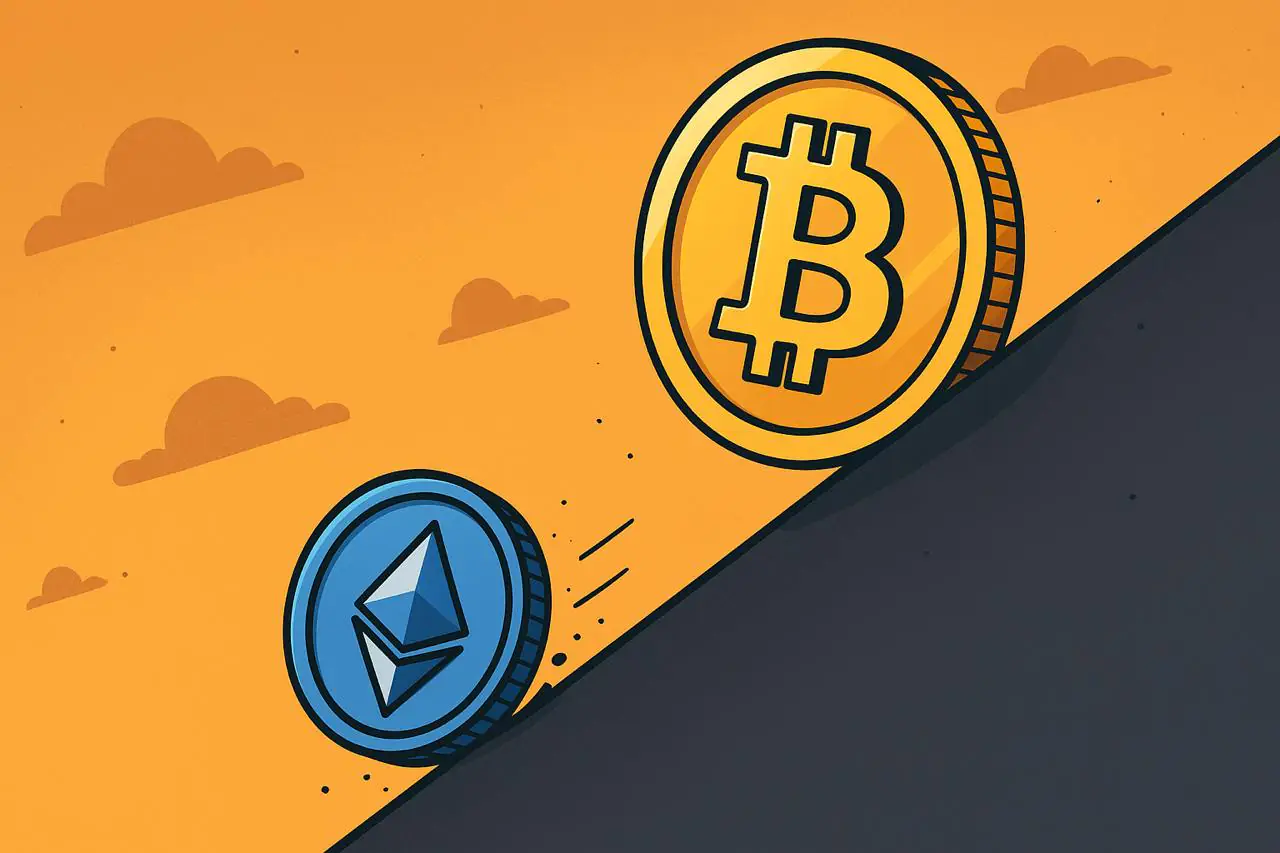
Bitcoin ETFs show tentative stabilization with modest inflows, indicating a potential shift in institutional sentiment despite broader market uncertainty. Ethereum ETFs continue to experience significant outflows, suggesting sustained institutional caution and a divergence in demand compared to Bitcoin. Concentrated corporate accumulation of Bitcoin by a single entity highlights a market increasingly influenced by strategic, long-term holders rather than broad institutional participation. The fragmented ETF flow data across Bitcoin, Ethereum, Solana, and XRP points to selective institutional positioning and tactical allocation rather than a unified market expansion.

The corporate Bitcoin treasury trend has significantly declined, with Strategy accounting for 99% of recent purchases, indicating a lack of broad institutional conviction beyond a few key players. The dwindling participation in corporate Bitcoin treasuries suggests a potential weakening of a previously cited structural argument for Bitcoin's price floor, shifting reliance to a smaller group of committed entities. While most companies have reduced or exited their Bitcoin treasury positions, Strategy's aggressive accumulation during price dips highlights a divergence in institutional sentiment and conviction. The concentration of corporate Bitcoin holdings in just two entities, Strategy and Metaplanet, implies increased sensitivity to their individual buying and selling decisions, potentially impacting market dynamics.

Binance CEO Richard Teng emphasizes that the crypto ecosystem's growth is fundamentally driven by human participation, including builders, traders, educators, and regulators, rather than solely by technology. The article highlights a maturing crypto market, with institutional ownership and ETFs contributing to stability, suggesting a potential extension of the current bull cycle and a revised price target for Bitcoin. While the core message focuses on human drivers, the article also mentions Binance's support for Ethereum soft staking and lists several other tokens, indicating ongoing platform development and user engagement.

FTX's $2.2 billion creditor payout on March 31 could see significant capital redeployed into the market, potentially influencing altcoin performance. Pepeto is positioning itself as a capital-preserving exchange with a Binance listing imminent, aiming to attract funds from FTX creditors seeking safer alternatives. The article highlights Pepeto's presale, promising 1000x returns and features like zero-fee trading and free cross-chain bridges, suggesting a speculative opportunity for early investors. Despite ongoing market volatility and low Fear and Greed Index readings, BTC and ETH are holding key support levels, indicating underlying resilience.

On-chain data indicates Bitcoin is in the late stages of a bear market, with significant unrealized losses and reduced realized profits suggesting demand exhaustion. Key price levels to watch for Bitcoin are $70,000 as immediate support, with potential downside targets around $65,000-$60,000 and resistance at $82,200. The current market sentiment is characterized by extreme fear and elevated losses, historically requiring time, further price drops, or substantial capital inflow to resolve.

Declining on-chain activity and technical weakness on XRP suggest a bearish outlook, increasing the probability of the support structure failing. The simultaneous decrease in XRP Ledger payments and active accounts indicates a fundamental decline in network usage, undermining a key justification for demand. With both technical and on-chain indicators pointing downwards, traders should temper recovery expectations and anticipate potential downside price action.
Signal context only. Validate with price action, liquidity, and risk limits before taking a position.
