
Navigating Crypto News

CoinFeather
Navigating Crypto News
Quick market read from this story
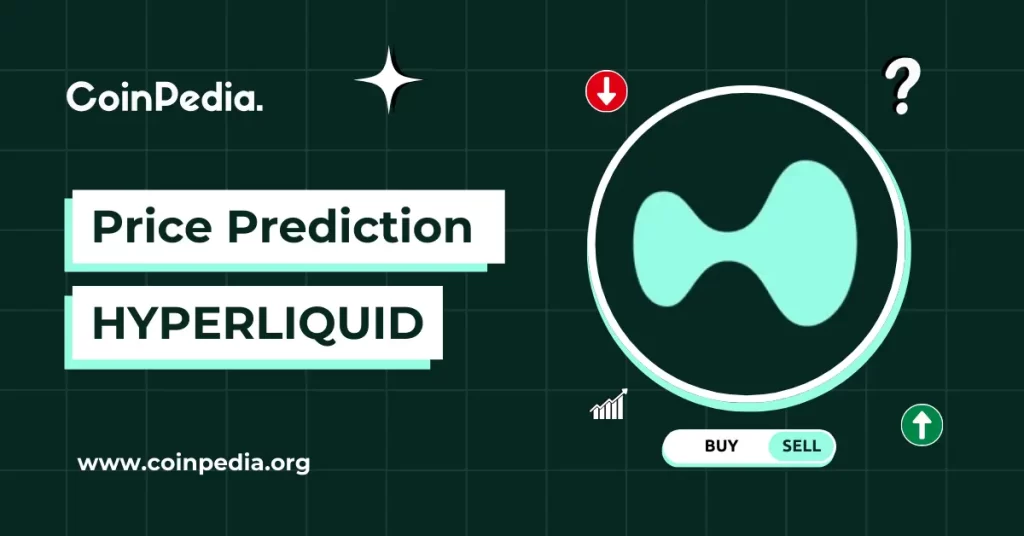
Hyperliquid's innovative consensus mechanism and zero-KYC approach are driving significant adoption, evidenced by ATHs in transaction fees and trading volume, suggesting strong fundamental growth.
Projected price targets for HYPE range from $40-$105 in 2026 and up to $185 by 2030, indicating substantial upside potential if current adoption trends continue.
The platform's ability to facilitate trading of major perpetual futures without owning underlying assets positions it as a competitive alternative to established exchanges, potentially capturing significant market share.
Deep Dive
The cryptocurrency market is closely watching Hyperliquid and its native token, HYPE, a decentralized trading platform positioning itself as a paperless alternative to major exchanges like Binance and Coinbase. With its unique “HyperBFT” consensus mechanism, rapid transactions, and zero KYC requirements, Hyperliquid is attracting significant investor interest, leading to detailed price predictions for HYPE for 2026 and beyond.
Hyperliquid enables users to trade crypto perpetual futures for assets such as BTC, ETH, SOL, AVAX, and SUI without needing to own the underlying asset. This streamlined trading experience is a key driver of its growing adoption. The platform's on-chain metrics, including total transaction fees on HyperEVM, total trading volume, and revenue, have all reached all-time highs, indicating strong user engagement and platform utility.
Technical analysis suggests that HYPE has shown bullish momentum, with price targets around $44 and potentially higher, aiming for $60 and a new all-time high in the near term. If the $44 level is secured, continued growth is anticipated; however, a failure to hold this level could lead to a retracement to $32 or $21.
Long-term projections indicate significant growth potential for HYPE. By 2026, the price is forecasted to range between $25 and $90, with an average around $50. By 2030, forecasts suggest HYPE could reach an average price of approximately $125, with potential highs up to $185, contingent on continued platform expansion and market adoption.
Market analysis from firms like Binance and DigitalCoinPrice also offers optimistic outlooks, with Binance projecting $63 for 2026 and $164 for 2030, while DigitalCoinPrice forecasts $54 for 2026 and $97 for 2030. CoinPedia's own projection for 2025 places the potential high at $41.39 and a low of $14.65.
Hyperliquid's strong adoption and impressive on-chain metrics suggest a positive outlook for the HYPE token. While the platform's innovative model and growing user base present an appealing case for long-term investment, potential investors are advised to conduct independent research, as all cryptocurrency investments carry inherent risks.
Source, catalyst, and sector overlap from the latest feed.
Bitcoin has demonstrated resilience, gaining 8% amid geopolitical tensions and market turmoil where gold and equities have declined, suggesting a potential flight to digital assets as a safe haven. The current geopolitical environment is testing the traditional dollar-dominated financial system, highlighting Bitcoin's independence from these structures and its ability to function without reliance on trust, recycled debt, or geopolitical arrangements. While Bitcoin has shown strength, the underlying geopolitical risks and potential for an oil shock impacting global markets introduce significant volatility, warranting a cautious approach despite recent price appreciation.
Africa's crypto market is experiencing significant growth, with Sub-Saharan Africa seeing a 52% increase in on-chain value to $205 billion, driven by practical use cases like remittances and payments rather than speculation. Stablecoin usage in Africa has surged by 180% year-over-year, indicating a strong preference for utility-driven crypto applications and highlighting a potential shift in regional financial behavior. Ripple's XRP is positioned to benefit from increased crypto adoption in Africa, with its ODL system facilitating cross-border payments and targeting a substantial remittance market, potentially reducing transaction fees significantly. Regulatory developments in key African nations like South Africa, Nigeria, and Kenya are progressing, which could further legitimize and accelerate crypto adoption and integration into the traditional financial system.
Machi Big Brother's repeated large leveraged losses highlight the extreme volatility and risk inherent in leveraged trading on platforms like Hyperliquid, potentially signaling caution for retail traders. Despite significant prior losses, Machi Big Brother's immediate re-entry into a leveraged ETH long suggests a high-risk, high-reward trading style, which, while not a direct market signal, indicates continued speculative interest in ETH. The event underscores the potential for rapid capital depletion in volatile markets, especially when employing high leverage, reinforcing the need for robust risk management strategies for all market participants.
Accumulation by several crypto funds, including DACM, Kenetic Capital, CoinFund, and Hashed, suggests early-stage institutional interest in Worldcoin despite its current downtrend. While smart money is quietly accumulating WLD, broader market indicators like RSI and CMF remain weak, indicating a divergence between institutional positioning and current price action. Worldcoin's price action is confined within a descending channel, suggesting a bearish structure; a breakout above $0.40-$0.45 is needed to signal short-term strength, while failure to hold $0.28-$0.30 could lead to further downside. The selective nature of this accumulation, with larger holders not adjusting positions, implies that widespread institutional adoption has not yet materialized, making the current situation a level-based trading setup.
Significant whale accumulation of FET tokens, totaling $2.34 million, suggests growing institutional confidence and could precede a substantial price breakout. The On-Balance Volume (OBV) indicator showing a steady rise despite subdued price action signals underlying accumulation and potential for a bullish divergence breakout. FET price action is exhibiting a recovery structure with higher lows and approaching a critical resistance zone, indicating that a confirmed breakout could trigger a significant upward rally. Traders should monitor the $0.2500 resistance level for a potential breakout, which, if accompanied by strong volume, could validate the accumulation narrative and lead to further price appreciation.
The Bitcoin Cash halving event on April 4, 2024, reduced block rewards by 50% to 3.125 BCH, reinforcing its programmed scarcity mechanism and potentially influencing future supply dynamics. While past halvings have historically correlated with increased market attention, the direct impact on BCH price remains contingent on demand, broader market conditions, and investor sentiment, rather than being a guaranteed outcome. The next Bitcoin Cash halving is anticipated in 2028, when rewards will further decrease to 1.5625 BCH, continuing the deflationary pressure on the asset's supply over the long term.
Hashdex's expansion of its Nasdaq CME Crypto Index ETF to include Cardano and Chainlink signals a strategic move towards diversification and broader market appeal beyond Bitcoin and Ether. The ETF's growth to seven assets, with $1.213 billion in net assets, reflects increasing investor demand for multi-asset crypto products in a competitive ETF landscape. Despite broader ETF developments, Solana's price weakness and technical patterns suggest potential near-term downside risk, warranting a cautious outlook for the asset.
Circle's CRCL stock is showing technical signs of a potential 25% rebound from current support levels near $100.75, indicating market overreaction to CLARITY Act fears. Analysts suggest the draft CLARITY Act language primarily impacts distributor incentives rather than Circle's core reserve income model, supporting a bullish outlook for CRCL. Institutional buying from Ark Invest during the recent dip reinforces the view that the sell-off presented a buying opportunity, potentially driving CRCL towards the $130 level. Despite potential regulatory headwinds, projections from Bitwise suggest Circle's valuation could reach $75 billion by 2030, highlighting long-term growth potential.
Live Feed
Loading the broader stream in the same flow as the homepage feed.
Ripple's integration into DTCC's core infrastructure via Ripple Prime positions XRP as a potential digital liquidity layer for tokenized assets, suggesting a significant shift from a fringe player to a foundational element in traditional finance's evolving structure. The DTCC's patents explicitly referencing XRP Ledger and Stellar (XLM) as compatible for tokenized assets, coupled with Ripple Prime's placement within NSCC's directory, indicates a deliberate move by traditional finance to leverage blockchain rails for future market operations. While direct certainty of XRP capturing a share of the $100 trillion tokenized market remains unconfirmed, the strategic alignment and integration into established financial plumbing present a unique opportunity for significant adoption and potential price appreciation.
The appointment of Fred Ehrsam and Marc Andreessen to Trump's Science and Technology Advisory Council signals increased mainstream recognition and potential policy influence for the crypto industry. Whop's integration of Aave into its platform, enabling 21 million users to earn yield on idle balances without direct DeFi interaction, represents a significant step in mainstream DeFi adoption by abstracting away complexity. Despite a recent selloff, Circle's stock rebound and analyst support, coupled with Ark Invest's purchase, suggest market overreaction to regulatory concerns, reinforcing the stablecoin issuer's fundamental value proposition. Google's 2029 deadline for post-quantum cryptography transition highlights a looming, albeit distant, threat to current blockchain security, prompting proactive development like Bitcoin's BIP 360.

The alleged theft of $176 million in Bitcoin highlights that physical surveillance and seed phrase exposure, rather than code vulnerabilities, can be the primary attack vector for self-custodied assets. This case underscores that robust crypto security extends beyond technical safeguards to include environmental awareness and trust management, as human factors remain a critical vulnerability. The fragmentation of stolen Bitcoin across 71 addresses suggests a tactic to complicate tracking and recovery, demonstrating sophisticated methods employed in illicit asset transfers.

Shibarium experienced a 300% surge in transactions, but analysis reveals these are primarily zero-value contract calls, not indicative of increased user adoption or economic activity. The inflated transaction count on Shibarium is attributed to infrastructure-level processes like cross-chain communication and batching, which do not reflect genuine user demand or network utility. Traders should view the reported transaction surge on Shibarium with caution, as it does not translate to increased liquidity or economic throughput, potentially misrepresenting ecosystem health.

Crypto philanthropy's focus on short-term hype cycles and token launches in Africa is failing to build sustainable systems, leading to aid dependency rather than long-term development. On-chain transparency alone is insufficient for effective philanthropy; accountability requires robust on-the-ground presence, local ownership, and maintenance frameworks beyond the ledger to ensure tangible outcomes. Repeated failures in crypto-backed philanthropic projects erode trust in blockchain technology itself, creating a credibility challenge for the industry and hindering future adoption in development contexts. For blockchain to contribute meaningfully to sustainable development, it must prioritize governance infrastructure, local stewardship, and multi-year planning over novelty and fundraising functions.

MARA Holdings' sale of $1.1 billion in bitcoin to repurchase debt significantly strengthens its balance sheet, reducing dilution risk and freeing capital for AI and energy infrastructure expansion. The strategic debt buyback, which reduces convertible notes by 30%, signals a proactive financial management approach by MARA, potentially improving investor confidence. While the bitcoin sale provides immediate financial flexibility, it also reduces MARA's BTC holdings, a key asset for a mining company, which could impact future upside if bitcoin prices surge.
Dash's unique emission model, featuring a gradual 7.14% annual reduction in block rewards rather than a sharp halving, suggests a more stable and predictable supply-side dynamic compared to Bitcoin. The continuous, predictable supply reduction in Dash aims to smooth miner revenue and inflation, potentially leading to less volatile price action and more sustainable long-term growth patterns. While lacking the speculative hype of traditional halvings, Dash's model prioritizes long-term scarcity and ecosystem stability, offering a distinct value proposition for investors focused on fundamental supply dynamics.
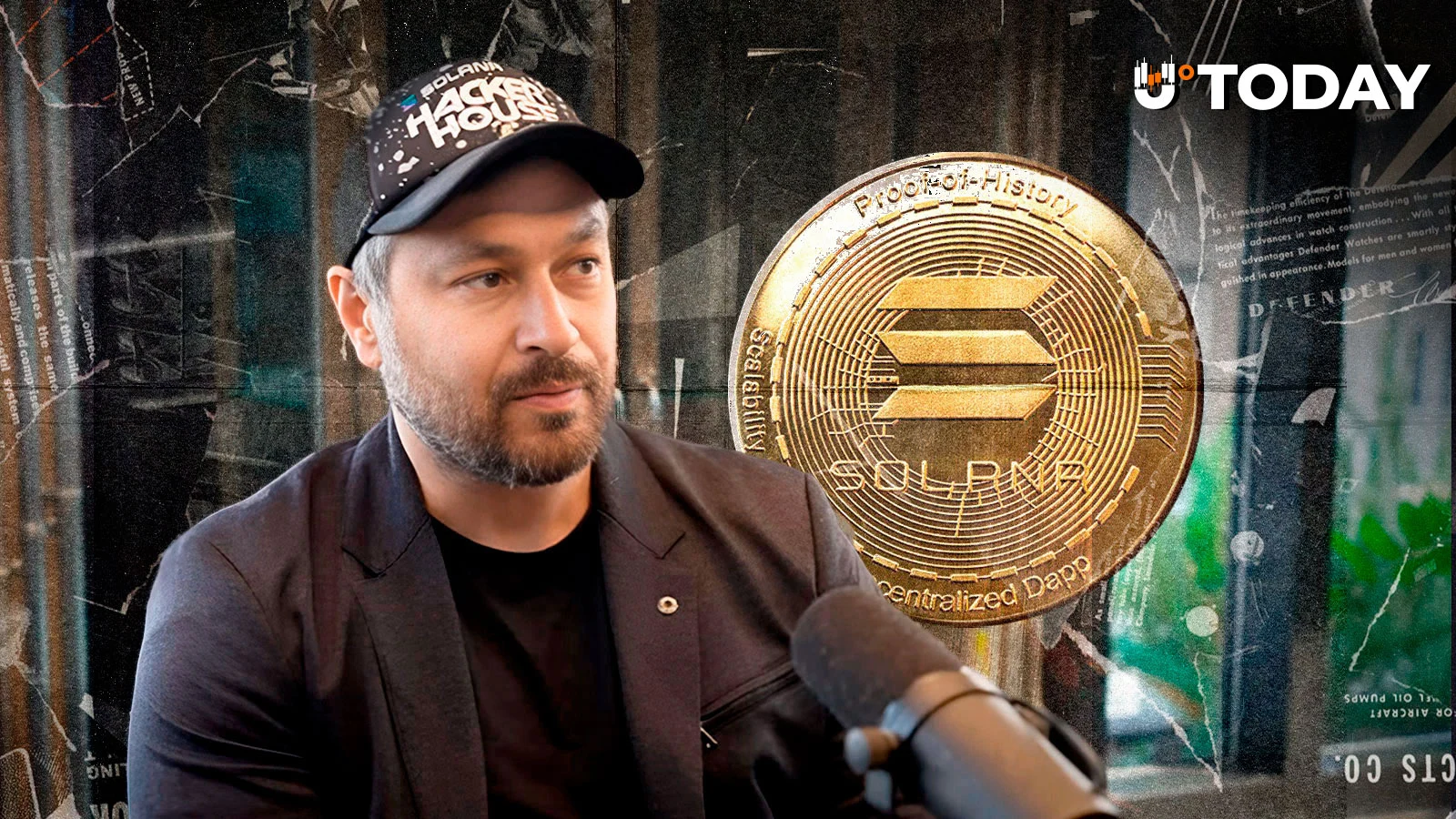
Solana's reported 44% dominance in global blockchain transactions, highlighted by its co-founder, signals significant network activity and potential adoption growth, despite ongoing debate about the nature of these transactions. The substantial transaction volume on Solana, while impressive, faces scrutiny regarding bot activity and validator votes, suggesting that the raw metric may not fully translate to organic user growth or immediate price appreciation. Despite strong on-chain metrics and a recent golden cross, Solana's SOL token is experiencing price volatility and a decline, indicating that network activity alone is not currently driving a sustained bullish trend in the short term.
Despite a new partnership with Sarvam AI to enable multilingual voice ordering, Swiggy's stock has declined, indicating that market participants are not yet pricing in the potential growth from this AI integration. The collaboration aims to bridge India's linguistic diversity gap in digital commerce by leveraging Sarvam's AI assistant, Indus, which supports 11 Indian languages, potentially expanding Swiggy's user base. The development highlights a trend towards voice-first interfaces and AI utility for mass adoption, suggesting a strategic move by Swiggy to capture a significant portion of the 'next billion users' in AI-driven commerce.
X's strategic hire of Benji Taylor, former Aave product chief and Base design lead, signals a serious push towards integrating crypto-native financial services into the platform's 'everything app' vision. The appointment of a seasoned crypto product designer directly precedes the planned rollout of X Money, suggesting a focus on user experience and adoption for its upcoming payments and wallet services. This development highlights the increasing convergence of social media platforms and decentralized finance, potentially driving new user acquisition and integration pathways for the crypto ecosystem.

Fannie Mae's acceptance of Bitcoin and USDC as mortgage collateral signifies a significant step towards mainstream adoption of digital assets in traditional finance. This development allows borrowers to leverage crypto holdings for down payments without immediate tax implications, potentially increasing demand for these assets as collateral. While offering a novel financing option, the higher mortgage rates (0.5-1.5%) suggest a premium for this crypto-backed service, impacting affordability for some borrowers. The absence of margin calls and a liquidation risk tied to payment delinquency, rather than asset price drops, mitigates some of the volatility concerns associated with crypto collateral.
XRP's leverage ratio on Binance has fallen to a multi-year low of 0.134, indicating a significant deleveraging event that reduces the risk of cascading liquidations and creates a healthier market structure. The current low volatility and deleveraging environment for XRP suggest that any upcoming price movements are more likely to be driven by genuine accumulation rather than speculative excess, potentially paving the way for a sustainable rally. Holding the $1.40 price level for XRP is crucial, as a sustained position above this mark, combined with low leverage, could signal a shift towards market stability and renewed upward momentum, setting the stage for a significant breakout.
Signal context only. Validate with price action, liquidity, and risk limits before taking a position.
