
Navigating Crypto News

CoinFeather
Navigating Crypto News
Quick market read from this story
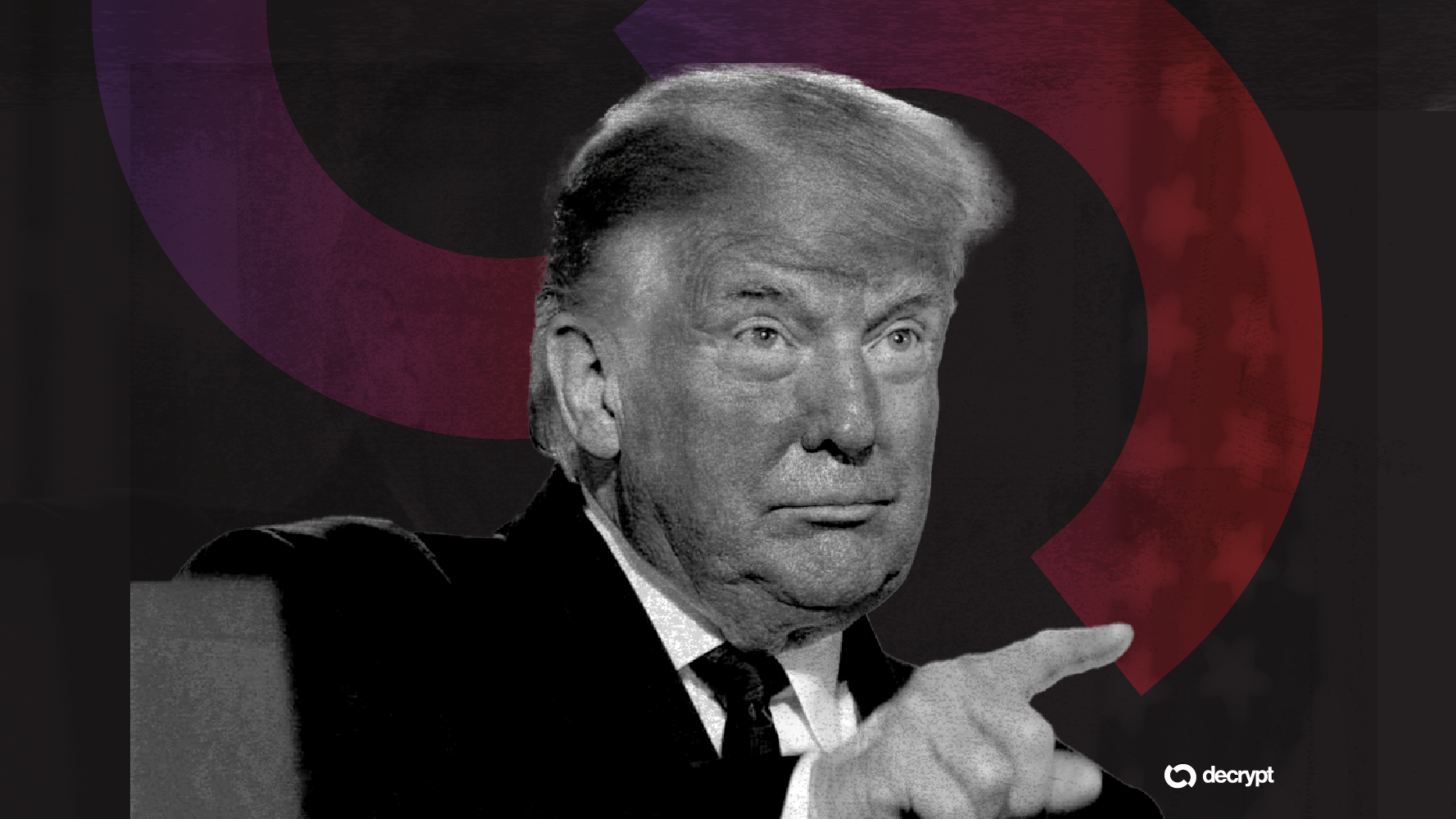
The appointment of Fred Ehrsam and Marc Andreessen to Trump's Science and Technology Advisory Council signals increased mainstream recognition and potential policy influence for the crypto industry.
Whop's integration of Aave into its platform, enabling 21 million users to earn yield on idle balances without direct DeFi interaction, represents a significant step in mainstream DeFi adoption by abstracting away complexity.
Despite a recent selloff, Circle's stock rebound and analyst support, coupled with Ark Invest's purchase, suggest market overreaction to regulatory concerns, reinforcing the stablecoin issuer's fundamental value proposition.
Google's 2029 deadline for post-quantum cryptography transition highlights a looming, albeit distant, threat to current blockchain security, prompting proactive development like Bitcoin's BIP 360.
Deep Dive
President Trump has announced the initial 13 members of his President’s Council of Advisors on Science and Technology (PCAST), featuring prominent figures from the AI and crypto sectors. The council, co-chaired by AI and crypto czar David Sacks and former U.S. CTO Michael Kratsios, aims to advise the President on emerging technologies to maintain U.S. global competitiveness. Notable appointees include Jensen Huang (Nvidia), Mark Zuckerberg (Meta), Sergey Brin (Google), Fred Ehrsam (Coinbase co-founder), and Marc Andreessen (a16z).
Circle's stock experienced a rebound after a significant selloff, with analysts suggesting the market overreacted. Bernstein clarified that yield restrictions from the Clarity Act target platforms passing interest to users, not issuers like Circle. Bitwise CIO Matt Hougan described the selloff as "overblown," emphasizing that stablecoin adoption is driven by global dollar transfer ease rather than yield. Ark Invest, led by Cathie Wood, took advantage of the dip, purchasing over 161,000 shares of CRCL.
E-commerce platform Whop has launched "Whop Treasury," a new yield product integrated directly into its service, powered by Aave, Plasma, and Tether. This feature allows users to earn up to 6% APY on their idle balances automatically, converting funds to USDT0 on Plasma, routing through a Veda vault into Aave's lending markets. Whop processes $3 billion in annual payouts for over 21 million users globally, aiming to introduce DeFi benefits to a mainstream audience without direct crypto interaction.
Google has established a formal 2029 timeline to transition its entire infrastructure to post-quantum cryptography, citing the threat as "closer than it appears." The company plans to integrate ML-DSA, a NIST-standardized algorithm, into Android 17 and Google Cloud. While quantum computers capable of breaking current cryptography are not expected by 2029, Google aims to be prepared. Bitcoin developers are also addressing this, with BIP 360, a quantum-resistant address format, recently merged into the Bitcoin improvement repository.
Spot Bitcoin ETFs have attracted nearly $2.5 billion in the past month, significantly reducing year-to-date outflows. Despite market volatility, including geopolitical events and economic headwinds, investors have largely remained committed. The iShares Bitcoin Trust (IBIT) has already turned positive for the year, ranking among the top ETFs for year-to-date flows. Strong inflow days in March have positioned the ETFs to potentially turn fully positive for the year, signaling a notable narrative shift.
Crypto markets saw major assets decline as oil prices rose, with Bitcoin trading around $69.3k and Ethereum at $2,070. Notable movers included M (+17%), HASH (+5%), and NIGHT (+2%). In corporate news, Robinhood's HOOD stock increased following a $1.5 billion share buyback announcement. Franklin Templeton and Ondo Finance are collaborating on 24/7 tokenized ETF trading on-chain. Cipher Digital has shifted focus from Bitcoin mining to AI, securing a data center deal. Visa joined the Canton Network as a Super Validator, and McLaren Racing joined the Hedera Governing Council.
Bitcoin ETFs experienced $7.8 million in net inflows on Wednesday, while Ethereum ETFs saw $8.5 million in net outflows. BitMine launched MAVAN, an Ethereum staking platform expected to become a leading ETH staking service. CoinShares introduced new ETFs designed to offer investors exposure to Bitcoin volatility.
NFT market leaders remained relatively stable, with Punks at 29.4 ETH and BAYC at 5.25 ETH. Notable movers included AKCB (+23%) and Doodles (+5%). An Autoglyph NFT sold for 42 ETH ($92,000), a significant increase from its 2022 purchase price. NFT NYC 2026 has been confirmed for September 1-3. In token news, Whop announced its yield product with Aave and Plasma. TradeXYZ founder teased upcoming product launches and new stock listings. Walrus launched MemWhal, a memory layer for AI agents on Sui, and Jupiter introduced its CLI for agent interaction across various financial protocols.
Source, catalyst, and sector overlap from the latest feed.
Bhutan's continued liquidation of Bitcoin holdings, with another $36.75 million transferred to exchanges, represents a significant ongoing sell-off pressure on BTC from a sovereign entity. The nation's BTC reserves have decreased by 66% from their peak, indicating a strategic monetization of assets accumulated through mining operations, potentially impacting market supply. The accelerating pace of Bhutan's transfers, from smaller clips to larger $35-45 million movements, suggests a potential urgency to convert BTC to fiat, which could influence short-term price action.
Fannie Mae's acceptance of Bitcoin and USDC as mortgage collateral signifies a significant step towards mainstream adoption of digital assets in traditional finance. This development allows borrowers to leverage crypto holdings for down payments without immediate tax implications, potentially increasing demand for these assets as collateral. While offering a novel financing option, the higher mortgage rates (0.5-1.5%) suggest a premium for this crypto-backed service, impacting affordability for some borrowers. The absence of margin calls and a liquidation risk tied to payment delinquency, rather than asset price drops, mitigates some of the volatility concerns associated with crypto collateral.
Bitcoin's support at $70,000 is under pressure due to escalating geopolitical tensions in Iran, increasing the probability of a near-term pullback as leverage-driven gains become vulnerable. The market is pricing in significant volatility, evidenced by a surging VIX futures reading, suggesting traders are bracing for potential shocks, which could lead to rapid price swings in Bitcoin. While some 'stronger hands' are accumulating defensively, the lack of a substantial base of committed buyers below $70,200 indicates that the current rally may not be sustainable without further macro-driven catalysts or de-escalation. The convergence of on-chain support vulnerability and heightened macro uncertainty creates a pivotal moment for Bitcoin, with potential for both sharp downside if risks materialize or a quick recovery if geopolitical fears subside.
Congressional offices are implementing bans on staff trading in prediction markets, signaling increased regulatory scrutiny on potential insider trading within government circles. The PREDICT Act and similar legislative efforts aim to extend these restrictions to senior officials, indicating a broader trend towards tighter oversight of prediction market activities tied to government information. While platforms like Polymarket and Kalshi are enhancing their anti-insider trading measures, the effectiveness of these changes in completely eliminating illicit activity remains uncertain.
The certification of a class action lawsuit against Nvidia, alleging concealment of crypto mining revenue impacts, signals potential future scrutiny on tech companies' crypto-related disclosures. Investors who bought Nvidia stock between August 2017 and November 2018 may see this development as a positive step towards potential compensation for alleged misrepresentations regarding crypto mining's influence on GPU sales. While the SEC previously fined Nvidia, this class action moving towards trial suggests a more significant legal and financial risk for the company, potentially impacting investor confidence in its transparency.
The partnership between Coinbase and Better introduces a novel mortgage product allowing crypto assets like BTC and USDC to serve as collateral, potentially unlocking significant liquidity for real estate purchases without immediate taxable events for holders. This product aligns with conforming loan standards and Fannie Mae backing, suggesting a move towards greater integration of digital assets within traditional financial frameworks, albeit with potentially higher interest rates. By enabling crypto collateralization without margin calls during downturns, the offering mitigates a key risk for borrowers, though standard mortgage default rules still apply, leading to potential liquidation of pledged assets. The initiative addresses a critical barrier to homeownership for crypto-wealthy individuals, potentially increasing demand for collateralized digital assets and signaling broader adoption of crypto as a financial instrument.
XRP faces significant liquidation risk near $1.35 ahead of a crucial SEC ETF verdict, suggesting potential for sharp price movements driven by leveraged traders. Massive SHIB outflows from exchanges indicate potential whale accumulation and a supply squeeze, historically preceding price rallies. The listing of Tether Gold (XAUt) on Binance with a Seed Tag expands its accessibility and highlights its growing presence in the tokenized asset market. Bitcoin's price action is currently dominated by a large options expiration, creating potential for volatility as traders position themselves ahead of Friday's event.
Morgan Stanley's imminent launch of its own Bitcoin ETF (MSBT) signifies a major TradFi institution moving from distributing third-party products to issuing its own, potentially redirecting significant fund flows within its $8 trillion wealth management division. The scale of Morgan Stanley's wealth management platform, overseeing $6 trillion in adviser-led assets, suggests that even a small allocation to MSBT could represent substantial demand, potentially dwarfing existing Bitcoin ETFs. By integrating MSBT into its model portfolios and offering it through its own adviser network, Morgan Stanley is positioning Bitcoin as a standard asset class within traditional wealth management, indicating a maturing adoption phase for crypto. The competitive landscape for Bitcoin ETFs is intensifying, with Morgan Stanley likely needing to price MSBT competitively, potentially around 0.20%-0.25%, to attract assets against established players like BlackRock's IBIT.
Hashdex's expansion of its Nasdaq CME Crypto Index ETF to include Cardano and Chainlink signals a strategic move towards diversification and broader market appeal beyond Bitcoin and Ether. The ETF's growth to seven assets, with $1.213 billion in net assets, reflects increasing investor demand for multi-asset crypto products in a competitive ETF landscape. Despite broader ETF developments, Solana's price weakness and technical patterns suggest potential near-term downside risk, warranting a cautious outlook for the asset.
Ripple's integration into DTCC's core infrastructure via Ripple Prime positions XRP as a potential digital liquidity layer for tokenized assets, suggesting a significant shift from a fringe player to a foundational element in traditional finance's evolving structure. The DTCC's patents explicitly referencing XRP Ledger and Stellar (XLM) as compatible for tokenized assets, coupled with Ripple Prime's placement within NSCC's directory, indicates a deliberate move by traditional finance to leverage blockchain rails for future market operations. While direct certainty of XRP capturing a share of the $100 trillion tokenized market remains unconfirmed, the strategic alignment and integration into established financial plumbing present a unique opportunity for significant adoption and potential price appreciation.
Zero-knowledge proofs offer a path to reconcile stringent AML/KYC regulations with user privacy, potentially modernizing compliance frameworks by verifying outcomes rather than raw data. The convergence of granular EU AML controls, evolving digital identity frameworks like eIDAS 2.0, and supervisory exploration of privacy-enhancing technologies signals a growing regulatory interest in ZKP-based compliance. A shift towards "programmable compliance" via ZKPs could enforce rules at the transaction level, offering real-time assurance and reducing operational risks associated with bulk data handling for both firms and regulators. Standardization of ZKP types, credential formats, and verifier logic is crucial for cross-border adoption, enabling regulators to verify cryptographic evidence efficiently without creating supervisory complexity.
Sub-Saharan Africa's on-chain value surge to over $205 billion, a 52% YoY increase, highlights significant crypto adoption driven by utility rather than speculation. Nigeria's substantial contribution of $92 billion to the regional total underscores its role as a key market within Africa's rapidly growing digital asset landscape. The increasing presence of African nations in global crypto adoption rankings and the rise in stablecoin volume suggest a maturing market with growing institutional interest. Ripple's executive emphasizes that digital assets are solving real problems in emerging markets, positioning Africa not as a 'wild west' but as a region actively building its crypto framework.
Proposed regulatory limits on stablecoin rewards, while a setback for Circle's growth trajectory, are unlikely to fundamentally alter its adoption case, as volume remains the primary indicator of success, not circulation. The market's sharp reaction to the Clarity Act draft, causing a ~20% drop in Circle shares, appears to be an overreaction, with analysts suggesting the core business model remains intact as Circle does not directly pay yield to holders. While the proposed legislation may pressure platforms like Coinbase by weakening their USDC yield products, Circle's revenue model, which passes reserve income to distribution partners, is largely unaffected, indicating a potential shift in competitive dynamics rather than a systemic threat. The focus on trading, payments, and collateral demand as drivers for USDC growth, rather than yield, suggests that despite regulatory headwinds, the stablecoin's utility and adoption are underpinned by fundamental use cases.
MARA Holdings strategically sold $1.1 billion in Bitcoin to reduce convertible debt by 30%, signaling a move towards deleveraging and improved financial flexibility. The debt buyback at a 9% discount represents a significant financial maneuver, potentially freeing up capital for MARA's expansion into digital energy and AI/HPC infrastructure. This action aligns with a broader trend among Bitcoin miners to diversify revenue streams and manage balance sheets, potentially impacting miner treasury strategies. MARA's stock experienced a positive short-term reaction, indicating market approval of the deleveraging strategy and diversification efforts.
Live Feed
Loading the broader stream in the same flow as the homepage feed.
Despite Solana processing 44% of global crypto transactions, indicating strong network activity, the SOL token is trading under pressure due to a bearish flag pattern identified on its daily chart. The high transaction volume on Solana, while impressive, is subject to debate regarding its organic nature versus bot activity and consensus mechanisms, potentially impacting investor perception of fundamental strength. A confirmed breakdown from the current bearish flag pattern could signal a significant downside risk for SOL, with analysts projecting a potential drop to the $40-$45 range within one to two weeks. The divergence between Solana's robust transaction metrics and its weakening price action suggests that market sentiment is currently being driven more by technical chart patterns than on-chain fundamentals.
The Ravencoin halving event, which occurred on January 15, 2026, has reduced the block reward by 50% to 1,250 RVN, directly impacting new supply issuance and potentially influencing miner economics and market sentiment. With the halving mechanism, Ravencoin continues its programmed reduction in inflation, reinforcing its scarcity narrative and potentially creating a basis for future price appreciation if demand remains consistent or grows. While halvings historically correlate with increased speculation and volatility, the actual price impact on RVN remains contingent on broader market conditions and network demand, not solely on the supply shock.

Bitcoin experienced a 3% dip from the $70,000 level, influenced by escalating geopolitical tensions and growing concerns over US inflation and potential recessionary pressures. Despite the price drop, market analysis suggests Bitcoin's price action is not "obviously bearish," indicating resilience and consolidation rather than outright stress. The broader macro environment, including Middle East headlines and potential interest rate hikes due to inflation, remains the primary driver for Bitcoin's price movements, overshadowing project-specific developments. Traders are advised to monitor the interplay between geopolitical events, macroeconomic indicators like inflation and interest rates, and Bitcoin's ability to hold its current range for near-term directional cues.

MemeCore experienced a 65% intraday price surge driven by a hardfork upgrade and a new perpetual futures listing with high leverage. Derivatives volume and open interest doubled, indicating aggressive trader positioning, while liquidations reached $2.62 million, primarily impacting short positions. The price has pulled back to test support around $1.80-$1.90; a hold could signal a base for further upside, while a break below $1.20-$1.30 would invalidate the bullish narrative. The current outlook hinges on MemeCore's ability to hold key support levels following a period of extreme volatility, balancing recent technical upgrades with speculative derivatives activity.

Fannie Mae's acceptance of Bitcoin down payments signals a significant integration of crypto assets into traditional U.S. housing finance, potentially increasing demand for BTC as a qualifying asset. This development, driven by FHFA directives, allows borrowers to leverage crypto holdings for mortgage qualification without immediate liquidation, broadening crypto's utility beyond speculative trading. The move by a U.S. government-sponsored enterprise into crypto-backed mortgages represents a maturing use case for digital assets, potentially paving the way for broader institutional adoption in real estate.

The launch of CryptoPass addresses a critical pain point for crypto users by providing a blockchain-verified solution for source-of-funds and wallet verification, potentially easing friction with traditional financial institutions. By offering a low-cost, on-demand certificate, CryptoPass aims to streamline compliance processes for individuals facing withdrawal freezes or deposit delays, signaling a growing need for user-friendly AML/KYT tools in the crypto space. The app's integration with major blockchain networks and its focus on user privacy (private keys never leave the device) position it as a potentially valuable tool for navigating increasing regulatory scrutiny without compromising control.

A federal judge has approved a class-action lawsuit against Nvidia, allowing investors to proceed with claims that the company concealed crypto mining revenue between 2017-2018. The lawsuit alleges Nvidia hid over $1 billion in GPU sales tied to crypto mining, impacting its stock price and investor trust. This development, following a prior SEC fine, highlights increased regulatory scrutiny on how tech companies disclose volatile revenue streams like cryptocurrency.

The SEC's clearance for DTC to tokenize traditional assets signals a significant move towards RWA adoption, potentially unlocking trillions in capital, though the pilot's long timeline contrasts with immediate presale opportunities. Pepeto, developed by the co-founder of the original Pepe coin, is positioned for a Binance listing with substantial presale funding, offering a potential 150x return that significantly outpaces projected gains for Cardano (ADA) and Solana (SOL). While Cardano (ADA) shows signs of recovery and Solana (SOL) aims for its previous highs, the article emphasizes that neither offers the immediate, high-multiple return potential currently available through early entry into projects like Pepeto before their exchange listings. The narrative highlights a divergence between institutional RWA adoption timelines and the rapid, high-return potential of presale tokens, suggesting a market focus on immediate gains from new token launches over gradual asset tokenization.

The CoinDesk 20 Index experienced a broad-based decline of 3.2%, with all constituent assets trading lower, indicating a general bearish sentiment across major cryptocurrencies. Aave (AAVE) and Cardano (ADA) were the laggards, falling 5.6% and 4.8% respectively, suggesting specific project-level weakness or increased selling pressure on these assets. The uniform downturn across all CoinDesk 20 components points to a prevailing risk-off sentiment in the market, potentially driven by macro factors or broader crypto-specific concerns.
Elevated mortgage rates near 6.48% are significantly increasing borrowing costs, leading to a 10.5% drop in mortgage application volume and signaling reduced demand in the housing market. Persistent inflation concerns and global economic uncertainty are driving Treasury yields higher, which in turn pressures mortgage rates upward and creates affordability challenges for potential homebuyers. Market forecasts for mortgage rates show a wide divergence, with projections ranging from 5.7% to 6.5% for 2026, indicating significant uncertainty that will likely keep buyers cautious and delay decisions. The current housing market dynamics, characterized by high borrowing costs and falling demand, suggest a potential cooling effect that could indirectly influence broader economic sentiment and consumer spending.
Marathon Digital's sale of 15,133 BTC for $1.1 billion, primarily to repurchase debt, signals a strategic move to strengthen its balance sheet rather than a bearish indicator for Bitcoin itself. The market reaction, with MARA stock rising, suggests investors view the debt reduction as a positive development for the company's financial health, potentially limiting future dilution. While a large BTC sale by a major miner can create short-term selling pressure, the stated use of proceeds for debt reduction indicates a focus on corporate finance rather than immediate market distress.

Binance's listing of Tether Gold (XAUT) with a seed tag indicates potential for high volatility, suggesting traders should approach with caution despite the increased accessibility. The listing of XAUT on Binance, a major exchange, provides significant market exposure for gold-backed stablecoins, potentially increasing adoption and liquidity for this asset class. Tether's CEO reaction to the XAUT listing on Binance, coupled with the news of Tether's first full audit by a Big Four firm, aims to bolster confidence in its stablecoin offerings, particularly USDT.
Signal context only. Validate with price action, liquidity, and risk limits before taking a position.
