
Navigating Crypto News

CoinFeather
Navigating Crypto News

Source, catalyst, and sector overlap from the latest feed.
Tether's expansion of its leading gold-backed token (XAUT) to BNB Chain increases accessibility for hundreds of millions of users, potentially driving adoption of tokenized gold within a major blockchain ecosystem. The integration of XAUT on BNB Chain, alongside major trading pairs on Binance, enhances liquidity and utility for tokenized gold, positioning it as a more accessible store of value within digital markets. Despite recent gold price volatility, the expansion of XAUT onto a new chain, coupled with Tether's ongoing USDT audit developments, signals continued strategic growth and integration efforts by a major stablecoin issuer.
Live Feed
Loading the broader stream in the same flow as the homepage feed.

Zero-knowledge proofs offer a path to reconcile stringent AML/KYC regulations with user privacy, potentially modernizing compliance frameworks by verifying outcomes rather than raw data. The convergence of granular EU AML controls, evolving digital identity frameworks like eIDAS 2.0, and supervisory exploration of privacy-enhancing technologies signals a growing regulatory interest in ZKP-based compliance. A shift towards "programmable compliance" via ZKPs could enforce rules at the transaction level, offering real-time assurance and reducing operational risks associated with bulk data handling for both firms and regulators. Standardization of ZKP types, credential formats, and verifier logic is crucial for cross-border adoption, enabling regulators to verify cryptographic evidence efficiently without creating supervisory complexity.
The partnership between Coinbase and Better introduces a novel mortgage product allowing crypto assets like BTC and USDC to serve as collateral, potentially unlocking significant liquidity for real estate purchases without immediate taxable events for holders. This product aligns with conforming loan standards and Fannie Mae backing, suggesting a move towards greater integration of digital assets within traditional financial frameworks, albeit with potentially higher interest rates. By enabling crypto collateralization without margin calls during downturns, the offering mitigates a key risk for borrowers, though standard mortgage default rules still apply, leading to potential liquidation of pledged assets. The initiative addresses a critical barrier to homeownership for crypto-wealthy individuals, potentially increasing demand for collateralized digital assets and signaling broader adoption of crypto as a financial instrument.

Sub-Saharan Africa's on-chain value surge to over $205 billion, a 52% YoY increase, highlights significant crypto adoption driven by utility rather than speculation. Nigeria's substantial contribution of $92 billion to the regional total underscores its role as a key market within Africa's rapidly growing digital asset landscape. The increasing presence of African nations in global crypto adoption rankings and the rise in stablecoin volume suggest a maturing market with growing institutional interest. Ripple's executive emphasizes that digital assets are solving real problems in emerging markets, positioning Africa not as a 'wild west' but as a region actively building its crypto framework.

Proposed regulatory limits on stablecoin rewards, while a setback for Circle's growth trajectory, are unlikely to fundamentally alter its adoption case, as volume remains the primary indicator of success, not circulation. The market's sharp reaction to the Clarity Act draft, causing a ~20% drop in Circle shares, appears to be an overreaction, with analysts suggesting the core business model remains intact as Circle does not directly pay yield to holders. While the proposed legislation may pressure platforms like Coinbase by weakening their USDC yield products, Circle's revenue model, which passes reserve income to distribution partners, is largely unaffected, indicating a potential shift in competitive dynamics rather than a systemic threat. The focus on trading, payments, and collateral demand as drivers for USDC growth, rather than yield, suggests that despite regulatory headwinds, the stablecoin's utility and adoption are underpinned by fundamental use cases.

Fannie Mae's acceptance of Bitcoin down payments signals a significant integration of crypto assets into traditional U.S. housing finance, potentially increasing demand for BTC as a qualifying asset. This development, driven by FHFA directives, allows borrowers to leverage crypto holdings for mortgage qualification without immediate liquidation, broadening crypto's utility beyond speculative trading. The move by a U.S. government-sponsored enterprise into crypto-backed mortgages represents a maturing use case for digital assets, potentially paving the way for broader institutional adoption in real estate.
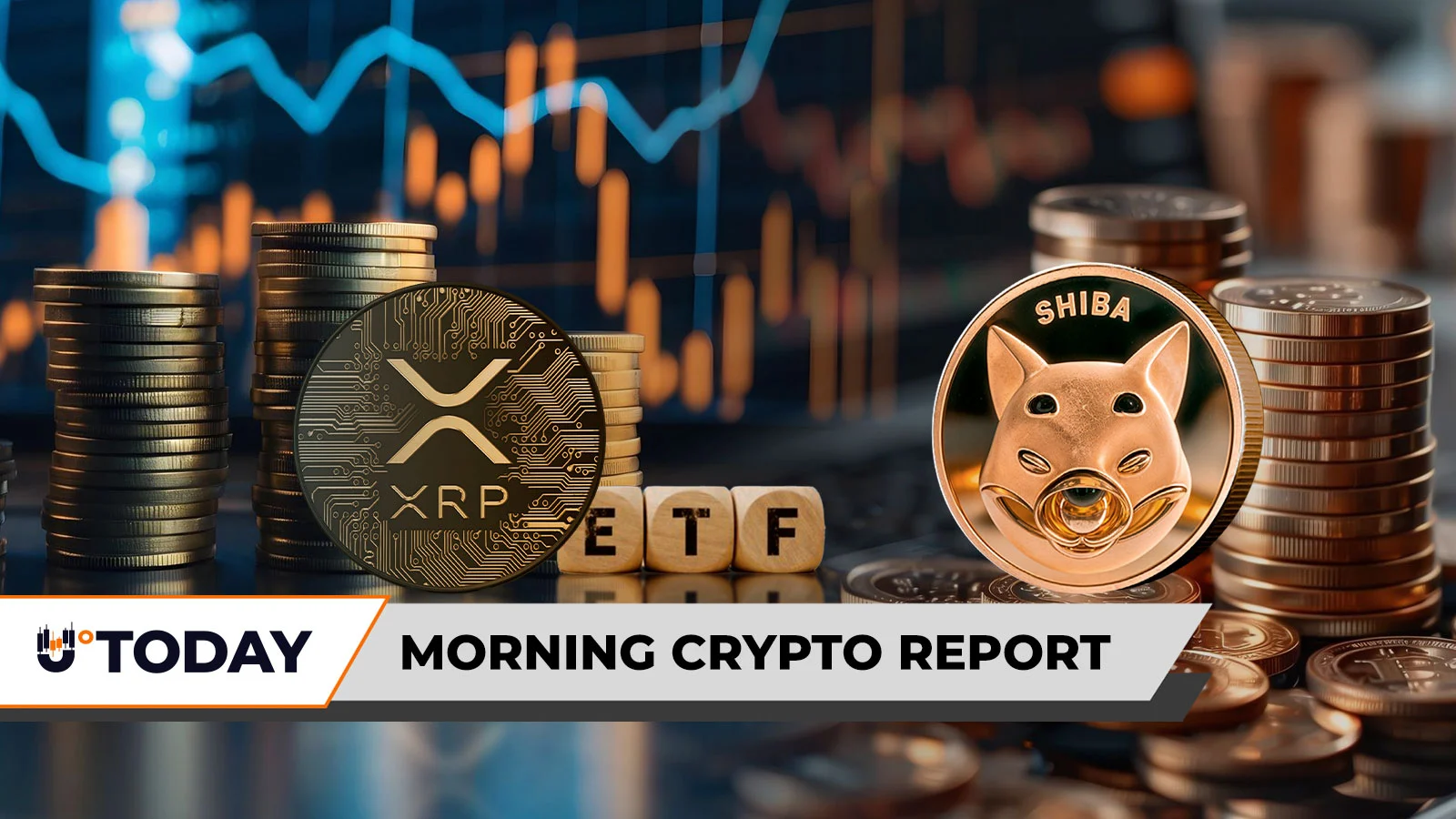
XRP faces significant liquidation risk near $1.35 ahead of a crucial SEC ETF verdict, suggesting potential for sharp price movements driven by leveraged traders. Massive SHIB outflows from exchanges indicate potential whale accumulation and a supply squeeze, historically preceding price rallies. The listing of Tether Gold (XAUt) on Binance with a Seed Tag expands its accessibility and highlights its growing presence in the tokenized asset market. Bitcoin's price action is currently dominated by a large options expiration, creating potential for volatility as traders position themselves ahead of Friday's event.

The launch of CryptoPass addresses a critical pain point for crypto users by providing a blockchain-verified solution for source-of-funds and wallet verification, potentially easing friction with traditional financial institutions. By offering a low-cost, on-demand certificate, CryptoPass aims to streamline compliance processes for individuals facing withdrawal freezes or deposit delays, signaling a growing need for user-friendly AML/KYT tools in the crypto space. The app's integration with major blockchain networks and its focus on user privacy (private keys never leave the device) position it as a potentially valuable tool for navigating increasing regulatory scrutiny without compromising control.

Morgan Stanley's imminent launch of its own Bitcoin ETF (MSBT) signifies a major TradFi institution moving from distributing third-party products to issuing its own, potentially redirecting significant fund flows within its $8 trillion wealth management division. The scale of Morgan Stanley's wealth management platform, overseeing $6 trillion in adviser-led assets, suggests that even a small allocation to MSBT could represent substantial demand, potentially dwarfing existing Bitcoin ETFs. By integrating MSBT into its model portfolios and offering it through its own adviser network, Morgan Stanley is positioning Bitcoin as a standard asset class within traditional wealth management, indicating a maturing adoption phase for crypto. The competitive landscape for Bitcoin ETFs is intensifying, with Morgan Stanley likely needing to price MSBT competitively, potentially around 0.20%-0.25%, to attract assets against established players like BlackRock's IBIT.

A federal judge has approved a class-action lawsuit against Nvidia, allowing investors to proceed with claims that the company concealed crypto mining revenue between 2017-2018. The lawsuit alleges Nvidia hid over $1 billion in GPU sales tied to crypto mining, impacting its stock price and investor trust. This development, following a prior SEC fine, highlights increased regulatory scrutiny on how tech companies disclose volatile revenue streams like cryptocurrency.

The SEC's clearance for DTC to tokenize traditional assets signals a significant move towards RWA adoption, potentially unlocking trillions in capital, though the pilot's long timeline contrasts with immediate presale opportunities. Pepeto, developed by the co-founder of the original Pepe coin, is positioned for a Binance listing with substantial presale funding, offering a potential 150x return that significantly outpaces projected gains for Cardano (ADA) and Solana (SOL). While Cardano (ADA) shows signs of recovery and Solana (SOL) aims for its previous highs, the article emphasizes that neither offers the immediate, high-multiple return potential currently available through early entry into projects like Pepeto before their exchange listings. The narrative highlights a divergence between institutional RWA adoption timelines and the rapid, high-return potential of presale tokens, suggesting a market focus on immediate gains from new token launches over gradual asset tokenization.

The CoinDesk 20 Index experienced a broad-based decline of 3.2%, with all constituent assets trading lower, indicating a general bearish sentiment across major cryptocurrencies. Aave (AAVE) and Cardano (ADA) were the laggards, falling 5.6% and 4.8% respectively, suggesting specific project-level weakness or increased selling pressure on these assets. The uniform downturn across all CoinDesk 20 components points to a prevailing risk-off sentiment in the market, potentially driven by macro factors or broader crypto-specific concerns.
Elevated mortgage rates near 6.48% are significantly increasing borrowing costs, leading to a 10.5% drop in mortgage application volume and signaling reduced demand in the housing market. Persistent inflation concerns and global economic uncertainty are driving Treasury yields higher, which in turn pressures mortgage rates upward and creates affordability challenges for potential homebuyers. Market forecasts for mortgage rates show a wide divergence, with projections ranging from 5.7% to 6.5% for 2026, indicating significant uncertainty that will likely keep buyers cautious and delay decisions. The current housing market dynamics, characterized by high borrowing costs and falling demand, suggest a potential cooling effect that could indirectly influence broader economic sentiment and consumer spending.
Signal context only. Validate with price action, liquidity, and risk limits before taking a position.
Quick market read from this story
Bhutan's continued liquidation of Bitcoin holdings, with another $36.75 million transferred to exchanges, represents a significant ongoing sell-off pressure on BTC from a sovereign entity.
The nation's BTC reserves have decreased by 66% from their peak, indicating a strategic monetization of assets accumulated through mining operations, potentially impacting market supply.
The accelerating pace of Bhutan's transfers, from smaller clips to larger $35-45 million movements, suggests a potential urgency to convert BTC to fiat, which could influence short-term price action.
Deep Dive
The Kingdom of Bhutan has significantly accelerated its Bitcoin liquidation, transferring 519.707 BTC worth approximately $36.75 million to external addresses on Wednesday. This move continues a trend that has seen the nation's Bitcoin holdings decrease by 66% from their peak levels in late 2024.
Bhutan's sovereign Bitcoin treasury now stands at 4,453 BTC, valued at around $315 million. This is a substantial decrease from nearly 13,000 BTC held in late 2024. Year-to-date, the kingdom has moved over $150 million worth of Bitcoin, indicating a strategic monetization of its mining operations.
Transaction analysis reveals an acceleration in these outflows, with recent transfers ranging from $35-45 million in March, a notable increase from the $5-15 million transactions observed in January and February. While the exact destinations of Wednesday's transfer remain unconfirmed, the pattern is consistent with deposits to exchanges.
Bhutan's approach to accumulating Bitcoin differs from many other nations; its holdings were primarily generated through mining, leveraging the country's abundant renewable energy resources, rather than direct purchases. This strategy was partly linked to a pledge made in December 2025, where Bhutan committed up to 10,000 BTC to fund the development of Gelephu Mindfulness City, an economic hub in the southern part of the country.
The ongoing sell-off represents one of the largest government Bitcoin liquidations recorded, contributing to consistent selling pressure in the market. Bitcoin is currently trading around $69,410, down 3% on the day.
MARA Holdings' significant $1.1 billion Bitcoin sale to repurchase convertible debt signals a strategic deleveraging, aiming to improve financial flexibility and reduce shareholder dilution amidst compressed mining margins. The move by MARA, alongside other miners pivoting to AI infrastructure, highlights a sector-wide trend driven by declining Bitcoin mining profitability and the pursuit of more stable, higher returns from AI services. While the sale reduces MARA's BTC holdings by 28%, the stock's positive reaction suggests investors favor the deleveraging and AI pivot over direct Bitcoin exposure, indicating a potential shift in the company's valuation drivers. The strategic capital allocation by MARA, including repurchasing debt at a discount, demonstrates proactive financial management in a challenging mining environment, potentially setting a precedent for other publicly traded miners facing similar pressures.
