
Navigating Crypto News

CoinFeather
Navigating Crypto News
Quick market read from this story
The Ravencoin halving event, which occurred on January 15, 2026, has reduced the block reward by 50% to 1,250 RVN, directly impacting new supply issuance and potentially influencing miner economics and market sentiment.
With the halving mechanism, Ravencoin continues its programmed reduction in inflation, reinforcing its scarcity narrative and potentially creating a basis for future price appreciation if demand remains consistent or grows.
While halvings historically correlate with increased speculation and volatility, the actual price impact on RVN remains contingent on broader market conditions and network demand, not solely on the supply shock.
Deep Dive
The Ravencoin halving is a pivotal event in the network's lifecycle, mirroring Bitcoin's model by reducing mining rewards by 50% at predetermined intervals. This mechanism directly influences the supply of new RVN entering circulation, affects miner incentives, and often impacts market sentiment. Understanding these halving dates is crucial for investors, miners, and anyone interested in the long-term economic trajectory of Ravencoin.
A Ravencoin halving is a programmed event that halves the block reward given to miners for validating transactions. This occurs every 2,100,000 blocks, which, with an average block time of one minute, translates to approximately every four years. This process gradually decreases the rate of new RVN creation, contributing to a deflationary-style asset over time.
The first Ravencoin halving took place on January 11, 2022, at block height 2,100,000, reducing the reward from 5,000 RVN to 2,500 RVN. The second halving is anticipated around January 15, 2026, at block height 4,200,000, further decreasing the reward to 1,250 RVN. Future halvings are projected to continue this pattern, with the third halving expected in 2030 (reward reducing to 625 RVN), the fourth in 2034 (312.5 RVN), and the fifth in 2038 (156.25 RVN), assuming consistent block production.
Ravencoin utilizes a Proof-of-Work (PoW) consensus mechanism, featuring a faster 1-minute block time compared to Bitcoin's 10 minutes, an ASIC-resistant KawPoW algorithm, and a higher total supply cap of 21 billion RVN. Each halving event directly reduces the mining reward, thereby decreasing the daily creation of new coins and potentially influencing price based on market demand.
Halving events are significant for several reasons:
While Ravencoin shares similarities with Bitcoin, key differences exist. Ravencoin has a 1-minute block time versus Bitcoin's 10 minutes, a 21 billion RVN supply cap compared to Bitcoin's 21 million BTC, and a 4-year halving interval based on 2.1 million blocks. Ravencoin's primary use case is asset and token creation, distinguishing it from Bitcoin's focus on digital currency and store of value.
Following a Ravencoin halving, miners receive fewer new coins, potentially reducing selling pressure. This scarcity narrative can strengthen, often leading to increased price volatility. Traders may employ strategies such as
Source, catalyst, and sector overlap from the latest feed.
Solana is testing a critical $88 support level, with a potential rebound to $93 if buyers step in, but failure to hold this level could lead to a drop to $85. While Solana is in a broader downtrend from its peak, a potential base may be forming between $80-$112, with bullish divergence on momentum indicators suggesting a rebuilding narrative. A confirmed move above $112 is required to invalidate the bear flag scenario and signal renewed bullish momentum, potentially opening doors to higher targets like $150-$180. Despite short-term weakness, long-term optimism remains due to low transaction costs attracting developers and speculative activity, with some analysts projecting a potential cycle high of $500.
Geopolitical tensions surrounding Iran and conflicting diplomatic signals are driving Brent crude oil prices above $107, highlighting the market's sensitivity to supply risks and uncertainty in key shipping routes like the Strait of Hormuz. Despite rising oil prices, analysts suggest central banks may adopt a wait-and-see approach to inflation, potentially allowing for rate cuts later in 2026 if long-term inflation expectations remain stable. The market's reaction to every headline indicates a high degree of volatility, making risk pricing difficult for traders as supply disruptions, even partial ones, create significant ripple effects.
A significant 39 billion token netflow into exchanges for Shiba Inu indicates rising sell-side pressure, suggesting potential short-term price weakness despite steady wallet growth. Technical resistance at the descending triangle pattern's apex confirms bearish control for SHIB, limiting upside momentum and reinforcing caution among traders. While on-chain exchange inflows signal selling pressure, consistent new wallet creation and a total holder count of 1.558 million suggest underlying ecosystem expansion and potential long-term demand.
FXRP's 600% YoY surge and over 107 million tokens locked on Flare indicate significant DeFi adoption for XRP, transforming it into a versatile financial asset beyond payments. The integration of XRP via FXRP into Flare's EVM-compatible ecosystem unlocks DeFi functionalities like lending, borrowing, and yield farming, directly impacting XRP's utility and market position. FXRP's success positions it as XRP's smart contract standard, potentially bridging institutional liquidity from areas like DTCC custody with decentralized finance opportunities.
Despite Solana processing 44% of global crypto transactions, indicating strong network activity, the SOL token is trading under pressure due to a bearish flag pattern identified on its daily chart. The high transaction volume on Solana, while impressive, is subject to debate regarding its organic nature versus bot activity and consensus mechanisms, potentially impacting investor perception of fundamental strength. A confirmed breakdown from the current bearish flag pattern could signal a significant downside risk for SOL, with analysts projecting a potential drop to the $40-$45 range within one to two weeks. The divergence between Solana's robust transaction metrics and its weakening price action suggests that market sentiment is currently being driven more by technical chart patterns than on-chain fundamentals.
MARA Holdings' significant liquidation of 15,133 BTC for $1.1 billion to de-lever its balance sheet, while criticized by some, resulted in an immediate 10% surge in its stock price, indicating a positive market reception to its debt reduction strategy. The sale, averaging $72,689 per BTC, reduces MARA's treasury holdings but also eliminates future dilution risk from convertible notes, a move that may signal a broader trend of miners prioritizing financial stability over maximal BTC accumulation. While the sale itself represents a large BTC outflow from a major miner, the immediate stock price reaction and the strategic debt retirement suggest a focus on operational solvency, which could be viewed as a net positive for the miner's long-term viability.
MARA Holdings' significant Bitcoin sale to reduce debt and pivot towards AI infrastructure signals a strategic shift away from a pure HODL strategy, potentially impacting its correlation with Bitcoin's price action. The company's move into AI infrastructure, exemplified by the Starwood partnership, mirrors a broader trend among Bitcoin miners seeking new revenue streams amidst declining mining profitability post-halving. While MARA has deleveraged and is diversifying, its substantial remaining Bitcoin holdings mean its financial performance remains intertwined with the cryptocurrency market.
MARA Holdings' significant $1.1 billion Bitcoin sale to repurchase convertible debt signals a strategic deleveraging, aiming to improve financial flexibility and reduce shareholder dilution amidst compressed mining margins. The move by MARA, alongside other miners pivoting to AI infrastructure, highlights a sector-wide trend driven by declining Bitcoin mining profitability and the pursuit of more stable, higher returns from AI services. While the sale reduces MARA's BTC holdings by 28%, the stock's positive reaction suggests investors favor the deleveraging and AI pivot over direct Bitcoin exposure, indicating a potential shift in the company's valuation drivers. The strategic capital allocation by MARA, including repurchasing debt at a discount, demonstrates proactive financial management in a challenging mining environment, potentially setting a precedent for other publicly traded miners facing similar pressures.
MARA Holdings strategically sold $1.1 billion in Bitcoin to reduce convertible debt by 30%, signaling a move towards deleveraging and improved financial flexibility. The debt buyback at a 9% discount represents a significant financial maneuver, potentially freeing up capital for MARA's expansion into digital energy and AI/HPC infrastructure. This action aligns with a broader trend among Bitcoin miners to diversify revenue streams and manage balance sheets, potentially impacting miner treasury strategies. MARA's stock experienced a positive short-term reaction, indicating market approval of the deleveraging strategy and diversification efforts.
Marathon Digital's sale of 15,133 BTC for $1.1 billion, primarily to repurchase debt, signals a strategic move to strengthen its balance sheet rather than a bearish indicator for Bitcoin itself. The market reaction, with MARA stock rising, suggests investors view the debt reduction as a positive development for the company's financial health, potentially limiting future dilution. While a large BTC sale by a major miner can create short-term selling pressure, the stated use of proceeds for debt reduction indicates a focus on corporate finance rather than immediate market distress.
Despite record-high weekly active addresses for Ethereum, the network is experiencing a divergence between user activity and price action, indicating a lack of buying pressure to absorb existing supply. Significant ETH outflows from exchanges in February did not translate to price appreciation, suggesting that while selling pressure may be reduced, there is insufficient new capital entering the market to drive sustained rallies. The upcoming $2.1 billion ETH options expiry with a max pain point above the current trading price introduces potential mechanical selling pressure due to dealer hedging, adding to near-term downside risk. While retail demand appears absent, the expansion of institutional products like the Hashdex Nasdaq CME Crypto Index ETF and growth in tokenized assets on Ethereum suggest underlying structural development that may not yet be reflected in spot price.
The new XRP/PAXG trading pair on Bitrue bypasses stablecoins, positioning XRP as a direct bridge between crypto assets and tokenized gold, potentially increasing its utility for capital preservation. This listing signifies a shift for the XRP Ledger, moving beyond its role in cross-border payments to become a more prominent platform for Real-World Asset (RWA) tokenization and commodity trading. The introduction of an XRP-to-gold trading pair challenges traditional trading norms and, in conjunction with the SEC's classification of XRP as a commodity, strengthens its narrative as an independent unit of account.
The Ethereum Foundation's updated post-quantum roadmap, coupled with Google's accelerated 'Q-Day' projection to 2029, signals an urgent need for protocol and user-level cryptographic upgrades, potentially impacting network security and asset accessibility sooner than anticipated. Ethereum's reliance on account abstraction (EIP-4337) presents a viable migration path for users, but the coordination challenge for high-value operational keys at bridges and custodians, along with the political complexity of dormant coin migration, introduces significant execution risks. The accelerated quantum threat timeline intensifies the focus on operational security for bridges and exchanges, as market participants may begin to price in security risks associated with delayed migrations, potentially leading to capital outflows for lagging operators. While Ethereum's lower percentage of dormant coins compared to Bitcoin simplifies potential governance decisions regarding asset recovery, the broader industry faces a complex coordination problem to ensure a secure transition to post-quantum cryptography across all critical infrastructure.
Live Feed
Loading the broader stream in the same flow as the homepage feed.

The NYSE's strategy to layer blockchain onto existing systems, rather than replace them, signals a cautious, incremental approach to tokenization adoption by traditional finance. This integration-focused model suggests that the immediate impact on market structure will be gradual, prioritizing interoperability and regulatory compliance over rapid disruption. The NYSE's parent company ICE's strategic investment in OKX highlights a dual approach: leveraging existing crypto infrastructure while building bridges to traditional markets.
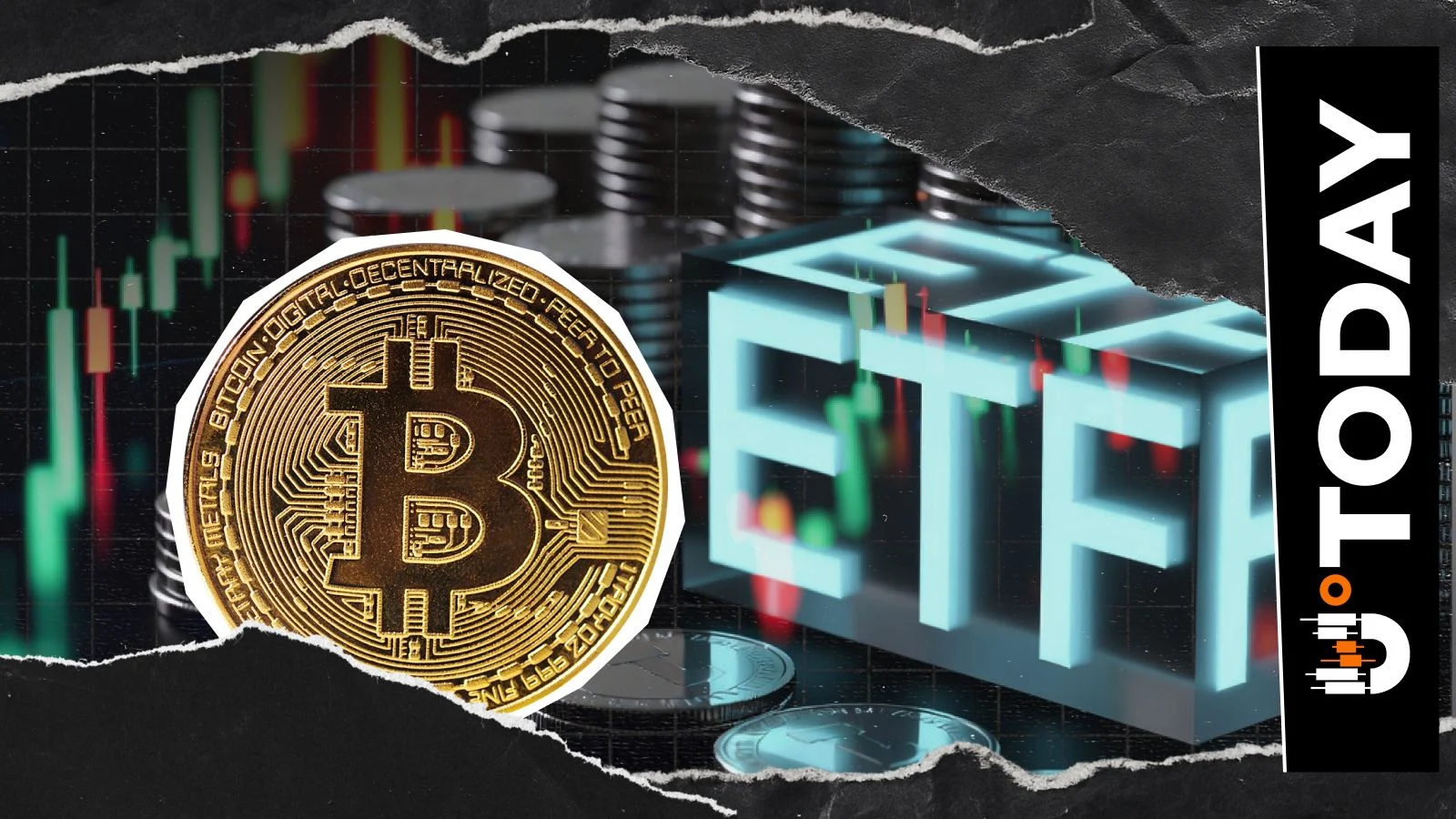
Bitcoin ETFs have reversed four months of outflows with $1.53 billion in net inflows during March, signaling a potential return of institutional demand and a positive shift in market sentiment. The sustained positive inflow trend in March is crucial for Bitcoin's price momentum, potentially improving spot demand and futures market exposure if it continues. While March inflows are strong, the year-to-date cumulative balance for Bitcoin ETFs remains negative at -4,000 BTC, indicating that the recent rebound needs to persist to fully offset prior outflows.

Coinbase's new mortgage structure allows borrowers to pledge BTC or USDC for down payments, potentially increasing demand for these assets by linking them to a major financial product. This development signifies a growing integration of crypto assets into traditional finance, specifically the US housing market, following recent regulatory signals and other lender initiatives. While enabling crypto-backed mortgages, the structure introduces new risks for borrowers due to asset volatility and the need for additional debt, which traders should monitor for potential impacts on asset liquidity and borrower financial health.
The shift of Digital Asset Treasury Companies (DATCOs) from passive holding to active yield generation via staking or operational participation introduces significant new risks, blurring the lines between corporate finance and fund management. Regulators, index providers, and investors must reclassify DATCOs that engage in active treasury management, as their operational responsibilities and liabilities now resemble those of operating companies or funds, not passive asset holders. The "active treasury" model, while potentially boosting short-term performance, dramatically increases tail risk and exposes companies to operational failures, governance decisions, and protocol-level outcomes beyond simple market volatility. The market is moving towards demanding greater transparency and fund-grade governance from DATCOs engaging in active strategies, signaling the end of the "easy phase" of passive balance sheet exposure.

The appointment of Benji Taylor, with prior experience at Aave Labs and Coinbase's Base, as Design Lead for X signals a strategic push towards integrating fintech and potentially crypto features into the platform. X's ambition to become a 'super app' is reinforced by this hire, suggesting a focus on enhancing user experience for new financial services like X Money, which could drive adoption and utility. While the direct impact on specific cryptocurrencies is speculative, the move indicates a growing trend of traditional tech platforms exploring deeper blockchain and payment integrations, potentially benefiting the broader crypto ecosystem.

Stablecoins are transitioning from niche trading instruments to foundational global financial infrastructure, impacting cross-border payments and tokenized markets. The passage of the GENIUS Act provides regulatory clarity for stablecoins in the US, establishing them as a distinct payment instrument and potentially extending the reach of the US dollar in the digital economy. Advisors must assess stablecoin credibility based on reserve quality, transparency, redemption rights, and regulatory oversight, as these factors are crucial for institutional adoption in tokenized capital markets. Global regulatory approaches to stablecoins, including those from the EU and Asia, highlight differing strategies for integrating digital assets while preserving monetary sovereignty and domestic financial relevance.

Tether's expansion of its leading gold-backed token (XAUT) to BNB Chain increases accessibility for hundreds of millions of users, potentially driving adoption of tokenized gold within a major blockchain ecosystem. The integration of XAUT on BNB Chain, alongside major trading pairs on Binance, enhances liquidity and utility for tokenized gold, positioning it as a more accessible store of value within digital markets. Despite recent gold price volatility, the expansion of XAUT onto a new chain, coupled with Tether's ongoing USDT audit developments, signals continued strategic growth and integration efforts by a major stablecoin issuer.

The ongoing legislative battle over stablecoin yield in the US, exemplified by the CLARITY Act, highlights a fundamental conflict between traditional banking interests and the growth potential of digital dollar alternatives. Banks' aggressive lobbying against stablecoin yield, fearing a $6 trillion deposit outflow, underscores the significant competitive threat stablecoins pose to traditional finance. The US government's conflicting objectives—banks seeking restrictions versus the Treasury's desire for stablecoin growth to fund government bonds—create regulatory uncertainty, delaying definitive action on the CLARITY Act. The market's reaction to the CLARITY Act compromise, initially pricing in a banking win before Coinbase rejected the draft, demonstrates the sensitivity of stablecoin-related assets to regulatory developments and industry pushback.

Euro stablecoins now represent over 80% of the non-dollar stablecoin market, indicating a significant shift in regional adoption driven by regulatory clarity from MiCA. EURC is emerging as the dominant euro stablecoin, benefiting from Circle's established reputation and increasing integration into payment networks like Visa and Mastercard. While growing, the euro stablecoin market remains a small fraction of the total stablecoin market, suggesting substantial room for further expansion and potential for increased adoption in cross-border payments. The development of private stablecoins like EURC may fill a gap in Europe's digital payments landscape, especially given potential delays in the digital euro project.

Goldman Sachs' significant $152 million XRP ETF exposure indicates institutional confidence, yet XRP price faces downside risk due to a confirmed bear pennant breakdown targeting $0.72. Despite institutional inflows, XRP ETF net outflows and declining volatility suggest an imminent sharp price move, with technicals pointing towards a potential 48% drop. The market is observing a divergence between institutional long-term sentiment via ETF holdings and short-term technical indicators signaling bearish pressure on XRP.
Signal context only. Validate with price action, liquidity, and risk limits before taking a position.
