
Navigating Crypto News

CoinFeather
Navigating Crypto News
Source, catalyst, and sector overlap from the latest feed.
Dogecoin's significant drop in spot flows, despite a broader market sell-off, could signal underlying demand as assets leave exchanges. The current price action shows Dogecoin struggling to break past key resistance levels, indicating potential downside risk towards the $0.06 support. Despite a negative netflow, the article suggests this outflow might be interpreted as a bullish sign of demand, creating a nuanced market signal.
Shiba Inu's global trading volume decline of 35% highlights a market pause, shifting focus to localized exchange activity. Upbit's near-parity volume with Binance suggests a significant concentration of current SHIB interest in the Asian market, particularly South Korea. The current low-volume environment makes SHIB highly sensitive to individual trades, with the "kimchi premium" potentially becoming a key short-term price indicator. Despite overall volume contraction, the exchange competition for SHIB trading volume indicates sustained, albeit concentrated, retail interest.
Live Feed
Loading the broader stream in the same flow as the homepage feed.
Falling US yields and a softer dollar are providing a tailwind for gold, pushing it towards the $4,600 resistance level, indicating a potential short-term bullish bias driven by macro factors. Despite geopolitical tensions and inflation concerns, gold's longer-term uptrend appears intact, with current pullbacks viewed as normal corrections within a broader bullish cycle, suggesting buyers remain active on dips. While Turkey's central bank selling gold reserves adds some supply pressure, it has not fundamentally altered the market structure, with key price levels at $4,600 resistance and $4,780-$4,800 support remaining critical for near-term direction. Analysts suggest a potential breakout for gold in the second quarter, with some forecasting targets exceeding $8,000 by July 2026 if buyers reclaim the upper range, highlighting a longer-term bullish outlook contingent on technical resolutions.
Alphabet's significant AI spending plan, coupled with rising energy costs due to geopolitical tensions, is pressuring GOOG stock despite its strong market position. Investors are evaluating the trade-off between Alphabet's aggressive AI investment and its impact on near-term profitability, creating uncertainty for the stock. While regulatory scrutiny persists, the core AI and search businesses continue to generate substantial cash flow, suggesting potential for a valuation reset rather than a fundamental decline.
XRP is consolidating within a key demand zone of $1.30-$1.40, with potential upside targets of $5-$6 by 2026 and $18 by 2030, contingent on broader market momentum and Ripple's continued institutional adoption in cross-border payments. On-chain data indicates a reset in speculative positioning, with declining spot volume and reduced leverage suggesting a cleaner market structure conducive to more sustainable directional moves once momentum returns. The article presents long-term price predictions for XRP, ranging from $5-$6 in 2026 to potentially $18-$30 by 2030, driven by factors such as institutional partnerships and global payment integration.

Crypto prices and risk assets remain at the mercy of macro headlines for now, one analyst said.

UK sanctions on crypto marketplace Xinbi and associated entities signal an intensified global effort to disrupt illicit finance networks, potentially impacting the operational capacity of scam centers reliant on crypto services. The targeting of Xinbi by regulatory bodies highlights the increasing scrutiny on crypto infrastructure used for fraudulent activities, suggesting a heightened risk environment for platforms facilitating such operations. This regulatory action, following previous large-scale asset freezes against the Prince Group, indicates a coordinated and sustained approach by international authorities to dismantle crypto-enabled scam operations, which could lead to further crackdowns.

The expiration of $16.4 billion in Bitcoin and Ethereum options presents a significant event that could lead to increased volatility as markets approach the 8am UTC deadline. The concept of 'max pain' suggests a potential gravitational pull on BTC and ETH prices towards specific strike levels, influencing short-term price action. Post-expiry, the removal of this large options open interest could unlock suppressed price movements, leading to sharp rallies or declines depending on pre-expiry positioning. With Bitcoin holding the majority of the notional value and Ethereum trading below its max pain level, market makers and traders are actively positioning for potential price swings.
Dogecoin price has dropped 5% as ETF investors show no new inflows for eight consecutive days, indicating a cautious institutional stance despite retail accumulation. The stagnation in Dogecoin ETF flows suggests that current price action is insufficient to attract new institutional capital, implying a need for a clearer market signal for sustained upside. Despite a bearish 'death cross' technical signal, exchange data reveals ongoing accumulation by traders viewing price dips as buying opportunities, creating a divergence between technical indicators and on-chain activity.

Bitcoin demonstrates relative resilience compared to gold and silver amid geopolitical stress and weakening liquidity, suggesting a shift in safe-haven asset preference or a maturing macro asset role. JPMorgan's analysis highlights diverging ETF flows, with gold experiencing significant outflows while bitcoin funds maintain net inflows, indicating sustained institutional interest in BTC despite broader market volatility. Deteriorating liquidity conditions in gold, now trailing bitcoin, coupled with declining momentum signals for precious metals, suggest potential for continued underperformance relative to BTC's stabilizing price action.

Brazil's new law allows seizure and sale of digital assets, including Bitcoin, to fund public security, signaling a new regulatory approach to crypto in combating crime. The legislation empowers judges to order the sale of seized crypto, potentially impacting liquidity and creating a new source of funding for government initiatives. This development highlights the increasing recognition of digital assets by governments as both a target for seizure and a potential funding mechanism.

The CLARITY Act is nearing a critical legislative phase, with bipartisan support and White House backing, aiming to define digital commodities and assign CFTC authority, which could provide regulatory clarity for assets like BTC and ETH. A significant hurdle remains regarding stablecoin yields, where a proposed ban on passive yield has caused pushback from industry players like Coinbase and Circle, indicating potential for further negotiation or market impact. The potential passage of the CLARITY Act by the end of April could be a major catalyst for the US crypto market, but failure to pass before the May deadline may delay significant regulatory progress until 2027.

XRP's derivatives market has undergone a significant reset, with leverage ratios collapsing and open interest declining, indicating a cleansing of excesses from the previous cycle and reducing the risk of cascading liquidations. Despite short-term bearish signals like oversold RSI and low spot volume, long-term technical analysis suggests a potential setup for a substantial rally, with Fibonacci cycle projections targeting $21-$27 by August 2027, contingent on holding a key support level around $0.87. The current market setup presents a dichotomy: short-term indicators point to continued pressure, while long-term structural analysis suggests a foundation for future growth, creating a divergence that traders must navigate based on their time horizon.
Despite current price pressure and oversold RSI, XRP's derivatives market has undergone a significant reset, with leverage ratios collapsing, suggesting a structurally cleaner environment for potential future rallies. Long-term technical analysis, including Fibonacci cycle patterns and monthly RSI formations, indicates a potential for substantial price appreciation to $21-$27 by August 2027, contingent on holding a key support level around $0.87. While short-term indicators show continued selling pressure and low spot volume, the reset in leverage and open interest in the derivatives market implies that the risk of cascading liquidations has been structurally reduced. The fading institutional interest in XRP ETFs, mirroring the derivatives market reset, suggests that the market is moving past the initial euphoria and is now focused on longer-term structural developments.
Signal context only. Validate with price action, liquidity, and risk limits before taking a position.
Quick market read from this story
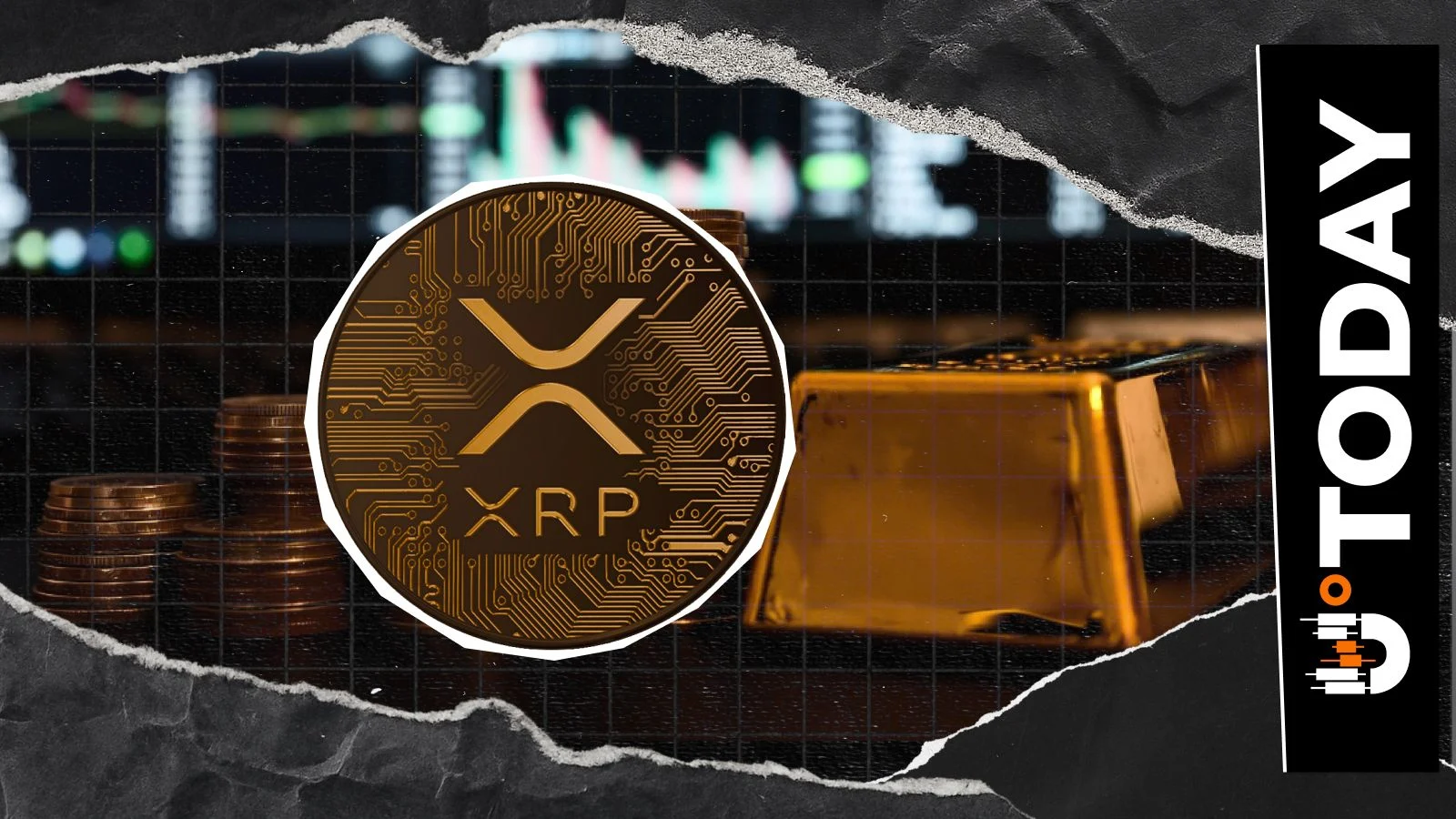
The new XRP/PAXG trading pair on Bitrue bypasses stablecoins, positioning XRP as a direct bridge between crypto assets and tokenized gold, potentially increasing its utility for capital preservation.
This listing signifies a shift for the XRP Ledger, moving beyond its role in cross-border payments to become a more prominent platform for Real-World Asset (RWA) tokenization and commodity trading.
The introduction of an XRP-to-gold trading pair challenges traditional trading norms and, in conjunction with the SEC's classification of XRP as a commodity, strengthens its narrative as an independent unit of account.
Deep Dive
Crypto exchange Bitrue has announced the listing of an XRP trading pair against Pax Gold (PAXG), a tokenized gold asset issued by Paxos. This marks the first time XRP can be directly traded against digital gold, bypassing traditional stablecoins and fiat currencies.
The new XRP/PAXG spot trading pair offers a potential liquid bridge for investors looking to move capital quickly between volatile crypto assets and gold. This allows XRP holders to protect profits by instantly swapping into PAXG without exiting into fiat, especially during periods of market volatility and macroeconomic uncertainty. XRP is currently trading in the $1.30-$1.40 range.
This listing further underscores the XRP Ledger (XRPL) as a leading network for real-world asset (RWA) tokenization. By March 2026, the volume of tokenized assets on XRPL reached $2.3 billion. The introduction of a trading pair with PAXG, which has a market capitalization exceeding $2.6 billion, positions XRP not just as a cross-border transfer currency but as a central hub for commodity trading.
The XRP/PAXG pair is considered unexpected as gold is traditionally traded against the dollar. This new pairing challenges classic trading habits and promotes XRP as an independent unit of account. Coupled with the SEC's recognition of XRP as a commodity, this listing further strengthens that narrative.
