
Navigating Crypto News

CoinFeather
Navigating Crypto News

Quick market read from this story
Pump.fun's new rule to lock creator fee redirects to a single instance aims to reduce token manipulation and 'griefing' by deployers.
This change restricts token deployers to one post-launch adjustment of fee recipients, potentially impacting creator revenue streams and transparency.
While the update acknowledges issues with fee distribution, community sentiment suggests it may not fully resolve existing challenges on the memecoin launchpad.
Deep Dive
The memecoin launchpad and decentralized exchange (DEX) platform, Pump.fun, has introduced a significant update restricting users to a single opportunity to change fee recipients after a token goes live. This new policy, announced by co-founder Alon Cohen, aims to reduce instances of 'griefing' and token manipulation associated with altering fee destinations once a memecoin gains traction.
Under the updated policy, token deployers can now make only one adjustment to the fee recipient's wallet address post-launch. After this single change is made, Pump.fun will permanently lock the feature, preventing any further modifications. This move directly impacts how platform fees are distributed and aims to enhance transparency.
This latest update follows a broader effort by Pump.fun to overhaul its creator-fee model, which began in January. At that time, Cohen stated that the platform's incentives were skewed, disproportionately favoring creators over traders. Subsequent changes in February introduced features like multi-wallet distribution and a 'Cashback Coins' program, allowing deployers to direct fees to their wallets or directly to trader wallets.
These earlier adjustments were intended to rebalance reward distribution and streamline incentives for trading activity. However, user complaints regarding transparency issues surrounding the fee redirection feature prompted the implementation of the current one-time limit policy.
Initial community responses to the new one-time limit policy suggest mixed reactions. While some users acknowledge that the change addresses a known issue and shows the platform's awareness of the problem, others believe it does not fully resolve the challenges facing the platform. One user, Tom, noted that while not a complete solution, the update signifies the platform's recognition of the existing issues.
Source, catalyst, and sector overlap from the latest feed.
Robinhood's announcement of a $1.5 billion share buyback program, extending incremental capacity by $1.1 billion, signals strong management confidence in the company's long-term value and potential for shareholder returns. The significant buyback authorization, coupled with an updated $3.25 billion credit facility with JPMorgan Chase, suggests Robinhood is strategically positioning itself for future growth and operational stability. While the stock has seen a recent uptick, the buyback program and credit facility updates provide a fundamental basis for potential sustained investor interest, despite past price volatility.
The debate around Frame Transactions (EIP-8141) as a more flexible foundation for Account Abstraction (AA) suggests a potential evolution in Ethereum's smart contract wallet capabilities, impacting future DeFi and user experience developments. Despite a developer pushing for new transaction standards, Ethereum's price consolidation below $2,400 resistance and drying trading volume indicate a bearish short-term outlook, warranting caution for traders. Institutional accumulation of ETH by Bitmine, adding $145M worth, signals strong conviction in Ethereum's long-term value despite current price stagnation, potentially influencing market sentiment.
Despite Shiba Inu surpassing 1.5 million holders and showing strong long-term holding patterns with reduced exchange supply, the SHIB price remains in a persistent downtrend, indicating that on-chain growth is not yet translating into upward price momentum. The significant portion of SHIB held by top wallets (62.65%) presents a potential risk, as concentrated ownership could lead to price manipulation or sudden sell-offs, overshadowing positive holder growth metrics. While on-chain data suggests increasing holder conviction and decreasing circulating supply due to burns, the lack of a clear price breakout above recent highs implies that current market sentiment is cautious, awaiting a stronger demand signal or trendline break. Historical March price action for SHIB shows significant volatility, ranging from substantial gains to losses, suggesting that past performance is not a reliable indicator for predicting near-term price movements based solely on the month.
Ripple's RLUSD stablecoin entering the Monetary Authority of Singapore's sandbox for trade finance testing signals a move towards regulated institutional adoption of stablecoins in real-world applications. The pilot aims to automate trade finance payments by verifying shipment conditions, potentially reducing settlement times from days to minutes and improving efficiency in global commerce. This development highlights Singapore's role as a hub for regulated digital asset innovation, providing a secure environment for testing new payment rails for institutional use. While XRP is mentioned with current price levels, the core development focuses on the RLUSD stablecoin's application in trade finance, suggesting a strategic expansion for Ripple beyond its native token.
Metaplanet's launch of a Bitcoin rewards card for shareholders signals a strategic move to integrate BTC into everyday spending, potentially driving adoption and rewarding loyal investors. The positive market reaction to Metaplanet's crypto payment initiative, evidenced by stock price uptrends, suggests investor confidence in the company's strategy to leverage Bitcoin for growth. Metaplanet's continued aggressive Bitcoin accumulation, supported by recent funding rounds, positions it as a significant public holder and aligns with broader institutional interest in BTC treasuries. The exclusive offering of the Bitcoin card to shareholders creates a unique incentive structure, potentially attracting new investors interested in tangible Bitcoin-earning benefits tied to stock ownership.
The appointment of a former MoneyGram CEO signals Bitcoin Depot's strategic pivot towards enhanced regulatory compliance and a potential diversification into a broader fintech platform. Mounting state-level regulatory actions against Bitcoin Depot for alleged excessive fees and facilitation of scams highlight significant operational risks and potential for further legal challenges. Bitcoin Depot's stock performance, down over 70% year-to-date and significantly from its all-time high, reflects market concerns over its regulatory environment and future revenue outlook.
Coinbase's rejection of the Clarity Act draft, specifically its proposed ban on stablecoin yields, introduces significant regulatory uncertainty for the stablecoin market and exchanges operating within it. The conflict highlights a critical juncture for stablecoin regulation, where proposed restrictions on yields could impact user incentives and competitive dynamics between crypto platforms and traditional banks. Coinbase's political influence, backed by its Super PAC network, suggests that its opposition could lead to further legislative delays or amendments, creating a volatile environment for stablecoin-related assets and exchange stocks.
The White House's review clearance for crypto in 401(k) plans signals a significant shift in regulatory sentiment, potentially opening a $13.9 trillion market to digital assets and boosting legitimacy. A formal Department of Labor ruling is the next critical step, which, if positive, would provide fiduciaries legal protection and could drive demand for assets like Bitcoin, potentially breaking current price consolidation. While the move aims to increase accessibility to high-yield digital assets, market participants should monitor retirement firms' adoption rates, as they may prioritize stable gains over speculative investments.
Australia's central bank is transitioning from tokenization research to implementation, signaling a significant step towards integrating tokenized assets into the financial system. Regulatory coordination between the RBA, ASIC, and AUSTRAC is a key development that aims to reduce uncertainty and unlock institutional participation in tokenized markets. The establishment of a longer-term digital market infrastructure sandbox suggests a commitment to commercialization and potential for substantial economic benefits, estimated at $24 billion annually. The focus on settlement systems, tokenized deposits, stablecoins, and CBDCs indicates a comprehensive approach to building the infrastructure for future tokenized finance.
Live Feed
Loading the broader stream in the same flow as the homepage feed.

A Texas court dismissed a developer's lawsuit seeking clarity on money transmitter laws, ruling there was no credible threat of prosecution, which limits immediate legal certainty for software creators. The dismissal, while without prejudice, highlights the ongoing legal ambiguity for crypto developers, as evidenced by past prosecutions of Tornado Cash and Samourai Wallet figures. Calls for the Blockchain Regulatory Certainty Act of 2026 underscore the industry's push for legislative solutions to define developer liability and provide durable legal protections.

The partnership between BitGo and ZKsync aims to create regulatory-compliant, institutional-grade tokenization infrastructure for banks, potentially bridging a significant portion of traditional finance assets onto the blockchain without relying on stablecoins. This development could unlock substantial institutional capital by offering 24/7 settlements and enhanced security for tokenized fiat deposits, addressing long-standing needs in bank treasury operations. While not directly resolving stablecoin yield disputes, the initiative's focus on tokenized deposits bypasses stablecoin reliance, potentially attracting significant traditional finance funds to blockchain infrastructure.

Cravin's integration of provably fair verification in mystery boxes, coupled with a Fair Value Guarantee, demonstrates a potential shift in consumer product design, prioritizing auditability over direct crypto payments. The development suggests that crypto's verification models, rather than its payment rails, may find broader adoption in non-financial consumer applications, impacting user trust and engagement. While the article highlights Cravin's use of crypto-style verification, the actual payment mechanism converts to internal Credits, indicating a limited direct impact on cryptocurrency transaction volume or utility. The trend of adopting verifiable outcomes in consumer products could foster greater user trust and transparency, potentially influencing how other platforms approach digital item reveals and fairness claims.

Google's aggressive 2029 PQC migration deadline signals a heightened urgency for the crypto industry to address quantum threats, potentially impacting protocols that fail to adapt. While Ethereum and Solana are actively developing quantum-resistant solutions, the Bitcoin ecosystem remains divided, highlighting potential vulnerabilities and a need for strategic positioning. The increasing focus on post-quantum cryptography by major tech players like Google underscores a significant, albeit longer-term, structural risk to current blockchain security paradigms.

The upcoming $18.6 billion Bitcoin options expiry on Friday presents a critical juncture, with bulls needing a sustained rally above $75,000 to invalidate a significant portion of out-of-the-money call options. Economic uncertainties, including rising inflation and geopolitical tensions, are creating a bearish backdrop that could favor put option holders if Bitcoin fails to break key resistance levels. The concentration of call options at higher strike prices, particularly above $90,000 on Deribit, suggests a potential for significant price impact if Bitcoin remains below $71,000 by expiry. Traders should monitor Bitcoin's price action around the $70,000 to $75,000 range as the options expiry approaches, as this zone will determine the net outcome for option holders and could influence short-term price direction.
XRP's increased spot flow suggests potential accumulation or distribution, making its upcoming test of local resistance a pivotal moment for determining short-term price direction. Bitcoin is consolidating between rising support and falling resistance, indicating a short-term range contraction where a breakout direction will likely dictate its next significant move. Shiba Inu is showing signs of weakening sell-side control as it repeatedly tests the 50 EMA, suggesting a potential shift in momentum if it can establish acceptance above key moving averages.

The technique reduces the memory required to run large language models as context windows grow, a key constraint on AI deployment.

The compromise on the market structure bill's yield agreement faces internal division within the crypto industry, with Coinbase expressing dissatisfaction over potential restrictions on stablecoin rewards. The proposed legislation, while aiming for clarity, may impede stablecoin-related products and services, creating a divergence between firms prioritizing regulatory establishment and those focused on specific revenue streams. Market reaction, including a significant drop in Circle's stock, highlights the sensitivity of stablecoin issuers and related businesses to regulatory developments, even amidst mixed industry sentiment. Despite internal disagreements and market volatility, White House crypto advisor Patrick Witt expressed optimism, suggesting a resolution is expected, which could influence near-term trading sentiment.
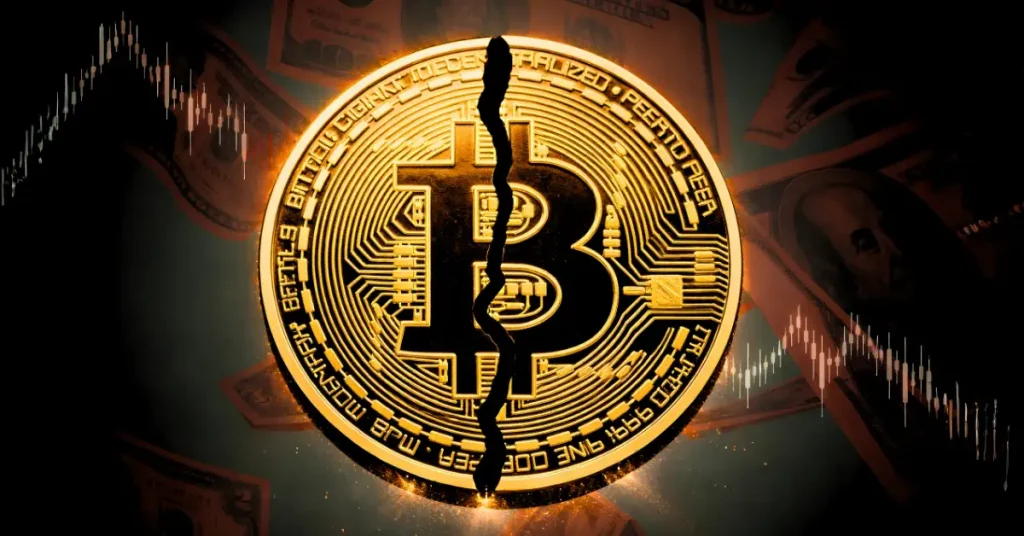
The post Will Bitcoin Drop Below $50K? Latest BTC Price Debate & Analysis appeared first on Coinpedia Fintech News Bitcoin (BTC) has been in consolidation between $62,000 and $75,000 over the 25 days of the US-Iran military conflict. Source: CoinMarketCap At press time, the flagship cryptocurrency was trading at $70,748, having gained 1.3% in the day following reported peace talks between the rival nations. The positive price action is also attributed to a year-to-date …

Allegations of Circle wrongfully freezing operational business wallets raise concerns about the censorship resistance of centralized stablecoins. The incident highlights potential risks for businesses relying on stablecoins that can be unilaterally frozen by the issuer, impacting operational continuity. This event could fuel further debate on the nature of stablecoins and their potential overlap with CBDC functionalities, impacting regulatory sentiment.
Coinbase's renewed opposition to stablecoin yield provisions introduces significant uncertainty into ongoing legislative efforts, potentially delaying regulatory clarity for stablecoin issuers and impacting market participants' strategies. The persistent disagreement over stablecoin yield rules highlights deep divisions within the crypto industry and between industry and traditional finance, suggesting that a compromise acceptable to all stakeholders remains elusive. The setback in stablecoin legislation, driven by concerns over deposit displacement from traditional banks, indicates a challenging path forward for innovation in stablecoin products that offer yield.

Google's formal 2029 deadline for post-quantum cryptography migration highlights an accelerating timeline for quantum threats, pressuring the crypto industry to proactively address long-term security risks. While Bitcoin's cryptographic vulnerability to quantum computers is a known long-term risk, Google's announcement serves as a significant external catalyst, underscoring the need for decentralized coordination on protocol upgrades and user fund migration. The decentralized nature of Bitcoin necessitates a multi-year, coordinated effort involving miners, developers, and users to implement quantum-resistant solutions, making Google's self-imposed deadline a critical benchmark for the crypto ecosystem's preparedness. Despite the theoretical threat, current quantum computing capabilities are still orders of magnitude away from breaking Bitcoin's encryption, suggesting a 'watchful waiting' approach is prudent rather than immediate panic selling.
Signal context only. Validate with price action, liquidity, and risk limits before taking a position.
