
Navigating Crypto News

CoinFeather
Navigating Crypto News
Source, catalyst, and sector overlap from the latest feed.
Franklin Templeton's partnership with Ondo Finance to launch tokenized ETFs signifies a major TradFi institution actively integrating with blockchain technology, potentially driving significant capital into the RWA sector. The collaboration aims to enhance accessibility, liquidity, and settlement efficiency for ETFs, demonstrating a clear pathway for traditional financial products to leverage decentralized finance infrastructure. While the pilot is launching in select regions, the pending US regulatory approval highlights the ongoing challenges and opportunities in bridging traditional finance with the crypto ecosystem. The ONDO token's price action, despite a reported 4.17% gain, faces scrutiny regarding its direct correlation to the partnership's success, underscoring the speculative nature of RWA-related tokens.
Live Feed
Loading the broader stream in the same flow as the homepage feed.
Australia's central bank is transitioning from tokenization research to implementation, signaling a significant step towards integrating tokenized assets into the financial system. Regulatory coordination between the RBA, ASIC, and AUSTRAC is a key development that aims to reduce uncertainty and unlock institutional participation in tokenized markets. The establishment of a longer-term digital market infrastructure sandbox suggests a commitment to commercialization and potential for substantial economic benefits, estimated at $24 billion annually. The focus on settlement systems, tokenized deposits, stablecoins, and CBDCs indicates a comprehensive approach to building the infrastructure for future tokenized finance.

The technique reduces the memory required to run large language models as context windows grow, a key constraint on AI deployment.

The compromise on the market structure bill's yield agreement faces internal division within the crypto industry, with Coinbase expressing dissatisfaction over potential restrictions on stablecoin rewards. The proposed legislation, while aiming for clarity, may impede stablecoin-related products and services, creating a divergence between firms prioritizing regulatory establishment and those focused on specific revenue streams. Market reaction, including a significant drop in Circle's stock, highlights the sensitivity of stablecoin issuers and related businesses to regulatory developments, even amidst mixed industry sentiment. Despite internal disagreements and market volatility, White House crypto advisor Patrick Witt expressed optimism, suggesting a resolution is expected, which could influence near-term trading sentiment.

Despite Shiba Inu surpassing 1.5 million holders and showing strong long-term holding patterns with reduced exchange supply, the SHIB price remains in a persistent downtrend, indicating that on-chain growth is not yet translating into upward price momentum. The significant portion of SHIB held by top wallets (62.65%) presents a potential risk, as concentrated ownership could lead to price manipulation or sudden sell-offs, overshadowing positive holder growth metrics. While on-chain data suggests increasing holder conviction and decreasing circulating supply due to burns, the lack of a clear price breakout above recent highs implies that current market sentiment is cautious, awaiting a stronger demand signal or trendline break. Historical March price action for SHIB shows significant volatility, ranging from substantial gains to losses, suggesting that past performance is not a reliable indicator for predicting near-term price movements based solely on the month.

Allegations of Circle wrongfully freezing operational business wallets raise concerns about the censorship resistance of centralized stablecoins. The incident highlights potential risks for businesses relying on stablecoins that can be unilaterally frozen by the issuer, impacting operational continuity. This event could fuel further debate on the nature of stablecoins and their potential overlap with CBDC functionalities, impacting regulatory sentiment.
Coinbase's renewed opposition to stablecoin yield provisions introduces significant uncertainty into ongoing legislative efforts, potentially delaying regulatory clarity for stablecoin issuers and impacting market participants' strategies. The persistent disagreement over stablecoin yield rules highlights deep divisions within the crypto industry and between industry and traditional finance, suggesting that a compromise acceptable to all stakeholders remains elusive. The setback in stablecoin legislation, driven by concerns over deposit displacement from traditional banks, indicates a challenging path forward for innovation in stablecoin products that offer yield.

Google's formal 2029 deadline for post-quantum cryptography migration highlights an accelerating timeline for quantum threats, pressuring the crypto industry to proactively address long-term security risks. While Bitcoin's cryptographic vulnerability to quantum computers is a known long-term risk, Google's announcement serves as a significant external catalyst, underscoring the need for decentralized coordination on protocol upgrades and user fund migration. The decentralized nature of Bitcoin necessitates a multi-year, coordinated effort involving miners, developers, and users to implement quantum-resistant solutions, making Google's self-imposed deadline a critical benchmark for the crypto ecosystem's preparedness. Despite the theoretical threat, current quantum computing capabilities are still orders of magnitude away from breaking Bitcoin's encryption, suggesting a 'watchful waiting' approach is prudent rather than immediate panic selling.
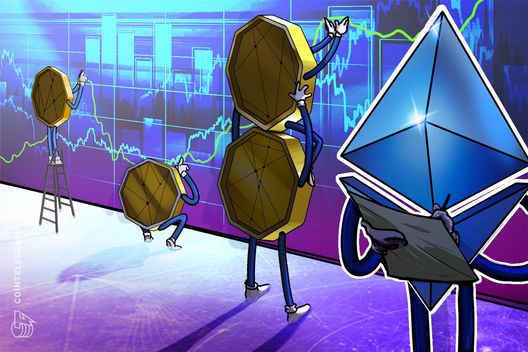
Accelerating ETH staking and increasing exchange outflows are tightening liquid supply, potentially establishing a stronger structural price floor for ETH. With 33.1% of ETH supply staked and exchange balances at multi-year lows, reduced availability increases price sensitivity to demand. The significant ETH locked in staking and slow exit queue times suggest that even with shifting sentiment, supply re-entry into circulation will be gradual. Sustained demand for staking, evidenced by a long entry queue, combined with reduced exchange reserves, points to a tightening market dynamic for ETH.
Despite a significant increase in ADA short interest to its highest point since June 2023, the announcement of a £250 million tokenized deposit deal between Midnight and Monument Bank introduces a potentially substantial real-world asset (RWA) use case for the Cardano ecosystem. The partnership aims to tokenize retail deposits, offering a regulated, privacy-enhanced savings format on a public blockchain, which could attract significant Total Value Locked (TVL) to Midnight and potentially boost broader Cardano ecosystem activity if successful. While the Midnight token design does not directly drive ADA demand, the success of this large-scale RWA initiative could indirectly benefit ADA by attracting new users and liquidity to the Cardano network through associated services and applications. The market is closely watching if this practical, regulated finance integration can overcome the current bearish sentiment and weak on-chain activity surrounding ADA, shifting focus towards tangible utility and institutional adoption.
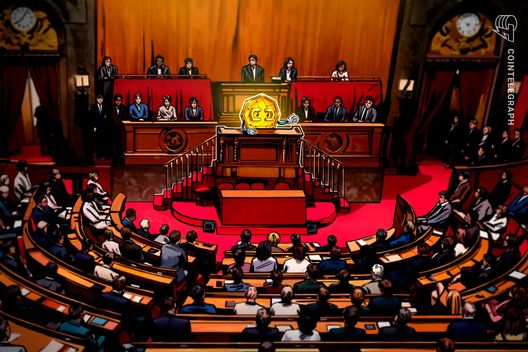
US lawmakers are actively discussing the regulatory framework for tokenized securities, signaling a move towards potential policy development that could impact RWA adoption. Industry executives emphasized that existing regulations should apply to tokenized assets, suggesting a path for integration rather than outright prohibition. Concerns around AML and sanctions compliance for tokenized assets were raised, highlighting key challenges that need technological and regulatory solutions before widespread adoption.
Ethereum has reclaimed a key support level at $2,150, indicating a potential short-term stabilization after a recent selloff. Technical analysis suggests ETH could target $2,500 as a breakout level, with a longer-term objective of $4,750 if broader trend reversal confirmation occurs. Despite the recovery, ETH remains below significant overhead resistance, meaning the current rebound is a test of support rather than a confirmed trend reversal. The price action is at a critical decision point, with both upside potential towards $2,500 and downside risk towards $1,760 and $1,540 depending on support hold.

Bhutan's continued Bitcoin outflows, totaling $36.7 million in the latest transaction, signal a strategic rebalancing of sovereign reserves, potentially impacting short-term supply dynamics. Thailand-listed DV8's plan to accumulate 10,000 BTC by 2028, alongside acquiring a licensed custody platform, indicates a growing trend of corporate treasury diversification and demand for regulated digital asset infrastructure. The diverging strategies between Bhutan's reserve deployment and DV8's corporate accumulation highlight Bitcoin's evolving role as both a tool for economic development and a treasury asset, suggesting a maturing market.

Ripple's RLUSD stablecoin entering the Monetary Authority of Singapore's sandbox for trade finance testing signals a move towards regulated institutional adoption of stablecoins in real-world applications. The pilot aims to automate trade finance payments by verifying shipment conditions, potentially reducing settlement times from days to minutes and improving efficiency in global commerce. This development highlights Singapore's role as a hub for regulated digital asset innovation, providing a secure environment for testing new payment rails for institutional use. While XRP is mentioned with current price levels, the core development focuses on the RLUSD stablecoin's application in trade finance, suggesting a strategic expansion for Ripple beyond its native token.

X's strategic hire of a design lead with deep Aave Labs and Coinbase Base experience signals a serious commitment to integrating sophisticated DeFi and self-custody wallet functionalities into its payment ecosystem. The appointment of Benji Taylor, who previously led product design for Aave and Coinbase's Base, suggests X is prioritizing user experience and advanced crypto-native features for its upcoming 'X Money' platform. While X Money's April launch was announced without explicit mention of blockchain, the recruitment of a crypto-native design expert indicates potential for future integration of decentralized technologies or crypto-adjacent services.
Bitcoin is testing the $72,000 resistance, with a potential short squeeze zone identified around $74,000 due to concentrated leveraged short positions. The market structure shows resilience with demand at lower levels, but a decisive break above $72,000 is required to confirm a bullish continuation and target higher price levels. While overhead short liquidity at $74,000 presents a potential catalyst for accelerated upside, it remains a speculative trigger until price action confirms entry into that zone. Traders are closely monitoring the interplay between technical resistance and derivatives positioning, suggesting that a move towards $74,000 could trigger significant volatility.
XRP's market capitalization has surpassed Russia's proposed threshold, positioning it for potential inclusion in the country's regulated digital asset market alongside BTC, ETH, and SOL. The Russian draft bill indicates a selective approach to crypto regulation, prioritizing large, liquid assets with established trading histories, suggesting a controlled market rather than broad access. While XRP meets the market cap criteria, the final decision on its inclusion in Russia's regulated market will depend on further criteria such as trading volume and public trading record, with a midyear deadline for the framework.

The partnership between Cardano's Midnight and Monument Bank signifies a major step towards integrating privacy-preserving blockchain technology into regulated financial services, potentially unlocking significant TVL and setting a precedent for future RWA tokenization. Monument Bank's plan to tokenize retail deposits and offer advanced financial tools like Lombard lending on-chain, leveraging Midnight's zero-knowledge cryptography, could attract substantial capital and redefine retail access to private banking services. This development highlights the growing intersection of traditional finance and blockchain, with a focus on privacy solutions, suggesting a potential shift in how regulated institutions approach digital asset adoption and customer offerings.

The upcoming expiration of $15 billion in Bitcoin options on Deribit, coinciding with a geopolitical deadline, introduces a potential volatility catalyst that traders should monitor for post-settlement price action. Despite the confluence of options expiry and geopolitical timing, implied volatility compression suggests a controlled settlement is anticipated, indicating a lack of immediate market panic. Bitcoin's resilience around the $70,000 level amidst macro uncertainty signals underlying spot demand and holder steadiness, providing a supportive backdrop for potential post-expiry price discovery.

Bitcoin's post-FOMC meeting performance has evolved from inconsistent reactions to a systematic downside bias, indicating its integration into the broader risk asset complex. This 'sell the Fed' tendency, particularly evident from 2024 through early 2026, suggests traders are increasingly using Fed events as de-risking opportunities, impacting short-term price action. The growing sensitivity to FOMC dates signifies Bitcoin's maturation as a global asset, responding to policy cadence and liquidity expectations within established macro frameworks. Traders should incorporate this recurring post-event weakness into their playbook, recognizing that calendar risk now plays a significant role in Bitcoin's pricing architecture.
Signal context only. Validate with price action, liquidity, and risk limits before taking a position.
The post Best Crypto to Invest in as Bitcoin Bounces 5% to $71,000 on Iran Pause and Pepeto Presale Keeps Growing appeared first on Coinpedia Fintech News Bitcoin jumped above $71,000 after Trump postponed strikes on Iran, and the entire crypto market followed with a relief rally that pushed altcoins up 5% across the board. When the market sells off on fear and bounces the moment tension eases, that tells you demand never left. The best crypto to invest in right now …
