
Navigating Crypto News

CoinFeather
Navigating Crypto News
Quick market read from this story
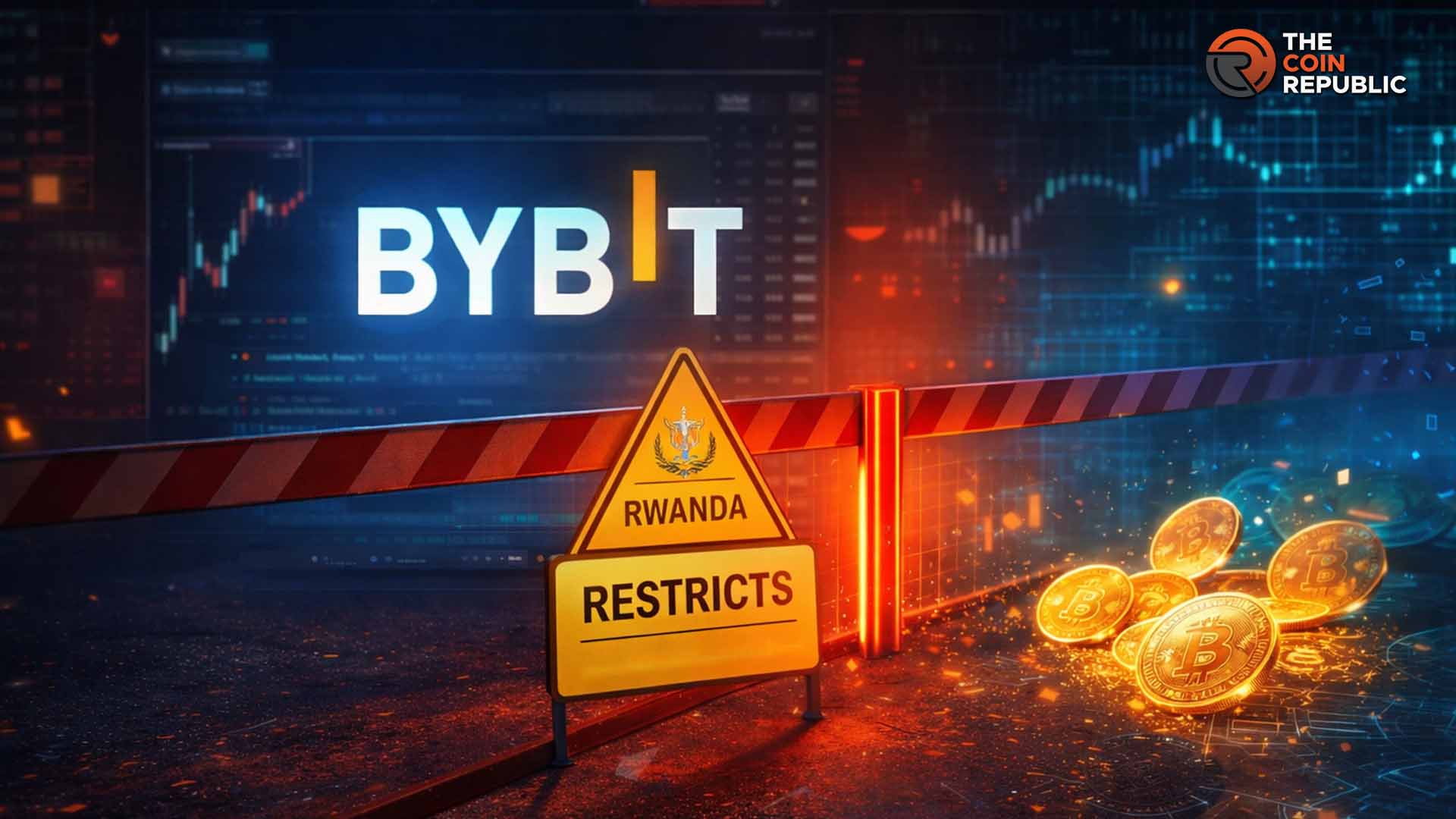
Rwanda's central bank has issued a direct warning against Bybit's P2P platform for facilitating trades involving the Rwandan franc, citing illegality and financial risks.
This regulatory action by Rwanda highlights a growing trend of emerging markets imposing stricter controls on crypto P2P services to protect local currencies and financial stability.
The development underscores the ongoing tension between crypto platforms seeking broader accessibility and national regulators prioritizing financial sovereignty and consumer protection.
Source, catalyst, and sector overlap from the latest feed.
Apple's removal of Bitchat from its China App Store, citing regulatory violations, highlights the ongoing tension between decentralized technology and state control. The app's reliance on Bluetooth and mesh networks for offline communication, while enabling censorship resistance, also presents challenges for compliance with local regulations. Despite the ban in China, Bitchat's global download numbers and continued availability elsewhere suggest its core functionality remains appealing to users seeking alternatives to internet-dependent messaging. This event reinforces China's restrictive stance on digital assets and technology that could influence public opinion or organize social activity, impacting the accessibility of certain crypto-related applications within the country.
Live Feed
Loading the broader stream in the same flow as the homepage feed.

The $270 million Drift exploit, attributed to North Korean state actors, highlights a shift from code vulnerabilities to human-centric social engineering, forcing DeFi to re-evaluate its security paradigms. This incident signals a new threat model where attackers employ long-term espionage tactics, embedding themselves through fake identities and cultivated trust, rather than solely relying on technical exploits. DeFi protocols must now prioritize operational security (OpSec) and human element defenses, as even rigorously audited code can be compromised through compromised team members or social engineering. The evolving threat landscape necessitates a broader security approach encompassing people, processes, and governance, moving beyond traditional smart contract audits to address sophisticated, state-sponsored attacks.
Geopolitical shifts are directly impacting Bitcoin's price action, highlighting its sensitivity to global risk sentiment and potentially creating short-term trading opportunities. Significant institutional buying of both BTC and ETH by entities like Strategy and BitMine suggests sustained conviction despite market volatility, reinforcing existing long-term theses. Polymarket's introduction of a native stablecoin and exchange overhaul signals a move towards greater platform control and potential for new on-chain financial products, impacting the stablecoin and DeFi sectors. Circle's Arc Layer-1 blockchain prioritizing post-quantum signature support from launch addresses a future security threat, positioning it as a forward-thinking infrastructure play against potential long-term risks to established protocols like Bitcoin.

ConfluxCapital's launch of free, AI-driven quantitative trading bots for BTC and XRP aims to democratize access to automated trading strategies, potentially attracting new retail capital to these assets. The platform's claim of up to $3,700 in daily returns, while presented as a core advantage, should be viewed with caution given the inherent volatility and risk in crypto trading. By offering a zero-fee, user-friendly interface, ConfluxCapital is positioning itself to lower the barrier to entry for automated trading, which could increase adoption of such tools among less experienced investors. The emphasis on "free to use" and "zero learning barrier" suggests a strategy to capture market share by appealing to a broad user base, potentially driving increased trading volume for supported assets.
Sam Altman's estimated $3.3 billion net worth highlights a diversified investment strategy across AI, startups, and notably, crypto projects like Worldcoin. Altman's wealth is primarily derived from his role as a capital allocator and early investor, rather than direct equity in OpenAI, indicating a focus on long-term growth and influence. The article underscores Altman's strategic positioning in both the AI boom and the crypto ecosystem through Worldcoin, suggesting a dual focus on transformative technologies with potential for significant future returns. Despite controversy surrounding Worldcoin's privacy implications, its ambitious goal of creating a global identity system and distributing tokens positions it as a key crypto venture for Altman.

Polkadot price has rejected a key resistance zone, indicating a potential start of a deeper downside move toward critical liquidity levels. Derivatives data shows a significant imbalance with more short positions than long positions, confirming strong bearish conviction and dominance of sell-side pressure. The current price action suggests DOT is rotating towards sell-side liquidity below recent lows, reinforcing a bearish continuation thesis with $1.20 and $1.10 as potential downside targets. A sustained move above $1.30-$1.32 is required to invalidate the bearish structure and signal a potential momentum shift; otherwise, breakdown risk remains high.
Despite recent price drops and liquidations, long-term Bitcoin holders are accumulating, indicating a potential shift from short-term traders to patient investors. The current market sentiment, characterized by extreme bearishness on certain indicators, historically suggests the end of a downtrend rather than a collapse, potentially signaling accumulation opportunities. While short-term holders are experiencing significant unrealized losses, the data suggests a pattern where such conditions have historically preceded market bottoms, implying a potential recovery phase is approaching.

A significant Bitcoin whale has moved 300 BTC to Binance, potentially signaling a willingness to sell at a loss, which could add to existing selling pressure. The whale's accumulation at an average price of $97,500 and current transfer at $68,300 highlights the risk for investors who entered positions near previous all-time highs. While the transfer could be for reasons other than immediate sale, the movement of large BTC sums to exchanges is often interpreted as a bearish signal by market participants.

MicroStrategy's recent Bitcoin purchases, while substantial in absolute terms, represent only a small fraction of overall market inflows, indicating their diminishing impact on price action. Broader market dynamics, including long-term holder behavior, ETF flows, and miner issuance, are currently exerting a greater influence on Bitcoin's price than MicroStrategy's buying activity. Despite MicroStrategy's consistent demand, significant capital outflows from Bitcoin, evidenced by realized cap drawdowns and ETF redemptions, are overwhelming its purchasing power. The market is currently prioritizing macro capital flows and long-term holder sentiment over the specific buying strategies of individual corporate entities like MicroStrategy.

Ripple CTO Emeritus David Schwartz's decision to remain focused on the XRPL ecosystem rather than launching a solo project signals a commitment to consolidating development and market attention, which could be viewed positively by XRP investors. Schwartz's acknowledgment of a potential bug where high-speed node communication could be misidentified as a DDoS attack highlights ongoing technical nuances within the XRPL, suggesting continued focus on network stability and optimization. The market may interpret Schwartz's continued involvement and focus on XRPL stability as a stabilizing factor for XRP, especially given the resolution of major legal battles with the SEC.

Global crypto ETPs saw a rebound with $224 million in inflows last week, reversing the previous week's outflows and bringing year-to-date inflows to $1.2 billion. XRP led the inflows with $120 million, its largest weekly gain since December 2025, while Bitcoin ETPs followed with $107 million, though US spot Bitcoin ETFs contributed minimally. Ether ETPs experienced $53 million in outflows, continuing a negative trend attributed to regulatory uncertainty surrounding stablecoins and potential legislation like the CLARITY Act. Despite a brief rebound, mixed macro data and hawkish policy expectations tempered overall sentiment, suggesting a cautious market environment for digital asset investments.

Argentine banks are piloting JPMorgan's JPM Coin for settlement, indicating institutional adoption of blockchain for efficiency gains despite local regulatory hurdles. The tests focus on recording and reconciling operations via blockchain, not on moving real funds, suggesting a gradual integration of DLT into traditional finance rather than immediate crypto adoption. This development highlights the growing interest in blockchain-based settlement solutions in Latin America, a region experiencing significant crypto market growth, potentially signaling future demand for such infrastructure.

Bitcoin briefly surpassed $70,000, driven by significant ETF inflows, indicating renewed institutional interest despite ongoing macro uncertainties. The correlation between Bitcoin and central bank easing has turned negative post-ETF launch, suggesting institutional capital is accumulating in anticipation of future monetary policy shifts. Despite positive ETF flows, the market remains fragile with weak organic demand and increasing downside protection in options below $68,000, highlighting a cautious sentiment. Geopolitical tensions and rising oil prices continue to exert macro pressure, with upcoming U.S. inflation data being a critical factor for the Federal Reserve's near-term rate decisions.
Daily Bitcoin ETF inflows reaching $471 million, the highest since February, indicate a significant resurgence in institutional demand and could signal a positive shift in market sentiment. The substantial inflows, led by major players like BlackRock and Fidelity, suggest renewed confidence in Bitcoin as an investment vehicle, potentially driving price appreciation. While Bitcoin ETFs show strong momentum, altcoin ETFs, including XRP and Solana, exhibit mixed or subdued performance, highlighting a potential divergence in institutional interest across different crypto assets. The rapid accumulation of assets in Bitcoin ETFs, comparable to gold ETFs' historical growth, underscores their increasing importance in institutional crypto exposure and suggests sustained participation.

Bitcoin and Ether are consolidating within a two-month range, mirroring a historical pattern that preceded a price breakdown, suggesting potential downside risk if support levels fail. Geopolitical tensions and high oil prices are creating a bearish macro environment for risk assets like crypto, increasing inflation fears and weighing on market sentiment. Despite broad market apathy, AI and privacy tokens are showing relative strength, indicating a potential rotation into niche sectors based on perceived fundamental value rather than speculative hype. Derivatives market data shows cautious institutional conviction with stable open interest and neutral funding rates, suggesting a lack of strong positioning for a major breakout in either direction.
Signal context only. Validate with price action, liquidity, and risk limits before taking a position.
Bitcoin Everlight introduces a new architecture aiming to provide passive Bitcoin rewards by acting as a specialized routing layer, potentially offering an alternative to traditional mining and staking. The project, identified by ticker BTCL, has secured over $2.5M in funding and is currently in Phase 4 of its presale, with a planned mainnet launch for live BTC distributions. With a total supply capped at 21 billion tokens and a low minimum contribution, Bitcoin Everlight targets retail investors seeking accessible ways to grow BTC holdings, positioning itself as an infrastructure play. Audited by Spywolf and Solidproof, and with KYC completed by Vital Block, the project emphasizes transparency and security, aiming to enhance Bitcoin's payment layer without altering consensus rules.
