
Navigating Crypto News

CoinFeather
Navigating Crypto News

Quick market read from this story
The SEC's decision on intermediary definitions for tokenized stocks will determine whether blockchain innovation primarily benefits incumbents or opens new revenue streams for decentralized infrastructure like wallets and smart contract platforms.
A ruling favoring Citadel Securities' broad interpretation of intermediaries could keep tokenized equities within traditional financial wrappers, limiting disruption and preserving existing fee structures.
Conversely, adopting the Blockchain Association's narrower, function-based view could foster competition by allowing decentralized applications to capture value, potentially accelerating broader adoption of on-chain equity trading.
The current $946 million tokenized stock market serves as a test case, with the SEC's framework poised to shape the future control and economic distribution of a potentially trillion-dollar asset class.
Source, catalyst, and sector overlap from the latest feed.
The current state of quantum computing, while advancing, remains far from posing an immediate threat to Bitcoin's cryptography, with estimates suggesting a cryptographically relevant machine is still years, if not decades, away. While recent research has revised down the estimated resources needed for a quantum attack on Bitcoin, the practical barriers to accessing and operating such a facility-scale machine remain extremely high for malicious actors. The primary risk to Bitcoin and similar cryptocurrencies lies in the race between quantum computing development and the adoption of post-quantum cryptography, with migration deadlines like NIST's 2035 target being crucial. The significant capital investment and infrastructure required for quantum computing development suggest that the first credible threats will likely emerge from state-backed programs or misuse of top-tier labs, rather than independent criminal operations.
Live Feed
Loading the broader stream in the same flow as the homepage feed.

The proposed Ethereum ERC-8211 standard would allow complex, multi-step blockchain actions to run in one transaction.

Polymarket is launching its own stablecoin, PolymarketUSD, backed 1:1 by USDC, to enhance internal operations and reduce bridge risks. The move aims to improve execution speed, lower gas fees, and provide greater flexibility for future platform upgrades, potentially attracting institutional traders. While PolymarketUSD will be used internally and is not a direct competitor to global stablecoins like USDT or RLUSD, it signifies a strategic step for the prediction market platform. The internal nature and limited scope of PolymarketUSD mean it is unlikely to significantly impact the broader stablecoin market dominated by global players.

Cardano's second-place ranking in validator count, while significantly behind Ethereum, highlights its strong position among Layer 1 networks and fuels debate on decentralization metrics. The article questions the raw validator count for Ethereum, suggesting that a single operator can manage multiple validators, potentially overstating true decentralization. Charles Hoskinson's clarification on the Midnight bridge design addresses community concerns, emphasizing a two-way functionality and aiming to resolve communication misinterpretations. The discussion around validator metrics and network structure suggests that while Ethereum leads in raw numbers, Cardano's approach may foster broader participant involvement.
XRP leads the week with a 656% ETF flow surge, while Binance users add 181 billion SHIB. Plus, Peter Schiff warns what happens with Saylor and Strategy if the $10,000 BTC scenario materializes by the end of the year.
Ethereum is testing critical support levels at $1,800 and $2,000, with the $1,800 level representing a key trendline for a potential ascending triangle pattern. Failure to hold the $1,800 support could invalidate the bullish ascending triangle pattern and signal a move towards lower demand zones near $1,765 and $1,693. The $2,000 support zone is crucial for preventing a deeper correction, and its hold or break will likely dictate ETH's short-term price action and potential for recovery. Analysts are closely watching the $2,150-$2,200 resistance zone, as repeated rejections here maintain short-term bearish pressure on ETH.

JBStrategy's AI-powered quantitative trading platform aims to mitigate emotional decision-making in volatile crypto markets by leveraging machine learning and big data analytics. The platform's AI strategies focus on capturing market anomalies and generating alpha through high-frequency arbitrage and hedging, offering institutional-grade strategies to retail investors. JBStrategy emphasizes risk control with dynamic stop-loss orders and diversification, seeking to provide more stable returns across various profitable strategies. The continuous 24/7 operation of JBStrategy's automated system addresses the challenge of round-the-clock crypto markets, aiming for improved efficiency and reduced human bias.

Lido’s institutional lead argues that more crypto treasury companies will need to incorporate liquid staking to outperform the returns generated by staked Ether ETFs.

The CoinDesk 20 Index experienced a broad-based decline of 2.4%, with all 20 constituents trading lower, indicating a general bearish sentiment across major digital assets. Aave (AAVE) and Avalanche (AVAX) were the primary laggards, falling 8.5% and 7.6% respectively, suggesting specific project-level weakness or profit-taking impacting these assets more significantly. The uniform downturn across all components of the CoinDesk 20 index points to prevailing negative market conditions or a lack of fresh buying interest in the short term.
Bitcoin is testing critical support levels around $68,055 and the 50-day SMA, with a hold suggesting potential for continued upside momentum towards $70,000+ resistance. A break below $68,055 could signal a shift to a corrective phase, with traders watching the $67,000 CME gap as a potential downside target. The market structure remains undecided, making the price action around current support levels a key determinant for Bitcoin's near-term direction.

The DOGEBALL presale highlights a strategic shift towards Layer 2 utility projects, particularly those focused on gaming, signaling a potential new trend for altcoin investments. With a locked-in listing price of $0.015 from a current presale price of $0.0004, DOGEBALL presents a potential 37.5x ROI, attracting significant whale interest and offering a short-term, high-velocity trading opportunity. The project's custom L2 blockchain, DOGECHAIN, aims to address high gas fees for gamers with near-zero transaction costs, positioning it as a direct competitor in the growing blockchain gaming infrastructure sector. The article frames DOGEBALL as a potential successor to TRON's early success, emphasizing the importance of early entry into disruptive projects with strong utility and community backing.
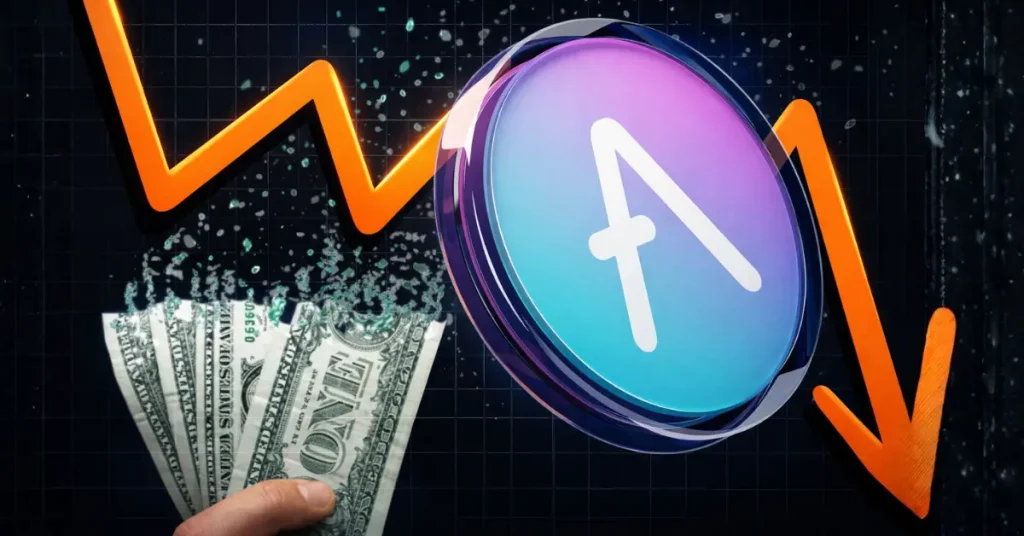
AAVE's price breakdown below $100, coupled with a 10% daily drop and rising exchange reserves, signals increasing sell-side pressure and a potential continuation of the bearish trend. The exit of Chaos Labs from the Aave ecosystem, following earlier contributor departures, raises concerns about governance continuity and long-term protocol direction, potentially impacting market confidence. With AAVE failing to reclaim the $95-$100 support zone, which has now become resistance, the price structure indicates a bearish continuation, with potential downside targets at $85, $55-$70.

Developers are finding novel ways to optimize AI model costs by manipulating output verbosity, directly impacting operational expenses for AI-driven applications. The 'caveman' prompt engineering technique demonstrates a significant, albeit unconventional, method for reducing token usage, potentially influencing how AI services are priced and utilized. While the cost savings are substantial for output tokens, input tokens remain a major cost driver, suggesting that further optimization strategies will be needed for comprehensive cost reduction. The viral adoption of this technique on platforms like GitHub highlights a community-driven approach to AI efficiency, potentially leading to broader adoption of similar cost-saving measures.

Geopolitical tensions and heightened rhetoric from President Trump regarding Iran have led to a pullback in Bitcoin's price, erasing recent gains and indicating a short-term negative correlation with global risk assets. The market is reacting to the uncertainty surrounding the Strait of Hormuz deadline, causing a risk-off sentiment that is pressuring Bitcoin and U.S. stock futures, while WTI crude oil sees a price increase. Despite the immediate price pressure, tempered comments from Vice President Vance suggest potential de-escalation, which could influence market sentiment if the situation resolves without further conflict.
XRP's MVRV ratio has fallen to its lowest point since late 2022, indicating that the majority of active wallets over the past year are experiencing an average loss of 41%. The current on-chain data suggests XRP is in an accumulation range, similar to December 2022, which historically preceded a significant price recovery. XRP faces the risk of its seventh consecutive monthly decline, a streak not seen since 2013-2014, highlighting persistent downward momentum despite broader market recoveries. Despite recent market weakness, the deeply negative MVRV levels and sustained realized losses suggest that much of the selling pressure may have already occurred, potentially reducing downside risk.
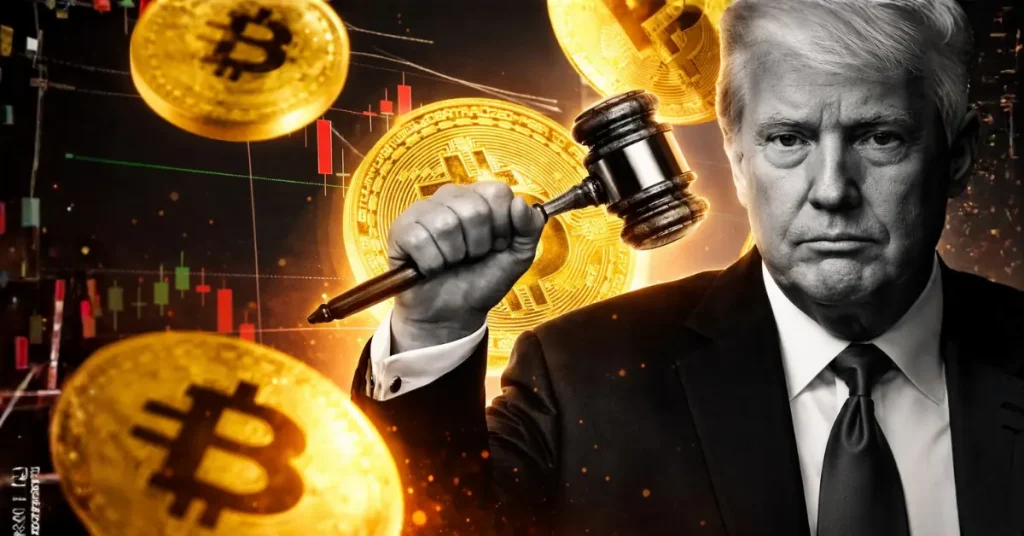
Geopolitical tensions and escalating rhetoric from former President Trump are directly impacting Bitcoin's price, creating volatility within a tight trading band as traders react to perceived de-escalation or escalation signals. The market is exhibiting a clear 'Iran Reverse Indicator' pattern where peace signals lead to Bitcoin price increases, and escalation or rejection of proposals leads to price drops, suggesting a reactive trading environment. The immediate price action for Bitcoin hinges on the de-escalation or escalation of the conflict, with potential for a return to $70,000 on peace or significant downside if strikes intensify.
Mortgage rates have eased to 6.43%, offering modest relief to borrowers and potentially signaling a slight improvement in housing market affordability. The decline in mortgage rates is linked to the Federal Reserve's previous rate cuts and broader economic trends, but future movements are uncertain and dependent on inflation and Fed policy. While current data shows a downward trend, the lack of immediate further Fed action suggests mortgage rates may stabilize or see only gradual changes, making market timing difficult for homebuyers.
Signal context only. Validate with price action, liquidity, and risk limits before taking a position.
The significant increase in crypto project closures, with 86 projects failing in Q1, signals a market-wide reset driven by the end of the 'easy money' era. Capital is rotating from speculative projects towards institutional-grade infrastructure like Bitcoin ETFs, stablecoins, and RWAs, indicating a flight to quality and durability. The shift in market dynamics necessitates that surviving projects must demonstrate real infrastructure, user engagement, and revenue, rather than relying on past speculative hype. The consolidation of activity towards dominant platforms and products integrated with traditional finance suggests a maturing market demanding specialization and robust unit economics.
