
Navigating Crypto News

CoinFeather
Navigating Crypto News

Source, catalyst, and sector overlap from the latest feed.
OpenServ claims its SERV Nano model rivals OpenAI on certain tasks, positioning itself as an AI infrastructure play with crypto-native monetization rails on Base and Solana. The core value proposition hinges on a proprietary 'Bounded Reasoning for Autonomous Inference and Decisions' (BRAID) framework, which aims to offer superior cost and speed efficiency for bounded AI tasks. While benchmark claims are strong, the market awaits independent verification of methodology, task selection, and real-world deployment success to validate the platform's infrastructure claims beyond narrative. The project's success depends on proving its structured reasoning layer delivers tangible gains in cost, speed, and operational trust, distinguishing it from typical AI-token narratives.
Live Feed
Loading the broader stream in the same flow as the homepage feed.

Strategy's aggressive Bitcoin accumulation, absorbing nearly three times the new supply, is actively counteracting bearish technical patterns like the bear flag. The current market setup, with Strategy's demand potentially invalidating a bearish pattern, draws parallels to Bitcoin's 2018 bottom, suggesting a potential reversal and rally. If Bitcoin breaks above the upper trendline of the bear flag, it could signal a shift to a bullish outlook with a measured move target around $108,000-$110,000.

Polymarket's comprehensive platform upgrade, including a new order book and its own stablecoin (Polymarket USD), signals a significant investment in improving user experience and trading efficiency for its prediction market. The transition from USDC.e to a native stablecoin backed by USDC, while aiming for better integration, introduces a new collateral asset that traders will need to adapt to, potentially impacting liquidity and user behavior in the short term. While the platform is also planning a native token (POLY), its delayed launch suggests that immediate market impact will be driven by the infrastructure and stablecoin changes rather than tokenomics speculation.
Metaplanet's aggressive Bitcoin accumulation strategy, now holding over 40,000 BTC and targeting 210,000 BTC, positions it as a significant corporate holder, potentially influencing market dynamics if its goal is achieved. The company's use of options strategies and expanded funding capacity suggests a sophisticated approach to managing acquisition costs and ensuring continuous accumulation, indicating a long-term commitment to Bitcoin as a treasury asset. Potential regulatory headwinds in Japan regarding index inclusion for crypto-heavy companies introduce a layer of risk for Metaplanet, creating uncertainty around its future market positioning despite its aggressive accumulation strategy.

A US appellate court ruling favors Kalshi, asserting CFTC's exclusive jurisdiction over prediction market event contracts and potentially preempting state-level gambling regulations. This decision establishes a significant precedent for prediction markets, potentially impacting how similar platforms are regulated across different states and setting the stage for a broader legal debate. The ruling, despite a dissenting opinion, strengthens the argument for federal oversight by the CFTC, which could lead to clearer regulatory frameworks for event contracts, impacting the broader derivatives and gaming sectors.
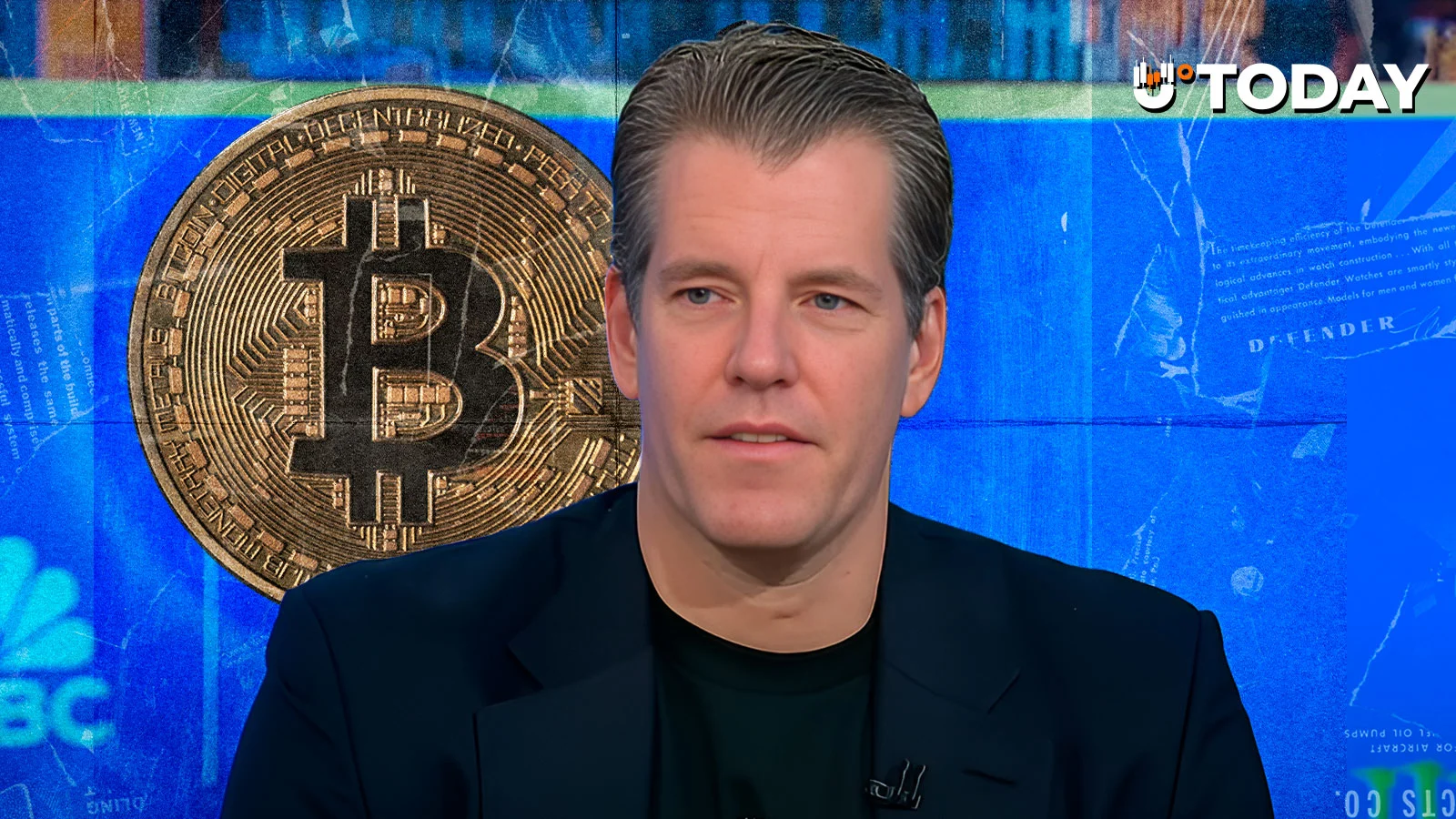
The significant expansion of the U.S. M2 money supply to $22.7 trillion, as highlighted by Tyler Winklevoss, serves as a strong macro-driven narrative for Bitcoin as a fixed-supply asset. The historical correlation between global M2 and Bitcoin's price suggests that increased fiat liquidity could act as a catalyst for BTC appreciation, potentially outperforming gold's historical response to similar conditions. This development reinforces the narrative of Bitcoin as a hedge against inflation and currency debasement, a theme that could attract investor interest seeking to preserve purchasing power.
Solana is consolidating within a defined range ($80-$83), indicating market indecision and a need for a breakout or breakdown to establish a clear trend. A reclaim of the $85 level is crucial for bullish momentum, potentially targeting $90 and the upper boundary of a broader rising channel near $100. Failure to hold the $80 support could trigger a rapid decline towards $78 or lower, highlighting the immediate downside risk if current consolidation breaks.

Solana and Chainlink are currently testing key resistance and support levels, indicating a period of market indecision that traders should monitor for directional confirmation. BlockDAG is nearing the end of its presale phase with a set price, presenting a potential entry point before its transition to open market trading, contingent on broader market sentiment. The article highlights technical price levels for SOL and LINK, suggesting a neutral short-term outlook for these established assets as they consolidate.

The Bitcoin options market is exhibiting a significant divergence between implied and realized volatility, suggesting traders are paying a premium for downside protection despite subdued spot price action. A negative gamma environment below $68,000 indicates that market makers may be forced to sell BTC as prices fall, potentially accelerating a downturn through a self-reinforcing feedback loop. Weakening spot demand and reduced participation, coupled with a concentration of supply above current prices, create a fragile equilibrium, making Bitcoin vulnerable to a sharp break below its current trading range. While some entities like MicroStrategy continue to accumulate, a broader pullback in corporate treasury activity and notable sales by others like Marathon Digital Holdings signal a narrowing base of demand, increasing market fragility.
Ethereum's weekly MACD is showing an early upward curl from deeply negative levels, a pattern historically preceding upside moves and suggesting potential for further price appreciation. The reclamation of the $2,100 support level, coupled with a consolidating price action near recent lows, indicates easing selling pressure and a possible near-term push towards $2,200. While bullish signals are emerging, traders should remain cautious as Ethereum has not yet confirmed a broader trend reversal and faces significant resistance overhead.
Bitcoin faces a critical short-term juncture with a newly formed CME gap near $67,500 acting as a potential support level, while a persistent trendline rejection at higher prices suggests continued overhead resistance. The dual technical signals indicate a divergence in market sentiment, where buyers are pushing price up but sellers are defending a key resistance zone, creating uncertainty for the immediate price direction. Traders will be closely monitoring whether Bitcoin fills the CME gap around $67,500 or breaks decisively above the trendline, as either scenario could signal a shift in short-term momentum. The presence of a shooting star candlestick pattern on the 8-hour chart following the trendline rejection implies weakening upside momentum and potential for a near-term pullback.

OpenAI's policy paper signals a potential paradigm shift in economic thinking, advocating for proactive government adaptation to AI-driven labor market disruptions and wealth concentration. The call for tax changes tied to automation and broader AI access suggests a future where digital infrastructure and AI capabilities could become foundational economic resources, impacting how value is perceived and distributed. The concurrent reporting on Sam Altman's leadership challenges introduces a layer of governance risk and internal conflict at a key AI developer, potentially influencing the pace and direction of AI policy implementation and market trust. While not directly a crypto event, OpenAI's focus on AI's economic impact and potential wealth redistribution could indirectly influence capital flows and investment theses within the broader tech and digital asset landscape.

Holders of tokenized shares in Galaxy (GLXY) will soon be able to participate in proxy voting on-chain via Broadridge.

JPMorgan CEO Jamie Dimon's acknowledgment of blockchain and stablecoins as emerging competitors signals a growing recognition of digital assets' potential to disrupt traditional finance, potentially influencing institutional adoption strategies. The bank's continued investment in its Kinexys blockchain platform for near-instant fund transfers and tokenization indicates a strategic pivot towards integrating blockchain technology, suggesting a medium-term bullish outlook for projects enabling such infrastructure. Dimon's comments coincide with ongoing US regulatory debates on stablecoins, particularly yield-bearing ones, highlighting a key friction point between traditional banking and the crypto industry that could impact future regulatory frameworks and market access.

The upcoming late-April deadline for the CLARITY Act's Senate Banking Committee passage signals a critical juncture for US digital asset regulation, potentially resolving long-standing jurisdictional ambiguities between the SEC and CFTC. Progress on stablecoin legislation, described as "99% resolved," with a potential Senate vote before May, indicates a significant step towards regulatory clarity for stablecoin issuers and could impact their ability to offer yield. The FDIC's finalization of federal rules for stablecoin issuance and prohibition of reputational risk denials for banking services to crypto firms represent a material shift in regulatory treatment, potentially improving banking access for the sector. With $193 million in crypto PAC war chests ahead of the 2026 midterms, digital asset policy has become a direct electoral issue, increasing the political pressure for legislative action and potentially influencing candidate stances.
Grayscale's research head suggests that recent resilience in leading altcoins like ETH and LINK, despite macro headwinds, may signal a durable market bottom forming. Improved fundamentals driven by tokenization and stablecoin adoption on Wall Street, coupled with potential regulatory clarity from bills like the Clarity Act, present compelling entry points for patient investors in altcoins. While Grayscale sees potential upside in altcoins benefiting from tokenization and regulatory clarity, contrasting analyst views and short-term bearish sentiment on ETH suggest continued choppiness is possible. The market may be overlooking fundamental improvements in altcoins due to ongoing macro uncertainty and a focus on Bitcoin, creating a potential disconnect that Grayscale believes offers a surprising opportunity.
A significant 69% of top Binance traders are holding long positions on SHIB, indicating strong conviction from sophisticated market participants and suggesting a potential upward price movement. Shiba Inu's ability to hold the $0.000006 support level, coupled with increased risk appetite in the broader market, strengthens the case for a near-term breakout towards $0.000008. SHIB's price action is closely correlated with Ethereum, implying that ETH's performance will be a key factor in amplifying SHIB's potential gains or magnifying its downside risks.

Polymarket's launch of Polymarket USD, a USDC-backed token replacing bridged USDC.e, directly addresses and mitigates bridge-related solvency risks, enhancing platform stability. The introduction of CTF Exchange V2 with EIP-1271 support significantly reduces gas costs and improves institutional access via smart contract wallets, potentially attracting more professional capital. With $10B in March 2026 volume and a $20B valuation post-ICE investment, Polymarket's infrastructure upgrade positions it to compete more effectively against emerging threats like Binance's potential entry into prediction markets. Despite the platform upgrade and integration with Google Finance, the absence of the native POLY governance token in this release indicates its launch remains a separate, pending catalyst.

A solo Bitcoin miner's unlikely $210,000 block reward highlights the extreme luck factor in mining, demonstrating that individual participants can still achieve significant payouts despite the dominance of large mining operations. The event underscores the inherent randomness in Bitcoin block rewards, serving as a reminder of the lottery-like nature of solo mining rather than a fundamental shift in mining economics. While this solo mining success is a rare event, it contrasts with major mining firms divesting Bitcoin to focus on AI infrastructure, suggesting a divergence in capital allocation strategies within the broader crypto ecosystem.
Signal context only. Validate with price action, liquidity, and risk limits before taking a position.
EDX Markets' bid for a federal trust bank charter signals a strategic move by Wall Street firms like Citadel and Fidelity to integrate crypto's back-end infrastructure within the U.S. banking perimeter, potentially reshaping institutional access and custody. The proposed modular structure, separating order matching from custody and settlement under federal supervision, aims to import traditional market structure efficiencies into crypto, addressing concerns over vertically integrated exchange risks. This development represents a significant regulatory action that could establish a new layer of institutional crypto infrastructure, potentially creating a durable competitive moat for federally chartered entities and shifting the market's economic center of gravity away from venue-centric models. While EDX has processed significant trading volume, the ultimate success hinges on institutional adoption and whether this federally supervised trust-bank model proves superior to existing crypto venues and bilateral arrangements for execution, custody, and capital efficiency.
