
Navigating Crypto News

CoinFeather
Navigating Crypto News
Quick market read from this story
Bitcoin faces a critical short-term juncture with a newly formed CME gap near $67,500 acting as a potential support level, while a persistent trendline rejection at higher prices suggests continued overhead resistance.
The dual technical signals indicate a divergence in market sentiment, where buyers are pushing price up but sellers are defending a key resistance zone, creating uncertainty for the immediate price direction.
Traders will be closely monitoring whether Bitcoin fills the CME gap around $67,500 or breaks decisively above the trendline, as either scenario could signal a shift in short-term momentum.
The presence of a shooting star candlestick pattern on the 8-hour chart following the trendline rejection implies weakening upside momentum and potential for a near-term pullback.
Source, catalyst, and sector overlap from the latest feed.
Metaplanet's aggressive Bitcoin accumulation strategy, now holding over 40,000 BTC and targeting 210,000 BTC, positions it as a significant corporate holder, potentially influencing market dynamics if its goal is achieved. The company's use of options strategies and expanded funding capacity suggests a sophisticated approach to managing acquisition costs and ensuring continuous accumulation, indicating a long-term commitment to Bitcoin as a treasury asset. Potential regulatory headwinds in Japan regarding index inclusion for crypto-heavy companies introduce a layer of risk for Metaplanet, creating uncertainty around its future market positioning despite its aggressive accumulation strategy.
Live Feed
Loading the broader stream in the same flow as the homepage feed.

Polymarket's comprehensive platform upgrade, including a new order book and its own stablecoin (Polymarket USD), signals a significant investment in improving user experience and trading efficiency for its prediction market. The transition from USDC.e to a native stablecoin backed by USDC, while aiming for better integration, introduces a new collateral asset that traders will need to adapt to, potentially impacting liquidity and user behavior in the short term. While the platform is also planning a native token (POLY), its delayed launch suggests that immediate market impact will be driven by the infrastructure and stablecoin changes rather than tokenomics speculation.

Bitcoin rose with the rest of the crypto market on Monday after President Donald Trump struck a mixed tone on a possible deal with Iran to reopen the Strait of Hormuz, prompting a relief rally that lifted prices but left the broader market setup unresolved. According to CryptoSlate's data, the largest cryptocurrency briefly climbed above […] The post Why Bitcoin briefly jumped above $70,000 on Iran deal hopes as Trump’s Hormuz threat keeps rally fragile appeared first on CryptoSlate.

OpenAI's policy paper signals a potential paradigm shift in economic thinking, advocating for proactive government adaptation to AI-driven labor market disruptions and wealth concentration. The call for tax changes tied to automation and broader AI access suggests a future where digital infrastructure and AI capabilities could become foundational economic resources, impacting how value is perceived and distributed. The concurrent reporting on Sam Altman's leadership challenges introduces a layer of governance risk and internal conflict at a key AI developer, potentially influencing the pace and direction of AI policy implementation and market trust. While not directly a crypto event, OpenAI's focus on AI's economic impact and potential wealth redistribution could indirectly influence capital flows and investment theses within the broader tech and digital asset landscape.

Holders of tokenized shares in Galaxy (GLXY) will soon be able to participate in proxy voting on-chain via Broadridge.

JPMorgan CEO Jamie Dimon's acknowledgment of blockchain and stablecoins as emerging competitors signals a growing recognition of digital assets' potential to disrupt traditional finance, potentially influencing institutional adoption strategies. The bank's continued investment in its Kinexys blockchain platform for near-instant fund transfers and tokenization indicates a strategic pivot towards integrating blockchain technology, suggesting a medium-term bullish outlook for projects enabling such infrastructure. Dimon's comments coincide with ongoing US regulatory debates on stablecoins, particularly yield-bearing ones, highlighting a key friction point between traditional banking and the crypto industry that could impact future regulatory frameworks and market access.

The upcoming late-April deadline for the CLARITY Act's Senate Banking Committee passage signals a critical juncture for US digital asset regulation, potentially resolving long-standing jurisdictional ambiguities between the SEC and CFTC. Progress on stablecoin legislation, described as "99% resolved," with a potential Senate vote before May, indicates a significant step towards regulatory clarity for stablecoin issuers and could impact their ability to offer yield. The FDIC's finalization of federal rules for stablecoin issuance and prohibition of reputational risk denials for banking services to crypto firms represent a material shift in regulatory treatment, potentially improving banking access for the sector. With $193 million in crypto PAC war chests ahead of the 2026 midterms, digital asset policy has become a direct electoral issue, increasing the political pressure for legislative action and potentially influencing candidate stances.

Grayscale's research head suggests that recent resilience in leading altcoins like ETH and LINK, despite macro headwinds, may signal a durable market bottom forming. Improved fundamentals driven by tokenization and stablecoin adoption on Wall Street, coupled with potential regulatory clarity from bills like the Clarity Act, present compelling entry points for patient investors in altcoins. While Grayscale sees potential upside in altcoins benefiting from tokenization and regulatory clarity, contrasting analyst views and short-term bearish sentiment on ETH suggest continued choppiness is possible. The market may be overlooking fundamental improvements in altcoins due to ongoing macro uncertainty and a focus on Bitcoin, creating a potential disconnect that Grayscale believes offers a surprising opportunity.

OpenServ claims its SERV Nano model rivals OpenAI on certain tasks, positioning itself as an AI infrastructure play with crypto-native monetization rails on Base and Solana. The core value proposition hinges on a proprietary 'Bounded Reasoning for Autonomous Inference and Decisions' (BRAID) framework, which aims to offer superior cost and speed efficiency for bounded AI tasks. While benchmark claims are strong, the market awaits independent verification of methodology, task selection, and real-world deployment success to validate the platform's infrastructure claims beyond narrative. The project's success depends on proving its structured reasoning layer delivers tangible gains in cost, speed, and operational trust, distinguishing it from typical AI-token narratives.

Polymarket's launch of Polymarket USD, a USDC-backed token replacing bridged USDC.e, directly addresses and mitigates bridge-related solvency risks, enhancing platform stability. The introduction of CTF Exchange V2 with EIP-1271 support significantly reduces gas costs and improves institutional access via smart contract wallets, potentially attracting more professional capital. With $10B in March 2026 volume and a $20B valuation post-ICE investment, Polymarket's infrastructure upgrade positions it to compete more effectively against emerging threats like Binance's potential entry into prediction markets. Despite the platform upgrade and integration with Google Finance, the absence of the native POLY governance token in this release indicates its launch remains a separate, pending catalyst.

A solo Bitcoin miner's unlikely $210,000 block reward highlights the extreme luck factor in mining, demonstrating that individual participants can still achieve significant payouts despite the dominance of large mining operations. The event underscores the inherent randomness in Bitcoin block rewards, serving as a reminder of the lottery-like nature of solo mining rather than a fundamental shift in mining economics. While this solo mining success is a rare event, it contrasts with major mining firms divesting Bitcoin to focus on AI infrastructure, suggesting a divergence in capital allocation strategies within the broader crypto ecosystem.

Aave's core risk management function is departing due to fundamental disagreements over the V4 upgrade's scope and economic unsustainability, signaling potential operational instability during a critical protocol transition. The exit of Chaos Labs, a key risk manager that oversaw significant TVL growth with zero bad debt, raises concerns about Aave's ability to manage risk effectively through its next growth phase, potentially impacting investor confidence. Disputes over resource allocation and operational burden for the V4 upgrade, coupled with Chaos Labs operating at a loss, highlight internal friction and economic challenges within Aave's contributor ecosystem.
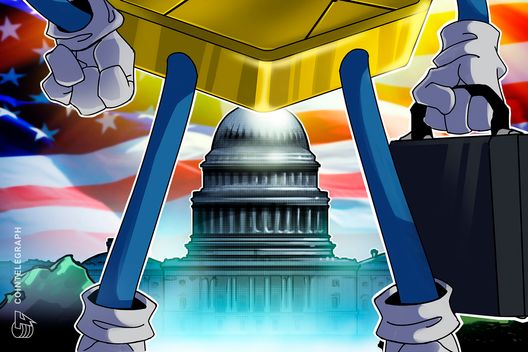
US Senator Bill Hagerty anticipates a crypto market structure bill moving through the Senate Banking Committee in April, signaling potential legislative progress after delays. The proposed legislation aims to shift oversight from the SEC to the CFTC, a significant structural change that could redefine regulatory clarity for digital assets. With the bill expected out of committee in April and before the midterms, market participants should monitor legislative developments for potential impacts on market sentiment and regulatory frameworks. The involvement of crypto PACs like Fairshake and Fellowship PAC in upcoming elections highlights the growing influence of the industry on political outcomes, potentially shaping future regulatory approaches.
Signal context only. Validate with price action, liquidity, and risk limits before taking a position.
No explicit catalyst tagged.
Solana is consolidating within a defined range ($80-$83), indicating market indecision and a need for a breakout or breakdown to establish a clear trend. A reclaim of the $85 level is crucial for bullish momentum, potentially targeting $90 and the upper boundary of a broader rising channel near $100. Failure to hold the $80 support could trigger a rapid decline towards $78 or lower, highlighting the immediate downside risk if current consolidation breaks.
